
DOOM Eternal Any% Speedrun: The Ultimate Breakdown for Maximum Slayers

``` ```json { "@context": "https://schema.org", "@type": "BlogPosting", "headline": "DOOM Eternal Any% Speedrun: The Ultimate Breakdown for Maximum Slayers", "image": "https://img.youtube.com/vi/ASm42DNN4ds/hqdefault.jpg", "author": { "@type": "Person", "name": "The GamingSpeedrun Team" }, "publisher": { "@type": "Organization", "name": "GamingSpeedrun.com" }, "datePublished": "2023-10-27", "dateModified": "2023-10-27" } ``` ```html
Hey Slayer! Ever watched those insane speedruns of DOOM Eternal and thought, "How in the Nine Hells did they do that?" You've landed in the right place. The "Any%" category, meaning beating the game as fast as possible with no specific restrictions other than completing the main objective, is where pure skill and knowledge of the game's mechanics shine. This isn't just about pointing and shooting; it's about precision movement, exploiting every little quirk, and a dash of calculated risk. We're diving deep into the Any% speedrun of DOOM Eternal, breaking down the strategies that allow players like seeker to absolutely obliterate the game in record time. Get ready to learn the secrets behind those jaw-dropping runs.

What is Any% in DOOM Eternal?

In the world of speedrunning, "Any%" signifies the most straightforward objective: finish the game from start to finish using any means necessary. For DOOM Eternal, this means the Doom Slayer is unleashed with the sole purpose of ending the game as quickly as humanly possible. This category often involves the discovery and exploitation of glitches, sequence breaks, and highly optimized combat encounters. It's a testament to the community's deep understanding of the game's engine and design. Unlike categories like "100%," which require collecting every item and completing every objective, Any% prioritizes raw speed above all else. The current World Record is a prime example of this intense focus, showcasing a level of mastery that’s truly breathtaking.

Movement is Key: The Art of Slayer's Path

DOOM Eternal's incredible mobility toolkit is the foundation of its speedruns. Mastering the dash, double jump, dash-jumping, and wall climbing isn't just about survival; it's about shaving milliseconds off every transition. A good speedrunner uses movement to not only traverse the environment quickly but also to position themselves optimally for combat and to set up for specific skips. The idea is to maintain momentum at all times, flowing from one action to the next without any wasted input. Techniques like "wave dashing" (though less prevalent in DOOM Eternal compared to some other games, the principle of using animations to gain speed is there) and precise aerial control are paramount. Think of it as an intricate dance with the game's physics engine.
"In DOOM Eternal, movement isn't just about getting from A to B; it's an offensive weapon in itself. Every dash, every jump, is a chance to gain an advantage."

Combat Optimization: Shredding Through Demons

While Any% speedruns often focus on skipping combat where possible, DOOM Eternal's combat is so integral that many encounters are optimized for speed. This means knowing precisely which demons to target, in what order, and with which weapons to eliminate them as efficiently as possible. The goal isn't just to kill them, but to kill them *fast* while setting up for the next encounter or transition. This involves understanding enemy weak points, utilizing glory kills for ammo and health boosts, and chaining abilities to maximize damage output. A perfectly executed combat arena in a speedrun feels less like a struggle and more like a choreographed ballet of destruction. You'll see runners using the chainsaw not just for ammo, but for its quick animation and iframes, and specific weapon combos to instantly dispatch high-threat targets.

Weapon Swapping: The Symphony of Destruction

The DOOM Slayer has an arsenal at his disposal, and knowing how and when to switch between them is crucial for speed. This isn't just about picking the "best" weapon for a situation, but about the fastest way to deal damage. Many speedrunners employ a rapid weapon-swap technique, often called "weapon canceling" or "quick switching," to maximize DPS. For instance, firing a rocket and immediately switching to the shotgun to cancel the rocket's reload animation can lead to a significant damage-per-second increase. Understanding the damage output, firing rates, and reload times of each weapon, and how they synergize, is a deep dive into the game's combat mechanics. It's a rhythm game disguised as a shooter, and mastering it is key to shaving off those precious seconds.

Glitches and Skips: Breaking the Game (and Records)

This is where the "broken" aspect of DOOM Eternal speedruns truly comes into play. The Any% category often leverages glitches to bypass large sections of the game, reach areas out of bounds, or manipulate enemy AI. These are not just minor bugs; they are often carefully discovered and exploited techniques that drastically shorten the intended path. Examples might include: * **Out-of-Bounds (OOB) Exploits:** Finding ways to push the Slayer outside the playable map boundaries to bypass entire levels or segments. * **Sequence Breaks:** Triggering events or reaching areas out of the intended order. * **AI Manipulation:** Using game mechanics or glitches to make enemies behave in unintended ways, such as making them ignore the player or get stuck. These tricks are what make Any% runs so exciting and unpredictable. They require immense practice and a deep understanding of the game's collision detection and scripting. The video often features explanations of these specific glitches and skips, detailing how they're performed and why they work.
The discovery of a new glitch can completely redefine a speedrun category. It's a constant arms race between runners finding exploits and developers patching them.

Route Planning: Every Second Counts

A successful Any% speedrun is meticulously planned. This involves creating a "route" – a precise sequence of actions, movements, and combat encounters designed to be the fastest possible path through the game. This route is developed through countless hours of practice, analysis, and community collaboration. Runners will meticulously map out every movement, every weapon swap, every encounter. They'll study existing runs, look for optimizations, and even use advanced tools to analyze frame data and movement timings. The goal is to minimize downtime and maximize efficiency. Even a single poorly executed jump or a slightly delayed weapon swap can cost valuable seconds, making route adherence critical.

Practice and Dedication: The Speedrunner's Creed

Achieving a world record or even a personal best (PB) in DOOM Eternal's Any% category requires an insane amount of dedication. Speedrunners spend hundreds, if not thousands, of hours practicing specific segments, mastering complex glitches, and perfecting their routes. It's not uncommon for runners to break down their runs into individual levels or even specific encounters, practicing them repeatedly until they are muscle memory. The mental fortitude required to consistently execute difficult sequences, especially under the pressure of a World Record attempt, is immense. It’s this relentless pursuit of perfection that defines the spirit of speedrunning.

Frequently Asked Questions

What is the primary goal of a DOOM Eternal Any% speedrun?

The main objective is to complete the game from start to finish as quickly as possible, using any available in-game mechanics, glitches, or exploits.

How do speedrunners learn their routes and strategies?

Routes are developed through extensive practice, experimentation, and collaboration within the speedrunning community. Runners often watch and analyze existing world records and share discoveries on platforms like Twitch and YouTube.

Are glitches allowed in Any% speedruns?

Yes, glitches and unintended exploits are not only allowed but often essential for achieving the fastest times in the Any% category. They are what allow runners to bypass large sections of the game.

What's the difference between Any% and other DOOM Eternal speedrun categories?

Any% focuses purely on beating the game. Categories like "100%" require completing all objectives and collecting all items, while "Glitchless" runs prohibit the use of major exploits, leading to significantly different strategies and times.

How much practice does it typically take to be competitive in DOOM Eternal Any%?

To be competitive at a high level, runners often dedicate hundreds of hours to practice, mastering specific techniques and memorizing routes. Achieving a World Record can take years of dedication.


The thrill of the chase for a new Personal Best or a coveted World Record is what drives the DOOM Eternal speedrunning community. It's a constant evolution of skill and discovery.

The Any% speedrun of DOOM Eternal is a breathtaking display of player skill, game mastery, and community innovation. From the lightning-fast movement to the intricate combat optimization and the boundary-pushing glitches, it’s a category that truly pushes the limits of what's possible. If you're looking to understand the absolute peak of DOOM Eternal performance, diving into these runs is an absolute must. Keep practicing, keep exploring, and who knows, maybe you’ll be the one setting the next record!

What are your favorite DOOM Eternal speedrun moments or tricks? Share them in the comments below! Have you tried any of these strategies yourself? Let us know your personal bests and join the discussion on our Discord server to connect with fellow speedrunners and discuss the latest strats!

``` ```json { "@context": "https://schema.org", "@type": "FAQPage", "mainEntity": [ { "@type": "Question", "name": "What is the primary goal of a DOOM Eternal Any% speedrun?", "acceptedAnswer": { "@type": "Answer", "text": "The main objective is to complete the game from start to finish as quickly as possible, using any available in-game mechanics, glitches, or exploits." } }, { "@type": "Question", "name": "How do speedrunners learn their routes and strategies?", "acceptedAnswer": { "@type": "Answer", "text": "Routes are developed through extensive practice, experimentation, and collaboration within the speedrunning community. Runners often watch and analyze existing world records and share discoveries on platforms like Twitch and YouTube." } }, { "@type": "Question", "name": "Are glitches allowed in Any% speedruns?", "acceptedAnswer": { "@type": "Answer", "text": "Yes, glitches and unintended exploits are not only allowed but often essential for achieving the fastest times in the Any% category. They are what allow runners to bypass large sections of the game." } }, { "@type": "Question", "name": "What's the difference between Any% and other DOOM Eternal speedrun categories?", "acceptedAnswer": { "@type": "Answer", "text": "Any% focuses purely on beating the game. Categories like \"100%\" require completing all objectives and collecting all items, while \"Glitchless\" runs prohibit the use of major exploits, leading to significantly different strategies and times." } }, { "@type": "Question", "name": "How much practice does it typically take to be competitive in DOOM Eternal Any%?", "acceptedAnswer": { "@type": "Answer", "text": "To be competitive at a high level, runners often dedicate hundreds of hours to practice, mastering specific techniques and memorizing routes. Achieving a World Record can take years of dedication." } } ] }

DOOM Eternal: A Deep Dive into the Evolution of Hell's Hordes (1993-2020)

Hey Slayer, and welcome to GamingSpeedrun.com! Today, we're diving headfirst into the fiery pits of hell to witness the terrifying evolution of DOOM's most iconic demons. From the pixelated nightmares of 1993's DOOM to the visually stunning and brutally challenging monstrosities in 2020's DOOM Eternal, the forces of Hell have undergone a remarkable transformation. If you're here for the lore, the visuals, or just to appreciate the sheer terror these creatures bring, you've come to the right place. We'll be dissecting their design, their mechanics, and how they've impacted the gaming landscape across decades.

The Dawn of DOOM: 1993's Pixelated Terrors

In 1993, id Software unleashed DOOM upon the world, and with it, a bestiary of demons that would become legendary. These weren't just enemies; they were the physical embodiment of hellish aggression. We're talking about the iconic Pinky Demon, the spitting Imps, the terrifying Revenant with its rocket launchers, and the sheer panic induced by a Baron of Hell.
Their designs, while limited by the technology of the era, were incredibly effective. Using sprite-based graphics, each demon had a distinct silhouette and animation set that communicated their threat. The 8-directional facing and limited frames of animation somehow conveyed a palpable sense of menace. The cacodemons, floating orbs of flesh with gaping maws, were both grotesque and strangely comical, a hallmark of DOOM's unique tone. For a PC game, this was revolutionary.
The simplicity of the early sprites belies their effectiveness. You knew instantly what you were facing and what it could do. That clarity is something many modern games struggle with.

DOOM II: Reinforcements from Below

DOOM II: Hell on Earth expanded the demon roster and refined existing designs. The Arch-Vile, capable of summoning other demons and unleashing devastating fire attacks, became a high-priority target that could instantly change the flow of a fight. The Mancubus, a hulking, fire-spewing behemoth, added a new layer of threat. These additions didn't just introduce new visual designs; they introduced new combat mechanics that forced players to adapt their strategies. The sheer variety of hellspawn presented a constant challenge, pushing players to master weapon switching and movement. For speedrunners, DOOM II presented early opportunities for optimization. Understanding enemy spawn points, projectile timings, and optimal kill orders became crucial for achieving those coveted World Records.

The Long Hiatus and Early 3D Experiments

After the initial DOOM trilogy and its expansions, the franchise entered a period of relative quiet on the mainline front, although spin-offs and ports kept the demon-slaying spirit alive. This era saw the industry transition heavily into 3D graphics. While not directly part of the core demon evolution for a while, this technological shift laid the groundwork for what was to come. Games like Quake showcased the potential of fully 3D environments and character models, hinting at a future where DOOM's demons could be realized with unprecedented detail and ferocity.

DOOM 3: A Horrific Reimagining

DOOM 3 in 2004 took a significant departure, leaning heavily into survival horror and a darker, more atmospheric tone. The demons were redesigned to be genuinely terrifying, emphasizing jump scares and psychological dread. The iconic Hell Knight became a more monstrous, less agile creature, and the Cyberdemon was a towering, imposing force. This iteration focused on a slower, more deliberate pace. The monsters often lurked in the shadows, their appearances heralded by flickering lights and unsettling sounds. While divisive among fans of the original's fast-paced action, DOOM 3's demon designs were masterclasses in creating atmosphere and horror within the engine's capabilities. It showed that the DOOM demons could be interpreted in different genres. This era also saw DOOM on consoles like the Playstation and Xbox, broadening its reach.

DOOM (2016): The Glorious Return

Then came 2016. DOOM (2016) wasn't just a reboot; it was a triumphant return to form, recapturing the frantic, aggressive gameplay that the series was known for. The demons were reimagined with a stunning level of detail, their designs a perfect blend of classic inspiration and modern artistry. The Pinky Demon was now a charging, armored beast. The Revenant, once a skeleton, became a cybernetic nightmare with missile pods and a jetpack. The Imp's spitting projectiles were faster and more numerous. The introduction of the "Glory Kill" system, which required close-quarters finishers for health and ammo, fundamentally changed how players interacted with the demons, turning every encounter into a high-risk, high-reward dance of death. This design philosophy was crucial for the game's emergent speedrun potential.
DOOM (2016) struck a perfect balance: familiar demons, but updated with breathtaking fidelity and brutal new mechanics. The Glory Kills are a prime example of how design can enhance both the core gameplay and speedrun strategies.

DOOM Eternal: The Apex of Demon Design

And then there was DOOM Eternal. If DOOM (2016) was the renaissance, DOOM Eternal is the apotheosis. The demons were not just redesigned; they were completely re-engineered. Each demon in Eternal feels like a distinct puzzle to solve, with specific weaknesses and attack patterns that demand mastery. The Mancubus now has arm cannons that can be destroyed. The Revenant's shoulder cannons are targets. The Hell Knight's charges can be parried. New threats like the Pain Elemental, the Arch-Vile (returning with even more devastating abilities), and the Doom Hunter add layers of complexity that make every combat arena a dynamic battlefield. The sheer visual fidelity, the intricate animations, and the clear tells for each attack are astounding.

Key Evolutionary Traits

Across these generations, several key traits mark the evolution of DOOM's demons: * **Increased Detail and Fidelity**: From 8-bit sprites to hyper-realistic 3D models with PBR textures. * **Enhanced Animation**: More fluid and expressive animations that convey weight, speed, and intent. * **Refined Mechanics**: Demons aren't just visually different; their attack patterns, weaknesses, and roles in combat have evolved significantly. * **Environmental Integration**: Demons feel more at home in their hellish landscapes, with designs that reflect the corrupted worlds they inhabit. * **Targetable Weak Points**: A significant shift, especially from DOOM (2016) onwards, allowing for strategic dismemberment.

The Speedrunner's Perspective

As a speedrunner myself, witnessing this evolution is fascinating. The early games relied on precise movement, route optimization, and exploiting enemy AI limitations. DOOM (2016) and DOOM Eternal introduced a new layer: understanding the mechanics of weapon mods, equipment, and the Glory Kill system to maximize damage output and sustain. Glitches and skips are always a part of the speedrunning community, but the core of these newer games lies in executing near-perfect combat encounters. The RNG can still play a role, but the reliance on pure player skill is immense. Seeing how a simple Imp from 1993 evolved into the multi-attacking, projectile-dodging menace of Eternal is a testament to game design progression. Every demon is a potential roadblock or a stepping stone on the path to a new Personal Best or even a new World Record.

Frequently Asked Questions

What is the most significant change in DOOM Eternal's demons compared to earlier games?

The most significant change is the introduction of clearly defined weak points on most demons in DOOM Eternal, allowing players to strategically dismember them for critical resources and to disable specific attacks. This adds a layer of tactical depth not present in earlier titles.

How did the technology of the time affect the demon designs in the original DOOM (1993)?

The technology limited demon designs to 2D sprites with limited animation frames. However, id Software used clever design and animation to make these sprites menacing and distinct, establishing iconic silhouettes that are still recognizable today.

Are there any notable glitches or skips related to demon encounters in DOOM Eternal speedruns?

While DOOM Eternal focuses heavily on combat mastery, the speedrunning community constantly discovers and utilizes minor glitches or sequence breaks to optimize routes and encounters. These often involve precise movement and weapon usage rather than major 'skips' of entire sections, though some environmental exploits exist.

Which demon saw the biggest visual overhaul from its original appearance to DOOM Eternal?

While many demons were significantly updated, the Arch-Vile underwent a massive transformation. From its original sprite, it evolved into a truly terrifying, imposing figure in DOOM Eternal with devastating new offensive capabilities, making it one of the most feared enemies in the game.

The journey of DOOM's demons from blocky sprites to terrifying, high-fidelity monsters is a microcosm of the evolution of video game technology and design itself. Each iteration built upon the last, refining not just the visuals but the very essence of what makes these creatures so compellingly dreadful. Whether you're a lore hound, a visual enthusiast, or a speedrunner pushing for that next WR, there's no denying the legacy and ongoing evolution of Hell's Hordes. What are your favorite demon designs across the DOOM series? Which encounter pushed you to your absolute limit? Let us know in the comments below, and join our Discord server to discuss all things gaming and speedrunning! Don't forget to check out our latest news and guides.

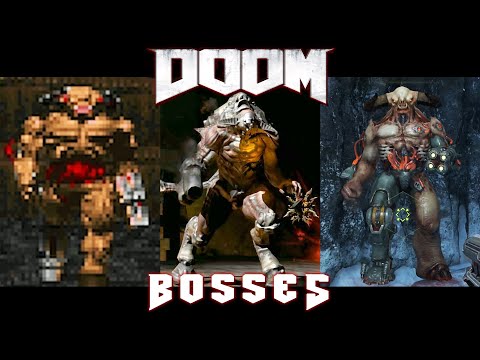
DOOM's Boss Arsenal: Every Fiend from 1993 to Eternal's Fury

What’s up, fellow slayers! Ever wondered just how many grotesque, soul-crushing bosses the DOOM franchise has thrown at us since its inception? From the pixelated nightmares of the 90s to the hyper-violent ballet of *DOOM Eternal*, we've been on a relentless mission to chainsaw, BFG, and shotgun our way through Hell itself. This isn't just a kill count; it's a deep dive into the evolution of DOOM's most formidable foes. Get ready, because we're about to revisit every single boss encounter that has tested our skills and sanity across the entirety of the main shooter series.

DOOM (1993): The Genesis of Boss Fights

The OG. When you think of DOOM, you think of the UAC bases overrun by demons. But who stands at the top of that infernal food chain? The first true boss encounter was the **Baron of Hell** in Episode 1. While later games would introduce more elaborate boss mechanics, the Baron’s sheer aggression and powerful projectiles made it a significant hurdle. Then came **Sargassos** in Episode 2, a hulking demon that required strategic use of the environment and heavy weaponry. But the true final challenge of the original *DOOM* was **The Spider Mastermind** in Episode 3. This massive, cybernetic arachnid spitting projectiles was the ultimate gatekeeper, forcing players to master movement and weapon switching to survive. These early bosses established the core DNA of what a DOOM boss should be: a test of endurance and raw firepower.
The sheer impact of these encounters in 1993 cannot be overstated. They were the defining moments that separated casual play from true demon-slaying mastery.

DOOM II: Hell on Earth: More Demons, Bigger Threats

id Software cranked up the difficulty and the demonic presence in *DOOM II*. We saw the return of familiar faces, but the new additions were truly terrifying. The **Hell Knight** became a common, yet still dangerous, mid-tier enemy. However, the true star of *DOOM II*'s boss roster was the **Cyberdemon**. This resurrected demon, now augmented with mechanical parts and wielding a rocket launcher arm, was a relentless force. Its sheer size and devastating attacks made it arguably the most iconic boss fight of the original saga. Fighting it in tight corridors, trying to dodge its rockets while landing headshots with the Super Shotgun, was peak DOOM. Unlike the original, *DOOM II* didn't feature as many distinct "final" boss encounters per episode, opting instead for a more continuous onslaught where bosses like the Cyberdemon and the ubiquitous **Baron of Hell** served as recurring major threats.

DOOM 64: The N64's Dark Lord

id Software and Midway took DOOM to a darker, more atmospheric place with *DOOM 64*. This title introduced a unique boss progression. While many enemies returned, the bosses felt more integrated into the unsettling atmosphere. The **Mother Demon**, for instance, was a grotesque, multi-stage encounter that felt truly alien and terrifying. The true culmination of *DOOM 64*'s challenge arrived with **The Chaos** – essentially a souped-up Cyberdemon, but with a more menacing design and relentless attack patterns that leveraged the N64's capabilities. The final boss, **The Unholy Triad**, presented a unique three-headed Cerberus-like demon that required precise targeting and constant evasion, offering a distinct challenge compared to its PC predecessors. This game proved that boss design could evolve beyond pure firepower, incorporating environmental hazards and unique attack phases.

DOOM 3: A Horror Reimagining

*DOOM 3* took a sharp turn, leaning heavily into survival horror. The bosses reflected this shift, becoming more about atmosphere and limited resources than straightforward slugfests. The **Helltime**, a grotesque amalgamation of bodies, served as a formidable early boss. The **Cyberdemon** returned, reimagined as a hulking, terrifying beast in a claustrophobic arena, forcing players to manage ammo and health carefully. But the most memorable boss fight in *DOOM 3* was arguably **Sarge**. This possessed Marine was a jarring, personal encounter, a dark reflection of the player's own struggle. The expansion, *Resurrection of Evil*, introduced the **Shadow**, a spectral boss that required using a special weapon to make it corporeal before it could be damaged, showcasing a more tactical approach to boss encounters.
The horror elements in DOOM 3 meant bosses weren't just bullet sponges; they were psychological trials that amplified the game's dread.

DOOM (2016): The Slayer's Glorious Return

*DOOM (2016)* brought the franchise roaring back with the speed and brutality fans remembered. The boss design was revitalized, blending classic elements with modern mechanics. The **Wretch**, a smaller demon tormenting Hell Knights, was an interesting early encounter. Then came the **Hell Guards**, a trio of heavily armored demons requiring precise **Glory Kills** to expose weak points. The **Cyberdemon** made another spectacular return, a true behemoth that demanded mastery of the new combat loop – dash, shoot, glory kill, repeat. But the ultimate test was **Olivia Pierce**, the possessed Argent D'Nur leader, a spectacular, multi-phase battle that served as the ultimate payoff. This game truly embraced the "combat puzzle" aspect of boss fights, rewarding aggression and strategic use of the entire arsenal. Finding the right **strats** for these encounters was key to achieving a good **PB**.

DOOM Eternal: The Ultimate Test of Skill

If *DOOM (2016)* was a comeback, *DOOM Eternal* was a full-blown demonic invasion of pure skill-based combat. The boss encounters were elevated to an art form, each demanding a unique approach and perfect execution. Early on, you face the **Doom Hunter**, a challenging duo requiring you to prioritize their shields and ranged attacks. The **Marauder** became infamous, a duel of parries and precise shots that tested players like never before – a true test of reflexes and timing, often seen as a mini-boss that could ruin a speedrun attempt if not handled correctly. Then there's the **Gladiator**, a brutal, multi-phase fight that requires perfect timing on dodges and targeted attacks. Finally, the ultimate boss: **The Khan Maykr**. This celestial being offered a massive, arena-spanning battle that incorporated aerial combat and resource management on an epic scale. *DOOM Eternal* truly redefined what a boss fight could be in a first-person shooter.
Mastering the Marauder is essential for any serious speedrunner aiming for a good PB or WR in DOOM Eternal. His timing is everything!

The Ancient Gods DLC: Pushing the Limits

The expansions for *DOOM Eternal*, *The Ancient Gods – Part One* and *Part Two*, didn't just add new levels; they introduced some of the most challenging boss encounters yet. *Part One* brought us **The World Spear**, a colossal serpentine entity, and the **Samur Maykr**, a celestial being with formidable powers. *Part Two* culminated in the epic confrontation with **The Khan Maykr** and, most significantly, the return of the **Serpent Hunter**, offering a final, brutal test of the Slayer's mastery. These DLC bosses were designed to push even experienced players to their limits, requiring refined **strats** and perfect execution, especially for those attempting low-health runs or speed completions. The enemy updates in 2021 provided crucial insights for tackling these final challenges.

(Enemy-Updates 2021 for "The Ancient Gods"-DLCs: https://youtu.be/Dq1ScHLB_wE https://youtu.be/tUk3imchjP0)

From the iconic Cyberdemon to the deceptively difficult Marauder, DOOM's bosses have always been central to its identity. Each iteration has offered unique challenges, forcing players to adapt, learn patterns, and ultimately, unleash hell. Whether you're a casual player or a dedicated speedrunner chasing that perfect #WR, these encounters are what make the DOOM series legendary.

Frequently Asked Questions

What is the hardest boss in DOOM history?

This is subjective and depends on the player's skill level and playstyle. However, many speedrunners and players consider the **Marauder** in DOOM Eternal to be one of the most challenging due to its strict timing requirements and unforgiving attack patterns. The Cyberdemon and Khan Maykr also rank high for many.

Are the DOOM RPG games considered part of the main boss progression?

No, the DOOM RPG titles for mobile devices feature turn-based combat and are generally not included when discussing the main boss encounters of the shooter series. Their gameplay mechanics differ significantly from the core franchise.

Which boss appears most frequently across the DOOM games?

The **Cyberdemon** and the **Baron of Hell** are the most iconic and frequently appearing major demonic threats throughout the DOOM franchise, acting as recurring boss encounters or elite enemies.

How do speedrunners approach DOOM bosses?

Speedrunners develop highly optimized strategies, often called 'strats', for each boss. This involves precise movement, optimal weapon switching, exploiting AI behavior, and sometimes specific item usage or environmental interactions to defeat bosses as quickly as possible, aiming for a new PB or #WR.

Did we miss any boss that you think deserves a spot on this list? Which demonic foe gave you the most trouble? Let us know in the comments below! Join our Discord channel to discuss strategies, share your best runs, and connect with fellow demon-slayers!

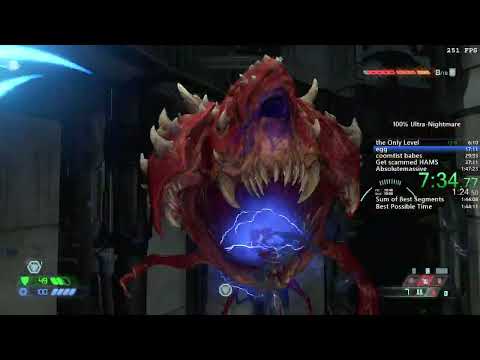
DOOM Eternal WR Shattered: 1:46:39 on 100% Ultra-Nightmare (Restricted)

The world of DOOM Eternal speedrunning has a new king! A blistering 1:46:39 has been achieved in the 100% Ultra-Nightmare Restricted category, etching a new **WR** into the annals of demon-slaying glory. This run isn't just about beating the game; it's about mastering its deepest mechanics, pushing the limits of what's possible, and doing it all under the intense pressure of the highest difficulty. Welcome, fellow Slayers and speedrunning enthusiasts, to GamingSpeedrun.com, your ultimate hub for all things **speedrun** and hardcore gaming. If you're here, you're likely as captivated by the sheer audacity of this **WR** as we are. This new record represents countless hours of practice, intricate **strats**, and a deep understanding of every single encounter DOOM Eternal throws at you.

Welcome, Slayer!

Hello and welcome to GamingSpeedrun! You're witnessing the culmination of extreme dedication: a new World **Record** for DOOM Eternal in the 100% Ultra-Nightmare Restricted category, clocking in at a staggering 1:46:39. This is more than just a **PB**; it's a testament to the relentless pursuit of perfection in one of the most demanding games available on **PC**, **Xbox**, and **Playstation**.
This run pushes the boundaries of what we thought was humanly possible in DOOM Eternal. The precision required is simply mind-boggling.
As the most complete and updated gaming blog on the internet, we aim to bring you the raw, unfiltered passion of the **gaming** community. Whether you're a seasoned speedrunner aiming for your own **WR** or a curious observer, this **record** offers a fascinating glimpse into the extreme end of **speedrunning** and **gaming**.

The Run: Segment by Segment

Breaking down a run of this caliber is essential to understanding the sheer skill involved. Here’s a look at the segment timings that led to this incredible new **WR**:
  • 00:00 - Hell on Earth
  • 08:51 - Exultia
  • 20:09 - Cultist Base
  • 33:14 - Doom Hunter Base
  • 40:41 - Super Gore Nest
  • 54:19 - Arc Complex
  • 1:06:57 - Mars Core
  • 1:15:42 - Sentinel Prime
  • 1:19:03 - Taras Nabad
  • 1:31:47 - Nekravol
  • 1:37:45 - Nekravol Part 2
  • 1:45:20 - Urdak
  • 1:53:50 - Final Sin
Each segment is a masterclass in combat efficiency, resource management, and precise movement. The journey from "Hell on Earth" to "Final Sin" is fraught with peril, and shaving off even milliseconds in each area is a monumental task.

Understanding "Restricted"

A common question that arises with this particular **record** is: "What does 'Restricted' mean?" In the context of DOOM Eternal speedrunning, the "Restricted" category often implies a specific set of rules that limit certain actions, glitches, or equipment. It’s crucial to consult the official leaderboards for the precise definition.
The 'Restricted' tag is vital. It ensures a level playing field and highlights different aspects of skill, often focusing on pure gameplay mastery rather than exploit execution. You can find more information on what 'restricted' means by viewing the rules on speedrun.com.
For this specific **WR**, the "Restricted" designation likely pertains to a set of rules that prevent certain advanced glitches or sequence breaks, forcing the runner to engage with the game’s intended mechanics and combat loops more directly. This often makes the **speedrun** even more impressive, as it relies purely on execution and knowledge.

Key Strategies and Techniques

Achieving a 100% completion on Ultra-Nightmare is already a monumental feat. Doing it under the constraints of a **speedrun** and a "Restricted" category requires an intimate knowledge of the game's AI, enemy patterns, and level design. Here are some elements that are crucial for runs like this:
  • Combat Efficiency: Mastering the "Doom Dance" is non-negotiable. This involves rapid weapon switching, utilizing equipment like the Flame Belch and Ice Bomb for resources, and precise Glory Kill timing to maintain invulnerability frames and health/ammo.
  • Movement Tech: Advanced movement, including flame-dash cancels, precise platforming, and optimal use of the monkey bars, is critical to maintaining speed and avoiding damage.
  • Resource Management: Knowing exactly when and where to find ammo, health, and armor is paramount. On Ultra-Nightmare, mistakes are unforgiving, and running dry on resources can mean the end of a **PB**.
  • Glitch Exploitation (within restrictions): Even in "Restricted" categories, some minor sequence breaks or AI manipulations might be permitted. Identifying and executing these flawlessly is key to gaining precious seconds. For instance, understanding enemy AI and how to manipulate their pathing can save significant time in combat encounters.
  • RNG Manipulation: While difficult to control, understanding and sometimes subtly influencing **RNG** (Random Number Generation) for things like enemy spawns or item drops can make a difference.
We don't talk about Arc Complex in the same way after seeing this run; the player's mastery over that challenging level is simply breathtaking. It's a prime example of how intricate **strats** and perfect execution can redefine what's possible.

Impact on the DOOM Speedrunning Community

New **WR**s like this don't just represent a personal achievement; they galvanize the entire **gaming** community. This run sets a new benchmark, inspiring other runners to refine their own **strats**, discover new tricks, and push their limits. The **speedrunning** scene for DOOM Eternal is incredibly active, with runners constantly experimenting and sharing knowledge on platforms like Discord and **streaming** sites. A **WR** like this often leads to a flurry of activity as the community dissects the run, learns from it, and attempts to replicate or even surpass it. It's a thrilling cycle of innovation and competition that keeps the **#speedrun** community vibrant and exciting. This new record is a beacon for all aspiring **speedrunners** out there, proving that with enough dedication and skill, the impossible can become the new standard. This is what **POG** moments are made of!

Frequently Asked Questions

Q1: What is the difference between this WR and a standard 100% Ultra-Nightmare run?
A1: The "Restricted" tag typically means certain glitches, exploits, or methods of gameplay are disallowed according to specific community rules. This forces runners to rely more on pure skill, combat prowess, and intended game mechanics.

Q2: How long did the runner train for this specific record?
A2: While we don't have exact figures for this particular run, achieving a World **Record** of this magnitude usually requires thousands of hours of dedicated practice over months, if not years.

Q3: Where can I find the official leaderboards for DOOM Eternal speedruns?
A3: The primary resource for official speedrun leaderboards is speedrun.com. You can find the DOOM Eternal page there to see all categories, records, and rules.

Q4: Is Ultra-Nightmare difficulty permanently unlocked after this run?
A4: Ultra-Nightmare difficulty is typically unlocked after completing the game on Nightmare difficulty. Achieving this **WR** implies the runner has already mastered the game at its highest base difficulty.

Q5: What is the significance of a "Restricted" category in speedrunning?
A5: Restricted categories aim to focus on specific aspects of a game's design or player skill. They often serve to exclude "game-breaking" glitches or exploits, leading to runs that feel more like a traditional playthrough but executed at extreme speeds and efficiency.

In conclusion, this new **WR** of 1:46:39 in DOOM Eternal's 100% Ultra-Nightmare Restricted category is a monumental achievement. It showcases the pinnacle of skill, dedication, and strategic thinking in the **speedrunning** world. For anyone passionate about **gaming**, this run is a must-watch, a source of inspiration, and a reminder of the incredible feats players can accomplish. What are your thoughts on this new **WR**? Did you expect a new record to be set so soon? Join the discussion in the comments below or head over to our Discord channel to connect with fellow gamers and speedrunners! Your passion fuels our content.

Top 5 Speedrunning Moments of 2020: A Deep Dive into Record-Breaking Feats

Hey there, fellow speed demons and gaming fanatics! Welcome back to GamingSpeedrun.com. As the calendar flipped on 2020, the speedrunning world was absolutely on fire. Records were not just being broken; they were being obliterated. But what exactly fueled this incredible year? Was it a revolutionary new strategy, some mind-bending glitches that redefined gameplay, or simply the relentless pursuit of perfection by elite speedrunners? Today, we're diving deep into the moments that truly defined 2020 for speedrunning, celebrating the ingenuity and sheer grit that pushes the limits of our favorite games.

Iconic Speedrunning Moment Montage 2020

1. The Glitch That Broke the Game: Doom Eternal's Unforeseen Skips

2020 was undeniably the year Doom Eternal truly ascended in the speedrunning hierarchy. While the game itself is a masterpiece of high-octane combat, it was the discovery of intricate, often unforeseen, exploits that sent its speedruns into overdrive. The community was electrified by new game-breaking glitches that allowed runners to bypass entire levels, leading to jaw-dropping time saves. Elite runners, like the incredibly skilled Xiae, showcased absolute mastery of movement tech and pixel-perfect inputs. These weren't just simple skips; they were elegant ways of exploiting the game's engine, a testament to the deep understanding of its mechanics by the speedrunning community. The sheer creativity in finding and weaponizing these bugs cemented Doom Eternal as a must-watch title for any gamer.

The discovery of certain 'out of bounds' techniques in Doom Eternal didn't just save seconds; they fundamentally changed the perception of how the game could be completed.

What was truly amazing was how quickly the community rallied. What might have started as a fluke quickly became a meticulously practiced speedrunning strategy, demanding split-second timing and near-perfect execution. Watching runners like Xiae navigate levels in ways the developers never intended is a prime example of the persistent, inventive spirit of speedrunning.

2. A Masterclass in Precision: Super Metroid's Near-Perfect Run

When you talk about speedrunning legends, Super Metroid is always at the forefront. In 2020, we were treated to performances that reminded us why this SNES classic remains a staple. Runners such as Zoast displayed a level of execution that was simply breathtaking. These runs often prioritize flawless routing and perfected movement tech like "bomb jumps" and "wall jumps" over game-breaking exploits. Incredible RNG manipulation was also key. The dedication to shaving off milliseconds, frame by frame, is what makes these feats so awe-inspiring. A single mistimed jump or an unlucky enemy spawn can derail an entire run, making the difference between a new PB and a failed attempt. Zoast's performances often felt like watching a perfectly choreographed ballet, each action honed for maximum efficiency.

The enduring magic of Super Metroid speedruns comes from the pure skill they demand. Unlike games ripe for glitch exploitation, success here hinges on mastering Samus Aran's physics and abilities. Decades of research have gone into optimizing routes, and 2020 delivered some of the cleanest, most polished runs yet. It’s a beautiful demonstration of how a beloved classic can still offer thrilling challenges and unforgettable performances.

3. The Legend of Zelda: Ocarina of Time's Consistent Dominance

The Legend of Zelda: Ocarina of Time has long been a titan of the speedrunning world, and 2020 was no different. The Any% category, in particular, continued its evolution with runners like Amateseru pushing the boundaries of what's possible. This game is notorious for its complex array of glitches, most famously the "Wrong Warp" and "arbitrary code execution" (ACE) exploits. These allow players to skip vast portions of the game, leading to mind-boggling finishes. The ACE runs from 2020 were truly groundbreaking, showcasing an almost unbelievable grasp of the game's memory manipulation. It’s a level of technical expertise that feels like pure magic, enabling runners to essentially trigger the end credits on demand.

The depth of discovered glitches in Ocarina of Time is so profound that new categories and strategies are still being explored years later, keeping the game eternally fresh for speedrunners.

While the glitches are a massive draw, the sheer precision needed to execute them flawlessly is still immense. The community continuously refines the setup for these ACE strategies, transforming what looks like pure chaos into a predictable, albeit incredibly intricate, sequence. Witnessing these runs feels like watching a high-stakes chess match, where every move is meticulously calculated to exploit the game's deepest secrets.

4. Super Mario 64: The Endless Pursuit of Perfection

Ah, Super Mario 64. The progenitor of 3D speedruns, this game remains a proving ground for the most dedicated runners out there. Throughout 2020, we saw incredible performances across its many categories, from the demanding 120-star challenges to the more specialized Any% Glitchless and Random Seed Glitchless (RSG) routes. The quest for perfection in SM64 is a never-ending journey. Runners like Dwhatever, Akki, Simply, and Cheese constantly pushed the limits, shaving off fractions of seconds and perfecting fundamental movement techniques. The iconic "triple jump," "long jump," and the legendary "BLJ" (Backwards Long Jump), which continues to be a vital part of many Any% strategies, are just a few examples of the mastery involved.

The collective knowledge within the Super Mario 64 speedrunning community is truly staggering. Years of intense research have been poured into understanding every minute detail of Mario's physics and the game's level design. Even with established routes, runners are perpetually seeking out the tiniest optimizations. The sheer number of world-record-breaking attempts and achievements in 2020 for this title is a testament to its enduring legacy and the passion of its dedicated player base. It’s a game that rewards unwavering dedication like few others.

5. Unexpected Breakthroughs: The Surprises of 2020

While perennial favorites like Doom Eternal, Super Metroid, Ocarina of Time, and Super Mario 64 consistently deliver thrilling moments, 2020 also saw some unexpected games and rising stars capture the speedrunning spotlight. Perhaps a challenging indie title was finally conquered, or an older favorite experienced a resurgence thanks to an innovative new strategy. For instance, the exceptional runs in games like Runway Agent, pioneered by runners like Eric Bergmann, showcased a different kind of challenge, blending precise platforming with clever puzzle-solving. These moments are vital because they highlight the ever-expanding universe of speedrunning, constantly proving there's always a new frontier to explore and new legends waiting to emerge. While specific "dark horse" instances can vary, the thrill of discovery and witnessing less-common games reach new speedrunning heights is always a highlight of any year.

Frequently Asked Questions

What's the difference between Any% and 100% speedruns?

Any% focuses on finishing the game as quickly as possible, allowing any glitches or exploits. 100% usually requires collecting every item, completing all missions, or reaching a specific game completion percentage before ending, which typically results in much longer runs.

What is RNG and why is it crucial in speedrunning?

RNG stands for Random Number Generator. It governs random elements in games, such as enemy placement, loot drops, or critical hit probabilities. Speedrunners aim to manipulate or benefit from favorable RNG outcomes, as a lucky sequence can significantly reduce run times.

What constitutes a 'glitch' in the context of speedrunning?

A glitch is an unintended bug within a game's code that players can exploit. Speedrunners leverage these glitches to skip levels, bypass challenges, or speed up completion. However, certain categories, like "glitchless" runs, explicitly prohibit their use.

How do speedrunners typically practice?

Practice involves segmenting runs, drilling specific tricks or glitches repeatedly, studying optimal routes used by other players, and conducting full run attempts to build stamina and consistency. Many utilize tools like save states or specialized practice ROMs.

What defines a World Record (WR)?

A World Record (WR) signifies the fastest time ever officially achieved for completing a specific game or category within the speedrunning community. These records are generally verified by community moderators and meticulously tracked on dedicated platforms like speedrun.com.

2020 was an unforgettable year for the speedrunning community, showcasing the incredible talent and innovation thriving within the gaming world. From the mind-bending glitches in Doom Eternal to the timeless precision of Super Metroid, and the continually evolving landscapes of Super Mario 64 and Ocarina of Time, these moments were more than just about finishing games quickly. They were about shattering perceived limits, both mechanically and creatively. What were your standout speedrunning moments from 2020? Did we miss any epic runs? Drop your thoughts and your own speedrunning triumphs in the comments below! And for more in-depth strategy discussions and to connect with fellow speedrunning enthusiasts, join our Discord server!

Los 5 Récords Mundiales de Speedrun que DESTRUYERON 2020: Análisis a Fondo

Los 5 Récords Mundiales de Speedrun que DESTRUYERON 2020: Análisis a Fondo

Análisis de los 5 momentos más épicos de speedrunning del año 2020
¿Alguna vez has sentido esa descarga de adrenalina al ver a un speedrunner ejecutar una serie de movimientos frame perfect que desafían la lógica? Ese instante en que sabes que estás presenciando historia, donde años de práctica, estudio de mecánicas y una pizca de bendición del RNG se alinean para pulverizar un récord que parecía intocable. El año 2020 fue una auténtica locura para la Gaming Community, un período en el que las barreras cayeron una tras otra. Como veteranos de incontables horas frente a la pantalla, sabemos que no buscas una simple lista. Buscas la historia detrás del cronómetro. Quieres entender la estrategia, el glitch que lo cambió todo y la presión inhumana que soportaron estos titanes. Prepárate, porque vamos a desglosar los cinco momentos que no solo definieron el speedrunning de 2020, sino que reescribieron las reglas de lo posible.

1. Doom Eternal y el Baile Demoníaco de Xiae

Cuando Doom Eternal irrumpió en la escena, todos sabíamos que su speedrun sería un espectáculo de agresión y precisión. Pero nadie estaba preparado para lo que Xiae nos mostraría. En un juego diseñado para ser rápido, Xiae encontró un nuevo nivel de velocidad, transformando el combate en un ballet mortal.

La Estrategia: Agresión Pura y "Meat Hook" Demente

El meta inicial de Doom Eternal se centraba en la supervivencia y el uso cauteloso de recursos. Xiae tiró ese manual a la basura. Su enfoque se basó en una premisa: el enemigo no puede matarte si ya está muerto.
  • Weapon Swapping (Cambio Rápido de Armas): Llevó la cancelación de animaciones a un nivel artístico, combinando la Super Shotgun, la Balista y el Lanzacohetes con una velocidad sobrehumana para maximizar el DPS.
  • Dominio del "Meat Hook": El gancho de la Super Shotgun no era solo para acercarse; se convirtió en una herramienta de momentum. Xiae lo usaba para lanzarse por los escenarios a velocidades que los desarrolladores jamás imaginaron, ejecutando skips que rompían por completo la secuencia de los niveles.
  • Ruteo Agresivo: En lugar de limpiar áreas, su ruta se optimizó para eliminar solo a los demonios clave necesarios para progresar, ignorando amenazas y gestionando su salud y munición al límite absoluto.
La run de Xiae no fue solo jugar rápido; fue una declaración de intenciones. Demostró que el límite de habilidad en Doom Eternal estaba mucho más allá de lo que cualquiera había soñado.
El world record de Xiae en la categoría Any% no fue solo un tiempo; fue una clase magistral que definió el futuro del gameplay competitivo del juego. Puedes ver su legendaria run en su canal de YouTube.

2. Super Metroid: Zoast y el Muro de los 26 Minutos

Super Metroid es uno de los pilares de la comunidad de speedrunning. Durante años, la barrera de los 27 minutos en la categoría Any% parecía una muralla de titanio. Muchos lo intentaron, pero solo los más grandes se acercaban. Y entonces, llegó Zoast.

El Desglose del Récord

Conseguir un tiempo sub-27 no dependía de un nuevo glitch revolucionario, sino de una ejecución casi perfecta de estrategias increíblemente difíciles y una gestión de RNG que rozaba la clarividencia.
  • Mockball y Wall-Jumps Perfectos: La precisión de Zoast en técnicas fundamentales como el Mockball para atravesar pasillos a alta velocidad fue simplemente de otro nivel.
  • Kraid Rápido y Consistente: La pelea contra Kraid puede ser un "run killer" por su dependencia del RNG. Zoast no solo consiguió el patrón rápido, sino que lo ejecutó sin un solo error, ahorrando segundos vitales.
  • El "Crystal Flash" Skip: Uno de los momentos más tensos fue su decisión de saltarse un "Crystal Flash" (una técnica para recuperar vida a cambio de munición), apostando a que podría sobrevivir secciones posteriores con muy poca salud. Una apuesta que valió un WR.
La run de Zoast, que finalmente rompió la barrera con un impresionante 26:57 (en tiempo de juego), fue un testamento a la perseverancia. Fue la culminación de miles de intentos y un profundo entendimiento de un juego con más de 25 años de historia. La comunidad entera celebró este hito, consolidando a Zoast como una leyenda. Para ver los detalles, los leaderboards de Super Metroid en speedrun.com son un recurso invaluable.

3. Ocarina of Time Any%: Amaterasu Toca el Santo Grial

Hablar de Ocarina of Time en speedrunning es hablar de una historia de glitches y descubrimientos que han roto el juego de formas inimaginables. La categoría Any% es la más salvaje de todas, permitiendo un glitch conocido como Arbitrary Code Execution (ACE), que básicamente permite a los jugadores reescribir la memoria del juego para saltar directamente a los créditos.

El "Stale Reference Manipulation" y los 7 Minutos

Durante mucho tiempo, la barrera de los 8 minutos parecía el límite humano. Pero la comunidad, incansable, descubrió una nueva técnica: Stale Reference Manipulation (SRM). Esta técnica, increíblemente compleja, permitía un control más preciso y rápido para configurar el ACE. El runner japonés Amaterasu fue quien perfeccionó esta nueva ruta. Su run de 7 minutos y 49 segundos fue una locura. Exigía una serie de inputs frame perfect desde el mismísimo inicio en el Bosque Kokiri.
Un solo error en los primeros 30 segundos, un ángulo incorrecto al hablar con un NPC, y la run estaba muerta. La presión era máxima desde el frame uno.
Este récord no solo fue un logro personal para Amaterasu, sino el clímax de años de investigación por parte de toda la ComunidadDeJugadores de Zelda. Fue la prueba de que, incluso en un juego tan estudiado como Ocarina of Time, siempre hay nuevas barreras que romper.

4. Runway Agent: La Joya Oculta y la Ejecución Perfecta

No todos los grandes momentos provienen de juegos AAA. A veces, las hazañas más impresionantes ocurren en los rincones más oscuros del gaming. Este es el caso de Runway Agent, un juego de PC poco conocido, y la increíble run de Eric "Omnigamer" Bergmann.

¿Por qué fue tan especial?

Este juego es un infierno de RNG. Prácticamente todo, desde el comportamiento de los enemigos hasta la aparición de objetos, es aleatorio. Esto hace que una speedrun consistente sea casi imposible. El récord de Omnigamer no se basó en un nuevo skip, sino en:
  • Adaptación en tiempo real: Su habilidad para reaccionar a patrones de RNG desfavorables y adaptar su estrategia sobre la marcha fue magistral.
  • Manipulación del RNG: A través de movimientos sutiles y precisos, logró influir en el generador de números aleatorios del juego para forzar resultados favorables, una técnica que requiere un conocimiento casi académico del código del juego.
  • Ejecución bajo presión: Logró encadenar una serie de eventos de baja probabilidad en una sola run, algo que estadísticamente era casi un milagro.
Este récord es un recordatorio de que el espíritu del speedrunning vive en cada juego, sin importar su popularidad. Es la celebración de la maestría y la dedicación a una causa, un verdadero logro para los puristas de la disciplina.

5. Super Mario 64: La Guerra de las 120 Estrellas

Si 2020 tuvo un campo de batalla principal, ese fue Super Mario 64, específicamente en la prestigiosa categoría 120 Star. Esta categoría es un maratón de habilidad, consistencia y optimización. Durante meses, la cima del leaderboard fue un auténtico hervidero de talento, con el récord mundial cambiando de manos constantemente.

Los Titanes: Cheese, Dwhatever, Akki y Simply

El récord mundial no fue derribado por una persona, sino por una comunidad entera que se empujaba mutuamente hacia la perfección.
  • La barrera de 1:38: Durante mucho tiempo, bajar de 1 hora y 38 minutos parecía el objetivo final. Varios runners como Akki y Simply intercambiaron golpes, rebajando el récord segundo a segundo.
  • Nuevas Estrategias (Strats): Se descubrieron y optimizaron nuevas rutas para estrellas específicas, como la famosa "Moat Door Skip" o nuevas formas de abordar "Rainbow Ride". Cada segundo ahorrado era el resultado de cientos de horas de trabajo colectivo.
  • El "Choke" y la Gloria: Vimos momentos de tensión extrema, con runners perdiendo récords mundiales en la última estrella (un "choke" dolorosísimo) y otros logrando su PB (Personal Best) con una ejecución perfecta en la batalla final contra Bowser.
  • El Ascenso de Cheese: Finalmente, fue el runner Cheese05 quien, tras una batalla épica, logró consolidar el récord con una run espectacular que dejó a toda la comunidad de Twitch boquiabierta.
La competición en SuperMario64 en 2020 fue la definición de una batalla épica. Demostró que incluso en el juego más "solucionado" de la historia del speedrunning, siempre hay espacio para la innovación y la superación humana.

Conclusión: El Legado de un Año Legendario

El año 2020 no será recordado solo por sus desafíos, sino por ser un período dorado para la ComunidadGamer y el speedrunning. Estos cinco momentos son solo la punta del iceberg de un año lleno de World Records, hazañas increíbles y, sobre todo, una pasión inquebrantable por llevar los videojuegos al límite absoluto. Cada uno de estos récords cuenta una historia de dedicación, innovación y espíritu competitivo. Nos recuerdan por qué amamos esta disciplina: no se trata solo de terminar un juego rápido, se trata de dominarlo hasta sus cimientos y compartir esa maestría con el mundo. Y ahora te toca a ti, runner. ¿Cuál fue tu momento favorito de 2020? ¿Qué récord te dejó sin aliento? ¡Comparte tus momentos más épicos en los comentarios y únete a nuestro Discord para seguir discutiendo las mejores estrategias y los récords más salvajes!

Preguntas Frecuentes

1. ¿Qué es exactamente un speedrun?

Un speedrun es el acto de completar un videojuego, o una sección de él, en el menor tiempo posible. Existen diferentes categorías, como Any% (terminar el juego por cualquier medio, usualmente usando glitches) o 100% (completar todo el contenido del juego).

2. ¿Usar glitches en un speedrun no es hacer trampa?

No se considera trampa si la categoría del speedrun lo permite. La comunidad establece reglas claras para cada categoría. Las categorías "Glitchless" prohíben explícitamente el uso de errores del juego, mientras que otras como Any% a menudo los fomentan como parte de la estrategia para ahorrar tiempo.

3. ¿Qué significa "RNG" en el mundo del gaming?

RNG son las siglas de "Random Number Generator" (Generador de Números Aleatorios). Es el elemento de azar en un juego, como el comportamiento de un enemigo, los objetos que suelta o los patrones de ataque de un jefe. Un buen RNG puede hacer una run mucho más fácil, mientras que un mal RNG puede arruinar un intento de récord mundial.

4. ¿Cómo se verifican los récords mundiales de speedrunning?

La mayoría de los récords mundiales se envían a sitios web de la comunidad como speedrun.com. Los envíos deben incluir una grabación de video completa de la partida. Un equipo de moderadores y verificadores, expertos en el juego, revisa el video para asegurarse de que se siguieron todas las reglas de la categoría y que no se usaron trampas externas (como herramientas de software o empalme de video).

Doom Eternal: Sub-2:23 Ultra-Nightmare 100% Speedrun - A Masterclass in Precision

Introduction: The Grind for Perfection

It’s been a whirlwind couple of months since the last major push, but the siren call of a refined route in Doom Eternal's 100% Ultra-Nightmare category was too strong to ignore. This latest run, clocking in at an astonishing 2:22:11, isn't just about shaving off a few minutes; it's a testament to relentless optimization and deep game knowledge. While it’s only a 15-minute improvement over the previous benchmark, the journey involved tweaking strategies that I believe bring us closer to the theoretical sub-2:20, and even flirt with the legendary sub-2:17:11 Doom 2016 record held by ByteMe. The irony of Eternal potentially out-pacing its predecessor is a delicious thought!

I’ve temporarily shelved other challenge runs for now, as the mental and physical toll was becoming too much. The focus shifted back to this beast of a category, aiming to surpass my own 2:25 any% UNM time from three months prior. This is where the true dedication to the grind, the kind that defines #speedrunning, really shines through.

Defining the 100% Ultra-Nightmare Challenge

For the uninitiated, achieving 100% in Doom Eternal Ultra-Nightmare is no small feat. It encompasses:

  • Acquiring all weapons and fully upgrading them.
  • Collecting every Sentinel Crystal and Weapon Point.
  • Gathering all Tokens and various collectibles scattered across the meticulously designed levels.
  • Unlocking everything within the Fortress of Doom.
  • Completing all Codex entries.

Successfully navigating these requirements leaves the player with specific resources: 8 Weapon Points, 15 Tokens, 4 Batteries, and a clean Codex with no remaining ??? entries, as confirmed post-Icon of Sin. My personal restrictions, honed over countless hours, are crucial to maintaining the integrity of this #speedrun:

  • No intentional major glitches: This primarily excludes out-of-bounds exploits that bypass intended level progression.
  • No external aids: Scripts, macros, or any form of cheating are strictly forbidden.
  • Vanilla gameplay: Utilizing the console for rebinding keys (like mousewheel jump) is disallowed.
  • Crash tolerance: While I don't seek them out, a run isn't invalidated by a crash unless it occurs at critical low health in a dangerous position or provides a clear, unintended advantage. For the record, a crash did occur during loading on Cultist Base this time.

The in-game time for this phenomenal run stands at approximately 2:22:11, with a real-time of roughly 2:25:02.

Core Strategies and Route Optimizations

This run is built upon a foundation of aggressive routing and precise execution. Key optimizations include:

  • Fast Travel on ARC Complex: This crucial trick bypasses the lengthy turret elevator sections, saving invaluable seconds.
  • Fast Travel on Urdak: By utilizing fast travel here, we can skip a 30-second cutscene for the first ring and also bypass some smaller sections leading up to the second secret encounter.
  • BFG Usage: The BFG is strategically employed to clear out the initial fight in Urdak, making the first secret encounter more manageable and faster.
  • Destroyer Blade Proficiency: This weapon mod has proven incredibly effective and is now a core part of the damage rotation.
  • Heat Blast Priority: I’ve reverted to upgrading Heat Blast first, as the meticulous headshotting required for other strategies became too tedious for the consistency needed in a 100% run.

These aren't just minor tweaks; they represent a fundamental shift in how certain encounters and sections are approached, pushing the boundaries of what's considered optimal for this #worldrecord attempt.

The pursuit of perfection in Doom Eternal's 100% Ultra-Nightmare category is an exercise in pushing personal limits and mastering every pixel of the game's intricate design.

Level-by-Level Breakdown

Here’s a look at the split times for each major section of the run, showcasing the incredible pace maintained:

  • Hell on Earth: 0:00:31
  • Exultia: 0:08:49
  • Cultist Base: 0:23:40
  • DOOM Hunter Base: 0:41:04
  • Super Gore Nest: 0:51:42
  • ARC Complex: 1:05:37
  • Mars Core: 1:22:40
  • Sentinel Prime: 1:33:31
  • Taras Nabad: 1:37:28
  • Nekravol: 1:52:50
  • Nekravol – Part II: 2:00:16
  • Urdak: 2:07:08
  • Final Sin: 2:17:50

Conquering the Slayer Gates

The Slayer Gates are brutal gauntlets that demand peak performance. Here are the start times for each:

  • Slayer Gate 1: 0:17:43
  • Slayer Gate 2: 0:37:38
  • Slayer Gate 3: 1:00:57
  • Slayer Gate 4: 1:09:26
  • Slayer Gate 5: 1:30:57
  • Slayer Gate 6: 1:47:24

While not all gates were perfect – Slayer Gate 1 was rough, and Gate 3 abysmal – Gate 5 was a standout performance. The sheer consistency required across all these challenges is what makes a #PB like this so impressive.

Patch Notes and Their Impact

This record was set on version 1.0 of Doom Eternal. The current patch is 1.2, and the game is still receiving updates, making version choices a significant factor in the #speedrun community. While running on older patches can be advantageous, the long-term goal is to transition to the latest stable version once major updates cease. This ensures the record remains relevant for the game's final state.

With version 1.2, significant time loss is introduced primarily due to the Marauder ice bomb glitch being fixed, likely adding a couple of minutes back onto runs.

A small hope remains that id Software might one day allow skipping the battery insertion animation in the Fortress of Doom, offering a further speed boost.

Tales from the Brink: Near Misses and Resets

The path to a successful run is paved with failed attempts, each teaching valuable lessons. My last three attempts before this record were fraught with peril:

  1. The "Forgot Something" Run: As the Icon of Sin death cutscene played, the horrifying realization struck: I had forgotten an Elena log entry. A critical mistake at the worst possible moment.
  2. The "Close, But No Cigar" Run: With a significantly slower time, I decided to push through and finish the Icon of Sin. I destroyed 7 out of 8 body parts in the second phase, only to be taken out by a stray Lost Soul mere meters from a health pickup.
  3. This Record-Breaking Run: Even this successful attempt had its hairy moments. Initial attempts involved several resets on Hell on Earth, a forgotten item on DOOM Hunter Base, and a death on ARC Complex. However, my overall consistency has been solid.

There were other close calls, like a near-death experience at the start of ARC Complex and a dangerous moment in Slayer Gate 3 on Super Gore Nest. The two failed attempts preceding this one were around 2:28-2:29 RTA, making this run over 3 minutes faster, even with the game crash!

Additional Insights and Technicalities

A wealth of additional details, including insights into routing, weapon choices, and answers to frequently asked questions, can be found in a comprehensive pastebin document. These nuances are critical for understanding the depth of strategy involved.

Visually, the game is set to maximum/ultra-nightmare graphics, with a Field of View (FOV) set to 115. This provides the clearest possible view for split-second decisions.

Notable minor glitches or visual oddities encountered during attempts include:

  • A visual glitch on Taras Nabad when going too far above the map near the second Pain Elemental.
  • A momentary confusion regarding the correct glory kill side on Nekravol after a failed first attempt.
  • A planned skip after the Tyrant arena on Final Sin, which failed twice.

On a positive note, most Marauder encounters were dispatched quickly. The cutscene after the first Baron on Urdak was also peculiar, with no clear explanation for its behavior.

The pursuit of the perfect run is never truly over. Every attempt, successful or not, provides data for the next optimization.

A disappointing moment was failing the meathook skip at Mars Core for the first time in ages. Such is the nature of high-level #speedrunning on #pc; consistency is king, but even the best can falter.

Frequently Asked Questions

Q1: Why are you running on version 1.0 and not the latest patch (1.2)?
A: Version 1.0 offers faster times due to certain glitches and mechanics that are either fixed or altered in later patches, like the Marauder ice bomb exploit. While running the latest patch is ideal for future archival, current records often prioritize the fastest available version.

Q2: What are your graphics settings and FOV?
A: Graphics are maxed out at Ultra-Nightmare, and the Field of View (FOV) is set to 115 for maximum situational awareness.

Q3: What's the biggest time save you implemented in this route?
A: The fast travel optimizations on ARC Complex and Urdak are significant time savers, bypassing lengthy traversal sequences.

Q4: Is it possible to go even faster than 2:22:11 in 100% UNM?
A: Absolutely. Sub-2:20 is considered achievable with further optimization, and the ultimate dream remains to push towards the sub-2:17 mark, mirroring Doom 2016's WR.

Thanks for watching, and may your runs be swift and glitch-free! The Slayer’s path is demanding, but the rewards of pushing the limits are immense. If you enjoyed this breakdown or have insights of your own, drop a comment below and join our community on Discord to discuss all things #speedrun and #gaming!

Welcome to GamingSpeedrun.com, your hub for the most comprehensive and up-to-date gaming content on the internet. Follow us on social media and don't forget to visit our main page for more!