DOOM Eternal Any% Speedrun: The Ultimate Breakdown for Maximum Slayers

``` ```json { "@context": "https://schema.org", "@type": "BlogPosting", "headline": "DOOM Eternal Any% Speedrun: The Ultimate Breakdown for Maximum Slayers", "image": "https://img.youtube.com/vi/ASm42DNN4ds/hqdefault.jpg", "author": { "@type": "Person", "name": "The GamingSpeedrun Team" }, "publisher": { "@type": "Organization", "name": "GamingSpeedrun.com" }, "datePublished": "2023-10-27", "dateModified": "2023-10-27" } ``` ```html
Hey Slayer! Ever watched those insane speedruns of DOOM Eternal and thought, "How in the Nine Hells did they do that?" You've landed in the right place. The "Any%" category, meaning beating the game as fast as possible with no specific restrictions other than completing the main objective, is where pure skill and knowledge of the game's mechanics shine. This isn't just about pointing and shooting; it's about precision movement, exploiting every little quirk, and a dash of calculated risk. We're diving deep into the Any% speedrun of DOOM Eternal, breaking down the strategies that allow players like seeker to absolutely obliterate the game in record time. Get ready to learn the secrets behind those jaw-dropping runs.

What is Any% in DOOM Eternal?

In the world of speedrunning, "Any%" signifies the most straightforward objective: finish the game from start to finish using any means necessary. For DOOM Eternal, this means the Doom Slayer is unleashed with the sole purpose of ending the game as quickly as humanly possible. This category often involves the discovery and exploitation of glitches, sequence breaks, and highly optimized combat encounters. It's a testament to the community's deep understanding of the game's engine and design. Unlike categories like "100%," which require collecting every item and completing every objective, Any% prioritizes raw speed above all else. The current World Record is a prime example of this intense focus, showcasing a level of mastery that’s truly breathtaking.

Movement is Key: The Art of Slayer's Path

DOOM Eternal's incredible mobility toolkit is the foundation of its speedruns. Mastering the dash, double jump, dash-jumping, and wall climbing isn't just about survival; it's about shaving milliseconds off every transition. A good speedrunner uses movement to not only traverse the environment quickly but also to position themselves optimally for combat and to set up for specific skips. The idea is to maintain momentum at all times, flowing from one action to the next without any wasted input. Techniques like "wave dashing" (though less prevalent in DOOM Eternal compared to some other games, the principle of using animations to gain speed is there) and precise aerial control are paramount. Think of it as an intricate dance with the game's physics engine.
"In DOOM Eternal, movement isn't just about getting from A to B; it's an offensive weapon in itself. Every dash, every jump, is a chance to gain an advantage."

Combat Optimization: Shredding Through Demons

While Any% speedruns often focus on skipping combat where possible, DOOM Eternal's combat is so integral that many encounters are optimized for speed. This means knowing precisely which demons to target, in what order, and with which weapons to eliminate them as efficiently as possible. The goal isn't just to kill them, but to kill them *fast* while setting up for the next encounter or transition. This involves understanding enemy weak points, utilizing glory kills for ammo and health boosts, and chaining abilities to maximize damage output. A perfectly executed combat arena in a speedrun feels less like a struggle and more like a choreographed ballet of destruction. You'll see runners using the chainsaw not just for ammo, but for its quick animation and iframes, and specific weapon combos to instantly dispatch high-threat targets.

Weapon Swapping: The Symphony of Destruction

The DOOM Slayer has an arsenal at his disposal, and knowing how and when to switch between them is crucial for speed. This isn't just about picking the "best" weapon for a situation, but about the fastest way to deal damage. Many speedrunners employ a rapid weapon-swap technique, often called "weapon canceling" or "quick switching," to maximize DPS. For instance, firing a rocket and immediately switching to the shotgun to cancel the rocket's reload animation can lead to a significant damage-per-second increase. Understanding the damage output, firing rates, and reload times of each weapon, and how they synergize, is a deep dive into the game's combat mechanics. It's a rhythm game disguised as a shooter, and mastering it is key to shaving off those precious seconds.

Glitches and Skips: Breaking the Game (and Records)

This is where the "broken" aspect of DOOM Eternal speedruns truly comes into play. The Any% category often leverages glitches to bypass large sections of the game, reach areas out of bounds, or manipulate enemy AI. These are not just minor bugs; they are often carefully discovered and exploited techniques that drastically shorten the intended path. Examples might include: * **Out-of-Bounds (OOB) Exploits:** Finding ways to push the Slayer outside the playable map boundaries to bypass entire levels or segments. * **Sequence Breaks:** Triggering events or reaching areas out of the intended order. * **AI Manipulation:** Using game mechanics or glitches to make enemies behave in unintended ways, such as making them ignore the player or get stuck. These tricks are what make Any% runs so exciting and unpredictable. They require immense practice and a deep understanding of the game's collision detection and scripting. The video often features explanations of these specific glitches and skips, detailing how they're performed and why they work.
The discovery of a new glitch can completely redefine a speedrun category. It's a constant arms race between runners finding exploits and developers patching them.

Route Planning: Every Second Counts

A successful Any% speedrun is meticulously planned. This involves creating a "route" – a precise sequence of actions, movements, and combat encounters designed to be the fastest possible path through the game. This route is developed through countless hours of practice, analysis, and community collaboration. Runners will meticulously map out every movement, every weapon swap, every encounter. They'll study existing runs, look for optimizations, and even use advanced tools to analyze frame data and movement timings. The goal is to minimize downtime and maximize efficiency. Even a single poorly executed jump or a slightly delayed weapon swap can cost valuable seconds, making route adherence critical.

Practice and Dedication: The Speedrunner's Creed

Achieving a world record or even a personal best (PB) in DOOM Eternal's Any% category requires an insane amount of dedication. Speedrunners spend hundreds, if not thousands, of hours practicing specific segments, mastering complex glitches, and perfecting their routes. It's not uncommon for runners to break down their runs into individual levels or even specific encounters, practicing them repeatedly until they are muscle memory. The mental fortitude required to consistently execute difficult sequences, especially under the pressure of a World Record attempt, is immense. It’s this relentless pursuit of perfection that defines the spirit of speedrunning.

Frequently Asked Questions

What is the primary goal of a DOOM Eternal Any% speedrun?

The main objective is to complete the game from start to finish as quickly as possible, using any available in-game mechanics, glitches, or exploits.

How do speedrunners learn their routes and strategies?

Routes are developed through extensive practice, experimentation, and collaboration within the speedrunning community. Runners often watch and analyze existing world records and share discoveries on platforms like Twitch and YouTube.

Are glitches allowed in Any% speedruns?

Yes, glitches and unintended exploits are not only allowed but often essential for achieving the fastest times in the Any% category. They are what allow runners to bypass large sections of the game.

What's the difference between Any% and other DOOM Eternal speedrun categories?

Any% focuses purely on beating the game. Categories like "100%" require completing all objectives and collecting all items, while "Glitchless" runs prohibit the use of major exploits, leading to significantly different strategies and times.

How much practice does it typically take to be competitive in DOOM Eternal Any%?

To be competitive at a high level, runners often dedicate hundreds of hours to practice, mastering specific techniques and memorizing routes. Achieving a World Record can take years of dedication.


The thrill of the chase for a new Personal Best or a coveted World Record is what drives the DOOM Eternal speedrunning community. It's a constant evolution of skill and discovery.

The Any% speedrun of DOOM Eternal is a breathtaking display of player skill, game mastery, and community innovation. From the lightning-fast movement to the intricate combat optimization and the boundary-pushing glitches, it’s a category that truly pushes the limits of what's possible. If you're looking to understand the absolute peak of DOOM Eternal performance, diving into these runs is an absolute must. Keep practicing, keep exploring, and who knows, maybe you’ll be the one setting the next record!

What are your favorite DOOM Eternal speedrun moments or tricks? Share them in the comments below! Have you tried any of these strategies yourself? Let us know your personal bests and join the discussion on our Discord server to connect with fellow speedrunners and discuss the latest strats!

``` ```json { "@context": "https://schema.org", "@type": "FAQPage", "mainEntity": [ { "@type": "Question", "name": "What is the primary goal of a DOOM Eternal Any% speedrun?", "acceptedAnswer": { "@type": "Answer", "text": "The main objective is to complete the game from start to finish as quickly as possible, using any available in-game mechanics, glitches, or exploits." } }, { "@type": "Question", "name": "How do speedrunners learn their routes and strategies?", "acceptedAnswer": { "@type": "Answer", "text": "Routes are developed through extensive practice, experimentation, and collaboration within the speedrunning community. Runners often watch and analyze existing world records and share discoveries on platforms like Twitch and YouTube." } }, { "@type": "Question", "name": "Are glitches allowed in Any% speedruns?", "acceptedAnswer": { "@type": "Answer", "text": "Yes, glitches and unintended exploits are not only allowed but often essential for achieving the fastest times in the Any% category. They are what allow runners to bypass large sections of the game." } }, { "@type": "Question", "name": "What's the difference between Any% and other DOOM Eternal speedrun categories?", "acceptedAnswer": { "@type": "Answer", "text": "Any% focuses purely on beating the game. Categories like \"100%\" require completing all objectives and collecting all items, while \"Glitchless\" runs prohibit the use of major exploits, leading to significantly different strategies and times." } }, { "@type": "Question", "name": "How much practice does it typically take to be competitive in DOOM Eternal Any%?", "acceptedAnswer": { "@type": "Answer", "text": "To be competitive at a high level, runners often dedicate hundreds of hours to practice, mastering specific techniques and memorizing routes. Achieving a World Record can take years of dedication." } } ] }

DOOM Eternal: A Deep Dive into the Evolution of Hell's Hordes (1993-2020)

Hey Slayer, and welcome to GamingSpeedrun.com! Today, we're diving headfirst into the fiery pits of hell to witness the terrifying evolution of DOOM's most iconic demons. From the pixelated nightmares of 1993's DOOM to the visually stunning and brutally challenging monstrosities in 2020's DOOM Eternal, the forces of Hell have undergone a remarkable transformation. If you're here for the lore, the visuals, or just to appreciate the sheer terror these creatures bring, you've come to the right place. We'll be dissecting their design, their mechanics, and how they've impacted the gaming landscape across decades.

The Dawn of DOOM: 1993's Pixelated Terrors

In 1993, id Software unleashed DOOM upon the world, and with it, a bestiary of demons that would become legendary. These weren't just enemies; they were the physical embodiment of hellish aggression. We're talking about the iconic Pinky Demon, the spitting Imps, the terrifying Revenant with its rocket launchers, and the sheer panic induced by a Baron of Hell.
Their designs, while limited by the technology of the era, were incredibly effective. Using sprite-based graphics, each demon had a distinct silhouette and animation set that communicated their threat. The 8-directional facing and limited frames of animation somehow conveyed a palpable sense of menace. The cacodemons, floating orbs of flesh with gaping maws, were both grotesque and strangely comical, a hallmark of DOOM's unique tone. For a PC game, this was revolutionary.
The simplicity of the early sprites belies their effectiveness. You knew instantly what you were facing and what it could do. That clarity is something many modern games struggle with.

DOOM II: Reinforcements from Below

DOOM II: Hell on Earth expanded the demon roster and refined existing designs. The Arch-Vile, capable of summoning other demons and unleashing devastating fire attacks, became a high-priority target that could instantly change the flow of a fight. The Mancubus, a hulking, fire-spewing behemoth, added a new layer of threat. These additions didn't just introduce new visual designs; they introduced new combat mechanics that forced players to adapt their strategies. The sheer variety of hellspawn presented a constant challenge, pushing players to master weapon switching and movement. For speedrunners, DOOM II presented early opportunities for optimization. Understanding enemy spawn points, projectile timings, and optimal kill orders became crucial for achieving those coveted World Records.

The Long Hiatus and Early 3D Experiments

After the initial DOOM trilogy and its expansions, the franchise entered a period of relative quiet on the mainline front, although spin-offs and ports kept the demon-slaying spirit alive. This era saw the industry transition heavily into 3D graphics. While not directly part of the core demon evolution for a while, this technological shift laid the groundwork for what was to come. Games like Quake showcased the potential of fully 3D environments and character models, hinting at a future where DOOM's demons could be realized with unprecedented detail and ferocity.

DOOM 3: A Horrific Reimagining

DOOM 3 in 2004 took a significant departure, leaning heavily into survival horror and a darker, more atmospheric tone. The demons were redesigned to be genuinely terrifying, emphasizing jump scares and psychological dread. The iconic Hell Knight became a more monstrous, less agile creature, and the Cyberdemon was a towering, imposing force. This iteration focused on a slower, more deliberate pace. The monsters often lurked in the shadows, their appearances heralded by flickering lights and unsettling sounds. While divisive among fans of the original's fast-paced action, DOOM 3's demon designs were masterclasses in creating atmosphere and horror within the engine's capabilities. It showed that the DOOM demons could be interpreted in different genres. This era also saw DOOM on consoles like the Playstation and Xbox, broadening its reach.

DOOM (2016): The Glorious Return

Then came 2016. DOOM (2016) wasn't just a reboot; it was a triumphant return to form, recapturing the frantic, aggressive gameplay that the series was known for. The demons were reimagined with a stunning level of detail, their designs a perfect blend of classic inspiration and modern artistry. The Pinky Demon was now a charging, armored beast. The Revenant, once a skeleton, became a cybernetic nightmare with missile pods and a jetpack. The Imp's spitting projectiles were faster and more numerous. The introduction of the "Glory Kill" system, which required close-quarters finishers for health and ammo, fundamentally changed how players interacted with the demons, turning every encounter into a high-risk, high-reward dance of death. This design philosophy was crucial for the game's emergent speedrun potential.
DOOM (2016) struck a perfect balance: familiar demons, but updated with breathtaking fidelity and brutal new mechanics. The Glory Kills are a prime example of how design can enhance both the core gameplay and speedrun strategies.

DOOM Eternal: The Apex of Demon Design

And then there was DOOM Eternal. If DOOM (2016) was the renaissance, DOOM Eternal is the apotheosis. The demons were not just redesigned; they were completely re-engineered. Each demon in Eternal feels like a distinct puzzle to solve, with specific weaknesses and attack patterns that demand mastery. The Mancubus now has arm cannons that can be destroyed. The Revenant's shoulder cannons are targets. The Hell Knight's charges can be parried. New threats like the Pain Elemental, the Arch-Vile (returning with even more devastating abilities), and the Doom Hunter add layers of complexity that make every combat arena a dynamic battlefield. The sheer visual fidelity, the intricate animations, and the clear tells for each attack are astounding.

Key Evolutionary Traits

Across these generations, several key traits mark the evolution of DOOM's demons: * **Increased Detail and Fidelity**: From 8-bit sprites to hyper-realistic 3D models with PBR textures. * **Enhanced Animation**: More fluid and expressive animations that convey weight, speed, and intent. * **Refined Mechanics**: Demons aren't just visually different; their attack patterns, weaknesses, and roles in combat have evolved significantly. * **Environmental Integration**: Demons feel more at home in their hellish landscapes, with designs that reflect the corrupted worlds they inhabit. * **Targetable Weak Points**: A significant shift, especially from DOOM (2016) onwards, allowing for strategic dismemberment.

The Speedrunner's Perspective

As a speedrunner myself, witnessing this evolution is fascinating. The early games relied on precise movement, route optimization, and exploiting enemy AI limitations. DOOM (2016) and DOOM Eternal introduced a new layer: understanding the mechanics of weapon mods, equipment, and the Glory Kill system to maximize damage output and sustain. Glitches and skips are always a part of the speedrunning community, but the core of these newer games lies in executing near-perfect combat encounters. The RNG can still play a role, but the reliance on pure player skill is immense. Seeing how a simple Imp from 1993 evolved into the multi-attacking, projectile-dodging menace of Eternal is a testament to game design progression. Every demon is a potential roadblock or a stepping stone on the path to a new Personal Best or even a new World Record.

Frequently Asked Questions

What is the most significant change in DOOM Eternal's demons compared to earlier games?

The most significant change is the introduction of clearly defined weak points on most demons in DOOM Eternal, allowing players to strategically dismember them for critical resources and to disable specific attacks. This adds a layer of tactical depth not present in earlier titles.

How did the technology of the time affect the demon designs in the original DOOM (1993)?

The technology limited demon designs to 2D sprites with limited animation frames. However, id Software used clever design and animation to make these sprites menacing and distinct, establishing iconic silhouettes that are still recognizable today.

Are there any notable glitches or skips related to demon encounters in DOOM Eternal speedruns?

While DOOM Eternal focuses heavily on combat mastery, the speedrunning community constantly discovers and utilizes minor glitches or sequence breaks to optimize routes and encounters. These often involve precise movement and weapon usage rather than major 'skips' of entire sections, though some environmental exploits exist.

Which demon saw the biggest visual overhaul from its original appearance to DOOM Eternal?

While many demons were significantly updated, the Arch-Vile underwent a massive transformation. From its original sprite, it evolved into a truly terrifying, imposing figure in DOOM Eternal with devastating new offensive capabilities, making it one of the most feared enemies in the game.

The journey of DOOM's demons from blocky sprites to terrifying, high-fidelity monsters is a microcosm of the evolution of video game technology and design itself. Each iteration built upon the last, refining not just the visuals but the very essence of what makes these creatures so compellingly dreadful. Whether you're a lore hound, a visual enthusiast, or a speedrunner pushing for that next WR, there's no denying the legacy and ongoing evolution of Hell's Hordes. What are your favorite demon designs across the DOOM series? Which encounter pushed you to your absolute limit? Let us know in the comments below, and join our Discord server to discuss all things gaming and speedrunning! Don't forget to check out our latest news and guides.

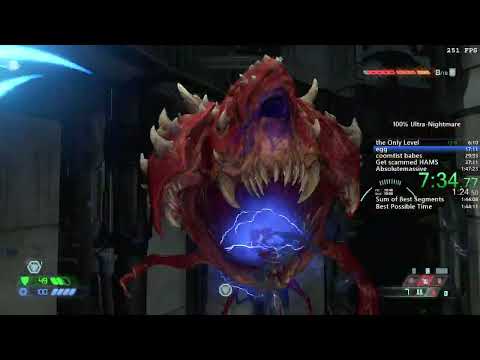
DOOM Eternal WR Shattered: 1:46:39 on 100% Ultra-Nightmare (Restricted)

The world of DOOM Eternal speedrunning has a new king! A blistering 1:46:39 has been achieved in the 100% Ultra-Nightmare Restricted category, etching a new **WR** into the annals of demon-slaying glory. This run isn't just about beating the game; it's about mastering its deepest mechanics, pushing the limits of what's possible, and doing it all under the intense pressure of the highest difficulty. Welcome, fellow Slayers and speedrunning enthusiasts, to GamingSpeedrun.com, your ultimate hub for all things **speedrun** and hardcore gaming. If you're here, you're likely as captivated by the sheer audacity of this **WR** as we are. This new record represents countless hours of practice, intricate **strats**, and a deep understanding of every single encounter DOOM Eternal throws at you.

Welcome, Slayer!

Hello and welcome to GamingSpeedrun! You're witnessing the culmination of extreme dedication: a new World **Record** for DOOM Eternal in the 100% Ultra-Nightmare Restricted category, clocking in at a staggering 1:46:39. This is more than just a **PB**; it's a testament to the relentless pursuit of perfection in one of the most demanding games available on **PC**, **Xbox**, and **Playstation**.
This run pushes the boundaries of what we thought was humanly possible in DOOM Eternal. The precision required is simply mind-boggling.
As the most complete and updated gaming blog on the internet, we aim to bring you the raw, unfiltered passion of the **gaming** community. Whether you're a seasoned speedrunner aiming for your own **WR** or a curious observer, this **record** offers a fascinating glimpse into the extreme end of **speedrunning** and **gaming**.

The Run: Segment by Segment

Breaking down a run of this caliber is essential to understanding the sheer skill involved. Here’s a look at the segment timings that led to this incredible new **WR**:
  • 00:00 - Hell on Earth
  • 08:51 - Exultia
  • 20:09 - Cultist Base
  • 33:14 - Doom Hunter Base
  • 40:41 - Super Gore Nest
  • 54:19 - Arc Complex
  • 1:06:57 - Mars Core
  • 1:15:42 - Sentinel Prime
  • 1:19:03 - Taras Nabad
  • 1:31:47 - Nekravol
  • 1:37:45 - Nekravol Part 2
  • 1:45:20 - Urdak
  • 1:53:50 - Final Sin
Each segment is a masterclass in combat efficiency, resource management, and precise movement. The journey from "Hell on Earth" to "Final Sin" is fraught with peril, and shaving off even milliseconds in each area is a monumental task.

Understanding "Restricted"

A common question that arises with this particular **record** is: "What does 'Restricted' mean?" In the context of DOOM Eternal speedrunning, the "Restricted" category often implies a specific set of rules that limit certain actions, glitches, or equipment. It’s crucial to consult the official leaderboards for the precise definition.
The 'Restricted' tag is vital. It ensures a level playing field and highlights different aspects of skill, often focusing on pure gameplay mastery rather than exploit execution. You can find more information on what 'restricted' means by viewing the rules on speedrun.com.
For this specific **WR**, the "Restricted" designation likely pertains to a set of rules that prevent certain advanced glitches or sequence breaks, forcing the runner to engage with the game’s intended mechanics and combat loops more directly. This often makes the **speedrun** even more impressive, as it relies purely on execution and knowledge.

Key Strategies and Techniques

Achieving a 100% completion on Ultra-Nightmare is already a monumental feat. Doing it under the constraints of a **speedrun** and a "Restricted" category requires an intimate knowledge of the game's AI, enemy patterns, and level design. Here are some elements that are crucial for runs like this:
  • Combat Efficiency: Mastering the "Doom Dance" is non-negotiable. This involves rapid weapon switching, utilizing equipment like the Flame Belch and Ice Bomb for resources, and precise Glory Kill timing to maintain invulnerability frames and health/ammo.
  • Movement Tech: Advanced movement, including flame-dash cancels, precise platforming, and optimal use of the monkey bars, is critical to maintaining speed and avoiding damage.
  • Resource Management: Knowing exactly when and where to find ammo, health, and armor is paramount. On Ultra-Nightmare, mistakes are unforgiving, and running dry on resources can mean the end of a **PB**.
  • Glitch Exploitation (within restrictions): Even in "Restricted" categories, some minor sequence breaks or AI manipulations might be permitted. Identifying and executing these flawlessly is key to gaining precious seconds. For instance, understanding enemy AI and how to manipulate their pathing can save significant time in combat encounters.
  • RNG Manipulation: While difficult to control, understanding and sometimes subtly influencing **RNG** (Random Number Generation) for things like enemy spawns or item drops can make a difference.
We don't talk about Arc Complex in the same way after seeing this run; the player's mastery over that challenging level is simply breathtaking. It's a prime example of how intricate **strats** and perfect execution can redefine what's possible.

Impact on the DOOM Speedrunning Community

New **WR**s like this don't just represent a personal achievement; they galvanize the entire **gaming** community. This run sets a new benchmark, inspiring other runners to refine their own **strats**, discover new tricks, and push their limits. The **speedrunning** scene for DOOM Eternal is incredibly active, with runners constantly experimenting and sharing knowledge on platforms like Discord and **streaming** sites. A **WR** like this often leads to a flurry of activity as the community dissects the run, learns from it, and attempts to replicate or even surpass it. It's a thrilling cycle of innovation and competition that keeps the **#speedrun** community vibrant and exciting. This new record is a beacon for all aspiring **speedrunners** out there, proving that with enough dedication and skill, the impossible can become the new standard. This is what **POG** moments are made of!

Frequently Asked Questions

Q1: What is the difference between this WR and a standard 100% Ultra-Nightmare run?
A1: The "Restricted" tag typically means certain glitches, exploits, or methods of gameplay are disallowed according to specific community rules. This forces runners to rely more on pure skill, combat prowess, and intended game mechanics.

Q2: How long did the runner train for this specific record?
A2: While we don't have exact figures for this particular run, achieving a World **Record** of this magnitude usually requires thousands of hours of dedicated practice over months, if not years.

Q3: Where can I find the official leaderboards for DOOM Eternal speedruns?
A3: The primary resource for official speedrun leaderboards is speedrun.com. You can find the DOOM Eternal page there to see all categories, records, and rules.

Q4: Is Ultra-Nightmare difficulty permanently unlocked after this run?
A4: Ultra-Nightmare difficulty is typically unlocked after completing the game on Nightmare difficulty. Achieving this **WR** implies the runner has already mastered the game at its highest base difficulty.

Q5: What is the significance of a "Restricted" category in speedrunning?
A5: Restricted categories aim to focus on specific aspects of a game's design or player skill. They often serve to exclude "game-breaking" glitches or exploits, leading to runs that feel more like a traditional playthrough but executed at extreme speeds and efficiency.

In conclusion, this new **WR** of 1:46:39 in DOOM Eternal's 100% Ultra-Nightmare Restricted category is a monumental achievement. It showcases the pinnacle of skill, dedication, and strategic thinking in the **speedrunning** world. For anyone passionate about **gaming**, this run is a must-watch, a source of inspiration, and a reminder of the incredible feats players can accomplish. What are your thoughts on this new **WR**? Did you expect a new record to be set so soon? Join the discussion in the comments below or head over to our Discord channel to connect with fellow gamers and speedrunners! Your passion fuels our content.

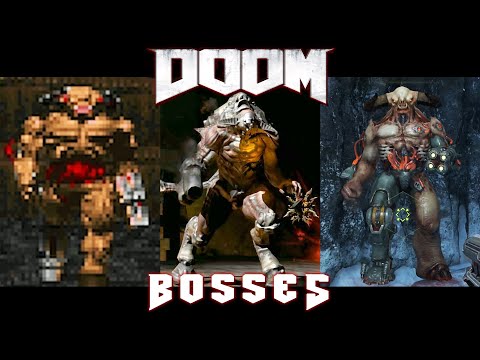
DOOM's Boss Arsenal: Every Fiend from 1993 to Eternal's Fury

What’s up, fellow slayers! Ever wondered just how many grotesque, soul-crushing bosses the DOOM franchise has thrown at us since its inception? From the pixelated nightmares of the 90s to the hyper-violent ballet of *DOOM Eternal*, we've been on a relentless mission to chainsaw, BFG, and shotgun our way through Hell itself. This isn't just a kill count; it's a deep dive into the evolution of DOOM's most formidable foes. Get ready, because we're about to revisit every single boss encounter that has tested our skills and sanity across the entirety of the main shooter series.

DOOM (1993): The Genesis of Boss Fights

The OG. When you think of DOOM, you think of the UAC bases overrun by demons. But who stands at the top of that infernal food chain? The first true boss encounter was the **Baron of Hell** in Episode 1. While later games would introduce more elaborate boss mechanics, the Baron’s sheer aggression and powerful projectiles made it a significant hurdle. Then came **Sargassos** in Episode 2, a hulking demon that required strategic use of the environment and heavy weaponry. But the true final challenge of the original *DOOM* was **The Spider Mastermind** in Episode 3. This massive, cybernetic arachnid spitting projectiles was the ultimate gatekeeper, forcing players to master movement and weapon switching to survive. These early bosses established the core DNA of what a DOOM boss should be: a test of endurance and raw firepower.
The sheer impact of these encounters in 1993 cannot be overstated. They were the defining moments that separated casual play from true demon-slaying mastery.

DOOM II: Hell on Earth: More Demons, Bigger Threats

id Software cranked up the difficulty and the demonic presence in *DOOM II*. We saw the return of familiar faces, but the new additions were truly terrifying. The **Hell Knight** became a common, yet still dangerous, mid-tier enemy. However, the true star of *DOOM II*'s boss roster was the **Cyberdemon**. This resurrected demon, now augmented with mechanical parts and wielding a rocket launcher arm, was a relentless force. Its sheer size and devastating attacks made it arguably the most iconic boss fight of the original saga. Fighting it in tight corridors, trying to dodge its rockets while landing headshots with the Super Shotgun, was peak DOOM. Unlike the original, *DOOM II* didn't feature as many distinct "final" boss encounters per episode, opting instead for a more continuous onslaught where bosses like the Cyberdemon and the ubiquitous **Baron of Hell** served as recurring major threats.

DOOM 64: The N64's Dark Lord

id Software and Midway took DOOM to a darker, more atmospheric place with *DOOM 64*. This title introduced a unique boss progression. While many enemies returned, the bosses felt more integrated into the unsettling atmosphere. The **Mother Demon**, for instance, was a grotesque, multi-stage encounter that felt truly alien and terrifying. The true culmination of *DOOM 64*'s challenge arrived with **The Chaos** – essentially a souped-up Cyberdemon, but with a more menacing design and relentless attack patterns that leveraged the N64's capabilities. The final boss, **The Unholy Triad**, presented a unique three-headed Cerberus-like demon that required precise targeting and constant evasion, offering a distinct challenge compared to its PC predecessors. This game proved that boss design could evolve beyond pure firepower, incorporating environmental hazards and unique attack phases.

DOOM 3: A Horror Reimagining

*DOOM 3* took a sharp turn, leaning heavily into survival horror. The bosses reflected this shift, becoming more about atmosphere and limited resources than straightforward slugfests. The **Helltime**, a grotesque amalgamation of bodies, served as a formidable early boss. The **Cyberdemon** returned, reimagined as a hulking, terrifying beast in a claustrophobic arena, forcing players to manage ammo and health carefully. But the most memorable boss fight in *DOOM 3* was arguably **Sarge**. This possessed Marine was a jarring, personal encounter, a dark reflection of the player's own struggle. The expansion, *Resurrection of Evil*, introduced the **Shadow**, a spectral boss that required using a special weapon to make it corporeal before it could be damaged, showcasing a more tactical approach to boss encounters.
The horror elements in DOOM 3 meant bosses weren't just bullet sponges; they were psychological trials that amplified the game's dread.

DOOM (2016): The Slayer's Glorious Return

*DOOM (2016)* brought the franchise roaring back with the speed and brutality fans remembered. The boss design was revitalized, blending classic elements with modern mechanics. The **Wretch**, a smaller demon tormenting Hell Knights, was an interesting early encounter. Then came the **Hell Guards**, a trio of heavily armored demons requiring precise **Glory Kills** to expose weak points. The **Cyberdemon** made another spectacular return, a true behemoth that demanded mastery of the new combat loop – dash, shoot, glory kill, repeat. But the ultimate test was **Olivia Pierce**, the possessed Argent D'Nur leader, a spectacular, multi-phase battle that served as the ultimate payoff. This game truly embraced the "combat puzzle" aspect of boss fights, rewarding aggression and strategic use of the entire arsenal. Finding the right **strats** for these encounters was key to achieving a good **PB**.

DOOM Eternal: The Ultimate Test of Skill

If *DOOM (2016)* was a comeback, *DOOM Eternal* was a full-blown demonic invasion of pure skill-based combat. The boss encounters were elevated to an art form, each demanding a unique approach and perfect execution. Early on, you face the **Doom Hunter**, a challenging duo requiring you to prioritize their shields and ranged attacks. The **Marauder** became infamous, a duel of parries and precise shots that tested players like never before – a true test of reflexes and timing, often seen as a mini-boss that could ruin a speedrun attempt if not handled correctly. Then there's the **Gladiator**, a brutal, multi-phase fight that requires perfect timing on dodges and targeted attacks. Finally, the ultimate boss: **The Khan Maykr**. This celestial being offered a massive, arena-spanning battle that incorporated aerial combat and resource management on an epic scale. *DOOM Eternal* truly redefined what a boss fight could be in a first-person shooter.
Mastering the Marauder is essential for any serious speedrunner aiming for a good PB or WR in DOOM Eternal. His timing is everything!

The Ancient Gods DLC: Pushing the Limits

The expansions for *DOOM Eternal*, *The Ancient Gods – Part One* and *Part Two*, didn't just add new levels; they introduced some of the most challenging boss encounters yet. *Part One* brought us **The World Spear**, a colossal serpentine entity, and the **Samur Maykr**, a celestial being with formidable powers. *Part Two* culminated in the epic confrontation with **The Khan Maykr** and, most significantly, the return of the **Serpent Hunter**, offering a final, brutal test of the Slayer's mastery. These DLC bosses were designed to push even experienced players to their limits, requiring refined **strats** and perfect execution, especially for those attempting low-health runs or speed completions. The enemy updates in 2021 provided crucial insights for tackling these final challenges.

(Enemy-Updates 2021 for "The Ancient Gods"-DLCs: https://youtu.be/Dq1ScHLB_wE https://youtu.be/tUk3imchjP0)

From the iconic Cyberdemon to the deceptively difficult Marauder, DOOM's bosses have always been central to its identity. Each iteration has offered unique challenges, forcing players to adapt, learn patterns, and ultimately, unleash hell. Whether you're a casual player or a dedicated speedrunner chasing that perfect #WR, these encounters are what make the DOOM series legendary.

Frequently Asked Questions

What is the hardest boss in DOOM history?

This is subjective and depends on the player's skill level and playstyle. However, many speedrunners and players consider the **Marauder** in DOOM Eternal to be one of the most challenging due to its strict timing requirements and unforgiving attack patterns. The Cyberdemon and Khan Maykr also rank high for many.

Are the DOOM RPG games considered part of the main boss progression?

No, the DOOM RPG titles for mobile devices feature turn-based combat and are generally not included when discussing the main boss encounters of the shooter series. Their gameplay mechanics differ significantly from the core franchise.

Which boss appears most frequently across the DOOM games?

The **Cyberdemon** and the **Baron of Hell** are the most iconic and frequently appearing major demonic threats throughout the DOOM franchise, acting as recurring boss encounters or elite enemies.

How do speedrunners approach DOOM bosses?

Speedrunners develop highly optimized strategies, often called 'strats', for each boss. This involves precise movement, optimal weapon switching, exploiting AI behavior, and sometimes specific item usage or environmental interactions to defeat bosses as quickly as possible, aiming for a new PB or #WR.

Did we miss any boss that you think deserves a spot on this list? Which demonic foe gave you the most trouble? Let us know in the comments below! Join our Discord channel to discuss strategies, share your best runs, and connect with fellow demon-slayers!

Top 10 World Record Speedruns at Games Done Quick: A Speedrunner's Dream

Hey there, fellow speed demons and gaming enthusiasts! Ever watched a Games Done Quick marathon and felt that surge of adrenaline as a runner pushes the boundaries of what's possible in a game? It's pure magic, right? We're talking about precision, dedication, and sometimes, a whole lot of luck with the RNG. Today, we're diving deep into the archives to celebrate some of the most mind-blowing World Record (WR) speedruns ever showcased at GDQ. Whether you're a seasoned speedrunner yourself or just a fan of incredible gaming feats, this list is for you. Get ready to be inspired!

What is Games Done Quick?

For those who might be new to the scene, Games Done Quick (GDQ) is a series of charity marathon events that feature incredible speedruns. These events, like Awesome Games Done Quick (AGDQ) and Summer Games Done Quick (SGDQ), raise millions of dollars for charities like the Prevent Cancer Foundation and Doctors Without Borders. The magic of GDQ lies not just in the phenomenal gameplay, but also in the passionate community that gathers to support the runners and the cause. It's a place where the **#ComunidadGamer** truly shines.

Why GDQ Matters for Speedrunning

GDQ has been instrumental in bringing speedrunning into the mainstream. It provides a massive platform for runners to showcase their skills, share their strategies, and connect with a global audience. Many runners achieve their personal bests (PBs) and world records during these events, often under immense pressure. The energy from the crowd, both online and in-person, is palpable and often pushes runners to achieve the seemingly impossible. Witnessing a new **#WR** being set live at GDQ is an unforgettable experience for any gamer.

The Top 10 World Record Speedruns

This list is a curated selection based on impact, technical difficulty, and sheer spectacle. In my experience, these runs represent the pinnacle of dedication and skill.

1. Super Mario 64 - 0 Star Speedrun

This classic is a staple of speedrunning, and the 0 Star category is notorious for its precise movement and complex glitches. Watching runners navigate the castle without collecting any stars is a masterclass in exploiting game mechanics.

2. Ocarina of Time - Any% Speedrun

The Legend of Zelda: Ocarina of Time has a massive and dedicated speedrunning community. The Any% category, focusing on reaching the end credits as fast as possible, is filled with ingenious skips and sequence breaks that fundamentally change how you perceive the game.

3. Super Metroid - Any% Speedrun

Super Metroid is another cornerstone of the speedrunning world. The Any% run here is all about maximizing Samus's movement capabilities, utilizing techniques like "wall jumping" and precise bomb placements to traverse Planet Zebes at breakneck speed.
The dedication shown by runners in games like Super Metroid is astounding. It's not just about beating the game; it's about understanding its very code.

4. Portal - Any% Speedrun

Portal's Any% run is a testament to clever puzzle-solving and precise portal placement. Runners often use advanced techniques to bypass entire sections of the game, demonstrating an intimate knowledge of the game's physics engine.

5. Celeste - Any% Speedrun

Celeste is a relatively modern game that has exploded in the speedrunning community due to its tight controls and challenging platforming. The Any% run is a blur of perfect jumps and dashes, showcasing incredible muscle memory.

6. Hollow Knight - Any% Speedrun

This Metroidvania gem offers a challenging and rewarding speedrunning experience. The Any% run in Hollow Knight involves efficient combat, strategic route planning, and mastery of movement abilities to reach the end as quickly as possible.

7. Bloodborne - Any% Speedrun

For fans of Souls-like games, the Bloodborne Any% speedrun is a spectacle of aggression and boss-slaying prowess. Runners optimize every encounter, often using clever tricks and weapon synergies to defeat the game's formidable foes with unprecedented speed.
Seeing a runner nail a difficult trick in Bloodborne that saves them precious seconds is pure dopamine for any speedrunning fan.

8. Sekiro: Shadows Die Twice - Any% Speedrun

Similar to Bloodborne, Sekiro's speedrun is a display of intense combat skill and knowledge of enemy attack patterns. The deflections, dodges, and combat arts are executed with flawless timing.

9. Doom Eternal - Any% Speedrun

Doom Eternal is a high-octane shooter, and its speedrun is no different. Runners utilize the game's extensive arsenal and movement mechanics in a frantic ballet of destruction, optimizing every fight and traversal segment.
The sheer speed and aggression in a Doom Eternal speedrun are breathtaking. It's a perfect marriage of chaos and control.

10. Elden Ring - Any% Speedrun

Elden Ring, the latest open-world epic from FromSoftware, has quickly become a favorite for speedrunners. The Any% category involves navigating the vast world, utilizing powerful builds and sometimes exploiting glitches to reach the final boss incredibly fast. It's a testament to how quickly the community can deconstruct and master a new game.

Runner Spotlight: The Minds Behind the Records

Behind every World Record is an individual, or sometimes a team, who has dedicated countless hours to mastering a game. These runners pour over frame data, experiment with obscure glitches, and practice routes until they become second nature. Their dedication is what fuels the **#CommunityDebate** and innovation within speedrunning. We often see runners like Narcissa Wright, Kosmic, BubblesDeluxe, and many others achieving incredible feats. Their passion for games like Baldur's Gate or any percent runs is what makes GDQ so special.

The Future of Speedrunning at GDQ

The landscape of speedrunning is constantly evolving. With new games releasing all the time and older games being revisited with fresh eyes, the potential for new discoveries and WRs is endless. GDQ continues to be a driving force, providing a stage for these incredible achievements. It's exciting to think about what new categories and incredible runs we'll see in the future, perhaps even in games from CD Projekt Red or indie darlings that capture the community's imagination. The spirit of **#ChallengeRun** is alive and well!

Frequently Asked Questions

  • What is the difference between Any% and 100% speedruns?
  • Any% means finishing the game as fast as possible, regardless of completion percentage. 100% requires completing all objectives or collecting all items before finishing.
  • How do runners practice for speedruns?
  • Runners typically practice by playing segments of the game repeatedly, using save states or practice tools to isolate difficult sections. They also study existing runs and discuss strategies with other players.
  • Can anyone submit a run to GDQ?
  • Yes, GDQ accepts run submissions from the community. Selected runs are then scheduled for the marathons.
  • What is RNG in speedrunning?
  • RNG stands for Random Number Generator. It refers to elements in a game that are random, like enemy drops or spawn locations, which can significantly impact a speedrun's time. Mastering RNG manipulation or adapting to it is key.
So there you have it – a glimpse into the electrifying world of GDQ World Record speedruns! These achievements are more than just fast times; they represent the passion, ingenuity, and sheer determination of the gaming community. Which of these runs blew your mind the most? Did we miss any of your favorites? Let us know in the comments below, and join our Discord server to discuss all things speedrunning! Your feedback fuels our content, just like runner strats fuel a new PB. Keep running fast, and keep gaming strong!

Into The Void: Unlocking DOOM's Most Bizarre Speedrun Secrets

DOOM speedrunner performing a void glide

DOOM. The name itself conjures images of demon-slaying, intense combat, and lightning-fast reflexes. For decades, players have pushed the boundaries of this iconic franchise, but few have ventured into the truly bizarre corners of its gameplay mechanics. Today, we're plunging 'Into The Void' to explore one of the strangest, most revolutionary speedrun techniques to emerge from the DOOM community: the 'void glide'. If you're a gamer looking to shave precious seconds off your best times or simply curious about the hidden depths of DOOM's engine, this guide is for you.

We're not just talking about standard tricks here. This is about exploiting the very fabric of the game's physics and level design to achieve what once seemed impossible. Forget your standard Doom Eternal speedrun; we're diving into the truly unconventional.

What is DOOM Speedrunning?

Speedrunning, at its core, is the practice of playing a video game as quickly as possible, aiming to complete it or achieve specific objectives in the shortest time. The DOOM community, renowned for its passion and technical prowess, has been at the forefront of innovative speedrunning for years. From precise combat encounters to intricate Gaming Strategies and obscure glitches, every aspect of the game is scrutinized for optimization.

The beauty of DOOM speedrunning lies in its accessibility yet immense depth. While anyone can pick up a shotgun and blast demons, mastering the movement, weapon switching, and enemy manipulation required for top-tier runs takes dedication and a deep understanding of the game's engine. This often involves discovering and perfecting techniques that go beyond the developers' initial intentions, transforming what seems like a glitch into a powerful tool.

The 'Void Glide' Explained

So, what exactly is this 'void glide' that's causing such a stir? In essence, it's a highly advanced movement exploit that allows players to traverse significant distances by manipulating the game's collision detection and physics engine. It involves precise timing and specific inputs that, under the right conditions, cause the player character to 'fall' through certain surfaces or gain an unprecedented burst of speed.

Think of it as a highly technical form of Sword Flying, but instead of relying on a specific weapon interaction, it taps into more fundamental engine behaviors. The precise execution requires:

  • Specific positioning: Being at the exact right spot on a level geometry.
  • Perfect input timing: Executing a series of jumps, strafes, and sometimes weapon swaps in rapid succession.
  • Understanding of game zones: Knowing which areas are susceptible to this manipulation.

This isn't something you stumble upon by accident. It's the result of dedicated research, experimentation, and countless hours spent by speedrunners to push the game's limits. The community often refers to these kinds of discoveries as 'game breakers' or 'major skips' that can redefine entire categories of runs.

"The void glide isn't just about speed; it's about redefining the path. It allows runners to bypass entire sections of levels that were originally designed to be challenging gauntlets."

Many have tried to replicate it, but only a dedicated few have truly mastered the 'void glide'. It's a testament to the ingenuity of the Speedrunning Community.

Impact on World Records

When a groundbreaking trick like the void glide is discovered, the impact on World Records is immediate and profound. Established routes are thrown out the window, and runners scramble to incorporate the new technique. This often leads to a flurry of new personal bests (PBs) and World Records.

For games like DOOM, where the engine has been extensively studied over the years, such discoveries are particularly exciting. They breathe new life into speedrunning communities, offering fresh challenges and opportunities for innovation. The void glide has undoubtedly shaved seconds, if not minutes, off previous run times, especially in categories that allow for such exploits, like Any%.

The chase for the next PB becomes even more intense. Runners are not just competing against each other; they're competing against the limitations of the game itself. The void glide represents a triumph of understanding and execution over traditional gameplay progression. This is what makes GamingSpeedrun.com so exciting – we witness these moments of discovery and mastery firsthand.

The analysis of WR Progression for levels that heavily feature the void glide has become a meta-game in itself. Watching skilled players execute these maneuvers flawlessly is a spectacle, a blend of precise input and a deep understanding of game physics.

Community and Discovery

The discovery and popularization of the void glide are perfect examples of the collaborative and competitive spirit within the Gaming Community. Typically, these techniques are found through:

  • Community Collaboration: Speedrunners share their findings, theories, and attempts on platforms like Discord and Twitch.
  • Dedicated Research: Individuals or small groups spend countless hours dissecting game code, experimenting with different inputs, and analyzing level geometry.
  • Talented Pioneers: A few exceptional players often lead the charge, demonstrating the feasibility of these complex tricks.

The original video source for this technique, often shared on platforms like YouTube, becomes a hub for discussion and further experimentation. It’s where players analyze the inputs, debate the mechanics, and celebrate new breakthroughs. Without this active Community de Jugadores, many of these incredible speedrunning discoveries might never see the light of day.

"This technique pushes the boundaries of what we thought was possible in DOOM. It’s a testament to the dedication and ingenuity of the speedrunning community."

The intricate dance of Player Skill and engine manipulation is what makes the speedrunning scene so compelling. It’s a constant evolution, driven by players who refuse to accept the intended path.

The Challenge of E2M6

The specific challenge highlighted in the original source material involves executing a specific sequence on Episode 2, Level 6 (E2M6). This level, known for its complex layout and opportunities for advanced movement, has become a prime testing ground for the void glide.

Achieving a time of 1:02 or better on Ultra-Violence difficulty using this technique is a significant feat. It requires not only mastering the void glide itself but also integrating it seamlessly with the game's combat. The player must still deal with demons, manage ammo, and navigate hazards, all while performing physics-defying maneuvers. This level often becomes a focal point for Speedrun Analysis, as runners strive to perfect their routes and execution.

The goal is to achieve a state of perfect flow, where each movement, each shot, and each void glide contributes to shaving off milliseconds. It's a dance between chaos and precision, a hallmark of top-tier DOOM speedruns.

For those aiming to replicate these times, understanding the map layout is crucial. Familiarizing yourself with the Level Design and identifying the optimal points for void glides can make the difference between a good run and a record-breaking one.

How to Get Started

Intrigued by the void glide and the world of DOOM speedrunning? Getting started might seem daunting, but the community is incredibly welcoming. Here's how you can jump in:

  1. Play the Game: First and foremost, play DOOM! Understand the basic mechanics, weapons, and enemy types.
  2. Watch Speedruns: Study the experts. Watch top runners on Twitch and YouTube. Pay close attention to their movements, weapon choices, and how they navigate levels. Sites like speedrun.com/doom are invaluable resources.
  3. Join the Community: The DOOM speedrunning Discord server (link provided in the original source) is the best place to ask questions, get advice, and find resources. You'll find guides, tips, and fellow runners eager to help.
  4. Practice the Basics: Before attempting advanced techniques like the void glide, master fundamental movement and combat. Work on your weapon switching, strafing, and enemy positioning.
  5. Learn Specific Tricks: Once you're comfortable, start learning individual tricks. There are often tutorials for specific glitches and skips. The void glide itself is a significant undertaking that requires dedicated practice.
  6. Use a Timer: Tools like LiveSplit are essential for tracking your progress and comparing your times.

Remember, achieving a PB or a WR takes time, patience, and a lot of practice. Don't get discouraged by initial failures. Every run is a learning experience.

Frequently Asked Questions

What exactly is a 'void glide' in DOOM speedrunning?

A 'void glide' is an advanced speedrunning technique in DOOM that manipulates the game's physics engine to allow players to travel through specific level geometry or gain extreme speed, bypassing intended pathways.

Is the void glide considered a glitch or an intended feature?

While not explicitly designed by developers, the void glide is a consequence of the game's engine mechanics. In speedrunning, such discoveries are often embraced and referred to as exploits or advanced techniques that push the game's limits.

Can I use the void glide in any DOOM game?

The void glide, as discussed in this context, is primarily associated with specific DOOM titles where the engine physics allow for this particular manipulation. It might exist in different forms or not at all in other games in the series. For example, similar techniques might be found in DOOM Eternal speedruns, but the specifics can vary.

How difficult is it to learn the void glide?

The void glide is considered a very difficult technique. It requires precise timing, perfect execution of multiple inputs, and a deep understanding of the game's mechanics. It takes significant practice to master.

Where can I find tutorials for the void glide?

The best places to find tutorials and guides are the official DOOM speedrunning Discord servers, dedicated speedrunning forums, and YouTube channels that specialize in speedrun strategy and analysis, like the one linked in the source.

The world of DOOM speedrunning is constantly evolving, with new discoveries and techniques emerging all the time. The void glide is just one example of how dedicated players can uncover hidden depths within their favorite games. Whether you're aiming for a World Record or just want to improve your personal best, understanding these advanced mechanics can be incredibly rewarding.

What are your thoughts on the void glide? Have you managed to pull it off? Share your experiences, tips, or any other bizarre DOOM speedrun techniques you've encountered in the comments below! Let's keep the conversation going and help each other push the boundaries of what's possible. Join our Discord to discuss your speedrunning journey!

DOOM's Ultimate Speedrun Challenge: Is This the True Test of Skill?

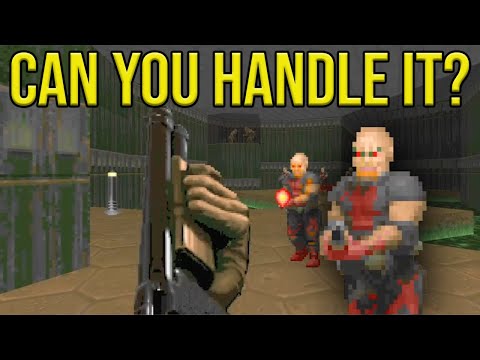
Introduction: The Legend of the 35-Second E1M1

Alright, fellow demonslayers and speedrunning enthusiasts! If you've been lurking in the shadows of the GamingSpeedrun community, you've likely heard whispers of a legendary challenge. It's not just about beating DOOM; it's about absolute mastery. The quest? To conquer E1M1 on Ultra-Violence (UV) MAX difficulty in under 35 seconds. This isn't just a speedrun; it's a test of pure skill, precise execution, and an intimate understanding of DOOM's intricate mechanics. Forget your casual playthroughs; this is where true legends are forged.

The original call to arms, posted back in January 2020, sparked a firestorm. Two pre-order copies of DOOM Eternal were on the line for anyone who could achieve this blistering time. It was a bold move, a direct challenge to the most dedicated players. But what makes this particular challenge so "legit"? It boils down to stripping away all but the most fundamental skills, forcing players to rely on perfect movement, optimal enemy engagement, and near-flawless weapon management.

Unpacking DOOM's E1M1 UV MAX: More Than Just Speed

When we talk about the E1M1 UV MAX challenge, we're not just talking about sprinting from point A to point B. This category demands perfection. "UV MAX" means you're facing the full onslaught of enemies on the highest difficulty, and you must kill *every single one* of them. No skips, no mercy, just pure, unadulterated combat efficiency.

The original DOOM's first level, E1M1 (Hangar), is deceptively simple. It's designed as an introduction, a tutorial in a hostile environment. However, for speedrunners, it becomes a crucible. The layout, enemy placement, and item distribution are meticulously studied. Every frame counts. Achieving a sub-35-second run requires understanding:

  • Optimal enemy aggro and positioning.
  • The fastest routes through the level.
  • The most efficient weapon swaps for each encounter.
  • Precise movement tech to minimize downtime.

This isn't a scenario where brute force with a super shotgun will cut it. You need finesse, knowledge, and a touch of RNG manipulation if you're pushing the absolute limits.

Mastering the Ultra-Violence MAX: Key Strategies and Mechanics

The core of any successful speedrun lies in its strategy. For E1M1 UV MAX, it's about creating a symphony of destruction. The ideal run often involves:

  1. Opening Volley: Immediately upon spawning, the player needs to dispatch the initial Imp and Pistol Imps with precise shots. The goal is to clear these threats as quickly as possible to gain momentum.
  2. Central Arena Engagement: The central area is teeming with Pinkies and Spectres. The strategy here often involves luring them into a specific formation to be taken down efficiently, often with the Super Shotgun or Plasma Rifle. Mastering movement tech is crucial to avoid getting cornered.
  3. Key Item Acquisition: Grabbing essential items like the shotgun and ammo are critical. The timing and path taken to acquire these items can make or break a run.
  4. Final Push: The final set of enemies often requires rapid targeting and execution to maintain the speed necessary for a sub-35 time. This might involve quick weapon switches and perfectly timed shots.

Many runners utilize techniques like "enemy stacking" or "monster trapping" to group enemies together for maximum damage output. This requires a deep understanding of enemy AI and level geometry. It’s about playing the game in a way that its developers likely never intended, pushing the engine to its limits.

Essential DOOM Skills for a Legit Challenge

Beyond memorizing a route, becoming proficient at this challenge requires honing several core DOOM skills. These aren't just for E1M1; they are foundational for any serious speedrunner tackling the series.

  • Weapon Switching Speed: The ability to swap between weapons instantaneously is paramount. A fraction of a second lost in weapon selection can mean losing valuable time. Mastering hotkeys or quick-switch mechanics is non-negotiable.
  • Aiming Precision: Even on lower difficulties, missing shots wastes ammo and time. On UV MAX, every bullet counts. Critical hits or precise targeting can significantly speed up enemy takedowns.
  • Resource Management: Knowing exactly how much ammo you need for each enemy and how to acquire more efficiently is vital. Running out of bullets at a critical moment is a run-killer.
  • Enemy Prioritization: Understanding which enemies pose the biggest threat and need to be eliminated first is key. In E1M1, this might mean dealing with the Baron of Hell (if present in a specific version) before focusing on weaker foes.

For those looking to improve, practicing individual segments of the level repeatedly is a common strategy. Analyzing your own demos and comparing them to top runners is also invaluable for identifying areas for improvement.

Weapon Loadouts for Maximum Efficiency

While E1M1 in the original DOOM has a limited set of weapons available early on, the choice and order of acquisition can drastically impact your speed. The standard progression generally involves:

  • Pistol: Your starting weapon. Useful for picking off the initial Imps, but quickly becomes obsolete.
  • Shotgun: The workhorse of early-game DOOM. Essential for dealing with Pinkies and Spectres effectively. Mastering its close-range power is crucial.
  • Super Shotgun: (If available in the specific version/run category) The undisputed king of close-quarters combat. A well-timed double-barrel blast can vaporize tougher demons.
  • Plasma Rifle: Offers sustained damage output and can be excellent for clearing groups of faster enemies like Imps and Cacodemons (though Cacodemons are typically not in E1M1).

The challenge of E1M1 UV MAX is that you often need to grab the shotgun very early and then quickly transition to optimal damage. This means knowing exactly where the ammo pickups are and how to collect them without losing speed.

The Art of Movement: Dodging, Straffing, and More

In DOOM, movement isn't just about getting from A to B; it's an offensive and defensive tool. For a speedrun like E1M1 UV MAX, mastering movement is as important as aiming:

  • Strafe-Jumping: While not as pronounced as in some later games, precise strafing can help you dodge projectiles and position yourself optimally for attacks.
  • Circle-Strafing: Essential for dealing with tougher enemies like Pinkies. By circling them, you can avoid their charges while delivering consistent damage.
  • Corner-Tricks: Using corners to your advantage can isolate enemies or block off threats temporarily.
  • Bunny Hopping (in certain versions): Some DOOM engines allow for bunny hopping, which can increase movement speed. This technique is more relevant in community mods or specific engine ports but understanding its potential is key.

The ability to chain these movement techniques seamlessly allows runners to maintain high speeds even while engaging enemies. It's a dance of death, a ballet of bullets.

"The difference between a good run and a great run often comes down to a few frames saved in movement. It's about making every step count, every jump purposeful."

Common Pitfalls and How to Avoid Them

Even with the best strategy, E1M1 UV MAX is unforgiving. Here are common mistakes and how to sidestep them:

  • Ammo Scarcity: Forgetting ammo locations or wasting shots can lead to a premature end. Always know where your next ammo pack is.
  • Getting Cornered: On UV MAX, getting trapped by Pinkies or Spectres is a death sentence. Constant awareness of enemy positioning and using the environment to your advantage is critical.
  • Suboptimal Weapon Swaps: Using the wrong weapon for the job wastes precious seconds. Practice switching to the most effective weapon for each enemy type.
  • RNG Dependence: While some RNG is unavoidable, relying too heavily on perfect enemy spawns can be detrimental. Aim for strategies that are robust even with slightly unfavorable RNG.
  • Mental Fatigue: This challenge requires immense focus. Burnout is real. Take breaks and practice in shorter sessions.

The key is consistent practice and learning from every failed run. Each death is a lesson, not a defeat.

The Competitive Spirit: Prizes and the Speedrunning Community

The original challenge, offering pre-order copies of DOOM Eternal, highlighted the vibrant nature of the speedrunning community. It's not just about personal bests (PBs); it's about pushing the boundaries of what's possible and fostering a sense of shared endeavor.

The official DOOM speedrunning Discord servers and platforms like speedrun.com are invaluable resources. Here, players share strategies, analyze runs, and celebrate each other's achievements. The community thrives on a blend of intense competition and mutual respect. Whether you're aiming for a WR or just trying to break 40 seconds, there's a place for you.

"The real prize is the knowledge gained and the connections made within the community. But hey, an extra copy of DOOM Eternal never hurt anyone!"

This kind of challenge embodies the spirit of GamingSpeedrun: pushing the limits, celebrating skill, and fostering a passionate community around classic and modern titles alike. The pursuit of a sub-35 E1M1 UV MAX run is a testament to the enduring appeal of DOOM and the dedication of its players.

Frequently Asked Questions

Q: What is the fastest recorded time for E1M1 UV MAX in DOOM?
A: While times are always being pushed, historically, top runners have achieved times well under 30 seconds, with the absolute bleeding edge of skill and RNG potentially dipping even lower. The 35-second mark is a significant benchmark for a "legit" challenge.

Q: Do I need to use a specific version of DOOM?
A: The original challenge mentioned "any version of DOOM," but most competitive speedruns today adhere to specific versions (e.g., Chocolate Doom, GZDoom with specific settings) to ensure fairness and consistency. Always check the rules for the specific competition or community standard you're aiming for.

Q: What are the most important weapons for this run?
A: Primarily the Shotgun and Super Shotgun (if applicable to the version). Their high damage output at close range is essential for clearing the map quickly and efficiently.

Q: How important is RNG in this challenge?
A: RNG (Random Number Generation) plays a role in enemy placement and behavior. While a perfect run requires excellent execution, good RNG can shave off crucial seconds. Top runners develop strategies that are resilient to minor RNG fluctuations.

Q: Where can I find more resources and connect with other DOOM speedrunners?
A: The official DOOM speedrunning Discord and platforms like speedrun.com are excellent places to start. You can find guides, leaderboards, and connect with a vibrant community.

So, what are you waiting for? Grab your favorite DOOM version, load up E1M1, and see if you have what it takes to conquer this legendary challenge. Share your best times and strategies in the comments below! What other DOOM speedrunning challenges should we explore?

The Pinnacle of Speed: Top 7 Most Optimized Speedruns Revealed!

Ever watched a speedrunner absolutely obliterate a game, making it look like a casual stroll through a digital park? You know, the kind of run that makes you question your own sanity and gaming prowess? The user behind the title 'Top 7 Most Optimized Speedruns' isn't just looking for news; they're hungry for the deep cuts, the cutting-edge strategies, and the sheer brilliance that makes speedrunning an art form. You're here to understand the pinnacle of optimization, the strats that shave off precious seconds, and the mindset that pushes games to their absolute limits. Forget lore or lore-adjacent discussions; this is about pure, unadulterated efficiency and mastery.

Optimizing the Impossible: What Makes a Speedrun "Optimized"?

When we talk about "optimized" speedruns, we're not just talking about someone playing fast. We're talking about runs that have been meticulously dissected, analyzed, and perfected over years, sometimes decades, by dedicated communities. This involves understanding the game's engine, identifying and exploiting glitches, mastering movement tech, and perfecting execution for every single frame. It's about finding the fastest possible path from point A to point B, often through routes that seem to defy the game's intended design. Think sequence breaks, out-of-bounds exploits, and precision inputs that would make a neurosurgeon sweat.

The core of optimization lies in a deep understanding of game mechanics. This can range from understanding the exact frame data of character abilities to manipulating the game's Random Number Generator (RNG) to get favorable outcomes. The pursuit of optimization is relentless, driven by the desire to shave milliseconds off a World Record (WR) and cement one's legacy. It's a testament to human ingenuity and dedication within the Gamer Community.

This isn't just about playing the game; it's about understanding its deepest secrets. Many optimized speedruns rely on techniques that were never intended by the developers. These can include:

  • Glitches: Unforeseen bugs in the game’s code that allow players to skip sections, move faster, or gain advantages.
  • Skips: Specifically designed techniques to bypass entire levels, bosses, or game segments.
  • Movement Tech: Advanced maneuvers that allow for faster traversal or better positioning than standard gameplay.
  • Optimal Routing: Planning the absolute fastest path through the game, considering enemy placement, item acquisition, and boss fight strategies.

Super Mario 64: The 120 Star Benchmark

Few games have been as thoroughly dissected for speedrunning as Super Mario 64. The pursuit of the 120-star run is a legendary feat, pushing the boundaries of what was thought possible on the Nintendo 64. Early optimization focused on foundational techniques like the long jump and triple jump for faster movement.

As the community matured, so did the strategies. We saw the discovery and mastery of insane techniques like the "BLJ" (Backwards Long Jump), which allowed Mario to clip through walls and gain impossible amounts of speed. This single exploit revolutionized the game's Any% category, dramatically shortening the time required to beat the game.

For the 120-star category, optimization is about precise execution of every star's strategy. This includes complex platforming, precise camera control, and exploiting minor physics bugs. The difference between a good run and a WR often comes down to perfect execution of just a few frames of input. The dedication to mastering these minute details is what makes the SM64 speedrun so compelling.

Super Metroid: Mastering the Morph Ball

Super Metroid is another titan in the speedrunning world, celebrated for its open-ended design that allows for a multitude of sequence breaks. The Any% category is a masterclass in glitch exploitation and precise movement.

A key element in optimized Super Metroid runs is the mastery of the Morph Ball and techniques like bomb jumps and wall jumps. Players have developed intricate routes that utilize these abilities to access areas much earlier than intended. For instance, the iconic "Sakura Skip" allows players to bypass a significant portion of the game by using a bomb jump to reach a critical area prematurely.

The sheer ingenuity involved in finding and executing these glitches, often requiring perfect timing and pixel-perfect positioning, is what makes Super Metroid speedruns so captivating.

The community constantly refines these strategies, leading to new discoveries and even faster times. It’s a living, breathing optimization process.

Ocarina of Time: The Iconic Any% Run

The Legend of Zelda: Ocarina of Time holds a special place in the hearts of many gamers, and its speedrun community is one of the most dedicated. The Any% category has seen incredible optimization, evolving from simple route planning to exploiting complex glitches.

Early Any% runs relied on clever routing and efficient combat. However, the discovery of techniques like "Wrong Warp" and "Credits Warp" completely changed the landscape. These glitches allow runners to manipulate the game's loading zones and warp directly to the end credits, bypassing almost the entire game. The execution is incredibly demanding, requiring precise menuing and manipulation of game states.

Mastering these speedrunning strategies involves understanding the game's internal logic in ways most players never even consider. The Ocarina of Time speedrun is a prime example of how deeply a game can be understood and exploited.

Pokémon Yellow: The 0:00 Challenge

This one is a bit of a meta-joke, but it highlights the extreme optimization possible. The "0:00" completion time for Pokémon Yellow is a testament to theoretical speedrunning and the discovery of what appears to be a major engine exploit. While not achievable in a conventional sense, it demonstrates the community's drive to find the absolute fastest possible completion, even if it involves bending the rules of reality.

The actual fastest legitimate speedruns for Pokémon Yellow are still incredibly optimized, focusing on minimizing battle times, efficient menuing, and perfect RNG manipulation for wild encounters and trainer battles. The goal is to collect all 151 Pokémon as quickly as possible, and every second counts.

The pursuit of these near-impossible times pushes developers to scrutinize their own creations and sometimes even inspires new ways to play.

While the "0:00" might be a theoretical extreme, it sparks conversation and encourages the exploration of game mechanics to their absolute limits.

Halo 2: Legendary Co-op Dominance

Halo 2, especially on Legendary difficulty with co-op, presents a unique challenge for speedrunners. The game's AI and level design on this difficulty are notoriously brutal, requiring incredibly precise execution and teamwork.

Optimized Halo 2 co-op runs often involve intricate coordination between two players. This includes synchronized grenade throws, perfect shield-breaking techniques on Elites, and exploiting enemy AI behavior to funnel them into kill zones. The infamous Scarab Gun glitch, while difficult to pull off consistently, can significantly speed up certain boss encounters.

The community has spent years refining routes and strats for each level, from the sands of Kodiak to the urban combat of New Mombasa. Achieving a top-tier time requires not only individual skill but also flawless communication and synergy with a partner. It's a testament to cooperative Gaming Strategies.

Street Fighter V: Frame Perfect Combos

While not a traditional "gameplay" speedrun in the sense of traversing levels, fighting games like Street Fighter V also have highly optimized sequences. In this context, "optimization" refers to executing perfect combos that deal maximum damage in the shortest possible time.

This involves understanding the exact timing of button presses, known as frame data. Executing a "frame-perfect" combo means hitting the inputs with precise timing that aligns with the game's internal animation frames. This is incredibly difficult and often requires specialized controllers or extensive practice.

The goal here isn't to finish a game quickly, but to perfect a sequence of moves that flawlessly defeats an opponent, often within seconds. It's a display of pure mechanical skill and dedication to understanding the game's intricate combat system.

DOOM Eternal: Speed Through Hell

DOOM Eternal is a game built around aggressive, fast-paced combat. Its speedrunning community has pushed the game to absurd levels of efficiency, turning demon-slaying into a high-speed ballet of destruction.

Optimized DOOM Eternal runs are characterized by relentless aggression, masterful use of the weapon-switching meta, and precise traversal. Runners utilize the "Flame Belch" and "Chainsaw" mechanics not just for ammo and armor but as integral parts of their combat flow, optimizing damage output and movement speed simultaneously.

Techniques like the 'Ice Bomb' to stagger enemies and the 'Dash' for rapid repositioning are used in conjunction with optimal weapon chains to clear arenas in mere seconds.

The game's intricate level design is navigated with incredible speed, often utilizing verticality and environmental hazards to their fullest. The constant pressure and need for precise inputs make DOOM Eternal runs incredibly exciting to watch.

Frequently Asked Questions

What is the most optimized speedrun category?

The "most optimized" category often depends on the game. For many classic games, Any% runs (completing the game as fast as possible, regardless of other objectives) are highly optimized due to years of discovery and refinement of glitches and skips. For games with deep mechanics, categories like 100% or specific challenge runs can also be incredibly optimized.

How do speedrunners find new optimizations?

Optimizations are found through a combination of dedicated practice, experimentation, community collaboration, and sometimes, accidental discoveries. Runners often "glitch hunt" by trying unusual inputs or exploring out-of-bounds areas to find new shortcuts or exploits. Speedrun Community discussion boards and Discord servers are crucial for sharing findings.

Is RNG a factor in optimized speedruns?

Yes, RNG (Random Number Generation) is a significant factor in many speedruns. While runners strive for perfect execution, the outcomes of random events (like enemy drops, critical hits, or item spawns) can drastically affect run times. Highly optimized runs often include strategies to manipulate or mitigate unfavorable RNG.

What is the difference between a glitch and a skip?

A glitch is generally an unintended bug or error in the game's code that can be exploited. A skip is a specific technique, often utilizing glitches or advanced mechanics, designed to bypass a particular section of the game.

How long does it take to optimize a speedrun?

This varies greatly. Simple games might have optimized routes within weeks, while complex games with deep mechanics can take years or even decades for the community to fully optimize. The top speedrunners dedicate thousands of hours to perfecting their runs.

The world of optimized speedruns is a fascinating microcosm of gaming culture, showcasing the incredible dedication, ingenuity, and sheer willpower of players who strive for absolute perfection. From exploiting obscure engine bugs to mastering intricate movement tech, these runners redefine what's possible within the virtual worlds we love.

What are your favorite optimized speedruns? Did any of these push your understanding of gaming to a new level? Share your thoughts and your own speedrunning aspirations in the comments below! And if you’ve discovered any groundbreaking Speedrunning Strategies, be sure to join our GamingSpeedrun Discord to discuss them with fellow enthusiasts!