La Guía Definitiva del Speedrun de Super Mario Bros: Cómo se Rompió la Barrera de los 4:54

La Guía Definitiva del Speedrun de Super Mario Bros: Cómo se Rompió la Barrera de los 4:54

Comparativa de los speedruns que rompieron las barreras de segundos en Super Mario Bros. 1 Any%
Si estás aquí, sabes que en el mundo del speedrun, cada frame cuenta. Y en ningún sitio es esto más cierto que en el coliseo de 8-bits de Super Mario Bros. para la NES. Durante décadas, este juego ha sido el campo de batalla definitivo para la optimización humana, un lugar donde los jugadores no luchan contra Bowser, sino contra el propio tiempo. Hablamos de la categoría reina: Any%. El objetivo es simple: llegar al final, por cualquier medio necesario. Pero la ejecución es una de las hazañas más complejas en la historia del gaming. En este viaje, ciertas barreras de tiempo se convirtieron en muros legendarios, tiempos que la comunidad consideraba casi imposibles de superar. 4:58, 4:57, 4:56... cada segundo era una montaña. Hoy, en GamingSpeedrun.com, vamos a desglosar la historia épica de cómo cayeron estas barreras, culminando en la increíble era del sub-4:55. Analizaremos las strats, los glitches y a los speedrunners legendarios que redefinieron lo posible. Prepárate, porque vamos a analizar esto frame por frame.

El Campo de Batalla: Entendiendo SMB1 Any% y las Frame Rules

Antes de sumergirnos en los récords, es crucial entender por qué el speedrunning de Super Mario Bros. es tan peculiar. La respuesta se resume en dos palabras: Frame Rules.
Una Frame Rule es una peculiaridad del motor del juego en la NES. El juego solo comprueba si has completado un nivel al final de un "ciclo" de 21 frames. Esto significa que no importa si terminas un nivel 1 frame o 20 frames antes, el tiempo registrado será el mismo hasta que empiece el siguiente ciclo.
Esto crea "muros" de tiempo invisibles. Para mejorar tu tiempo, no basta con ser un poco más rápido; tienes que ser lo suficientemente rápido para ahorrar 21 frames completos (aproximadamente 0.35 segundos) en total a lo largo de un mundo para poder pasar a la siguiente "frame rule". Por eso, durante años, los récords mundiales permanecían estancados en tiempos específicos, como 4:57.260, hasta que alguien descubría una nueva estrategia o un glitch que ahorrara esos preciosos frames. Las estrategias de speedrun en SMB1 Any% se centran en:
  • Rutas Optimizadas: Usar los "warp zones" en los mundos 1-2 y 4-2 para saltar directamente a los mundos 4 y 8.
  • Movimiento Perfecto: Mantener la máxima velocidad de Mario, realizando saltos precisos para no perder ni un píxel de momento.
  • Glitches Clave: El más famoso es el Flagpole Glitch (FPG), donde Mario toca el asta de la bandera desde abajo, lo que ahorra un tiempo crucial al saltarse la animación de bajada.
  • Wall Clips: Atravesar paredes en niveles como el 4-2 y el 8-4. El "wall clip" del 4-2 es uno de los trucos más difíciles y cruciales del run.

La Era de AndrewG: Rompiendo los Míticos 4:58

Durante mucho tiempo, romper la barrera de los 5 minutos fue el santo grial. Pero una vez superado, la comunidad puso sus ojos en los 4:58. El 15 de diciembre de 2011, el speedrunner AndrewG logró lo que parecía imposible: un tiempo de 4:58.890. Este world record fue un hito monumental. AndrewG no solo demostró una consistencia increíble, sino que su ejecución del movimiento y los saltos sentó las bases para la optimización futura. Su ruta era la estándar, pero su dominio de las físicas del juego era de otro nivel. Fue el primer ser humano en demostrar que los tiempos que solo se veían en un TAS (Tool-Assisted Speedrun) podían, con suficiente práctica, ser alcanzados por manos humanas.

La Barrera de los 4:57: Saradoc y la Perfección de Darbian

El récord de AndrewG se mantuvo durante casi tres años, una eternidad en el gaming competitivo. La comunidad se preguntaba si se había alcanzado el límite humano. Entonces, el 25 de junio de 2014, Saradoc destrozó las expectativas con un increíble 4:57.693. ¿Cómo lo hizo? Saradoc perfeccionó una técnica crucial: el Flagpole Glitch. Logró ejecutarlo en los niveles 1-1 y 4-1 de forma consistente, ahorrando los frames necesarios para romper la "frame rule" que había limitado a AndrewG. Este fue el momento en que la ejecución de glitches se volvió no solo una opción, sino un requisito para competir en la élite. Pero la era de los 4:57 es sinónimo de otro nombre: Darbian. El 5 de octubre de 2016, Darbian no solo batió el récord, sino que lo pulverizó con un 4:56.878. Este fue un salto cuántico. Darbian llevó la optimización a un nivel obsesivo, perfeccionando el posicionamiento de sub-píxeles de Mario.
El posicionamiento de sub-píxeles es una mecánica avanzada donde la posición de Mario se rastrea con más precisión que los píxeles visibles en pantalla. Controlar esto permite realizar saltos y clips que de otro modo serían imposibles.
El run de Darbian fue considerado durante mucho tiempo como casi perfecto, una obra maestra de ejecución y dominio técnico que se mantuvo en la cima durante casi dos años.

El Reinado de Kosmic: La Conquista de los 4:55

Cuando parecía que los 4:56 eran el muro definitivo, apareció Kosmic. Este runner redefinió la consistencia y empujó los límites una y otra vez. El 24 de septiembre de 2018, logró un hito que cambiaría el juego para siempre: un asombroso 4:55.913. El secreto de Kosmic fue la maestría absoluta del "wall clip" del 4-2 y la optimización de los patrones de Bowser en el 8-4. Entendió que el RNG (el factor de aleatoriedad) de los martillos y el fuego de Bowser podía ser manipulado con un timing perfecto. Su run demostró que incluso los elementos aparentemente aleatorios del juego podían ser domados. Kosmic no solo batió el récord; lo batió varias veces, estableciendo tiempos de 4:55.796 y 4:55.746, demostrando que no había sido suerte, sino un nuevo nivel de habilidad.

Niftski, el Nuevo Rey: La Era del Impensable 4:54

Y entonces, llegamos a la era moderna. El 7 de abril de 2021, un runner llamado Niftski hizo historia. Con una ejecución que roza lo sobrehumano, consiguió el primer y único 4:54.948. Este récord mundial actual, que puedes consultar en speedrun.com, no solo rompió una nueva barrera de segundo, sino que lo hizo saltando directamente a la siguiente frame rule, un logro de optimización sin precedentes. El vídeo que ves a continuación es una increíble comparativa que pone en perspectiva la evolución de estos récords. Muestra las cinco grandes "barreras de segundo" superpuestas. Observa la precisión milimétrica, cómo cada runner gana una ventaja de unos pocos píxeles que, acumulados, se convierten en historia.
La run de Niftski es lo más cercano a la perfección teórica que un humano ha logrado. Incorpora una estrategia conocida como el "wall clip" rápido en 8-2, un truco que ahorra unos pocos frames pero es increíblemente arriesgado. Su ejecución en el 8-4 es, simplemente, perfecta. Cada salto, cada movimiento, está calculado para maximizar la velocidad y manipular el juego a su favor.

La Próxima Frontera: ¿Es Humanamente Posible un 4:53?

Con el récord en 4:54.948, la pregunta que resuena en la comunidad de speedrunning es: ¿hemos llegado al final? El récord TAS actual, realizado por una computadora con inputs perfectos, es de 4:54.032. Esto nos dice que todavía hay frames que ahorrar. Sin embargo, para alcanzar la siguiente frame rule y lograr un 4:53, se requeriría descubrir un nuevo glitch o una estrategia revolucionaria que ahorre una cantidad significativa de tiempo, algo que después de 35 años de optimización parece improbable. Pero si algo nos ha enseñado la historia del speedrunning de Super Mario Bros., es que nunca se debe subestimar la dedicación y el ingenio de la comunidad gamer.

Preguntas Frecuentes

¿Qué es una "Frame Rule" en Super Mario Bros.?
Es una limitación del motor del juego que solo actualiza el tiempo de finalización de un nivel cada 21 frames (aproximadamente 0.35 segundos). Para mejorar un récord, un jugador debe ahorrar suficientes frames a lo largo de los niveles para superar este umbral.

¿Cuál es el récord mundial actual de SMB1 Any%?
Actualmente, el récord mundial lo ostenta Niftski con un tiempo de 4:54.948, conseguido el 7 de abril de 2021.

¿Es humanamente posible un tiempo de 4:53?
Teóricamente, es extremadamente difícil. Requeriría un nivel de ejecución perfecto más allá de lo que se ha visto y, muy probablemente, el descubrimiento de un nuevo glitch o estrategia que ahorre una cantidad considerable de tiempo. La mayoría de los expertos lo consideran casi imposible para un ser humano.

¿Qué es el "Flagpole Glitch"?
Es un glitch crucial donde el jugador hace que Mario toque la parte inferior del asta de la bandera. Esto permite que el juego registre la finalización del nivel sin ejecutar la animación completa de Mario bajando por el poste, ahorrando un tiempo valioso.

Una Lucha Eterna Contra el Reloj

La saga del speedrun Any% de Super Mario Bros. es más que una simple competencia; es un testimonio del espíritu humano. Es la prueba de que con dedicación, estudio y una pasión inquebrantable, podemos seguir encontrando la perfección en un código de hace casi 40 años. Desde AndrewG hasta Niftski, cada speedrunner ha construido sobre los hombros de gigantes, empujando colectivamente el límite de lo posible. Ahora te toca a ti. ¿Qué opinas de esta increíble evolución? ¿Crees que veremos caer el récord de Niftski algún día? ¿Cuál es tu PB en SMB1? ¡Déjanos tus pensamientos en los comentarios y únete a nuestra Comunidad de Jugadores para discutir más estrategias y récords!

4:53 in Super Mario Bros.: Is It Truly Impossible... or Just "Kinda"?

We've all been there. Staring at the screen, the iconic Super Mario Bros. timer ticking down, desperately trying to shave off precious milliseconds. For years, the 4:53 mark in the original Super Mario Bros. has been a holy grail, a time whispered about in hushed tones, often dismissed as an impossible dream. But what if I told you that this legendary time isn't *exactly* impossible? It's… kinda possible. Intrigued? You should be. This isn't about a magic glitch or a cheat code; it's about pushing the boundaries of what we thought we knew about one of gaming's most foundational titles.

What's the Big Deal with 4:53 in Super Mario Bros.?

The original Super Mario Bros., released in 1985, is a cornerstone of gaming history. Its tight controls, iconic level design, and pure platforming challenge have captivated players for decades. In the world of speedrunning, every frame counts. The Any% category, which aims to finish the game as quickly as possible by any means necessary, has been meticulously optimized over the years. Players have discovered intricate glitches, precise movement techniques, and exploited every possible shortcut. For a long time, the theoretical best time was considered to be around 4:54. Achieving anything close to 4:53 was thought to be physically impossible due to the game's engine limitations and specific level designs.
The pursuit of the ultimate time in Super Mario Bros. has become a legend in itself, a testament to the dedication of the speedrunning community.
This quest for the perfect run often involves exploiting specific game mechanics and pixel-perfect execution. The term "TAS" (Tool-Assisted Speedrun) comes to mind, where players use external tools to achieve frame-perfect inputs, creating runs that are technically perfect but humanly impossible. However, the fascination with 4:53 isn't about a TAS; it’s about what a human player *might* be able to achieve under ideal conditions.

The Route to Near Perfection: Understanding the 4:54 and Beyond

The current World Record for Super Mario Bros. Any% is an astonishing feat of human skill and dedication. This record typically hovers around the 4:54 mark. To get there, runners utilize a series of highly optimized strategies. These include:
  • World 1-1: Precise jumps and running to maintain maximum speed, often involving pixel-perfect wall clips or jumps that barely touch the ground.
  • Warp Zones: Utilizing the fastest possible routes to access warp zones, skipping entire worlds. The most famous is the warp to World 4.
  • Level-Specific Skips and Glitches: Certain levels have known glitches or sequence breaks that allow players to bypass sections or enemies entirely.
  • Frame-Perfect Inputs: Many of the fastest segments rely on inputs that must be executed within a single frame of the game's execution.
The idea of shaving off another full second is monumental. A single frame in Super Mario Bros. is about 1/60th of a second. To gain a full second means optimizing every single segment, eliminating even the slightest hesitation or suboptimal movement. This is where the "kinda" in the title comes into play.

Key Strats and Mechanics: The Difference Makers

Achieving times close to the theoretical limit in Super Mario Bros. requires an intimate understanding of its engine and physics. Here are some of the critical elements:
  • Running Speed: Mario's running speed is not constant. It increases gradually as you hold down the run button. Optimal runs maintain this momentum.
  • Jumps: The height and distance of Mario's jumps are determined by the duration he spends holding the jump button. Mastering jump height and trajectory is paramount for clearing obstacles and triggering specific events.
  • Wall Jumps (unofficial): While not a programmed mechanic, skilled players can "clip" Mario into walls and exploit the game's collision detection to gain vertical momentum or precise positioning.
  • Frame Rules: In Super Mario Bros., certain actions have "frame rules" which dictate how quickly you can perform them consecutively. Understanding and manipulating these rules is key to maximizing speed.
  • Enemy Manipulation: Even enemy placements and movements can be influenced by Mario's position and timing, allowing runners to avoid them more efficiently or even use them to their advantage (though this is less common in Any%).
The chase for sub-4:54 times often hinges on mastering these subtle mechanics and executing them flawlessly under pressure. It's a dance with the game's code, pushing its boundaries with every perfectly timed button press.

The Crucial Role of RNG

Random Number Generation (RNG) plays a significant role in any speedrun, and Super Mario Bros. is no exception. While many actions are deterministic, certain elements like enemy behavior or the exact scrolling of the screen can have slight variations. For a run to be "perfect," or as close to it as possible, the RNG needs to be favorable.
In the pursuit of the absolute fastest times, even the smallest bit of favorable RNG can mean the difference between a personal best and a potential World Record.
For times like 4:53, the RNG would need to be absolutely perfect, aligning every possible favorable outcome to shave off those critical frames. This is where the "kinda" aspect becomes more apparent. It's not about discovering a new glitch that *breaks* the game in a way that allows a sub-4:53, but rather about a near-perfect execution of existing strategies combined with exceptionally good luck.

Miniland and Niftski: Pushing the Limits

The video linked in the original source, by Storster, highlights the efforts of prominent speedrunners like Miniland and Niftski. These individuals are at the forefront of Super Mario Bros. speedrunning, constantly experimenting with new routes and pushing the limits of what's achievable. Their work involves deep analysis of the game's mechanics and tireless practice. The video itself likely showcases attempts or discussions surrounding these incredibly fast times, demonstrating the techniques and the razor-thin margins involved. The music featured in the video, spanning various retro titles, adds to the nostalgic and dedicated atmosphere of the speedrunning community.

The 'Kinda Possible' Explanation

So, why "kinda" possible? It boils down to a few key factors:
  • No New Glitches: We're not talking about a revolutionary new glitch that drastically alters the game's flow. The 4:53 possibility stems from optimizing existing strategies to an almost absurd degree.
  • Frame Perfect Execution: It requires every single input to be performed at the absolute perfect frame, over and over, for the entire duration of the run.
  • Ideal RNG: The stars have to align. Enemy patterns, object spawns, and screen scrolling all need to be in the runner's favor for the entire run.
  • Human Limitation: While theoretically possible in terms of game mechanics, achieving such a time requires a level of human precision, consistency, and endurance that is incredibly difficult to maintain, even for the best in the world.
Essentially, a 4:53 run is "kinda" possible because the game engine doesn't strictly forbid it, but the confluence of perfect execution and flawless RNG required makes it so incredibly improbable that it borders on impossible for a human player to achieve consistently. It’s a theoretical time that might be achieved once in a lifetime under the most ideal circumstances.
This pursuit is what makes speedrunning so compelling. It's not just about beating the game; it's about understanding its deepest secrets and pushing human capability to its absolute limits. The quest for 4:53 in Super Mario Bros. is a prime example of this dedication.

FAQ

Is 4:53 actually achievable in Super Mario Bros.?

While theoretically not impossible due to the game's engine, achieving a 4:53 in Super Mario Bros. requires a level of human precision and perfect RNG that is considered practically impossible for a human player. It's on the extreme edge of theoretical best times.

What is the current World Record for Super Mario Bros. Any%?

The current World Record for Super Mario Bros. Any% is typically around the 4:54 mark, achieved through highly optimized strategies and near-perfect execution.

What is 'Any%' in speedrunning?

'Any%' is a speedrunning category where the goal is to complete the game as fast as possible, using any glitches, exploits, or intended mechanics available.

How do speedrunners shave off milliseconds in games like Super Mario Bros.?

Speedrunners achieve this by mastering precise movement techniques, exploiting game engine mechanics and glitches, optimizing routes to warp zones, and relying on favorable RNG. Every single frame is analyzed and optimized.

Are TAS runs considered when discussing theoretical best times?

Tool-Assisted Speedruns (TAS) demonstrate what is technically possible with frame-perfect inputs, often revealing times that are far beyond human capability. While they inform theoretical best times, the focus for human speedrunning records is on what players can achieve.

The quest for 4:53 in Super Mario Bros. is a fascinating glimpse into the dedication and ingenuity of the speedrunning community. While it might remain a near-unattainable goal for most, the pursuit itself drives innovation and pushes the boundaries of what we believe is possible in gaming. Keep practicing, keep analyzing, and who knows, maybe one day someone will truly shatter this legendary time!

What are your thoughts on the 4:53 barrier? Have you ever attempted speedruns in classic Nintendo titles? Share your experiences and strategies in the comments below! And if you're looking for more in-depth SpeedrunGaming content, join our Discord server to connect with fellow enthusiasts!

Super Mario Bros. World Record: Is 4:55 the Absolute Peak of Perfection?

Alright, speedrunning fanatics, gather 'round! We're diving deep into the ultimate question for any Any% Super Mario Bros. player: is a 4:55 run truly the pinnacle of human (and digital) achievement? For years, players have obsessed over shaving off milliseconds, mastering every jump, and executing frame-perfect glitches. Today, we're dissecting a monumental run that might just redefine perfection in the classic NES title.

Introduction: The Quest for the Perfect Run

The pursuit of a World Record (WR) in Super Mario Bros. is a legendary saga in the speedrunning community. It's a game where the smallest optimization can mean the difference between a personal best (PB) and a new global benchmark. The 4-minute 55-second barrier has been a holy grail for a long time, representing a near-flawless execution of the game's most optimal path. But what goes into achieving such a time? It's not just about speed; it's about understanding every pixel, every enemy pattern, and every hidden trick the game has to offer.

A Deep Dive into the History of SMB Speedrunning

Super Mario Bros. speedrunning has a rich and storied past. Early runs were focused on simply beating the game quickly, but as the community evolved, so did the techniques. We've seen the rise and fall of various strategies, the discovery of groundbreaking glitches, and the incredible dedication of runners like Any% legend Darbian, StuckInAPlate, and the phenomenal Kosmic. Each era of SMB speedrunning has brought new challenges and pushed the limits of what was thought possible.

Consider the sheer dedication: tavenwebb2002's 4:55.746, achieved on August 3rd, 2019, was a massive leap forward. This run showcased incredible precision and mastery of established techniques. But the quest never stops. The drive to find that extra bit of speed, to execute a strategy perfectly, is what fuels the passion of every speedrunner.

Essential Strats and Glitches

To break into the sub-4:56 territory, and then push towards 4:55, runners need to master a suite of advanced techniques. Let's break down some of the critical ones:

  • 1-1 Flagpole Glitch: This is fundamental. Instead of touching the very top of the flagpole, runners aim for a specific point to save a fraction of a second by triggering the end-level sequence slightly faster.
  • 1-2 Pipe Clip: Skipping the intended end of the level by clipping through the pipe saves valuable time and requires precise positioning and movement.
  • 4-1 Flagpole Glitch: Similar to 1-1, optimizing the flagpole interaction here is crucial.
  • 4-2 Precision: Navigating this underground section efficiently, often involving specific jumps to avoid enemies and maintain momentum.
  • 8-1, 8-2 Bullet Bill Glitch: This is a major time-saver, involving manipulating Bullet Bills to clear obstacles or open paths that would otherwise require slower maneuvering.
  • 8-3 Flagpole Glitch: Another instance where optimizing flagpole interaction significantly impacts the overall time.
  • 8-4 Mastery: The final castle is a complex maze. Runners need perfect knowledge of the correct path and enemy placements to avoid any delays. The "Fastest 8-4" strategies are constantly refined.
  • 8-1 Framerule: Understanding and exploiting the game's frame rules to ensure specific enemy patterns or favorable conditions.

These aren't just tricks; they are the result of thousands of hours of practice, analysis, and community collaboration. Every frame counts, and the discovery of a new optimal strat can send ripples through the leaderboards.

"The 4:55 is not just about execution; it's about understanding the game at a sub-atomic level. Every single input has to be perfect."

The Duel: Kosmic vs. Somewes

The race to 4:55 was particularly intense between two titans: Kosmic and somewes. Both runners pushed each other to new heights. Somewes's previous WR was a testament to his skill, but Kosmic's relentless pursuit led to even faster times.

Kosmic's run on January 18th, 2020, clocked in at an astonishing 4:55.646. This wasn't just a PB; it was a new World Record that solidified his place in Super Mario Bros. speedrunning history. It built upon the foundations laid by others, incorporating refined strats and near-perfect execution across all worlds. The community watched with bated breath as Kosmic navigated Bowser's castle, each jump and firebar avoided bringing him closer to that magical time.

TAS vs. RTA: Pushing the Boundaries

To truly understand the limits, we often look to Tool-Assisted Speedruns (TAS). These runs, created using emulators and frame-by-frame input, represent the absolute theoretical maximum speed achievable in a game, unhindered by human reaction times. Happy Lee's TAS runs, including a near-perfect 4:54.032, provide an invaluable benchmark.

The comparison between TAS and Real-Time Attack (RTA) runs like Kosmic's 4:55 is fascinating. While a TAS might show a theoretical 4:54 is possible, achieving it in RTA is a monumental challenge. The discrepancies often lie in the extreme precision required for TAS-level tricks, some of which are incredibly difficult or outright impossible for human players to consistently replicate under RTA conditions. However, the TAS often inspires new RTA strategies and techniques.

"The difference between a TAS and a WR run is that the WR run is a testament to human perseverance and skill, while the TAS is a glimpse into the game's absolute potential."

Is 4:54 Achievable?

The question on everyone's mind: can a human achieve a 4:54 in Super Mario Bros. under RTA rules? The current WR sits just above 4:55, and the TAS shows that even faster times are theoretically possible. It would likely require a combination of perfect execution of all known major glitches, unparalleled consistency, and perhaps even the discovery of new, incredibly difficult strats.

Runners like Kosmic, somewes, Darbian, and StuckInAPlate are constantly refining their techniques. They analyze every frame, study every run, and push the boundaries. Whether 4:54 becomes a reality remains to be seen, but the pursuit itself is what makes the Community Gamer scene so exciting. The dedication shown by runners like Content Creator HappyLee in pushing TAS boundaries also highlights the potential ceiling.

Frequently Asked Questions

What is the current Super Mario Bros. World Record?

As of my last update, the World Record for Super Mario Bros. Any% is held by Kosmic with a time of 4:55.646, set on January 18th, 2020. However, records are always being challenged!

What are the main glitches used in Super Mario Bros. speedruns?

Key glitches include the Flagpole Glitch (in various worlds), the 1-2 Pipe Clip, and the Bullet Bill Glitch in 8-1/8-2, among others that optimize movement and enemy manipulation.

Is 4:54 possible in Super Mario Bros. speedruns?

Tool-Assisted Speedruns (TAS) have shown times faster than 4:55, with Happy Lee achieving around 4:54. Achieving this in a Real-Time Attack (RTA) run is considered extremely difficult but remains a theoretical possibility for the most dedicated players.

Who are some notable Super Mario Bros. speedrunners?

Prominent runners include Kosmic, somewes, Darbian, StuckInAPlate, GTAce, and andrewg. Happy Lee is renowned for his TAS work.

What is the difference between a TAS and an RTA run?

A TAS (Tool-Assisted Speedrun) is created using emulators and frame-by-frame input, representing the theoretical fastest time. An RTA (Real-Time Attack) is a run performed live by a human player within the normal flow of time, subject to human limitations.

The pursuit of the 4:55 World Record in Super Mario Bros. is a testament to the incredible skill, dedication, and passion of the speedrunning community. It represents a near-perfect blend of strategy, execution, and sheer willpower. While the quest for faster times never truly ends, these incredible runs serve as inspiration for aspiring runners and a spectacle for fans.

What are your thoughts on this record-breaking run? Do you think a 4:54 is achievable in RTA? Let us know in the comments below! Join our Discord server to discuss strategies, share your own PBs, and connect with fellow speedrunning enthusiasts. Don't forget to check out the original video for the full breakdown!

Who is the Ultimate Cheater in the Yu-Gi-Oh! Anime?

Ever felt that gut-wrenching sense of unfairness watching your favorite duelists? You're not alone. The world of Yu-Gi-Oh! is filled with incredible duels, strategic masterpieces, and… a surprising amount of cheating. As veteran speedrunners and anime enthusiasts, we've seen it all. We've spent countless hours dissecting duels, analyzing strategies, and yes, identifying those moments where the rules of the game seemed to bend, or outright break. This isn't just about who lost; it's about who *made* them lose through questionable means. Prepare yourselves, duelists, because we're diving deep into the shadows of the Yu-Gi-Oh! anime to crown the undisputed King of Cheats. Forget about skill for a moment; we're talking about exploiting loopholes, divine intervention (that wasn't supposed to be there), and outright rule-bending.

The Art of the Duel (and the Cheat)

The beauty of Yu-Gi-Oh! lies in its intricate rules and the strategic depth of its card game. However, the anime often takes liberties for dramatic effect. This often blurs the line between clever play and outright cheating. Sometimes it's subtle, a conveniently drawn card. Other times, it's a full-blown supernatural intervention or a blatant disregard for the established rules. From our perspective as speedrunners, every frame counts, and every advantage, fair or foul, is scrutinized. We appreciate a well-executed strategy, but we also recognize when a win feels… unearned. The anime’s narrative often necessitates wins for its main characters, and sometimes, the easiest path to victory involves a little bending of the rules.
In the realm of competitive gaming, fair play is paramount. But in the narrative of an anime, the drama often trumps strict adherence to rules. This makes identifying the "biggest cheater" a fascinating, albeit subjective, exercise.
Let's break down the usual suspects and the most egregious examples of cheating throughout the various arcs of the Yu-Gi-Oh! anime.

Yugi Muto / Yami Yugi: The Chosen One's Controversies

It might surprise some, but Yugi Muto, or rather his alter ego Yami Yugi (the Pharaoh Atem), is no stranger to bending the rules. Often portrayed as the hero fighting for justice, his victories are sometimes questionable. * **The "Heart of the Cards" Phenomenon**: This is perhaps the most famous and debated aspect. While often framed as faith and destiny, there are numerous instances where Yami Yugi *miraculously* draws the exact card he needs at the most critical moment. Is it luck, plot armor, or some form of divine intervention guided by the cards themselves? Many fans argue this constitutes a form of cheating, as it defies probability. * **Anime-Only Card Effects**: There are instances where cards appear to have effects that are not officially documented or are significantly different from their real-life counterparts. While this is a common anime trope to create plot devices, it can be seen as an unfair advantage within the established game mechanics. * **The Duelist Kingdom Arc**: This early arc is notorious for its loose interpretation of rules. Yami Yugi benefited from several convenient draws and situations that helped him overcome opponents who were, at times, playing more by the book.
The "Heart of the Cards" is the ultimate cheat code, isn't it? It’s the anime’s way of saying, "The plot demands this card, so here it is!"
While Yami Yugi's intentions were usually noble, the means by which he achieved victory often skirted the edges of fair play. It's a classic case of the hero's journey where the narrative requires him to succeed, sometimes at the expense of strict rule adherence.

Seto Kaiba: The Billionaire's Ruthless Edge

Seto Kaiba, Yugi's primary rival, embodies arrogance, power, and a near-obsessive drive to win. While his duels are often showcases of raw power and strategic aggression, Kaiba has also employed less-than-honorable tactics. * **Exploiting Rules and Technology**: Kaiba is a master of using technology and corporate influence to his advantage. In the Battle City arc, he famously used his company's advanced technology, including holographic projectors and digital duel disks, which sometimes malfunctioned or provided him with an edge. His intention was always to dominate, and if the rules or technology could be manipulated, he would. * **Intimidation and Psychological Warfare**: Kaiba often uses his immense wealth and intimidating presence to psych out his opponents. While not direct card cheating, it's a form of unsportsmanlike conduct designed to gain an unfair mental advantage. * **The Duelist Kingdom Incident**: While less direct than Yugi's "luck," Kaiba was instrumental in rigging situations and manipulating the tournament rules to his favor, especially during the early stages of Duelist Kingdom. His goal was to eliminate rivals and secure the dragon cards. Kaiba’s cheating is less about supernatural luck and more about leveraging power, influence, and cutting-edge (sometimes unreliable) technology to ensure his victory. He plays the game, but he also plays the system.

Marik Ishtar: Master of Manipulation and Dark Magic

Marik Ishtar, particularly his evil alter ego within the anime, represents the darker side of dueling. His methods are often terrifying and undeniably constitute cheating. * **Mind Control and Possession**: Marik's signature move is using the Millennium Rod to control the minds of others, forcing them to duel for him or even duel against their will. This is a direct violation of any notion of fair play, as the opponent isn't truly competing. * **Possession of Cards and Duelists**: Through his powers, Marik could manipulate game events, influence card draws, and even possess opponents' bodies during duels. This level of interference is far beyond simple rule-bending. * **The Shadow Game**: Marik often employs "Shadow Games," where the losers face dire consequences beyond just losing a duel. While these are presented as ancient rituals, they often involve supernatural powers that give Marik an unfair, terrifying advantage. His use of the Winged Dragon of Ra, imbued with dark powers, is a prime example.
Marik doesn't just bend the rules; he shatters them with dark magic and mind control. His duels are less about strategy and more about survival.
Marik's cheating is arguably the most overt and malicious in the series. He uses supernatural powers and psychological terror to ensure victory, often with devastating consequences for his opponents. For any gamer focused on integrity, Marik is the ultimate antagonist in terms of fair play.

The Lesser Offenders and One-Off Cheats

Beyond the main antagonists, numerous characters have engaged in single instances or patterns of cheating: * **Weevil Underwood**: Famous for hiding "Harpie's Feather Duster" in his deck and destroying Yugi's legendary Exodia pieces. This was a blatant act of cheating disguised as a "mistake." * **Rex Raptor**: In Duelist Kingdom, he used cards that were considered illegal or not yet introduced to the public, giving him an advantage. * **Various Minor Duelists**: Throughout the series, especially in filler arcs or early tournaments, many minor characters resort to cheating tactics like tampering with cards, using hidden devices, or exploiting specific, often unstated, loopholes in rules to gain an edge. These instances, while perhaps less impactful than the main villains, contribute to the overall picture of cheating within the Yu-Gi-Oh! universe. They highlight that the temptation to cheat exists at all levels of dueling.

Our Definitive Ranking: Who Cheats the Most?

Based on the frequency, severity, and impact of their cheating tactics, here's our ranking from most to least cheater-like: 1. **Marik Ishtar (and his dark side)**: His use of mind control, dark magic, and outright supernatural interference makes him the undisputed champion of cheating. He operates entirely outside the established rules. 2. **Yugi Muto / Yami Yugi**: The "Heart of the Cards" phenomenon, while narrative-driven, represents a constant, albeit passive, form of cheating by defying probability. Coupled with convenient anime-only card effects, he ranks high. 3. **Seto Kaiba**: While less reliant on supernatural means, Kaiba's manipulation of technology, rules, and his opponents' minds earns him a solid spot. His cheating is calculated and often systemic. 4. **Weevil Underwood / Rex Raptor / Other Minor Antagonists**: These characters committed significant, memorable acts of cheating but lacked the sustained, overarching pattern of the top contenders. It's important to remember that much of this stems from the anime's need for drama and compelling narratives. These characters, especially Yugi and Kaiba, are protagonists or major rivals whose wins are often predetermined by the script. However, when analyzed purely from a rule-adherence standpoint, the evidence is clear.

Frequently Asked Questions

Q1: Is the "Heart of the Cards" really cheating?
A1: From a purely probabilistic and real-world gaming perspective, yes. The consistent drawing of exact needed cards defies statistical likelihood. In the anime's narrative, it's often portrayed as destiny or a spiritual connection to the cards.

Q2: Did Kaiba ever get punished for his cheating?
A2: Kaiba's actions are often framed within his business and rivalry. While his opponents might suffer, he rarely faces direct repercussions for his technological or manipulative advantages, as he operates within a grey area of legality and influence.

Q3: Were there any specific duels where Yami Yugi clearly cheated?
A3: Many point to his duels in Duelist Kingdom as prime examples, where the stakes and rules were constantly in flux, allowing for convenient draws and plot-driven victories against opponents like Weevil and Rex Raptor.

Q4: How does anime cheating compare to cheating in real-life card games or online platforms like Yu-Gi-Oh! Master Duel?
A4: Anime cheating often involves supernatural elements or plot devices that don't exist in real-world games. Real-life and online cheating typically involves exploiting glitches, using unauthorized software, or colluding, which are universally condemned and punishable.

In conclusion, while the Yu-Gi-Oh! anime provides thrilling duels, it's also a playground where rules are frequently bent and broken for the sake of narrative. Marik stands out as the most egregious cheater, wielding dark magic and control. Yami Yugi benefits from the ultimate plot device – the "Heart of the Cards." Kaiba uses his power and tech to his advantage. Who do YOU think is the biggest cheater in the Yu-Gi-Oh! anime? Did we miss any crucial moments? Let us know in the comments below, and join our Discord channel to discuss all things speedrunning and anime!

Ultimate Mortal Kombat 3: A Deep Dive into Its Speedrunning Saga

Hey fellow Kombatants and speedrunning enthusiasts! You've landed on GamingSpeedrun.com because you're not just playing games, you're mastering them. Today, we're diving deep into a game that might surprise you with its depth in the speedrunning community: **Ultimate Mortal Kombat 3**. Forget your casual playthroughs; we're talking about glitches, skips, and frame-perfect execution. For ages, games like Super Mario Bros. and Ocarina of Time have dominated speedrunning discussions. But UMK3, with its intricate combos, brutal fatalities, and surprisingly complex engine, has cultivated a passionate and dedicated speedrunning community. This isn't just about finishing the game; it's about shaving off milliseconds, executing flawless strategies, and pushing the boundaries of what’s possible.

Introduction to UMK3 Speedrunning

Ultimate Mortal Kombat 3 might seem like a straightforward fighting game, but beneath the surface lies a world of meticulous planning and execution for speedrunners. The goal in a typical UMK3 speedrun is to defeat all opponents in the arcade ladder as quickly as possible. This involves not only mastering each character's moveset but also understanding the game's mechanics to exploit enemy AI, optimize movement, and even utilize glitches to bypass entire sections or gain significant time advantages. The dedication of the MK Speedrunning Community is immense. They've poured countless hours into discovering new techniques, refining existing ones, and meticulously documenting every improvement. It’s this commitment that allows games like UMK3 to have such a rich and evolving speedrunning history.

The Historical Evolution of UMK3 Speedruns

When UMK3 first hit arcades and consoles, the concept of “speedrunning” as we know it today was still nascent. Early attempts were likely focused on simply beating the game quickly, without the intricate knowledge of glitches and optimal pathing we see now. As the internet grew and communities formed around games, players began sharing their discoveries. The rise of platforms like YouTube and Twitch has been instrumental. Seeing the incredible work of pioneers like Summoning Salt, who masterfully documents the history of various game speedruns, inspires countless others. His dedication to telling the story of WR progression provides a fantastic blueprint for understanding how records are broken and strategies evolve. In UMK3's case, the journey has involved leaps and bounds. Early runs might have focused on basic combos and winning fights efficiently. However, dedicated players discovered ways to manipulate AI, optimize character selection, and eventually, uncover game-breaking glitches. This evolution is a testament to the community's passion and technical prowess.
The journey from simply beating the game to optimizing every single frame is what makes speedrunning so compelling. UMK3 is a perfect example of this evolution.
Early speedrunners relied on word-of-mouth and forum posts. Now, dedicated Discord servers, like the MK Speedrun Discord, serve as hubs for strategy discussion, glitch hunting, and sharing new personal bests (PBs). This collaborative environment accelerates progress dramatically. The transition from console versions to emulated or specific arcade versions also played a role, as slight differences in code could lead to different glitch behaviors or execution requirements. This constant refinement is the heartbeat of any serious speedrunning scene.

Major Skips and Glitches

The pursuit of the ultimate World Record in UMK3 often hinges on the discovery and exploitation of glitches. While the community is generally focused on "glitchless" categories, understanding these can reveal the game's underlying mechanics and lead to fascinating speedrun history. One of the most talked-about glitches involves manipulating the AI to essentially freeze opponents or make them unresponsive. This can save significant time as you don't need to execute complex combos. Another common technique is optimizing the character select screen and the brief loading periods between fights. * **AI Manipulation**: By performing specific actions or staying at a certain distance, runners can trick the AI into performing predictable patterns or even standing still. * **Menu Glitches**: In some versions, players have found ways to manipulate the game through the menu system to achieve faster load times or even skip certain mandatory fights, though these are often confined to specific categories. * **"Freezing" Opponents**: Certain move sequences can sometimes leave an opponent stuck in an animation loop, allowing for easy hits or even preventing them from attacking altogether. These aren't just random bugs; they are phenomena that runners have studied, replicated, and integrated into their runs. The sheer ingenuity required to find and utilize these exploits is mind-boggling.

Character-Specific Strategies

UMK3 boasts a massive roster, and each character offers a unique approach to speedrunning. The choice of character is crucial, as some possess faster projectiles, more damaging combos, or abilities that are particularly effective against the game's AI. * **Scorpion**: Known for his teleport and quick combos, Scorpion is a popular choice for aggressive runs. His Spear can also interrupt certain opponent actions. * **Sub-Zero**: His sliding kick is a fast, low attack that can stun opponents, setting up further damage. His ice projectiles also offer zoning control. * **Liu Kang**: As a shoto-style character, Liu Kang offers a balanced approach with fast kicks and projectiles. His dragon transformations can also be used for quick offense. * **Motaro/Shao Kahn**: In certain categories or challenges, these bosses might be playable, offering entirely different stratagems due to their unique abilities and larger hitboxes. Runners often dedicate themselves to mastering a single character, learning every optimal combo, every counter, and every AI-baiting sequence specific to that fighter. This level of specialization is what separates casual play from elite speedrunning.
The meta in UMK3 speedrunning is constantly shifting. A new trick discovered for one character could potentially overhaul the entire category.
The decision often comes down to a balance between raw speed, ease of execution, and glitch potential. Some characters might have slightly slower damage output but allow for more consistent execution of complex skips, making them viable for a record run.

Categories and Rules

Like most speedrunning games, UMK3 has various categories, each with its own set of rules and objectives. This diversity allows different types of players to compete and explore the game in unique ways. * **Glitchless**: This is often the most popular category. The goal is to complete the game as fast as possible without utilizing any unintended game mechanics or glitches. This category heavily emphasizes pure execution, combo optimization, and AI knowledge. * **Any% Glitched**: In this category, runners are allowed to use any glitches or exploits they can find to achieve the fastest possible time. This often leads to wildly different strategies and significantly faster times compared to glitchless runs. * **Specific Character Categories**: Some communities might run categories focused on beating the game with a particular character, regardless of glitches. * **Console vs. Arcade**: Different versions of the game (e.g., SNES, Genesis, Arcade) can have different rules or allow for different glitches, leading to separate leaderboards. The rules are crucial for maintaining fairness and comparability across different runs. The Speedrun.com leaderboards for Ultimate Mortal Kombat 3 are the definitive source for categories, rules, and current world records. It's essential to check these resources to understand exactly what is allowed within a specific category before attempting a run.

Top Runners and Records

The history of UMK3 speedrunning is etched in the performances of its top players. Figures like Lee Woods, The Kombat King, and Nick Mathews have consistently pushed the boundaries. Their dedication to optimizing strategies, discovering new routes, and executing under pressure is what drives the community forward. Watching their runs is not just entertaining; it’s educational. You can learn about frame-perfect inputs, optimal combo routes, and how to manipulate the game's AI to your advantage. The constant battle for the top spot on the leaderboards fuels innovation and keeps the scene alive and exciting. The current records are a testament to years of effort. Each new world record represents countless hours of practice, analysis, and dedication. It’s a thrilling spectacle to witness these players shave off fractions of a second, inching closer to the theoretical perfect run.
The dedication of runners like TKK, who are a non-stop treasure of good information, is what makes this community thrive.
It’s worth noting the massive contributions of runners whose times are tracked on channels like Dwednesday, Innarik, Parallax, and Byspeed. Their efforts, even if not always holding the top record, are vital to the collective knowledge base.

The Future of UMK3 Speedrunning

What’s next for Ultimate Mortal Kombat 3 speedrunning? As with any long-standing game, the pursuit of optimization becomes increasingly difficult. However, the community remains active. * **New Discoveries**: While major glitches might be well-documented, subtle optimizations or new ways to sequence moves could still emerge. * **Category Expansion**: New, niche categories might be created to challenge runners in different ways, focusing on specific characters, challenges, or rule sets. * **Console-Specific Runs**: As emulation technology improves and older consoles are preserved, new records might emerge on different hardware platforms. * **Community Growth**: With more exposure through platforms like Twitch and YouTube, new players are constantly discovering UMK3 and bringing fresh perspectives and skills to the scene. The enduring appeal of UMK3 lies in its depth and the challenge it presents. Whether you're aiming for a glitchless arcade run or exploring the fastest possible Any% time, there's always a new goal to strive for. The spirit of competition and the drive to be the best is what will keep this speedrunning community thriving for years to come.

Frequently Asked Questions

What is the goal of an Ultimate Mortal Kombat 3 speedrun?

The primary goal is to complete the arcade ladder, defeating all opponents, in the shortest time possible. The specific rules can vary greatly depending on the chosen category (e.g., glitchless, any%).

Which character is considered the best for UMK3 speedruns?

There isn't a single "best" character. It depends heavily on the category. For glitchless runs, characters with fast, reliable combos and good AI manipulation are preferred. For glitched runs, characters that can exploit specific bugs might be chosen. Popular choices often include Scorpion, Sub-Zero, and Liu Kang.

Are glitches allowed in UMK3 speedruns?

Yes, but it depends on the category. Categories like "Any%" allow for the use of any discovered glitches to achieve the fastest time. However, categories like "Glitchless" specifically prohibit the use of any unintended game mechanics or exploits.

Where can I find UMK3 speedrun leaderboards and rules?

The most comprehensive resource is Speedrun.com. This website hosts leaderboards for various categories and details the specific rulesets for each.

How do I get started with UMK3 speedrunning?

Start by watching top runners on platforms like Twitch and YouTube. Then, familiarize yourself with the game's mechanics and the rules of the category you're interested in. Practice consistently, join the MK Speedrun Discord to ask questions and share progress, and don't be afraid to set small goals before aiming for a full world record. Ultimate Mortal Kombat 3 continues to be a beloved title within the fighting game and speedrunning communities. Its blend of fast-paced action, memorable characters, and surprising technical depth makes it a perennial favorite for those looking to test their skills against the clock. Whether you're a seasoned veteran of the Mortal Kombat series or new to the world of speedrunning, UMK3 offers a compelling challenge. So, what are you waiting for? Grab your favorite fighter, fire up the game, and start practicing. Share your progress, ask questions, and join the discussion in the comments below or on our Discord channel. Let's keep the spirit of UMK3 speedrunning alive and continue to push those records! FATALITY!

Will I Get Banned for Doing This in Minecraft 1.20?

Introduction

Hey fellow Minecrafters and speedrun enthusiasts! So, you're diving into the vibrant world of Minecraft 1.20, pushing your limits, and perhaps wondering about the boundaries. A common question pops up: "Can I get banned for doing *this* in Minecraft 1.20?" It's a valid concern, especially when exploring new **strats** or trying out obscure **glitches**. As a seasoned gamer and **speedrunner**, I understand the drive to optimize and the need to play within the established rules. This guide is here to break down what you can and cannot do to keep your account safe and sound while enjoying the game, whether you're building intricate **redstone** contraptions or aiming for a new **world record**.

Understanding Minecraft's Terms of Service

Minecraft, like any major online game, has a set of rules. These aren't just suggestions; they're the bedrock of a fair and enjoyable community for everyone. Mojang and Microsoft, the custodians of Minecraft, have clear guidelines in place to prevent cheating, harassment, and anything that detracts from the core **gaming** experience. Staying informed about these terms is crucial for any player, but it's absolutely vital for those of us focused on **speedrunning** and achieving incredible feats.

When we talk about Minecraft 1.20, the fundamental rules remain consistent. The core principle is to ensure a legitimate **gaming** environment. This means playing fair, respecting other players, and not using external tools to gain an unfair advantage. For **speedrunners**, this can sometimes be a grey area, especially when certain **skips** or **tricks** become part of the accepted meta. However, outright cheating is always a no-go.

The Terms of Service are designed to protect the integrity of the game and its community. Understanding them is your first step to playing safely.

What Constitutes a Ban-Worthy Offense?

So, what exactly can land you in hot water? The most common reasons for a ban in Minecraft revolve around:

  • Cheating: This is the big one. Using any software or mods that give you an unfair advantage is strictly prohibited. This includes things like hacked clients, fly hacks, X-ray mods (unless server-sanctioned), and automation tools that aren't part of the vanilla game.
  • Harassment and Abuse: This covers offensive language, hate speech, bullying, and generally making the game unpleasant for others, especially in multiplayer environments.
  • Exploiting Bugs (in specific contexts): While discovering **glitches** is part of the fun for many, intentionally exploiting game-breaking bugs for personal gain or to grief other players can lead to repercussions, particularly on official servers or in competitive settings.
  • Unauthorized Account Sharing or Trading: Selling or sharing your Minecraft account can also lead to a ban.

For **speedrunners**, it's important to differentiate between community-accepted **strats** and outright cheating. Many **speedrun** categories have specific rulesets defined on platforms like Speedrun.com. These rules often dictate what **glitches** are allowed, what **skips** are permissible, and whether certain mods or external tools can be used. Adhering to the specific ruleset of the category you're attempting is paramount.

Speedrunning and the Rules

Now, let's talk about **speedrunning**. The core of **speedrun** is about completing a game or a specific section as fast as possible. This often involves deep knowledge of game mechanics, precise execution, and, yes, sometimes exploiting **glitches** or discovering **skips**. Are these inherently ban-worthy?

Generally, no. The **speedrunning** community has developed its own ethics and rulesets. If a **glitch** or **skip** is discovered and becomes widely accepted within a **speedrun** category, it's usually fair game for that category. For instance, many **speedruns** of older games rely heavily on known **glitches** to bypass large sections. Minecraft is no different. Discovering new **strats** or mastering complex **glitches** is part of the challenge.

The key distinction lies in intent and community acceptance. Exploiting bugs for a speedrun is often celebrated; exploiting them to grief others is not.

However, there's a line. If a **glitch** allows for blatant cheating (e.g., duplicating valuable items infinitely and using them to win a PvP match unfairly, or completely breaking the game's progression in a way that circumvents intended challenges without community acceptance), it could be problematic. Always check the rules for the specific **speedrun** category and the server you are playing on. For example, on a public Minecraft server, using an X-ray texture pack to find diamonds, even if you're trying to "speedrun" resource gathering, would likely get you banned.

In my own experience as a **speedrunner**, I've found that the most rewarding runs are those that push the boundaries of the game's intended mechanics in clever ways, rather than resorting to outright hacks. Mastering **RNG** manipulation for critical moments or executing frame-perfect **skips** feels much more authentic to the **speedrunning** spirit.

Specific Scenarios and Clarifications

Let's address the elephant in the room: "What if *that thing* I want to do is what I'm asking about?" Without knowing the specific action, it's impossible to give a definitive "yes" or "no." However, we can apply the principles discussed:

  • If your "thing" involves using third-party software to automate gameplay, grant you abilities you don't normally have (like flying in survival mode without commands or Elytra), or reveal hidden information (like ore locations through walls), then yes, you are at high risk of being banned.
  • If your "thing" is a clever in-game mechanic, a well-timed jump, a specific sequence of actions, or exploiting a known, accepted **glitch** within a particular **speedrun** category, you are likely safe.
  • If your "thing" involves interacting with other players in a negative way (harassment, griefing, scamming), expect consequences regardless of the game version.

For instance, if you're asking about using a specific **redstone** contraption to duplicate items in Minecraft 1.20, its permissibility depends heavily on the context. On a private server with friends, it might be fine. In a competitive **speedrun** category where item duplication is banned, it's not. On a large public server, it could lead to a ban if it's considered an exploit.

My advice? Always err on the side of caution. If you're unsure, do some research. Check the official Minecraft EULA, look up the rules for any **speedrun** communities you're part of, and observe how other successful players are tackling similar challenges. Playing fair ensures you can continue to enjoy your passion for **gaming** and **speedrunning** without interruption. Remember the core pillars of #gaming: fair play and respect. Achieving a #worldrecord is incredible, but doing it legitimately is what truly matters.

Frequently Asked Questions

  • Q: Can I get banned for using Optifine in Minecraft 1.20?
    A: No, Optifine is generally considered a client-side performance mod and is widely accepted in the community for both regular play and **speedrunning**. It does not provide unfair gameplay advantages.
  • Q: Are there any specific new bans or rules introduced with Minecraft 1.20?
    A: Minecraft 1.20 ("Trails & Tales") focused on new features like archeology, camels, and cherry biomes. There were no major changes to the ban policy directly tied to this update. The core rules against cheating and harassment remain the same.
  • Q: Is it okay to use map seeds found online for speedruns?
    A: Yes, using known map seeds is a standard practice in many **speedrun** categories, especially in Minecraft. It helps standardize runs and allows runners to focus on execution rather than exploration.
  • Q: What if I accidentally do something that seems like cheating?
    A: If you're playing on a server and believe you might have triggered an anti-cheat system unfairly, contact the server moderators immediately to explain the situation. Honesty is usually the best policy.

Hopefully, this clears up some of the confusion surrounding bans in Minecraft 1.20. The **gaming** world is constantly evolving, and staying informed is key to a smooth and enjoyable experience. Keep practicing those **strats**, refining your **RNG** manipulation, and striving for those personal bests and **world records**!

What are your thoughts on the rules? Have you ever encountered a tricky situation? Share your experiences and strategies in the comments below! And if you're looking to connect with a community of dedicated gamers and **speedrunners**, join our Discord server!

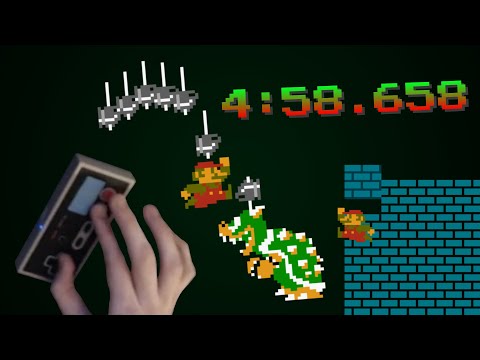
Super Mario Bros. One-Handed WR: 4:58.658 - The Ultimate Deep Dive!

Ever stared at the iconic Super Mario Bros. title screen and wondered what the absolute limits of human execution are? The speedrunning community constantly pushes boundaries, and this recent World Record (WR) in the Super Mario Bros. One-Handed category is a testament to that dedication. A staggering 4:58.658 – let that sink in. This isn't just about beating the game; it's about mastering it under extreme constraints. The question on every gamer's mind is: How is this even possible?

Introduction: The Unprecedented One-Handed Feat

The original Super Mario Bros. is a cornerstone of gaming history. For decades, players have been obsessed with shaving off milliseconds, discovering new speedrunning techniques, and pushing the game to its absolute limits. The "Any%" category is the most popular, but specialized categories like "One-Handed" add a unique layer of difficulty and challenge. Achieving a sub-5-minute time in this category is nothing short of phenomenal. This isn't just a record; it's a demonstration of peak human performance under self-imposed restrictions.

This record, set at 4:58.658, pushes the boundaries of what we thought was possible. It prompts a deep dive into the mechanics of Super Mario Bros., the dedication of its speedrunning community, and the sheer willpower required to achieve such a feat. We're going to explore what makes this category so demanding, the specific strategies employed, and what it means for the future of gaming speedrun.

The One-Handed Constraint: More Than Just a Gimmick

At first glance, playing a game with one hand might seem like a novelty, a simple handicap. However, in a game as precise as Super Mario Bros., this constraint fundamentally changes the gameplay. Every jump, every movement, every decision must be executed with a single hand controlling all inputs. This dramatically increases the difficulty and requires an extraordinary level of muscle memory and strategic planning.

Think about the precise jump timings needed to navigate the Mushroom Kingdom. Even with two hands, a single misstep can cost valuable seconds. With one hand, the margin for error is microscopic. This category forces runners to abandon certain established strategies that might rely on quick, dual-handed manipulations, and instead find new ways to optimize movement and execution using only one limb. It truly tests the limits of dexterity and coordination.

"This category cannot be played on keyboard due to the tremendous comfort advantage it can have."

This quote from the record holder highlights a crucial point: the playing field must be leveled. While keyboards offer certain advantages in precision and speed for some games, for a category specifically designed around a physical limitation, using a standard keyboard would defeat the purpose. The reliance on a specific controller type ensures that the challenge remains focused on the one-handed execution itself.

Understanding the Controller Requirements

The rules of the Super Mario Bros. One-Handed category are designed to maintain the integrity of the challenge. As stated, "An original or dogbone style NES controller must be used for this category." This isn't just about nostalgia; it's about adhering to the spirit of playing on original hardware or authentic replicas. The use of a wireless 8BitDo NES controller, specifically modified by removing the turbo buttons, further underscores the commitment to a pure, challenging experience.

Why this specific controller? The original NES controller, with its iconic D-pad and single action button, is the most basic input device for the game. Using a wireless version removes any potential advantage from cord length or connection interference, while removing the turbo buttons ensures that the player is truly performing each action manually. This adherence to retro hardware standards is a hallmark of many dedicated speedrunning communities, preserving the authenticity of the challenge.

Unpacking the Strategies and Techniques

Achieving a 4:58 requires near-perfect execution of established speedrun strategies, but also potentially new optimizations tailored for one-handed play. While specific details of the record-breaking run would require an in-depth video analysis, we can infer some key aspects based on general Super Mario Bros. speedrunning:

  • Optimal Route: The fastest route through the game is crucial. This involves identifying the shortest and most efficient path through each level, minimizing backtracking and unnecessary actions.
  • Frame-Perfect Jumps and Skips: Many records rely on hitting specific inputs at exact frame intervals to perform advanced maneuvers. This includes skips that bypass entire sections of levels or precise jumps that maintain momentum.
  • Power-Up Management: While less critical in Any% compared to other categories, knowing when to grab a Mushroom or Fire Flower can sometimes optimize certain segments.
  • Enemy Manipulation: Understanding enemy patterns and positioning is key to avoiding them or using them to your advantage (e.g., bouncing off them for extra height).
  • Glitch Exploitation: While the "One-Handed" category might lean towards less glitch-heavy strategies to maintain focus, some minor glitches or unintended mechanics could be leveraged if they provide a significant time save and are within the rules. Techniques like the flagpole glitch, while difficult, could be relevant.

The "One-Handed" aspect likely means that strategies requiring rapid button combinations or complex directional inputs will be significantly harder, forcing a focus on simpler, yet equally precise, one-handed execution.

"I plan to improve this to a 4:57 eventually unless hand pain gets in the way of it."

This statement is a stark reminder of the physical toll speedrunning can take, especially in a category like this. The risk of injury, like carpal tunnel syndrome, is very real. It speaks to the incredible dedication and sacrifice involved in pursuing these records. This pursuit of perfection is a core part of the speedrunning community.

The Role of RNG and Frame-Perfect Execution

Even in a game as old as Super Mario Bros., Random Number Generation (RNG) plays a subtle but significant role. Enemy spawn patterns, coin block contents, and even movement physics can have slight variations. For a speedrunner aiming for WR, minimizing the impact of bad RNG and maximizing the benefit of good RNG is paramount. This often involves developing strategies that are either RNG-manipulation friendly or robust enough to handle minor variations.

The sub-4:58 time strongly suggests that this run was incredibly clean, likely with minimal RNG variance or successful manipulation. The level of precision required for a one-handed run means that even a single missed frame on a jump could cost the record. This is where the true expertise of a top-tier speedrunner shines through – their ability to execute complex inputs with unparalleled consistency, often down to the frame.

The Grind: Training, Dedication, and Pain

Breaking a World Record, especially in a challenging category like Super Mario Bros. One-Handed, isn't achieved overnight. It requires thousands of hours of practice, meticulous study of existing runs, and a deep understanding of the game's mechanics. The runner likely spent countless hours:

  • Practicing individual levels repeatedly to perfect specific segments.
  • Studying the speedrun routes and techniques of other top players.
  • Experimenting with different approaches to find the most efficient one-handed strategies.
  • Enduring the physical strain and potential pain associated with repetitive motions.

This level of dedication is what defines the true spirit of speedrunning. It's a journey of self-improvement, pushing personal limits, and contributing to the collective knowledge of a game's mechanics. The community aspect, sharing strategies and celebrating achievements, is a huge motivator.

Impact on the Speedrunning Community

A new World Record, especially in a classic title like Super Mario Bros., always sends ripples through the speedrunning community. This 4:58.658 run is significant for several reasons:

  • Inspiring New Players: It shows that even in a game that has been optimized for decades, there is still room for incredible human achievement and innovation.
  • Highlighting Niche Categories: It brings attention to specialized categories that might otherwise be overlooked, encouraging more players to try them.
  • Pushing Technical Boundaries: It forces runners to re-evaluate what's possible with limited inputs, potentially leading to the discovery of new techniques or optimizations.
  • Demonstrating Dedication: It serves as a powerful example of the commitment, skill, and perseverance required to reach the top of any speedrun.

The fact that this is a WR (World Record) category with specific rules about controllers also emphasizes the community's desire for fair and consistent competition. The pursuit of these records is a collaborative effort, with runners building upon each other's discoveries.

Frequently Asked Questions

Q1: What is the "One-Handed" category in Super Mario Bros. speedrunning?

The "One-Handed" category requires players to complete the game using only one hand to control an original NES controller (or a faithful replica). This adds a significant layer of difficulty to the standard speedrun.

Q2: Why is a specific NES controller required?

The rule is in place to ensure fairness and maintain the integrity of the challenge. It prevents players from using devices like keyboards, which could offer a significant comfort and control advantage, thereby negating the one-handed constraint.

Q3: How does playing with one hand affect speedrunning strategies?

It forces players to adapt or abandon strategies that rely on quick, dual-handed inputs. Focus shifts to simpler, yet perfectly timed, single-handed executions and potentially new routing or movement techniques.

Q4: Is it possible to cheat in the One-Handed category?

While cheaters exist in all forms of gaming, the speedrunning community has robust verification processes. For a WR like this, the run would be meticulously reviewed for any suspicious activity, and the use of specific hardware adds another layer of trust. The dedication to fairness is high in this community.

Q5: What are the risks of playing in the One-Handed category?

The primary risk is physical strain, such as carpal tunnel syndrome, due to the repetitive motions required to play with only one hand for extended periods.

The pursuit of the 4:58.658 World Record in Super Mario Bros. One-Handed is more than just a gaming achievement; it's a story of human dedication, mastery of game mechanics, and the relentless spirit of the speedrunning community. It showcases how even the most classic games can still offer incredible challenges and inspire breathtaking feats of skill. The dedication of players like the record holder proves that the passion for gaming knows no bounds, even when facing physical limitations.

What are your thoughts on this incredible achievement? Have you ever attempted a speedrun with a handicap? Share your experiences and strategies in the comments below! What other classic games would you like to see broken down for speedrunning potential?