Le Speedrun Ultime de Minecraft : Dompter un Seul Chunk

Salut à tous, speedrunners et passionnés de défis ! Vous êtes-vous déjà demandé si une partie de Minecraft pouvait être condensée à l'extrême, à tel point qu'elle tienne... dans un seul chunk ? Moi, en tout cas, je me suis lancé dans cette aventure folle pour tester mes limites et, avouons-le, pour voir si c'était même possible. Si comme moi vous êtes un vrai hardcore gamer et que l'idée de repousser les frontières du possible dans vos jeux préférés vous anime, alors vous êtes au bon endroit. Accrochez-vous, car aujourd'hui, on plonge tête la première dans le guide ultime pour le *speedrun* de Minecraft sur un seul chunk.

Une Introduction Éclair au Défi

Le speedrunning, c'est l'art de finir un jeu le plus vite possible. Mais quand on parle de Minecraft, le jeu bac à sable par excellence, le concept prend une toute autre dimension. Pousser le défi à l'extrême en se limitant à un seul chunk (cette unité de génération de monde de 16x16 blocs) demande une maîtrise qui dépasse le cadre du simple joueur expérimenté. C'est une épreuve de planification millimétrée, de connaissance intime des mécaniques de jeu et d'une exécution sans faille. Mon expérience m'a montré que la préparation est la moitié de la bataille gagnée.

Pourquoi un Seul Chunk est un Défi Unique

Dans un speedrun Minecraft classique, l'exploration et la gestion des ressources sur une carte immense sont primordiales. Ici, tout est concentré. Chaque action doit être optimisée car l'espace est drastiquement limité. C'est un peu comme un puzzle géant où chaque pièce doit s'emboîter parfaitement pour atteindre le but avant la fin du chronomètre. Ce format pousse à réinventer les stratégies habituelles.
Le défi du "one chunk" force une créativité débridée. On ne peut plus se permettre le moindre gaspillage de temps ou de ressources.
Pour réussir ce type de speedrun, il faut une version de Minecraft qui permette une personnalisation poussée, notamment la génération de mondes spécifiques.

Préparatifs Essentiels : Le Setup Parfait

Avant même de penser à lancer le chronomètre, la préparation est capitale.
  • Connaissance du jeu : Il ne s'agit pas juste de connaître les bases. Il faut maîtriser les mécaniques de génération, le comportement des mobs, les cycles jour/nuit, et surtout, comment optimiser chaque action dans un espace restreint.
  • Choix du Monde : La première étape cruciale est de trouver ou créer le "monde" parfait. Un monde qui n'est constitué que d'un seul chunk ! Cela simplifie énormément le processus. Vous pouvez trouver des mondes pré-faits en ligne sur des plateformes dédiées au speedrun Minecraft ou, si vous êtes ambitieux, utiliser des outils de génération pour créer le vôtre. L'important est d'avoir un chunk qui offre les ressources nécessaires à votre objectif final.
  • Objectifs clairs : Qu'allez-vous faire dans ce chunk ? Vaincre l'Ender Dragon ? Obtenir un certain nombre d'items ? Le speedrun classique vise souvent la fin du jeu, mais ici, les objectifs peuvent être plus variés et spécifiques à ce défi. Définissez votre but précis.

Stratégie Optimale : L'Art de l'Efficacité

Une fois le setup prêt, il faut penser stratégie. C'est là que l'expertise entre en jeu.
  1. Planification des ressources : Quels sont les matériaux indispensables ? Comment les obtenir dans un espace aussi limité ? Pensez à la génération de cobblestone infinie, à l'eau et la lave pour créer des sources, et surtout, à la manière de générer des objets clés comme le silex ou le fer.
  2. Optimisation des déplacements : Dans un seul chunk, chaque bloc compte. Il faut minimiser les allers-retours inutiles. Construisez intelligemment pour créer des ponts, des échelles, et optimiser l'accès aux différentes zones du chunk.
  3. Gestion des mobs : Les créatures hostiles peuvent être vos alliées (pour les dropper) ou vos ennemies. Savoir comment les attirer, les contrôler ou s'en débarrasser rapidement est essentiel. Parfois, un bon placement peut transformer une menace en une ressource.
La planification de votre stratégie est le pilier de votre succès. Une bonne compréhension des mécaniques du jeu est votre meilleur atout.
Consulter des guides et regarder d'autres speedruns est une excellente manière de découvrir de nouvelles astuces.

Exécution et Pratique : La Clé du Succès

C'est bien beau d'avoir la meilleure stratégie sur le papier, mais c'est en s'entraînant qu'on devient un maître. Le speedrunning de Minecraft sur un chunk est exigeant et demande de la répétition.
  • Entraînement régulier : Jouez, échouez, réessayez. Chaque tentative est une leçon. Essayez d'améliorer votre temps, de trouver des raccourcis, et d'affiner vos mouvements.
  • Mémorisation : Vous devez connaître votre chunk par cœur. Où se trouve chaque ressource potentielle, quel est le chemin le plus court entre deux points, comment réagit un mob à tel endroit.
  • Adaptabilité : Même avec la meilleure préparation, le RNG (Random Number Generator) peut jouer des tours. Il faut savoir improviser et s'adapter rapidement si quelque chose ne se passe pas comme prévu.

Techniques Avancées et Glitches Potentiels

Pour les speedrunners les plus audacieux, l'exploration des limites du jeu et des bugs potentiels peut faire gagner des secondes précieuses, voire des minutes.
  • Utilisation des glitches : Certains glitches peuvent permettre de traverser des blocs, de dupliquer des items, ou d'accélérer certains processus. La communauté speedrun Minecraft est souvent à la pointe de la découverte de ces "skips".
  • Stratégies spécifiques aux versions : Les versions de Minecraft ont des différences notables dans leurs mécaniques. Une stratégie qui fonctionne sur la 1.8 pourrait être inutile sur la 1.16. Assurez-vous que votre stratégie est adaptée à la version que vous utilisez.
  • La "Chunk Loading" : Dans certains cas, savoir comment charger ou décharger des chunks peut influencer votre partie, bien que dans un speedrun d'un seul chunk, cela soit moins pertinent que la gestion interne de ce chunk.
En maîtrisant les techniques avancées, vous pouvez vraiment faire la différence entre un bon temps et un record du monde.

Le Moment de Vérifier : L'Enregistrement

Une fois que vous pensez avoir le run parfait, il faut le prouver.
  • Logiciels d'enregistrement : Utilisez un logiciel fiable comme OBS Studio pour capturer votre partie. Assurez-vous que la qualité de l'enregistrement est suffisante pour être soumise aux classements officiels.
  • Soumission : Les sites comme Speedrun.com sont les plateformes de référence pour soumettre vos temps. Suivez leurs règles de soumission, qui incluent souvent la fourniture de la vidéo de votre run.
Ce défi est difficile, mais incroyablement gratifiant. C'est une manière unique de redécouvrir Minecraft et de pousser vos compétences de joueur à leur paroxysme.

Questions Fréquentes

Q1 : Est-il possible de faire un speedrun de Minecraft sur un seul chunk pour gagner de l'argent ?

Bien que certains concours de gaming offrent des prix, le speedrun sur un seul chunk est plus un défi personnel ou communautaire. Les gains financiers directs sont rares, mais la gloire et le respect de la communauté en valent la chandelle pour beaucoup.

Q2 : Quelle est la version de Minecraft recommandée pour ce type de speedrun ?

Historiquement, les versions plus anciennes comme la 1.8.1 étaient populaires pour les speedruns classiques en raison de mécaniques spécifiques. Pour le "one chunk", cela dépendra des stratégies et des glitches que vous souhaitez exploiter. La communauté speedrun Minecraft est la meilleure source pour connaître les versions les plus optimisées pour des défis spécifiques.

Q3 : Comment trouver un monde "un seul chunk" pour mon speedrun ?

Vous pouvez chercher des "world seeds" spécifiques sur des forums de speedrun Minecraft one chunk seeds, ou utiliser des outils de génération de monde personnalisés pour créer votre propre chunk idéal.

Q4 : Quels sont les objectifs les plus courants pour un speedrun sur un seul chunk ?

Les objectifs peuvent varier : vaincre l'Ender Dragon, collecter un certain nombre d'items rares, construire une structure spécifique, ou simplement terminer le jeu avec des contraintes extrêmes. Le défi lui-même est souvent l'objectif principal.

Voilà, futurs maîtres du chunk unique ! Ce speedrun est une épreuve qui mettra à rude épreuve votre patience, votre ingéniosité et vos réflexes. Mais la satisfaction de maîtriser un tel défi est immense. Alors, préparez votre clavier, affûtez votre souris, et lancez-vous ! N'oubliez pas de partager vos propres expériences, vos meilleurs temps, ou vos découvertes les plus folles dans les commentaires ci-dessous. La communauté speedrun Minecraft est toujours avide de nouveaux défis et de nouvelles stratégies. Rejoignez notre serveur Discord pour en discuter et trouver d'autres speedrunners prêts à en découdre ! Bonne chance, et que vos runs soient rapides !
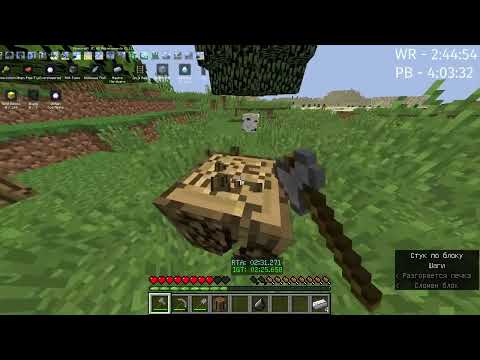
How Fast Can You *Actually* Speedrun Minecraft in Just One Week?

Introduction: The Minecraft Speedrunning Challenge

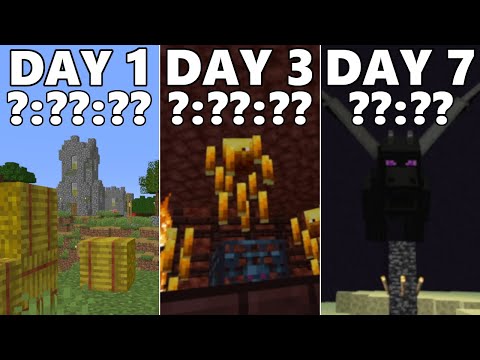
Alright, fellow gamers and speedrunning enthusiasts! You've seen the mind-blowing times posted by legends like Dream and Benex, and you've probably thought, "Could I do that? Could *anyone* realistically speedrun Minecraft in just a week?" Well, that's exactly the question I set out to answer. This wasn't just another gaming session; it was a deep dive into the chaotic, exhilarating world of Minecraft speedruns, all crammed into seven intense days. Get ready, because we're breaking down the challenge, the strats, and whether becoming a WR holder in a week is more than just a pipe dream.

Why Minecraft Speedrunning is Unique

Let's be honest, speedrunning Minecraft feels fundamentally different from, say, beating Super Mario 64 as fast as possible. It's not just about executing precise platforming or memorizing enemy patterns. Minecraft speedrunning is a beast of its own, a volatile mix of procedural generation, player skill, and an almost absurd amount of RNG (Random Number Generation). Unlike games with fixed maps, every speedrun start is a new adventure, a new world seed with unique challenges and opportunities.

The core gameplay loop involves gathering resources, crafting essential tools, finding a stronghold, and finally defeating the Ender Dragon. Each step is a mini-challenge. Do you go for a glitchless run, which demands near-perfect execution and resource management, or do you delve into the more technical glitch-heavy categories that can shave off precious minutes but require immense practice? This duality makes Minecraft speedrunning incredibly dynamic and endlessly replayable.

The sheer variability of a Minecraft world seed means no two speedruns are ever truly identical. This adds a layer of unpredictability that's both frustrating and incredibly exciting.

The "One Week" Goal: Is it Realistic?

So, can you achieve a respectable speedrun time in Minecraft within a single week? My experience says: yes, but with massive caveats. The original WR for a glitchless Minecraft run was around 24 minutes, as set by Benex. Reaching that level of mastery in seven days? Highly improbable for a newcomer. However, can you complete a run, learn the core mechanics, and perhaps achieve a personal best (PB) that you're proud of? Absolutely.

This week-long challenge is less about breaking world records and more about understanding the meta, practicing key techniques, and experiencing the speedrunning grind firsthand. It's about pushing your limits and seeing how quickly you can adapt and improve within a compressed timeframe. You'll learn quickly that consistent practice is far more valuable than a few lucky breaks.

Lessons from the Pros: Dream, Benex, and More

During my week of intense practice, I found myself constantly turning to the masters. Watching videos from players like Dream and Benex was crucial. Dream's iconic Minecraft speedrun world record videos showcased incredible efficiency and clutch plays. Benex, on the other hand, often highlights the meticulous planning and execution required for glitchless runs, including his impressive 24:32 record on Minecraft 1.16. It’s inspiring to see how they optimize every second.

But it's not just about the top-tier players. Resources like Tiger856's tutorials ("How to Speedrun Minecraft Fast!" and "How to Speedrun Minecraft in Under an Hour!") provided invaluable insights into game mechanics and strategies for specific versions like 1.16 and 1.14.4. Even mini-tutorials, like BlueCrystal's guide on blaze farm construction, are game-changers for late-game efficiency. These resources are the bedrock upon which successful speedruns are built.

Key Strategies and Glitches (or Lack Thereof)

For a week-long challenge, focusing on a glitchless run is often the most practical approach. Mastering complex glitches requires dedicated practice that might be hard to fit into seven days. The core of a glitchless speedrun revolves around:

  • Efficient Resource Gathering: Quickly acquiring wood, stone, iron, and diamonds.
  • Swift Crafting: Knowing exactly what to craft and in what order. This includes beds for quick dragon kills and specific armor pieces.
  • Strategic Base Building: Creating a small, functional base near a good spawn point for quick restarts if things go wrong.
  • Targeted Exploration: Quickly locating villages for beds and iron, and efficiently finding the stronghold.

While I focused on glitchless, it's worth noting that categories involving glitches exist and can lead to significantly faster times. However, the precision needed for techniques like triangulation or object duplication is steep learning curve.

Resource Management: Early Game is Crucial

The first 10-15 minutes of a Minecraft speedrun are arguably the most critical. You need to spawn, gather enough wood for basic tools and a crafting table, find stone for better tools, and then immediately hunt for iron. Getting an iron pickaxe early is paramount for mining diamonds and obsidian.

Finding a village early can be a massive boon. Villages provide access to beds (essential for the Ender Dragon fight), food, and sometimes even iron golems to fight for ingots. If a village isn't nearby, prioritizing finding sheep for beds and then heading straight for iron ore becomes the primary objective. Every second spent chopping unnecessary trees or wandering aimlessly is a second lost.

In my runs, the difference between a good start and a bad start often came down to how quickly I could secure iron. It dictates your ability to progress efficiently.

Conquering the Nether

Entering the Nether is a significant milestone. Your main objectives here are to find a Nether Fortress to gather Blaze Rods (for Eyes of Ender) and locate a Bastion Remnant or Piglin structure for gold (if needed for bartering). Navigation in the Nether is treacherous.

Key Nether Strats:

  • Finding Fortresses Quickly: Learn to identify fortress structures by their appearance and build patterns. Listen for the sounds of Blazes.
  • Blaze Rod Farming: Efficiently kill Blazes. Aim for at least 7-10 rods, depending on how many Eyes of Ender you might need.
  • Minimizing Danger: Avoid ghast fireballs and magma cubes. Use water buckets (if you have one) to negate fire damage and create safe spots.
  • Piglin Bartering (Optional but Recommended): If you have spare gold, bartering with Piglins can yield valuable items like Ender Pearls, flint, and even obsidian.

A common strategy is to build a safe perimeter around your portal to prevent Piglins or Ghasts from immediately attacking you upon entry.

The Final Push: Stronghold and Ender Dragon

Once you have enough Blaze Rods and have gathered Ender Pearls (often through bartering or finding Endermen in the Overworld), it's time to craft Eyes of Ender. These are your guides to the Stronghold.

Locating the Stronghold:

  1. Throw an Eye of Ender; it will fly towards the Stronghold.
  2. Travel a significant distance (a few hundred blocks) and throw another.
  3. Repeat this process, adjusting your direction based on the Eye's trajectory. Don't throw them too close together, or you'll get lost.
  4. Once the Eye flies downwards, you're above the Stronghold. Dig down carefully.

Inside the Stronghold, the hunt is on for the End Portal room. Once found, place the Eyes of Ender into the frame. Be prepared for the Ender Dragon fight!

Ender Dragon Strategy:

  • Destroy Ender Crystals: Shoot the crystals on the obsidian towers first. Some are caged and require precise shots or climbing.
  • Dragon Attacks: Dodge the dragon's breath attacks and dive bombs.
  • Damage: Use beds to cause massive explosion damage when the dragon perches on the central portal. This is a high-risk, high-reward strategy popular in speedruns. Alternatively, use a bow and arrows.

Upon defeating the dragon, the portal back to the Overworld appears, signifying the end of the speedrun. The timer stops when you enter the portal.

The Ever-Present RNG Factor

As much as you practice, RNG will always play a role in Minecraft speedrunning. Will you spawn near a village? Will the Nether Fortress be close to your portal? Will you find enough Ender Pearls easily? Will the Stronghold be easy to navigate? Will the dragon's attack patterns be favorable?

Learning to adapt to bad RNG is as important as mastering good RNG. Sometimes, a run is doomed from the start due to a terrible spawn. Other times, a lucky find can give you the edge you need. In a week-long challenge, you'll experience both ends of the spectrum, reinforcing the need for resilience.

My Personal Journey: The Grind is Real

Attempting to speedrun Minecraft in a week was an eye-opening experience. While I didn't come close to any official WR times, I gained a profound respect for the dedication and skill involved. The sheer number of resets required was staggering. I learned to quickly diagnose what went wrong in a run – was it a bad initial resource spawn, a missed iron vein, a poor Nether navigation, or a botched dragon fight? Each failed run was a lesson.

The most rewarding moments were when a strategy finally clicked, or when a series of plays unfolded perfectly, leading to a faster time than before. It’s that feeling of improvement, that small victory, that keeps you coming back. This challenge isn't just about the destination (the end credits), but the journey of mastering a complex game under pressure. It's a true test of patience, skill, and a bit of luck.

Frequently Asked Questions

How long does it take to speedrun Minecraft for beginners?

For a complete beginner, completing a speedrun in under an hour is a realistic goal within a week of practice. Achieving times closer to the 20-30 minute mark for glitchless runs requires hundreds of hours of dedicated practice and understanding of advanced strats.

Is Minecraft speedrunning difficult?

Yes, Minecraft speedrunning is considered quite difficult, especially in the glitchless categories. It demands excellent game knowledge, precise execution, resource management skills, and the ability to adapt to unpredictable RNG.

What is the fastest Minecraft speedrun time?

The fastest known Minecraft speedrun times are incredibly low, often under 15 minutes for categories that allow specific glitches. For glitchless runs on random seeds, times are typically in the low 20-minute range.

Can you learn to speedrun Minecraft in a weekend?

You can learn the basic mechanics and complete a full run within a weekend. However, achieving a competitive time or even a solid PB (Personal Best) usually requires significantly more time and consistent practice.

So, how fast can *you* speedrun Minecraft in a week? The only way to truly find out is to jump in, practice those strats, embrace the chaos, and see what times you can achieve. The speedrunning community is always welcoming, so don't hesitate to share your progress or ask for tips.

What are your thoughts on Minecraft speedrunning? Have you tried it yourself? Let us know your experiences and best times in the comments below! If you're looking for more tips, strategies, or just want to connect with fellow speedrunners, consider joining our Discord channel. Happy running!

Mastering Minecraft Education Edition: The Ultimate Speedrun Guide and Strategies

{ "@context": "https://schema.org", "@type": "BlogPosting", "headline": "Mastering Minecraft Education Edition: The Ultimate Speedrun Guide and Strategies", "image": "https://img.youtube.com/vi/tkuP-i-YHKQ/hqdefault.jpg", "author": { "@type": "Person", "name": "The GamingSpeedrun Team" }, "publisher": { "@type": "Organization", "name": "GamingSpeedrun.com", "logo": { "@type": "ImageObject", "url": "https://example.com/logo.png" } }, "datePublished": "2023-10-27T10:00:00+00:00", "dateModified": "2023-10-27T10:00:00+00:00", "video": { "@type": "VideoObject", "name": "i speedrun minecraft education edition", "description": "Speedrunning Minecraft Education Edition with EazySpeezy.", "uploadDate": "2023-10-27T10:00:00+00:00", "thumbnailUrl": "https://img.youtube.com/vi/tkuP-i-YHKQ/hqdefault.jpg", "contentUrl": "https://www.youtube.com/watch?v=tkuP-i-YHKQ", "embedUrl": "https://www.youtube.com/embed/tkuP-i-YHKQ" } } ```
So, you've found yourself asking, "i speedrun minecraft education edition." Let's be honest, it might not sound like the most intense speedrun category out there. You might be thinking it's a far cry from the punishing challenges of games like Baldurs Gate Speedrun or the intricate glitches of other titles. But hear me out – there's a unique thrill and an unexpected depth to be found in conquering Minecraft's educational iteration as fast as humanly possible. This isn't just about hitting buttons; it's about leveraging game mechanics, understanding the underlying systems, and executing with precision. Whether you're a seasoned speedrunner looking for a new challenge or a curious gamer, this guide will dive deep into the strategies, mindsets, and essential knowledge needed to conquer Minecraft: Education Edition.

Why Speedrun Minecraft Education Edition?

The immediate question for many is: why tackle Minecraft: Education Edition for a speedrun? Unlike its more sandbox-oriented cousin, Education Edition is often structured around specific learning objectives and challenges. This provides a built-in framework that can be exploited for speedrunning. You're not just breaking the game; you're mastering its intended design at an accelerated pace. It's a test of your ability to understand and manipulate game mechanics, even those designed for educational purposes. Plus, there's a certain satisfaction in showing that even educational tools can be subjected to the relentless pursuit of speed. It's about proving your mastery over the system, no matter its original intent.

In my experience, the core appeal lies in the unexpected twists and turns. You might think you know Minecraft, but the specific curriculum-based elements or structured lessons can introduce unique variables. It's a different kind of puzzle, one where the solution isn't just about efficiency, but also about understanding the underlying programming and player progression within its designed parameters. It’s a unique blend of learning and gaming, making it a surprisingly engaging endeavor for any dedicated gamer.

Understanding the Game Modes and Objectives

Minecraft: Education Edition often presents players with specific tasks or "worlds" designed to teach particular concepts, from coding and chemistry to history and art. For a speedrun, the objective typically boils down to completing the primary goal of that specific world or lesson as quickly as possible. This could mean building a designated structure, solving a puzzle, or gathering specific resources within a time limit.

The key here is to identify the critical path. What are the absolute minimum steps required to achieve the objective? Any deviation, any unnecessary exploration, or any time spent on optional elements is a direct detriment to your speedrun. This requires a deep understanding of the specific lesson's mechanics and how to bypass or accelerate them. It’s less about exploring every nook and cranny and more about navigating the most efficient route, much like optimizing a run in games like TESIV.

Key Strategies for a Faster Run

To achieve those lightning-fast times, a combination of strategic thinking and precise execution is paramount. Here are some core strategies that will shave precious seconds (and potentially minutes) off your runs:

  • Route Optimization: Before you even load into the game, have a meticulously planned route. Know exactly where you need to go, what blocks to break, what items to collect, and in what order.
  • Resource Management: Understand which resources are essential and which can be skipped. Efficiently gather only what you need, and use crafting recipes that require minimal components.
  • Exploiting Game Mechanics: Even in an educational version, Minecraft has underlying mechanics that can be leveraged. This might include understanding mob AI, block placement physics, or even specific lesson-based triggers.
  • Movement Tech: Master sprinting, jumping, and any other movement abilities available to traverse the world as quickly as possible. Minimal downtime is key.
  • Knowledge of Specific Lessons: Each world or lesson in Education Edition has unique rules and objectives. Knowing these inside and out is crucial for finding the fastest solution.
"The true art of speedrunning Minecraft: Education Edition isn't just about speed, but about understanding the intended progression and finding the fastest way to bypass or fulfill it."

Essential Minecraft Education Edition Mechanics for Speedrunners

While Minecraft: Education Edition might seem simplified, certain mechanics are vital for speedrunning success. Mastering these will be the difference between a good run and a great one.

  • Block Placement and Breaking: This is fundamental. Learn the fastest ways to place and break blocks, especially when constructing or clearing paths. Knowing the speed at which different tools break blocks is critical.
  • Crafting Speed: Understand the crafting interface. Sometimes, the fastest way to craft is by knowing the precise recipe and quickly inputting it, minimizing mouse movement and clicks.
  • Inventory Management: A cluttered inventory can cost valuable seconds. Learn to quickly sort and access the items you need. Stacking is your friend.
  • NPC Interaction (if applicable): Some lessons involve interacting with NPCs. Understanding their dialogue trees and how to trigger them efficiently can save time.
  • Lesson-Specific Mechanics: This is where Education Edition shines (and can be tricky). For example, if a lesson involves setting up a redstone circuit, you need to know the fastest way to place the components and test them. If it’s about chemistry, knowing the quickest way to synthesize the required elements is paramount.

One of the most powerful mechanics in any version of Minecraft is inventory management. In a speedrun, every second counts, and fumbling through your inventory for the right item can cost you dearly. I’ve spent countless hours practicing quick swaps and hotbar setups to ensure I have what I need at a moment’s notice. This is especially true when building complex structures under pressure, similar to the demands of a Oblivion Speedrun where every second in crafting can mean the difference between a PB and a reset.

"Don't underestimate the power of a well-organized hotbar. It's your lifeline in a speedrun."

Common Speedrunning Challenges and Solutions

Even in an educational environment, speedrunning isn't without its hurdles. Here are some common challenges and how to overcome them:

  • Unpredictable RNG: While less prevalent than in some other games, certain aspects of Minecraft, like mob spawning or block generation, can have an element of randomness. The best approach is to have robust strategies that can handle slight variations or to accept that some runs will be luckier than others. Mastering RNG manipulation, even to a small degree, can be a game-changer.
  • Lesson-Specific Hurdles: Sometimes, a particular lesson's design might intentionally slow down progress. Identifying these roadblocks and finding clever ways to bypass them or complete them with maximum efficiency is key. This might involve using exploits or understanding hidden game mechanics.
  • Learning Curve of Education Edition: If you're new to the Education Edition, there will be a learning curve. Familiarize yourself with its unique features, interface, and any differences from the Java or Bedrock editions.
  • Technical Issues: Like any game, technical glitches or performance issues can occur. Ensure your system is optimized and be prepared to adapt if something unexpected happens.

One of the most common issues I've encountered is the RNG, particularly with mob spawns or certain interactive elements within lessons. In a standard playthrough, you might wait for the perfect moment. In a speedrun, you can't afford to wait. This is where understanding the game's RNG patterns and having contingency plans becomes crucial. Sometimes, it means a quick adaptation, and other times, it means resetting the run if the RNG is too unfavorable.

Another significant challenge can be understanding lesson-specific mechanics. For instance, a world designed to teach about Redstone may have complex circuits. Your goal isn't to learn Redstone in depth, but to execute the speedrun objective related to it as fast as possible. This means understanding just enough to bypass or optimize the intended learning process for speed.

"Don't get bogged down learning every detail of a lesson. Focus on the objective and the fastest path to completion."

FAQs

What is the main objective when speedrunning Minecraft: Education Edition?

The main objective is to complete the specific goals or lessons within Minecraft: Education Edition as quickly as possible. This varies greatly depending on the world or challenge, but it always revolves around efficiency and minimizing time.

Is Minecraft: Education Edition harder to speedrun than other versions?

It can be different. While it might lack some of the complex glitches found in other versions, its structured, educational nature introduces unique challenges and requires a different kind of strategic thinking to exploit its intended mechanics for speed.

What are the most important mechanics for an Education Edition speedrun?

Key mechanics include efficient block placement and breaking, fast crafting, optimized inventory management, understanding lesson-specific triggers, and mastering movement techniques.

How can I find specific speedrun routes for Minecraft: Education Edition worlds?

You can often find routes and strategies on community forums, speedrunning websites like speedrun.com, or by watching successful speedruns on platforms like YouTube and Twitch. The speedrunning community is a great resource.

Are there any known glitches or exploits in Minecraft: Education Edition that speedrunners use?

While less extensively documented than in other editions, speedrunners often discover and utilize glitches or unintended mechanics within specific lessons or worlds to gain an advantage. This is part of the discovery process in speedrunning any game.

Conclusion: The Unexpected Thrill of Educational Speedruns

Speedrunning Minecraft: Education Edition might seem like an odd choice at first glance, but it offers a unique and rewarding challenge. It's a testament to the fact that speedrunning isn't just about mastering combat or complex platforming; it's about understanding and deconstructing any system with the goal of achieving maximum efficiency. From route planning and resource management to exploiting niche mechanics and adapting to unexpected challenges, every element of a successful speedrun is a skill that translates across many games. So, whether you're aiming for a WR or just want to beat your personal best, diving into Minecraft: Education Edition speedruns can be an incredibly fun and surprisingly educational experience.

What are your thoughts on speedrunning educational games? Have you attempted any yourself? Share your personal best times, your favorite strats, or any interesting glitches you've discovered in the comments below! If you found this guide helpful, consider sharing it with your fellow speedrunners. And don't forget to join our GamingSpeedrun community Discord server to connect with other passionate players and discuss the latest in speedrunning!

Minecraft Speedrun All Achievements: Your Ultimate Guide to Mastering Versions 1.8-1.11

Hello, fellow speedrunners and Minecraft enthusiasts! Are you ready to push your skills to the absolute limit? If the thrill of shaving off milliseconds and the challenge of achieving every single in-game accomplishment in the shortest time possible gets your adrenaline pumping, then you've landed in the perfect spot. Welcome to the definitive guide to Minecraft Speedrun All Achievements, specifically focusing on the iconic versions 1.8 through 1.11.

Minecraft is more than just a game; it's a universe of endless possibilities. Building, exploring, surviving – it's all part of the magic. But for those of us who crave the ultimate test, the 'All Achievements' speedrun presents a unique and demanding challenge. It's not just about speed; it's about precision, knowledge, and an almost supernatural understanding of the game's mechanics.

What is All Achievements Speedrunning?

In the world of Minecraft speedrunning, the 'All Achievements' category is a beast of its own. Unlike standard speedruns that focus on reaching the Ender Dragon or completing a specific task, this category demands that you unlock every single achievement the game offers. This includes everything from crafting your first tool to venturing into the Nether, defeating bosses, and even more obscure goals.

This mode is widely considered one of the most complex and hardcore challenges in Minecraft. It requires a deep understanding of game mechanics, efficient resource management, and the ability to execute a precise route. Only the most dedicated and skilled players can truly master this discipline.

Why Versions 1.8 to 1.11?

The period between Minecraft versions 1.8 and 1.11 holds a special place in the hearts of many speedrunners. This era introduced significant gameplay changes and a robust set of achievements that provided fertile ground for creative routing and optimization.

These versions feature a stable set of mechanics that speedrunners have meticulously analyzed. Understanding the specific glitches, strats, and item interactions available within these patches is crucial for any aspiring runner. Mastering the nuances of these versions means you're tackling a well-documented yet still incredibly challenging landscape.

In my experience, mastering the specific movement mechanics and combat timings of 1.10 was key to shaving vital seconds off my runs.

Essential Strategies and Route Planning

Success in an 'All Achievements' speedrun hinges on meticulous planning. You can't simply wander around; every action must be deliberate and contribute to unlocking multiple achievements simultaneously.

  • Concurrent Achievement Unlocks: The core strategy is to plan your route so that completing one achievement naturally leads to, or assists in, the completion of others. For example, mining iron for tools can also contribute to achievements related to crafting or using specific items.
  • Resource Management: Efficiently gathering and utilizing resources is paramount. Know exactly what you need, how much you need, and the fastest way to acquire it. This includes wood, stone, iron, food, and any special items.
  • Nether Navigation: The Nether is a critical component for many achievements. Planning your portal location, understanding fortress layouts, and knowing how to quickly find Blazes and Wither Skeletons is vital.
  • Environmental Awareness: Understanding biome spawns, village locations, and potential structures like desert temples or jungle temples can save immense amounts of time.

Key Achievements to Focus On

While all achievements must be obtained, some act as major milestones or bottlenecks in your run. Prioritizing these can help structure your overall strategy.

  • Getting an Upgrade: The very first step, requiring you to craft a wooden pickaxe. Seems simple, but doing it quickly sets the pace.
  • Hot and Cold: Entering the Nether. This requires building a portal, a significant undertaking early on.
  • How Did We Get Here?: Obtaining all status effects. This is often one of the later, more complex achievements, requiring careful planning for brewing and mob interactions.
  • The End?: Defeating the Ender Dragon. While not the sole focus, it's a major achievement and often requires significant preparation.
  • Adventuring Time: Visiting every biome. This requires extensive travel and knowledge of world generation.

Don't forget the combat-related achievements, like defeating the Wither or obtaining specific mob drops. Each one adds layers to your planning.

Tips for Optimizing Your Run

Even with a solid route, little optimizations can make a massive difference. As a seasoned speedrunner, I've found these tricks invaluable:

  • Hotkeys and Inventory Management: Master your hotkeys for quick item selection and crafting. Efficient inventory management prevents fumbling.
  • Combat Techniques: Learn effective combat strategies for each mob, especially bosses like the Wither and Ender Dragon. Crit-spamming and effective use of shields or bows can drastically speed up fights.
  • Crafting Efficiency: Utilize the crafting table effectively. Sometimes, crafting multiple items at once saves time. Understand recipe shortcuts.
  • Movement: Master techniques like sprint-jumping, water bucket MLG, and potentially rabbit-proof strats if applicable to the version.
The sheer number of achievements means you'll often be jumping between vastly different objectives. Staying focused and adapting to the situation is key.

Common Pitfalls and How to Avoid Them

Every runner faces challenges. Knowing what to watch out for can save you from disaster:

  • Poor RNG: Bad luck with mob spawns, loot chests, or biome generation can be frustrating. While you can't control it, good planning mitigates its impact.
  • Getting Lost: Especially in the Nether or large cave systems. Always have a way to navigate back or find your objective.
  • Unnecessary Combat: Fighting mobs that aren't required for achievements can waste precious time and resources.
  • Forgetting Achievements: In a long run with many objectives, it's easy to overlook one. Double-checking your achievement list regularly is crucial.

The most critical aspect is practicing specific segments. If you struggle with finding a stronghold, dedicate practice sessions just to that. This is where the real gains are made.

The Importance of RNG

Let's talk about RNG (Random Number Generation). In any Minecraft speedrun, but especially in 'All Achievements', RNG plays a significant role. The location of villages, the loot in chests, the specific mobs that spawn in a fortress, the exact generation of a Stronghold – all of this is determined by random chance.

While you can't eliminate RNG, you can learn to adapt. Have backup plans. If the first village you find doesn't have what you need, know where to look for the next. Develop strategies that are robust enough to handle slightly unfavorable RNG, but also know when a run is becoming unsalvageable.

Community and Resources

No speedrunner is an island. The Minecraft speedrunning community is vast, supportive, and incredibly knowledgeable. Tapping into these resources can accelerate your learning curve dramatically.

  • Speedrun.com: The central hub for all speedrunning leaderboards, rules, and guides. You'll find specific categories for 'All Achievements' here.
  • Discord Servers: Many Minecraft speedrunning communities have active Discord servers where you can ask questions, share strategies, and connect with other runners.
  • YouTube and Twitch: Watching top runners tackle the 'All Achievements' category is one of the best ways to learn new strats and see high-level play in action.

Don't be afraid to ask questions! The community is generally welcoming to newcomers, and sharing your own discoveries is part of the fun.

Frequently Asked Questions

What is the fastest way to get iron in Minecraft 1.8-1.11?

Typically, finding a village with a blacksmith's house is the quickest way to get early iron. Alternatively, strip mining at specific Y-levels known for higher iron ore concentration is a reliable method.

How do I get the "How Did We Get Here?" achievement efficiently?

This achievement requires obtaining all 30 positive status effects. It involves brewing numerous potions, consuming various foods, and surviving specific mob attacks. It's best tackled later in the run when you have better access to resources and are more prepared.

Is it possible to speedrun Minecraft 'All Achievements' solo?

Yes, it is absolutely possible to complete the 'All Achievements' speedrun solo. While some strategies might be more efficient with a team, the category is designed and commonly run by individual players.

What are the most common 'skips' or 'glitches' used in these versions?

Depending on the exact version, runners might utilize techniques like boat clipping, specific block placements for duping, or exploiting AI behaviors. However, many 'All Achievements' runs focus on optimized vanilla gameplay rather than heavy glitch exploitation.

How long does a typical Minecraft 'All Achievements' speedrun take?

World record runs can be incredibly fast, often under an hour for specific versions. However, for most players, achieving a good time will involve many hours of practice, and initial completion times can range from several hours to over a day.

Mastering Minecraft Speedrun All Achievements across versions 1.8-1.11 is a journey, not a destination. It demands dedication, strategic thinking, and a willingness to learn and adapt. Every successful run is a testament to your skill and perseverance.

So, gear up, plan your route, and dive into the challenge. We can't wait to see what you accomplish! Share your own tips, record-breaking attempts, or questions in the comments below. Let's build the ultimate knowledge base together!

The Ultimate Guide to "Phone Minecraft" Speedrunning: Master the Mobile World Record!

The quest for the ultimate **Minecraft** speedrun is a never-ending journey for dedicated gamers. But what happens when you take the iconic sandbox survival experience and transplant it onto a mobile device? You get what many affectionately call "phone Minecraft," typically referring to Minecraft Bedrock Edition on smartphones or tablets. For those craving that ultimate challenge and the thrill of shaving off every possible second, diving into a **Minecraft speedrun** on a mobile platform presents a unique set of hurdles and stratagems. This isn't just about knowing the game; it's about mastering its mobile iteration, understanding its quirks, and pushing its boundaries to their absolute limits. If you've ever watched a professional speedrunner and thought, "I could do that faster!" or if you're simply looking to conquer the Ender Dragon in record time, this guide is your key. We'll dissect the strategies, the frustrations, and the sheer triumphs of speedrunning Minecraft on a phone. Get ready to optimize your runs, exploit every mechanic, and potentially set your own personal best!

Understanding the "Phone Minecraft" Speedrun Challenge

The core appeal of speedrunning any game lies in the pursuit of perfection and efficiency. When it comes to "phone Minecraft," the challenge is amplified by the inherent limitations and unique characteristics of mobile hardware and software. While the fundamental goal remains the same – to reach and defeat the Ender Dragon as quickly as possible – the path to achieving this is significantly different from its PC counterpart. For instance, the touch controls can introduce a layer of difficulty not present with a mouse and keyboard. Precise movement, quick inventory management, and accurate aiming become paramount. Furthermore, the specific version of Minecraft being used plays a massive role, as seen in the original video's mention of version 1.16. Different versions often feature varying game mechanics, mob AI, and importantly, different drop rates for crucial items like **ender pearls**. This makes understanding the exact version and its associated metas vital for any aspiring speedrunner. The ultimate goal is to shave off every millisecond, making meticulous route planning and execution absolutely essential. Every block placed, every sword swing, and every jump is scrutinized. It's a testament to the dedication of the **speedrunning community** to find the fastest way through even the most common of games.

Game Versions and the Crucial Role of RNG

One of the most significant factors in mobile **Minecraft speedrun** is the game version. As highlighted in the source video, version 1.16 drastically altered the drop rates for ender pearls. This change alone can significantly impact the viability of certain strategies, particularly those relying on early access to the End dimension. Running older versions might offer more consistent pearl drops, but often speedrunners aim for the latest stable release to align with current community standards and challenges. Random Number Generator (RNG) is another beast in speedrunning, and Minecraft is notorious for it. From the generation of your starting world seed and the biomes you spawn in, to the specific loot in generated chests and the behavior of mobs, RNG can make or break a run. For speedrunners, understanding how to manipulate or at least predict RNG is key. This involves: * **World Seeds**: Knowing if you can use a specific **seed** for consistent world generation or if you're bound by a random spawn. * **Village and Structure Spawns**: The placement of villages, pillager outposts, and other structures can drastically affect early-game resource gathering. * **Mob Drops**: The chance of a zombie dropping an iron ingot or a skeleton dropping a bow is all down to RNG. * **Ender Pearl Drops**: As mentioned, this is a critical RNG element for reaching the End. A successful speedrunner doesn't just react to RNG; they develop strategies that are resilient to bad RNG or can capitalize on good RNG. This is where deep game knowledge and countless hours of practice come into play.

Essential Strategies and Glitches for Speedrunning

To achieve those lightning-fast times, speedrunners employ a combination of optimized strategies and, at times, game-breaking glitches. In "phone Minecraft," the focus is on efficiency and exploiting mechanics to their fullest. Here are some core strategies and concepts to master: * **Resource Management**: Efficiently gathering wood, stone, and iron is crucial. Knowing where to find these resources quickly and what tools to prioritize is key. For instance, crafting an iron pickaxe is usually a top priority to mine diamonds for a diamond sword and armor. * **Combat Efficiency**: Learning enemy attack patterns, critical hit mechanics, and effective combat stances can save precious seconds. Utilizing terrain to your advantage, like funneling mobs into tight spaces, is also a common tactic. * **Crafting Speed**: Minimizing time spent in menus is vital. Practicing quick crafting sequences for essential items like beds, potions, and enchanted gear is essential. * **Ender Pearl Strats**: The fastest routes often involve minimizing travel time. This means mastering the use of **ender pearls** to quickly traverse distances, skip obstacles, and reach objectives faster. * **Bed Bombing**: Using beds in the Nether to cause explosions that damage mobs, particularly the Blazes needed for the Ender Dragon fight. This is a high-risk, high-reward strategy that requires precise placement and timing. * **Portal Manipulation**: Understanding how to trigger Nether portals quickly and efficiently. * **Glitches and Skips**: Depending on the accepted ruleset for the speedrun category (e.g., Any%, Glitchless), certain exploits might be allowed. These can include out-of-bounds travel, sequence breaks, or item duplication glitches that drastically shorten the game time. While specific glitches may vary by version, the principle of finding and executing them flawlessly is universal to speedrunning. For example, certain versions might allow for "chunk loading" exploits or unique movement techniques to bypass normally impassable areas. Mastering these elements requires dedication and a thorough understanding of how the game's engine works on a mobile platform.

The Ender Dragon Fight: Optimized Strategies

The Ender Dragon is the ultimate boss, and defeating it quickly is the endgame of any **Minecraft speedrun**. In mobile Minecraft, the fight often boils down to a few key strategies: * **Crystal Destruction**: Eliminating the healing Ender Crystals on top of the obsidian pillars is the first priority. This can be done with a bow and arrows, or by strategically placing beds and detonating them when the dragon is near. * **Bed Bombing in the End**: This is the most common and effective strategy. By placing beds on the End island and right-clicking them while the dragon is swooping down, you create a powerful explosion. This deals massive damage and can quickly end the fight. Timing and placement are critical; miss a window, and you risk taking significant damage or even dying. * **Dragon Behavior**: Understanding the dragon's attack patterns and flight paths is crucial for both dodging damage and positioning yourself for effective bed bombs. * **Pearls for Positioning**: Using Ender Pearls can help you quickly reposition yourself on the pillars or the main island to set up your next bed. The key is to practice this phase extensively. The Ender Dragon fight is where many runs are either won or lost due to a single mistake.

Equipment and Inventory Management

In a speedrun, every second counts, and that includes time spent in menus. Efficient inventory management and quick access to essential items are paramount in mobile Minecraft speedrunning. * **Hotbar Setup**: Strategically place your most-used items on your hotbar. This typically includes your sword, pickaxe, axe, bow, arrows, food, beds, and potentially a water bucket or flint and steel. * **Quick Crafting**: Learn the fastest ways to craft common items. Many versions allow for quick-crafting recipes to be performed by holding down a button or dragging items. * **Gear Prioritization**: While a full set of enchanted diamond armor is ideal, in a speedrun, you often need to make calculated risks. A partially enchanted iron set might be sufficient, or you might focus on a strong sword and bow, prioritizing offense to end fights faster. The ability to quickly craft and equip the necessary gear is a hallmark of an experienced speedrunner.

Common Pitfalls and Essential Tips

Even with the best strategies, mobile Minecraft speedruns can be derailed by common issues. Here are some tips to avoid them: * **Touch Control Precision**: This is arguably the biggest hurdle. Practice movement and combat extensively. Consider using a controller if your device supports it for more consistent input. * **Lag and Performance**: Mobile devices can sometimes struggle with performance, leading to lag spikes that can ruin a run. Closing unnecessary apps and ensuring your device is not overheating can help. * **Version Differences**: Always confirm the version of Minecraft you are running and its specific mechanics. Strategies that work on one version might not work on another. * **RNG Frustration**: Don't let bad RNG tilt you. Sometimes a run is simply unwinnable due to poor spawns or drop rates. Resetting and trying again is part of the process. * **Practice, Practice, Practice**: This cannot be stressed enough. The more you play, the more intuitive your actions become, the faster you'll react, and the better you'll understand the game's intricacies on mobile. Watch other speedrunners, analyze their routes, and incorporate what works for you. * **Stay Updated**: The **speedrunning community** is always discovering new **strats**, glitches, and optimizations. Keep an eye on resources like **speedrun.com** for the latest advancements in **Minecraft speedrun** categories, especially for Bedrock Edition. For anyone aiming to push the boundaries of "phone Minecraft," the journey is as rewarding as the destination. With enough practice, a keen eye for detail, and a bit of luck with the RNG, you too can achieve impressive times. Good luck, and happy running!

Frequently Asked Questions

What is "phone Minecraft" speedrunning?

It refers to speedrunning Minecraft Bedrock Edition on mobile devices like smartphones and tablets, aiming to complete the game (usually by defeating the Ender Dragon) in the fastest possible time. This often involves unique strategies and adaptations due to mobile controls and potential performance differences.

Is speedrunning Minecraft on a phone harder than on PC?

For many, yes. Mobile controls can be less precise than keyboard and mouse, and device performance can vary, leading to lag. However, the challenge is also what makes it exciting for many players.

What is the most important RNG element in mobile Minecraft speedruns?

The drop rate of Ender Pearls is often critical, as they are essential for quickly reaching the End dimension and for certain combat strategies like bed bombing. World seed generation and mob spawns also significantly impact a run.

Are glitches allowed in mobile Minecraft speedruns?

This depends on the specific category. "Any%" categories often allow glitches and exploits, while "Glitchless" categories prohibit them. Always check the rules for the speedrun category you intend to compete in.

Where can I find mobile Minecraft speedrunning resources?

Websites like speedrun.com are excellent resources. You can find leaderboards, rulesets, and often links to speedrunner communities (like Discord servers) where you can ask questions and learn from experienced players.

Minecraft Speedrun World Record: Diamond Acquisition in Under 0.4 Seconds!

The Minecraft community is always pushing the boundaries of what's possible, and today we're diving deep into a speedrunning category that sounds almost unbelievable: obtaining a diamond in a mind-boggling 00:00:383. Yes, you read that right. This isn't about exploring vast caves or defeating the Ender Dragon; it's about the hyper-focused, frame-perfect execution required to achieve a World Record (WR) in acquiring a single diamond. If you're looking for the ultimate guide on how to shave milliseconds off your Minecraft speedrun, or simply want to understand the insane level of precision involved, you've come to the right place.

Introduction: The Quest for Diamond

In the grand tapestry of Minecraft speedrunning, certain categories stand out for their sheer absurdity and the incredible skill they demand. "Obtain a Diamond" is one such category. It's not about the journey; it's about the destination, and that destination is a single, shiny diamond. The current World Record, as indicated by the title "[WR] Minecraft: Obtain a Diamond | 00:00:383", represents the pinnacle of optimization in this niche. This WR isn't just a fast time; it's a testament to meticulous planning, deep game knowledge, and flawless execution. The player achieving this has likely spent countless hours practicing specific glitches and pixel-perfect movements.

The Current WR: A Masterclass in Execution

The record of 00:00:383 is frankly astonishing. To put this into perspective, a standard diamond acquisition might involve mining in a cave, which takes minutes, if not hours. Even in a speedrun context, finding diamonds typically requires a structured approach to gear up and locate them efficiently. However, this specific category focuses on the absolute fastest method, often involving highly specific seeds, game versions, and exploiting unintended mechanics.
This isn't your grandpa's Minecraft speedrun. We're talking about breaking the game's intended mechanics to achieve a time that feels almost impossible to beat.
The runner, whose identity is often celebrated within the speedrunning community, has likely perfected a sequence of actions that are incredibly difficult to replicate. This might involve precise block-breaking, item manipulation, or even utilizing environmental factors in ways the developers never intended.

Key Strategies and Exploits

Achieving a sub-second diamond acquisition in Minecraft often hinges on exploiting specific game mechanics or "glitches" that allow for rapid resource acquisition. While the exact strategies can be highly technical and vary between versions, some common themes emerge in categories like this:
  • Exploiting World Generation: Certain seeds can generate worlds where valuable resources, like diamond ore, are placed in highly accessible locations, sometimes even near spawn. This is crucial for saving precious time that would otherwise be spent on exploration. The seed "walruswalruswalrus" is a prime example of how specific seeds can be leveraged for speedrunning.
  • Precise Block Breaking: In older versions of Minecraft, there were mechanics that allowed for faster block breaking with specific tools or even by leveraging game physics in unintended ways. For a diamond to be obtained this quickly, it's likely that a very specific, optimized block-breaking technique is employed.
  • Item Duplication Glitches: While often considered controversial, some speedrunning categories might utilize item duplication glitches if allowed by the ruleset. This could theoretically allow a player to instantly spawn or acquire diamonds without traditional mining.
  • Version-Specific Exploits: Game versions can drastically change how mechanics work. A glitch that exists in 1.16 might be patched in 1.17. Runners often target versions where specific, beneficial glitches are present and stable. The mention of "Version: 1.1" suggests that this record might be on a very early or specific patched version where unique exploits were available.
  • Pixel-Perfect Movement and Timing: Even with glitches, achieving such a low time requires absolute perfection in every movement, jump, and action. A single frame off can mean the difference between a WR and a failed attempt.
It's important to note that many of these categories are highly specialized and may fall under different rulesets (e.g., glitchless vs. glitch allowed). The "Obtain a Diamond" WR, given its extreme speed, almost certainly relies on exploiting game mechanics to their absolute limit.

Seed and Version Analysis

The provided information mentions "Version: 1.1" and "Seed: walruswalruswalrus". This is critical data for any aspiring speedrunner looking to replicate or break this record. * **Version 1.1:** This is an incredibly early version of Minecraft. Such old versions often contain numerous bugs and exploits that were later patched. This specific version likely has a unique property or bug that facilitates the rapid acquisition of diamonds. Exploring the changelogs and community discussions around this version could reveal the specific exploit. * **Seed: walruswalruswalrus:** This seed is renowned in the speedrunning community for generating specific world structures. For this category, it's likely that this seed places a diamond source or a structure containing diamonds in an extremely advantageous position relative to the player's spawn point, minimizing travel time. To understand the exact strategy, one would typically analyze the full speedrun video. Looking at the player's actions in the first few seconds, their inventory, and their interaction with the environment is key. This might involve quickly breaking a specific block with a pre-placed item or interacting with a generated structure in a way that yields a diamond instantly.

Future Potential and Community Impact

The pursuit of faster times in categories like "Obtain a Diamond" is a constant battle of optimization. The current WR of 00:00:383 is incredibly precise, suggesting that the margin for improvement might be small. However, the speedrunning community is incredibly innovative. Future advancements could come from:
  • Discovering new glitches or exploits in older versions of the game.
  • More refined execution of existing strats, shaving off even more frames.
  • A deeper understanding of world generation to find even more optimal seeds.
Records like these inspire new runners and push the boundaries of what we understand about game mechanics. They highlight the dedication and passion within the gamer community.

Frequently Asked Questions

What is the main goal of the "Obtain a Diamond" speedrun category?

The primary objective is to acquire a single diamond ore or diamond item in the fastest time possible, from the moment the game starts.

Why is this speedrun category so fast?

This category heavily relies on exploiting specific game mechanics, glitches, and highly optimized world generation (seeds) available in particular versions of Minecraft, allowing players to bypass traditional gameplay loops.

Is this a glitchless speedrun?

Given the extremely short time, it is highly probable that this category allows for the use of glitches and exploits. Glitchless categories for diamond acquisition would be significantly longer.

How can I find out the exact strategy used for this WR?

The best way to understand the strategy is to watch the full speedrun video linked in the source and consult with the speedrunning community on platforms like Reddit or Discord. Detailed analysis often reveals the precise steps. The world of speedrunning is as diverse as the games themselves. This "Obtain a Diamond" WR is a prime example of pushing the limits of game mechanics and human precision. It’s a reminder that even in a game as familiar as Minecraft, there are always new discoveries and optimizations to be made. What other incredibly niche speedrun categories blow your mind? Did you know this was even a category? Share your thoughts and your own Personal Bests in the comments below! Join our GamingSpeedrun Discord to discuss the latest WRs and strategies!

How Big Is The World of Minecraft? Unveiling the Infinite (Almost!)

Hey fellow adventurers and speedrunners! Ever stared out at the blocky horizon in Minecraft and wondered just how far you could *really* go? It's a question that tickles the explorer in all of us, and for us speedrunners, understanding the scale of the world is crucial for planning those mind-bending speedrun attempts. Today, we're diving deep into the sheer, almost incomprehensible, vastness of the Minecraft world. Forget what you think you know; we're about to uncover just how massive this sandbox truly is.

Understanding Minecraft's World Size

At its core, Minecraft generates worlds using a procedural generation system. This means that instead of a pre-designed map, the game uses algorithms to create terrain, biomes, structures, and caves on the fly as you explore. This system is designed to create virtually endless possibilities. For a long time, the perceived limit of a Minecraft world was often discussed in terms of its coordinates. The game uses a system of X, Y, and Z coordinates to define every block's position. The theoretical limit for these coordinates is massive. In the Java Edition, the world border extends to X and Z coordinates of ±30,000,000 blocks. That's an astounding 60 million blocks from one edge to the other on either axis! The Y coordinate, representing height, ranges from -64 to 319 in modern versions.
In practical terms, exploring 30 million blocks in every direction would take an astronomical amount of time, even with the fastest speedrun strategies.

Java Edition vs. Bedrock Edition: A Size Discrepancy?

It's important to note that there are differences in world generation and limits between the Java Edition and the Bedrock Edition (which includes versions for consoles, mobile, and Windows 10). * **Java Edition**: As mentioned, the Java Edition has the ±30,000,000 block limit on the X and Z axes. This has been the standard for a long time. * **Bedrock Edition**: In Bedrock Edition, the world border is technically infinite. However, this doesn't mean you can truly explore forever without issues. Due to how the game handles data and rendering, performance degrades significantly as you venture extremely far from the world spawn. Players have reported graphical glitches, extreme lag, and other instability issues when pushing the boundaries of Bedrock worlds. While there isn't a hard coded border like in Java, the practical limit is far more constrained by the game's engine.

The Far Lands: Myth and Reality

The legendary "Far Lands" were a phenomenon in older versions of Minecraft's Java Edition. Due to a bug in the noise-generation algorithm at extreme coordinates (around ±12,550,821 blocks), the terrain would become incredibly chaotic and distorted, creating surreal landscapes. These were not intentional but a fascinating byproduct of the generation system's limitations at the time. While the original Far Lands have been fixed and are no longer present in modern Java versions, the concept of "extreme" coordinates still exists. Pushing towards the ±30,000,000 block limit in Java can still lead to performance issues and bizarre terrain generation, though not the same chaotic patterns as the original Far Lands. Some dedicated players and speedrunning communities have explored these regions, documenting the strange landscapes and the challenges they present. It's a testament to the game's enduring complexity and the dedication of its players.
The pursuit of reaching the Far Lands, or the modern equivalent of extreme coordinates, is a niche but dedicated pursuit within the speedrun community.

The Impact on Speedrunning

For speedrunning Minecraft, the immense size of the world isn't usually a direct obstacle in the way of reaching the Ender Dragon. Most speedrun categories, especially Any% and specific challenge runs, focus on reaching the End dimension as quickly as possible. This typically involves optimizing routes within the Overworld to find a Stronghold and then navigating the End. However, the world's scale *does* play a role in several ways: * **Seed Exploration**: The specific seed of a Minecraft world determines the layout of biomes, structures, and even the location of the Nether and End portals. Speedrunners spend countless hours analyzing seeds to find optimal ones that spawn crucial structures close to the starting point. The sheer number of possible seeds (2^32 unique seeds for Java Edition) means the world's potential is nearly infinite in terms of unique starting conditions. * **Resource Distribution**: Knowing how biomes and structures are distributed across vast distances can influence long-term strategies, particularly in categories that require specific resources found only in certain biomes or generated structures. * **Glitches and Skips**: While not directly related to world size, understanding how the game generates terrain can sometimes lead to discovering glitches or skips that bypass large distances, making speedruns even faster. The engine's behavior at extreme coordinates, while not typically exploited in standard runs, represents an area of the game's mechanics that dedicated players explore.

Exploration and Discovery Beyond the Horizon

Beyond the competitive edge of speedrunning, the vastness of Minecraft's world is an invitation to pure exploration. Players have documented incredible discoveries, navigating millions of blocks to find rare biomes, unique geological formations, or simply to witness the procedural generation at its most extreme. The concept of an "infinite" world is a powerful draw. It means that no matter how much you play, there's always something new to see. This sense of endless possibility is what makes Minecraft such a unique and enduring game. Even with the known limits and performance considerations, the **feeling** of an infinite world is a core part of the Minecraft experience. For those who love to RPG and explore, this scale is a dream.

Practical Limits and Performance

While the theoretical limits are staggering, the practical reality of playing Minecraft involves performance. * **World Border**: In Java Edition, the world border is a hard stop. Once you hit it, you can no longer move past it. This limit was implemented to prevent players from encountering severe performance issues and graphical glitches that occurred at extremely high coordinates in older versions. * **Chunk Loading**: The game loads and renders "chunks" of the world around the player. The further you travel, the more chunks need to be loaded and processed, which taxes your system's CPU and RAM. Even with powerful PCs, venturing millions of blocks away will eventually lead to significant lag and instability. * **File Size**: Minecraft world save files can grow quite large, especially after extensive exploration. While not directly tied to the world *size* limit, the cumulative data of explored areas impacts storage and loading times.
For most players, the "infinite" world provides more than enough space for countless builds, adventures, and even epic speedrun attempts without ever approaching the technical limits.
The beauty of Minecraft's world generation lies in its balance between perceived infinity and manageable gameplay. It offers a canvas so vast that it fuels our imagination, while still being a space we can actively engage with and conquer, whether for building the ultimate castle or achieving that next WR.

Frequently Asked Questions

What is the maximum world size in Minecraft Java Edition?

The world border in Minecraft Java Edition extends to ±30,000,000 blocks on the X and Z axes, creating a playable area of 60 million by 60 million blocks.

Is Minecraft Bedrock Edition's world truly infinite?

While Bedrock Edition doesn't have a hard coded world border like Java, performance degrades significantly at extreme coordinates, creating practical limitations long before any theoretical infinite boundary.

Can you still find the Far Lands in modern Minecraft?

No, the original chaotic Far Lands caused by a bug in older Java Editions have been fixed. However, extreme coordinates in modern Java can still generate unusual terrain and cause performance issues.

Does world size affect Minecraft speedruns?

World size primarily impacts speedrunning through seed selection and the distribution of necessary structures. While most runs don't require traveling extreme distances, understanding the world's generation mechanics is key to optimization.

What are the practical limits of exploring a Minecraft world?

Practical limits are imposed by game performance. Loading and rendering distant chunks requires significant system resources, leading to lag and instability long before reaching the theoretical world borders. In conclusion, the world of Minecraft is staggeringly, almost unfathomably, large. While the Java Edition has a defined, albeit massive, border, and the Bedrock Edition faces practical performance limits, the *feeling* of infinite possibility remains. This vastness is a core part of what makes Minecraft a playground for creativity, exploration, and of course, incredibly challenging speedruns. Keep exploring, keep pushing those boundaries, and let us know in the comments below about your most epic explorations or your personal best speedrun times! Join our Discord to share your discoveries and strategies!

Minecraft Animated Speedrun 2 - Reverse: Un Análisis Profundo del Glitch Más Loco

Alright, speedrunners and Minecraft enthusiasts, welcome back to GamingSpeedrun! Today, we're diving headfirst into a truly mind-bending piece of content: Minecraft Animated Speedrun 2 - Reverse. Forget your standard Ender Dragon kills; this is about exploiting the game's mechanics in ways you wouldn't even dream of. If you're here for the absolute craziest glitches and the most absurd strategies to shave off precious seconds, you've come to the right place. We're going to dissect this animated masterpiece, understand the underlying tricks, and appreciate the sheer dedication it takes to achieve such a feat.

What is Reverse Speedrunning?

So, what exactly does "Reverse Speedrun" even mean in the context of Minecraft? Normally, a speedrun is about reaching the end of the game (defeating the Ender Dragon) as fast as possible from a fresh start. "Reverse," however, flips the script. It often implies starting from a state closer to the end and working backward, or more commonly in this context, utilizing glitches that effectively make you "un-do" game progression or manipulate the game's state in a way that feels backward. Think of it as breaking the game's intended flow to achieve an impossibly fast time by rewinding or skipping major hurdles through sheer exploit.

In this animated piece, it likely refers to employing glitches that allow for an absurdly fast progression, perhaps by manipulating entity data, chunk loading, or even item duplication in ways that bypass the normal gameplay loop. It's not about playing the game as intended; it's about finding the unintended paths.

Breaking Down the Animation: Key Glitches and Skips

While the animation is a stylized representation, it hints at some of the most notorious and exploitable glitches in Minecraft's history. We're talking about techniques that seasoned speedrunners have spent years discovering and refining.

One of the most common themes in "reverse" or highly optimized runs is inventory manipulation. This could involve using mechanics like:

  • Item Desync Glitches: Making the server and client disagree on item quantities or types, allowing for duplication or acquisition of unobtainable items.
  • Exploiting Crafting Mechanics: Certain crafting recipes or interactions can be abused under specific conditions to yield more items than expected or to craft items without the required materials.
  • Fast Block Placement/Breaking: While seemingly basic, advanced techniques allow for breaking blocks almost instantly, especially when combined with specific tools or enchantments.

Then there are the movement exploits. These are crucial for traversing the world at speeds far beyond normal sprinting:

  • MLG Water Bucket (and variations): While classic, advanced versions are still relevant for negating fall damage from extreme heights.
  • Stasis Chambers: Using propelled entities (like boats or minecarts) to maintain momentum or a specific position.
  • Packet Loss Exploitation: In some older versions, precise timing of network disconnections could lead to incredible speeds or teleports.

The "reverse" aspect might also heavily rely on ender pearl stasis or complex portal manipulation to instantly travel vast distances or reset player positions in ways that bypass the intended travel mechanics.

The beauty of speedrunning is finding these unintended pathways. What looks like a bug to a casual player is a golden ticket to a faster time for a dedicated runner.

The Craft Behind the Chaos: Animation vs. Reality

It's crucial to remember that this is an *animated* speedrun. While it's inspired by real-world techniques, animations often take creative liberties for dramatic effect. The core concepts, however, are usually rooted in actual glitches and strategies found on platforms like Speedrun.com. The animators are essentially visualizing the most impactful and visually interesting exploits.

For instance, an animation might show a character instantly teleporting across a vast chasm. In reality, this could be achieved through a meticulously timed series of ender pearl throws, utilizing boat or minecart stasis, or even a complex nether portal setup. The animation simplifies this complex sequence into a single, dramatic moment.

Understanding this distinction is key. The animation serves as a fantastic introduction and a visual aid, but the true depth lies in the real-world execution and the precise knowledge of game mechanics required. This is where the speedrun community's expertise truly shines.

Rangers of the Lost Blocks: Essential Strats

If you were to attempt to replicate some of the feats seen in such an animation, you'd need to master several key strategies. These are the bread and butter of any advanced Minecraft speedrunner:

  • Early Game Optimization: Getting iron, diamonds, and essential resources as quickly as possible. This often involves targeted mining or exploiting village mechanics.
  • Nether Travel: Building efficient portals and navigating the Nether using biomes and landmarks to quickly reach fortresses or specific coordinates. Techniques like 'chunk optimization' and 'baiting blaze spawners' are critical.
  • Eyes of Ender: Finding strongholds efficiently. This involves understanding how Endermen spawn and how to lure them for pearls, and then triangulating the stronghold's location with maximum speed.
  • The Ender Dragon Fight: This is where many runs are won or lost. Modern strategies involve pre-tower destruction, precise crystal placement, and quick DPS on the dragon itself, often utilizing beds or TNT for massive damage bursts.
The dragon fight isn't just about hitting it; it's a complex puzzle involving timing, positioning, and resource management under extreme pressure.

The "reverse" element in the animation might imply skipping parts of this traditional progression, perhaps by finding ways to acquire dragon eggs early or manipulate the exit portal. It’s about finding the ultimate shortcut, often through hours of practice and frame-perfect inputs.

RNG and the Unexpected

No discussion of world record attempts or complex speedruns is complete without mentioning RNG (Random Number Generation). Minecraft is notorious for its reliance on RNG:

  • World Generation: Seed variations, biome distribution, and structure placement.
  • Mob Spawns: Rate and type of mobs appearing.
  • Loot Tables: What you find in chests or get from mob drops.

For a speedrunner, a "good" seed can shave minutes off a run before you even start moving. Similarly, a lucky blaze spawner spawn in the Nether or a quick Enderman spawn for pearls can make or break a run. The animated speedrun likely assumes near-perfect RNG or depicts scenarios where glitches *overcome* bad RNG.

This is where the dedication of speedrunners truly shows. They don't just rely on luck; they develop strategies to mitigate bad RNG and maximize the impact of good RNG. They practice the same sequences thousands of times so that when the lucky break happens, they're ready to capitalize on it.

Community Impact and Future

Content like Minecraft Animated Speedrun 2 - Reverse does more than just entertain; it inspires. It showcases the incredible potential for creativity within the game's engine and highlights the dedication of the gaming and speedrun communities. These animations often bring attention to obscure glitches and complex strategies, potentially sparking new research and discoveries.

The speedrunning scene is constantly evolving. New versions of Minecraft introduce new glitches, and old ones are patched out. Runners must constantly adapt, share their findings, and develop new techniques. What seems impossible today might be a standard strategy tomorrow.

Whether you're a seasoned speedrunner aiming for a new PB or just a fan of seeing a game pushed to its absolute limits, this animated look at Minecraft's hidden mechanics is a testament to the ingenuity and sheer persistence of the players who love to break the game.

Frequently Asked Questions

What is the main goal of a Minecraft speedrun?

The primary goal is to defeat the Ender Dragon as quickly as possible, starting from a brand new world. However, categories vary, including "any%", "1.16%", "100%", and challenge categories.

Are the glitches shown in animated speedruns real?

Most animated speedruns are based on real, documented glitches and exploits within Minecraft. However, animations often take creative liberties for visual impact and may simplify complex sequences or assume perfect conditions.

How long does a typical Minecraft speedrun take?

A competitive run in the 'any%' category can be under 10 minutes, while the world record is significantly faster. Casual runs can take much longer, depending on player skill and RNG.

What is "RNG" in speedrunning?

RNG stands for Random Number Generation. It refers to the game's random elements, such as world seed generation, mob spawns, and loot drops, which significantly impact the speed and difficulty of a run.

Where can I find more Minecraft speedrunning content?

Platforms like Speedrun.com are the central hubs for leaderboards, rules, and resources. Twitch and YouTube are also great for watching live runs and compilations.

What do you think of the craziest glitches shown in Minecraft Animated Speedrun 2 - Reverse? Did we miss any key strategies? Let us know in the comments below! And if you're looking to push your own Minecraft skills to the limit, join our Discord community to connect with fellow speedrunners and strategists. Happy running!