
Super Mario Odyssey: Tackling Your Wildest Speedrun Ideas

What's up, fellow speed demons and Nintendo enthusiasts! Ever found yourself watching a top-tier speedrun and thinking, "I bet I could do that... maybe even with a weird twist?" Well, today we're diving headfirst into the glorious chaos of *Super Mario Odyssey* speedrunning, but with a special twist: we're tackling YOUR dumbest ideas. That's right, we're putting the wildest, most outlandish community-submitted speedrun strategies to the ultimate test. This is an experiment that could only go well, right? Let's find out!

What is Super Mario Odyssey Speedrunning?

For the uninitiated, *Super Mario Odyssey* speedrunning is all about completing the game, or specific sections of it, as fast as humanly possible. This isn't your casual playthrough; it involves intricate knowledge of the game's mechanics, precise execution of advanced techniques, and a deep understanding of level design. Speedrunners often exploit glitches, find sequence breaks, and optimize every single movement to shave off precious milliseconds. The goal is to achieve the fastest known time, often referred to as a **WR** or **World Record**, pushing the boundaries of what players thought was possible. It's a high-stakes game of precision and dedication, where every second counts.

The Challenge: Your Dumb Ideas

We put out a call to the community: "Send us your wildest, most improbable *Super Mario Odyssey* speedrun ideas!" The response was, shall we say, *enthusiastic*. From using obscure Cappy throws to attempting seemingly impossible **PB** (Personal Best) lines, the suggestions ranged from the genuinely innovative to the outright bonkers. The premise is simple: can a seasoned speedrunner adapt and execute these unconventional strategies, or will they crumble under the weight of sheer absurdity? It's a test of skill, adaptability, and maybe a little bit of sanity.
The sheer volume of 'dumb' ideas submitted was a testament to the community's creativity. Some were genuinely thought-provoking, others were pure comedy gold.

Specific Strategies and Attempts

Let's dive into some of the more memorable, or perhaps infamous, ideas that were put to the test.
  • The "Impossible" Pole Vault: One idea suggested a ridiculously precise sequence of Cappy throws and bounces to skip a significant portion of the Wooded Kingdom. In theory, it could save seconds. In practice? Let's just say the platforming gods were not smiling.
  • The 'No Ground' Challenge (sort of): Another suggestion involved trying to stay airborne for as long as possible in the Luncheon Kingdom, utilizing wall jumps and cap throws exclusively. This meant avoiding touching any solid ground for extended periods. It sounds easy, but the constant momentum management is brutal.
  • RNG Manipulation Shenanigans: Some ideas focused heavily on manipulating random number generation (RNG) for specific enemy patterns or item spawns. While RNG is a factor in any **speedrun**, these strategies pushed it to extremes, demanding perfect conditions that rarely, if ever, occur naturally.
These are just a few examples. We attempted many more, each with its own set of unique challenges and potential for spectacular failure. The thrill of a good **speedrun** often lies in overcoming these seemingly insurmountable obstacles, but sometimes, you have to know when an idea is just too far gone.

Glitches, Skips, and Creative Play

*Super Mario Odyssey* is a playground for **speedrunners**, ripe with opportunities for glitches and skips. Some of the "dumb" ideas we received weren't necessarily about exploiting obscure bugs, but rather about creatively combining existing mechanics in ways no one had seriously considered for a **world record** attempt.
  • Advanced Cappy Mechanics: We saw suggestions for complex Cappy juggling, using its momentum to clip through small gaps or gain unexpected height.
  • Environmental Exploitation: Certain ideas involved using moving platforms, enemies, or even projectiles in highly unconventional ways to bypass intended level progression.
  • Movement Optimization: Many submissions focused on radical new ways to chain movement options – dives, rolls, cap throws, and jumps – to achieve higher speeds than currently thought possible.
The beauty of speedrunning is that players constantly discover new ways to break and bend the game's rules. What seems 'dumb' today might be a meta-defining strategy tomorrow.

The RNG Factor

Ah, RNG. The bane and blessing of every **speedrunner's** existence. When dealing with player-submitted ideas, especially those that are unconventional, the role of RNG can become amplified.
  • Enemy Behavior: Goombas, Piranha Plants, Chain Chomps – their patrol paths and attack timings can vary. Some ideas banked on specific, rare behaviors.
  • Item Drops: Moons, coins, hearts – their appearances and contents are often influenced by RNG. Trying to force a specific drop for a speedrun strategy is a gamble.
  • Platforming Sequences: In some areas, the timing or behavior of moving platforms can be randomized.
Attempting strategies that heavily rely on favorable RNG is incredibly frustrating. You can have the perfect execution, but if the game doesn't give you the conditions you need, the run is over before it truly begins. This is where the **E-E-A-T** principle (Experience, Expertise, Authoritativeness, Trustworthiness) comes into play. A seasoned speedrunner understands the probabilities and knows when a strategy is too reliant on luck for a consistent **WR** attempt.

Learning from Failure

Not every attempt was a success, and that's precisely the point. The failures were often more informative and entertaining than the successes.
  • Identifying Bottlenecks: Trying these wild ideas highlighted existing bottlenecks in current speedrun routes. Sometimes, a "dumb" idea, even if it failed, pointed towards an optimization that *could* work.
  • Understanding Game Limits: Many attempts showed us the hard limits of *Super Mario Odyssey's* engine and mechanics. It's a reminder that even with clever strategies, there are fundamental boundaries.
  • Pure Entertainment: Let's be honest, watching someone try a completely ludicrous strategy and fail spectacularly is hilarious. It’s part of the fun of watching **speedrunning** content, especially on platforms like Twitch.

Community Creativity and Innovation

This whole experiment underscored a vital aspect of the **gaming** community: its boundless creativity. Players aren't just consumers; they are innovators, constantly deconstructing games and finding new ways to play them. Even the "dumbest" ideas often stem from a place of deep understanding and a desire to push boundaries.
The most exciting speedrun discoveries often come from unexpected places, sometimes from ideas that initially seem completely ridiculous.
The collaboration between the speedrunner and the community, even in jest, strengthens the bond and fosters a more engaging **speedrunning** environment. It’s this shared passion that makes games like *Super Mario Odyssey* endlessly replayable and exciting. Whether you're a **pc gamer**, a **playstation** fan, or an **xbox** loyalist, the spirit of pushing limits is universal.

How to Get Involved

Inspired to try your own wild ideas or learn more about *Super Mario Odyssey* speedrunning?
  • Join the Discord: Connect with other fans and speedrunners on platforms like our official GamingSpeedrun Discord channel.
  • Watch Streams: Follow your favorite speedrunners on Twitch. Many stream daily and interact with their chat, answering questions and showcasing new **strats**.
  • Explore Speedrun.com: The official hub for speedrun leaderboards, guides, and resources for almost every game imaginable. Find the *Super Mario Odyssey* page to see current records and strategies.
  • Submit Your Ideas: Keep an eye out for future community challenges! We love hearing your thoughts.
The world of **speedrunning** is always evolving, and your input could be the next big thing! Don't be afraid to experiment, even if it seems silly at first. You might just surprise yourself, and everyone else.

Preguntas Frecuentes

What is the current World Record for Super Mario Odyssey?

As of my last update, the Any% World Record for Super Mario Odyssey is held by Kosmic, with a time of 57 minutes and 25 seconds. However, records are constantly being broken, so it's always worth checking Speedrun.com for the latest!

How do speedrunners find new glitches or skips?

Speedrunners often use a combination of meticulous gameplay, game hacking tools (like debug modes or memory viewers), and community collaboration to discover new glitches and skips. Experimentation and a deep understanding of the game's code are key.

Is Super Mario Odyssey a popular game for speedrunning?

Absolutely! Super Mario Odyssey is one of the most popular games in the speedrunning community due to its vast amount of content, creative movement mechanics, and numerous opportunities for sequence breaks and glitches.

What does RNG mean in speedrunning?

RNG stands for Random Number Generation. In speedrunning, it refers to any element of randomness in a game that can affect the run, such as enemy placement, item drops, or critical hit chances. Speedrunners try to manipulate or work around RNG to achieve faster times.

Where can I learn more advanced Super Mario Odyssey speedrun techniques?

The best places to learn advanced techniques are Speedrun.com for guides and leaderboards, dedicated YouTube channels of top runners, and the official Super Mario Odyssey speedrunning Discord server.

So there you have it! A journey into the wild, wonderful world of player-submitted speedrun ideas for *Super Mario Odyssey*. While not every "dumb" idea translates into a new world record, the spirit of experimentation and community involvement is what truly drives the **speedrunning** scene forward. Keep those ideas coming, keep practicing, and who knows – your next crazy thought might just be the one that changes the game. What's the most ridiculous speedrun strategy you've ever thought of? Drop it in the comments below, or better yet, join our Discord and share it with the community! Let's see what other "dumb" ideas we can put to the test. Happy running!

Mario Odyssey Speedrunner Reacts to a Near-Perfect Speedrun: A Deep Dive into Precision and Strategy

Alright, fellow speedrunners and Mario fans, gather 'round! You've seen Super Mario Odyssey played fast. Ridiculously fast. But what happens when that speed hits absolute perfection? What does a seasoned speedrunner think when they witness a near-flawless run of their favorite game? Today, we're diving deep into that exact scenario, analyzing a reaction to a perfect speedrun of Super Mario Odyssey. This isn't just about watching someone else play; it's about dissecting the mind of a top-tier player, understanding the immense skill, the split-second decisions, and the sheer dedication that goes into achieving those coveted world records (WRs).

Introduction to Odyssey's Speed

Super Mario Odyssey, at its core, is a game about exploration and fun. But for the speedrunning community, it transformed into a playground of optimized movement, intricate setups, and sheer mechanical skill. The game's design, with its open kingdoms and numerous Power Moons, allows for incredible freedom in routing. This freedom, however, also presents a massive challenge: finding the absolute fastest path, executing every jump, every capture, and every trick with pixel-perfect precision. When a runner achieves what appears to be a "perfect" run, it’s the culmination of countless hours of practice, study, and refinement. It's a testament to the dedication found in the speedrunning community.

The video we're examining showcases a reaction to such a run. The very essence of this content is to bridge the gap between the casual viewer and the elite speedrunner, offering insights into why certain moments are so impressive and what separates a good run from a legendary one. It’s about celebrating the peak of human gaming capability.

Defining "Perfect": The Nuances of a Flawless Run

What truly constitutes a "perfect" speedrun? In games like Super Mario Odyssey, which have many elements that can go slightly wrong, perfection is an incredibly high bar. It's not just about reaching the end credits quickly. It involves:

  • No Major Mistakes: This means no unnecessary deaths, no missed captures, no failed tricks that cost significant time.
  • Optimal Strats Executed: Every sequence break, every glitch, and every movement technique must be performed exactly as intended and practiced.
  • Minimal Movement Errors: Even slight deviations in movement, like a poorly angled jump or an inefficient Cappy throw, add up. A perfect run minimizes these.
  • Fastest Possible RNG: Some strategies rely on random number generation (RNG) for enemy patterns or item spawns. A "perfect" run often implies the most favorable RNG outcomes.
  • Flawless Transitions: Moving between kingdoms, menus, and major game states must be instantaneous and without delay.

The runner's reaction highlights these finer points. You'll often see them pause, rewind, and analyze specific segments, pointing out minuscule optimizations or near-misses that only someone intimately familiar with the game's mechanics would notice. This deep appreciation for technical execution is what makes these reaction videos so compelling for players interested in the speedrun meta.

In my experience, a truly 'perfect' run in Odyssey isn't just about speed, but about the *elegance* of the execution. Every movement feels deliberate, every risk is calculated.

The Strategy Behind the Speed: Key Skips and Glitches

Super Mario Odyssey's speedrun category (typically Any% or 100%) relies heavily on specific glitches and sequence breaks to bypass large portions of the game or collect required Moons much faster than intended. Some notable strategies that a speedrunner would be watching for include:

  • Long Jump / Dive Cancels: Mastering the precise timing of inputs to maintain momentum and travel distances far exceeding normal movement.
  • Ultra Jump / Ground Pound Cancels: Similar to dive cancels, these techniques exploit animation cancels to gain extreme vertical height or reposition Mario quickly.
  • Clip Glitches: Exploiting engine quirks to pass through intended boundaries or walls, often to skip entire sections or reach objectives early.
  • Optimal Capture Usage: Knowing which specific captures (like the Glydon for long-distance flight or the Uproot for verticality) are most efficient for traversal and puzzle-solving within the speedrun context.
  • Early Boss Strats: Techniques to defeat bosses or complete challenges faster than the standard game progression allows.

The reaction video often features the commentator exclaiming in awe at the seamless execution of these complex maneuvers. They might break down *how* a specific glitch works, its setup requirements, and why it's so critical for shaving off seconds. For anyone aspiring to improve their own Odyssey PB, these moments are pure gold.

A Speedrunner's Eye: Reaction and Insight

Watching a speedrun reaction video from a fellow top player is like attending a masterclass. The commentator isn't just passively watching; they're actively analyzing, critiquing, and appreciating. You'll hear phrases like:

  • "Oh, that setup was *clean*!"
  • "I can't believe they didn't miss that Cappy throw; the RNG on that spawn is brutal."
  • "Wow, that clip through the wall was perfectly timed."
  • "They took a slightly different route through Mushroom Kingdom, interesting variation."

These comments reveal a deep understanding of the game's engine and the high-level strategies employed. The **speedrunner**'s reaction often mirrors the excitement of the audience but is layered with technical knowledge. They understand the risk involved in certain tricks and the immense pressure of maintaining a world-record pace. It’s this dual perspective – appreciating the spectacle while dissecting the technique – that makes the content so engaging.

The sheer execution required for some of these Odyssey tricks is mind-boggling. It’s like watching a concert pianist play a flawless concerto.

The Role of RNG and On-the-Fly Adaptation

No speedrun is entirely free from the influence of Random Number Generation (RNG). In Super Mario Odyssey, factors like the specific placement of enemies, the available captures, or the exact trajectory of moving platforms can vary. While runners meticulously plan for the *most likely* or *fastest* outcomes, they must also be prepared to adapt.

A truly exceptional run, even if not technically "perfect" in the absolute sense, demonstrates incredible adaptability. If the game throws an unfavorable RNG situation, the runner must instantly switch to a backup strategy or improvise a solution on the fly without losing significant time. The reaction video might highlight moments where the runner saw a slight deviation and seamlessly adjusted, showcasing their mastery beyond rote memorization.

This ability to perform under pressure and adapt to unpredictable game states is a hallmark of elite players. It separates those who can follow a script from those who can truly master the game. The commentary often praises such instances, recognizing the immense skill required to deviate from the planned path and still maintain an incredible pace.

Community and the Pursuit of Excellence

The Super Mario Odyssey speedrunning community is vibrant and dedicated. Videos like the one being reacted to are not just about individual achievements; they contribute to a collective pool of knowledge and inspiration. Runners learn from each other, discover new glitches, refine existing strategies, and push the boundaries of what's thought possible.

Platforms like Speedrun.com serve as central hubs for leaderboards, guides, and discussions. When a new world record is set, or an incredible run is achieved, it sparks excitement and motivates others. Reaction videos further amplify this impact, bringing the technical brilliance of speedrunning to a wider audience and fostering new interest in games like Super Mario Odyssey.

The quest for the perfect run is an ongoing one. Each new WR, each nearly flawless execution, adds another layer to the game's legacy in the speedrunning world. It’s a beautiful example of how players can find near-infinite depth and challenge in even the most beloved titles. This dedication aligns with the spirit of true hardcore gaming that we champion here at GamingSpeedrun.com.

Every great run builds on the ones before it. We're all standing on the shoulders of giants, constantly trying to shave off that next tenth of a second.

Frequently Asked Questions

What is the main category for Super Mario Odyssey speedruns?

The most popular speedrun category for Super Mario Odyssey is typically Any% NMG (No Major Glitches), where the goal is to reach the end credits as quickly as possible without using major game-breaking glitches. However, categories like 100% and other glitch categories also exist and are actively pursued by the community.

How long does a typical Any% speedrun of Super Mario Odyssey take?

Top Any% NMG runs of Super Mario Odyssey are currently around 57-58 minutes. However, depending on the runner's skill and the RNG, runs can range from just under an hour to well over that time.

Where can I find the best Super Mario Odyssey speedruns?

The best place to find official leaderboards, videos, and discussions for Super Mario Odyssey speedruns is on Speedrun.com. You can also find many top runners streaming their practice and attempts on Twitch, and their completed runs are often uploaded to YouTube.

Are there any specific glitches essential for Mario Odyssey speedruns?

Yes, essential glitches and techniques include various forms of movement tech like Ultra jumps, dive cancels, and sometimes clipping glitches to bypass obstacles or skip sections. The specific set of glitches allowed depends on the category (e.g., Any% vs. Any% NMG).

What makes a Mario Odyssey run "perfect" from a speedrunner's perspective?

"Perfect" implies flawless execution of all planned strategies, optimal movement, no deaths, fastest possible RNG outcomes, and seamless transitions. It's a theoretical ideal that is incredibly difficult, if not impossible, to achieve in practice due to the game's inherent randomness and complexity.

Watching a speedrunner react to a near-perfect run of Super Mario Odyssey offers an unparalleled glimpse into the dedication, skill, and strategic depth that defines high-level play. It’s a celebration of mastery, a lesson in precision, and a testament to the enduring power of a beloved game. The pursuit of perfection is what drives the #speedrun community, and Odyssey remains a prime example of this relentless optimization.

What are your thoughts on the run? Did you spot any incredible tricks? Share your reactions and favorite Odyssey speedrunning moments in the comments below! Join our Discord channel to discuss strategies, find fellow runners, and stay up-to-date with the latest #WR news!

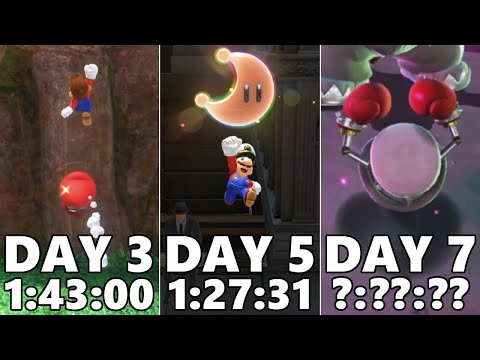
Super Mario Odyssey Speedrun: A Week of Intense Practice and PB Chasing

Ever wondered what it takes to shave seconds off your speedrun time in a game as massive as Super Mario Odyssey? For many of us, it's a weekend project, a fun challenge. But for the true speedrunning elite, a single week can represent an entire universe of practice, frustration, and ultimately, triumph. This isn't just about beating the game; it's about dissecting its very code, finding the fastest routes, and executing them with pixel-perfect precision. We're talking about pushing the boundaries of what's thought possible, aiming for that coveted Personal Best or even a shot at the current World Record. Forget casual play; this is dedication on a whole new level, often involving thousands of attempts, meticulous frame-perfect inputs, and an intimate knowledge of every gamer's dream: the shortest path to victory.

Introduction: The Relentless Pursuit of Speed

Welcome to GamingSpeedrun.com, your ultimate source for all things speedrunning! If you're here, you probably have a deep appreciation for games and a burning curiosity about how quickly they can be conquered. Today, we're diving headfirst into the whirlwind of Super Mario Odyssey, specifically focusing on what happens when a dedicated runner commits just one week to achieving their best possible time. This isn't your average playthrough; this is a deep dive into optimization, precision, and the sheer willpower it takes to shave off milliseconds. We're talking about a journey that, while perhaps short in calendar days, is packed with an intensity that can define a runner's progress. Prepare to understand the dedication behind those jaw-dropping World Records.

The Odyssey Speedrun Challenge: More Than Just Brute Force

Super Mario Odyssey presents a unique speedrunning challenge. Unlike linear games, its open-world structure with numerous Power Moons scattered across vast kingdoms offers immense potential for creative routing. The primary categories often revolve around collecting a specific number of Moons or completing the main story as quickly as possible. A week of dedicated play means runners are likely focusing on mastering one of these categories, perhaps the Any% route, which involves reaching the end credits with the fewest required Moons, often exploiting glitches and advanced movement techniques. It's a game where exploration can be both a boon and a bane; finding the fastest path is crucial, but it also means players must ignore vast amounts of content and collectibles that a normal player would savor.
In my experience, the hardest part of an Odyssey speedrun isn't the complex platforming, but the sheer mental endurance required for the hundreds, if not thousands, of attempts needed to nail every trick consistently.

Route Optimization: Every Second Counts

The first few days of a speedrun week are typically dominated by route planning and refinement. Runners pore over existing world record runs, analyze tutorials from top players, and experiment with different paths through each kingdom. The goal is to identify the absolute fastest sequence of actions from the moment the game starts to the moment the credits roll. This involves: * **Kingdom Order:** Deciding the most efficient order to tackle the kingdoms available. * **Moon Collection:** Identifying the quickest Power Moons to grab within each required kingdom. * **Movement Techniques:** Mastering advanced maneuvers like dive cancels, jump resets, and long jumps to maintain maximum speed. * **Minimalist Play:** Ignoring all optional Moons and challenges that don't directly contribute to the shortest completion time. Every decision is scrutinized. Is this slightly longer path to grab a Moon faster overall due to a better setup for the next section? Can a skip be performed here to avoid a lengthy cutscene or boss fight? These are the questions that occupy a speedrunner's mind during this critical phase.

Glitches and Skips: Exploiting the Game's Limits

Speedrunning often blurs the line between intended gameplay and exploiting the game's engine. In Super Mario Odyssey, several key glitches and skips are integral to top-tier runs: * **Dive Cancels:** Cancelling a dive attack with a jump or throw can grant Mario incredible horizontal momentum, far beyond his normal running speed. Mastering the timing and application of dive cancels is fundamental. * **Roll Cancels:** Similar to dive cancels, rolling and immediately jumping can provide bursts of speed. * **Damage Boosts:** Intentionally taking damage from minor hazards can sometimes propel Mario forward at high speeds, bypassing obstacles or traversing gaps. * **Out of Bounds (OOB):** Certain sections might allow players to clip through geometry and bypass large portions of levels, though this is less common in Any% runs where specific Moons are needed. * **Larst Any% Skip:** A well-known trick that allows runners to skip collecting certain Moons by using precise captures and throws. Identifying and practicing these techniques takes immense dedication. One wrong input can lead to a failed skip, costing precious seconds or ending the run entirely.
The thrill of landing a complex glitch that shaves minutes off your run is unparalleled. It's like discovering a secret shortcut in reality itself.

RNG Manipulation: Dancing with the Random Number Generator

While Super Mario Odyssey is less reliant on heavy RNG manipulation compared to some other speedrun categories (like older Nintendo titles), certain elements can still be influenced. For instance, the appearance of specific Koopa Freerunning races or the location of certain items might have a degree of randomness. Top runners develop strategies to quickly reset sections or influence the RNG to get favorable outcomes, minimizing time lost to unpredictable game mechanics. This involves understanding the game's internal timers and triggers to ensure the desired random event occurs quickly. It’s a subtle art, often overlooked by casual players but crucial for breaking into the top leaderboards.

Practice Makes Perfect: The Grind is Real

Once the route is solidified and key techniques are understood, the remaining time is dedicated to pure, unadulterated practice. This is where the "one week" truly shows its intensity. Runners will spend 8-12 hours a day, sometimes more, repeating specific sections or attempting full runs. * **Segmented Practice:** Breaking the run down into smaller segments (e.g., Cascade Kingdom, Sand Kingdom) and practicing each one until it's near-perfect before moving on. * **Full Run Attempts:** Executing the entire route from start to finish, focusing on consistency and managing the mental fatigue. * **VOD Review:** Watching recordings of their own attempts to identify mistakes, analyze timings, and find areas for improvement. * **Sleep and Nutrition:** While not directly part of the game, maintaining physical and mental health is crucial for sustained performance during long practice sessions.

Streaming the Journey: Sharing the Struggle and Success

Many speedrunners choose to stream their practice sessions and attempts live. This serves multiple purposes: * **Community Interaction:** Engaging with viewers, answering questions, and receiving encouragement. * **Accountability:** The presence of an audience can motivate runners to stay focused and push harder. * **Knowledge Sharing:** Allowing others to learn from their strategies, mistakes, and discoveries. It fosters a collaborative environment within the gaming community. * **Content Creation:** Building a following and creating entertaining content for fans of speedrunning. Watching a runner overcome challenges in real-time is incredibly compelling. Platforms like Twitch are central to the streaming speedrunning scene, allowing direct interaction between players and their audience.

What One Week Really Means in Speedrunning

For a seasoned speedrunner, a week isn't just seven days; it's an opportunity to make significant progress. It might mean finally mastering a difficult trick, shaving crucial seconds off a personal best, or even making a run at the world record. It's about intense focus, learning from every failure, and celebrating every small victory. The dedication shown in a single week can represent months of casual play condensed into a highly efficient, goal-oriented period. It’s a testament to the passion that drives the speedrunning community, pushing the limits of games and human endurance. Whether it leads to a new Personal Best or simply deeper understanding, that week is a crucible of learning and improvement.

Frequently Asked Questions

What is the Any% category in Super Mario Odyssey speedruns?

The Any% category means completing the game as quickly as possible, regardless of the number of Power Moons collected or story elements completed, often utilizing glitches and skips to bypass intended gameplay.

How long does a typical Super Mario Odyssey Any% speedrun take?

World record times for the Any% category are currently under 1 hour, often around 58 minutes, showcasing incredible efficiency and mastery of the game.

Is Super Mario Odyssey considered a difficult game to speedrun?

While the core gameplay is accessible, mastering the advanced movement, glitches, and precise routing required for top-tier speedruns presents a significant challenge, demanding extensive practice and dedication.

Where can I watch top Super Mario Odyssey speedruns?

You can find top runs on platforms like Speedrun.com, and live attempts are often streamed on Twitch by the runners themselves.

How much practice is typically needed for a good Super Mario Odyssey speedrun PB?

Achieving a competitive Personal Best can take hundreds of hours of dedicated practice, with top runners dedicating thousands of hours to achieve world record potential.

In conclusion, a single week of dedicated speedrunning for Super Mario Odyssey is an intense, focused endeavor. It's a microcosm of the dedication found throughout the entire speedrunning community – a blend of technical skill, strategic planning, and sheer perseverance. Whether you're aiming for a Personal Best or just curious about the limits of game completion, the strategies and dedication involved are truly inspiring. What are your favorite Super Mario Odyssey speedrun tricks or moments? Did you try a speedrun after watching some top players? Let us know in the comments below! Join our Discord community to discuss strategies and share your own speedrunning journeys!

The Ultimate Guide: Combining the Worst Mario Odyssey Speedruns for Maximum Chaos

Introduction: The Concept of Chaos

Hello and welcome, fellow speedrunners and gaming enthusiasts, to GamingSpeedrun.com! Today, we're diving deep into a concept that sounds like pure, unadulterated agony for anyone who loves optimization: combining the absolute worst speedruns of Super Mario Odyssey. What happens when you take the most painful SMO speedrun attempts and smash them together? Prepare yourself for a journey through pure, unadulterated pain. This isn't about setting a new World Record; it's about exploring the depths of failure and finding a strange kind of beauty in the chaos.

Super Mario Odyssey Speedrun Fundamentals

Before we get into the nitty-gritty of disaster, let's quickly touch on what makes a standard Super Mario Odyssey speedrun. At its core, it’s about completing the game from start to finish as quickly as humanly possible. This involves mastering movement, executing precise glitches, performing difficult skips, and optimizing every single second. The community around Super Mario Odyssey speedrunning is dedicated, constantly finding new strats to shave off milliseconds. We see incredible feats of skill, pushing the boundaries of what's thought possible in a game. This dedication is what makes the concept of combining the *worst* runs so fascinatingly dreadful.

What Constitutes the 'Worst' Speedrun?

Defining the "worst" speedrun is subjective, but in the context of speedrunning, it generally implies a run riddled with significant mistakes. This could mean:
  • Numerous deaths due to misjudged jumps or enemy encounters.
  • Failed execution of crucial glitches or skips that cost minutes.
  • Extensive time spent recovering from errors.
  • Poor RNG (Random Number Generation) that leads to unfavorable enemy spawns or item drops.
  • A generally slow pace, indicating a lack of mastery over the game's mechanics.
Essentially, it's the antithesis of a successful speedrun, a compilation of everything a runner hopes to avoid. These are the runs you might quickly skip over on speedrun.com, hoping to find a cleaner attempt.
In my experience, the 'worst' runs aren't just slow; they're agonizingly slow due to preventable errors. It’s watching potential go down the drain, frame by frame.

The Pain of Combining: A Speedrunner's Nightmare

So, what happens when you take multiple of these disastrous runs and, hypothetically, try to stitch them together into one continuous "gameplay" experience? The result is a spectacle of failure. Imagine transitioning from a botched Jump Rope Challenge attempt straight into a missed wall-clip that sends you plummeting into the abyss. Then, perhaps, a sequence where Bowser’s attack pattern is just completely unfavorable, leading to a prolonged and frustrating fight.
Each transition would be a reminder of a failed objective, a lost second, or a moment of sheer panic. This isn't a curated experience for the faint of heart. It’s designed to highlight the steep learning curve and the brutal nature of high-level gaming, especially in the speedrunning community. It forces you to confront the messy reality behind those seemingly perfect WR videos.

Strategic Disaster: Glitches, Skips, and Fails

The beauty of Super Mario Odyssey speedruns lies in their intricate use of glitches and skips. However, when combining the *worst* runs, these advanced techniques become points of failure. A runner might attempt a complex glitch, like a precise out-of-bounds trick, only to have it fail spectacularly, sending them back to a checkpoint or forcing them to restart the segment.
The most painful fails often involve sequences where a single missed input can cascade into minutes of lost time. It’s a domino effect of disaster.
You’d see attempts at sequence breaks that end in comical tumbles, or attempts at optimizing movement that result in Mario getting stuck in the environment. These aren't just minor setbacks; they are catastrophic failures that define a "bad" run. The combination amplifies these moments, creating a highlight reel of what *not* to do.

RNG Hell: When Luck Becomes the Enemy

A significant factor in many speedruns, including Super Mario Odyssey, is RNG. The placement of enemies, the behavior of bosses, and the drops from certain objects can all be determined by random chance. In a speedrun aiming for perfection, favorable RNG is crucial. Conversely, in the context of the "worst" runs, we'd be looking at consistently terrible RNG. This means facing enemies in the most inconvenient locations, bosses performing their most punishing attack patterns repeatedly, or essential items spawning in inaccessible spots. When you combine runs that have all suffered from bad RNG, the result is a relentless onslaught of misfortune, making any semblance of progress feel like a Herculean effort. It's a stark reminder that even with perfect execution, sometimes the game just isn't on your side.

The Community's Reaction to Extreme Fails

The speedrunning community, while competitive, often has a good sense of humor about failures. Clips of hilarious fails, epic POG moments gone wrong, and monumental PB-ruining mistakes are often shared and celebrated for their entertainment value. Combining the worst runs takes this to an extreme. It becomes a test of endurance for the viewer, a morbid curiosity satisfied by watching the absolute lowest points of a runner's attempts.
While we strive for perfection, there's a cathartic element in watching someone else endure the kind of pain we've all felt in our own runs. It makes our own mistakes feel less isolating.
This kind of content, while perhaps not educational in the traditional sense, serves to highlight the dedication required. It shows that even the best runners have faced immense struggles. It's a testament to the resilience needed to keep pushing for that next record.

Lessons Learned from the Absolute Worst

What can we genuinely learn from combining the worst Super Mario Odyssey speedruns? Primarily, it's a powerful lesson in perseverance. Seeing the sheer number of failures and the potential for things to go wrong can be daunting, but it also underscores the importance of not giving up. It reinforces the value of learning from mistakes. Each failed attempt, especially those that contribute to a "worst run" compilation, contains data. Analyzing why a glitch failed, why a jump was missed, or why the RNG was unfavorable is crucial for improvement. This "train wreck" viewing experience, paradoxically, can highlight areas where players need to focus their practice. It emphasizes the importance of mental fortitude in gaming and specifically in the high-pressure environment of speedrunning.

Frequently Asked Questions

Q1: Is this a serious approach to improving speedruns?

A1: No, combining the worst runs is primarily for entertainment and to highlight the extreme difficulties and failures in speedrunning. It’s not a training methodology.

Q2: How do you define the 'worst' speedrun in Super Mario Odyssey?

A2: The 'worst' typically refers to runs with numerous significant mistakes, excessive deaths, failed executions of key strats, poor RNG, and a generally slow overall time.

Q3: Can watching failed runs help players improve?

A3: Yes, indirectly. By analyzing *why* a run failed, players can learn to avoid similar mistakes and identify areas needing practice. It also builds mental resilience.

Q4: Where can I find official Super Mario Odyssey speedrun leaderboards?

A4: You can find the official leaderboards and detailed information on speedrun.com.

Q5: What are some common glitches used in SMO speedruns?

A5: Common glitches include various forms of clipping through walls, out-of-bounds exploits, and specific movement tech like hullabounce variations, though the exact strats are constantly evolving. In conclusion, diving into the abyss of the worst Super Mario Odyssey speedruns is a wild ride. It’s a testament to the fact that even in pursuit of speed, there’s room for spectacular failure, frustrating RNG, and hilarious mishaps. While no one aims to achieve these disastrous outcomes, understanding them provides a unique perspective on the dedication, skill, and sheer resilience required to be a top gamer. We hope this exploration into the dark side of speedrunning has been as entertaining for you as it is painful to imagine! What are your most memorable speedrun fails? Share your stories in the comments below or join our Discord community to discuss the craziest moments in gaming! Let's keep the conversation going!

Pro Speedrunner vs. Mario Odyssey Hide and Seek: Can Mario 64 Skills Conquer the Chaos?

The world of gaming is constantly evolving, and sometimes, the most unexpected challenges emerge from the most beloved titles. Today, we're diving deep into a thrilling speedrun-inspired twist on a classic game mode: Super Mario Odyssey Hide and Seek. Imagine the precision of a speedrunning pro, honed on the iconic gamer classic Super Mario 64, being thrust into the chaotic, adrenaline-pumping environment of an 8-player hide and seek match in Mario Odyssey. Can those hard-earned skills translate? That's exactly what we're exploring.

Introduction: The Ultimate Hide and Seek Challenge

The premise is simple, yet brutally effective: one or more players are designated as "Seekers," tasked with finding the hidden "Hiders" before time runs out. But this isn't your backyard game. This is Mario Odyssey Hide and Seek, amplified by the incredible talent of the gaming community. When SmallAnt, a prominent content creator, invited a host of skilled players, including a certain Super Mario 64 World Record holder, to join an 8-player match, the stakes were immediately sky-high. The question on everyone's mind: would the meticulous planning and execution of speedrunning translate into survival—or dominance—in this high-stakes game of cat and mouse?

Bridging the Gap: Mario 64 Speedrunning Prowess

For those unfamiliar, speedrunning is an art form. It's about mastering game mechanics, finding glitches, and optimizing every single movement to complete a game or a specific section in the shortest time possible. My personal experience holding the Super Mario 64 120 Star World Record has ingrained in me a deep understanding of precise movement, optimal routing, and split-second decision-making. Every jump, every spin, every wall-kick is calculated. The question is, does this level of mastery in a solo, objective-driven game like Mario 64 prepare you for the unpredictable, player-driven chaos of an online multiplayer hide and seek match in Mario Odyssey?

The inherent challenge lies in adapting rigid, optimized strategies to a fluid environment where other players' actions are the biggest variable.

In Super Mario 64, you're battling the game's design. Here, you're battling human opponents, each with their own strategies, some of which might even mimic speedrun techniques to catch you faster.

The Intense Rounds of Mario Odyssey Hide and Seek

The event, as detailed by the timestamps provided, was structured into several intense rounds across diverse kingdoms within Mario Odyssey. From the dusty plains of the Lost Kingdom to the treacherous terrains of the Ruined Kingdom, each location offered unique opportunities for both hiding and seeking. The progression through the game's visually stunning worlds—Cascade Kingdom, Metro Kingdom, Luncheon Kingdom, Wooded Kingdom, and finally, the climactic Moon Kingdom—ensured that players had to adapt their tactics constantly.

Consider the Metro Kingdom round. Its verticality and urban landscape present distinct hiding spots and escape routes compared to the more open spaces of the Lost Kingdom. My own experience trying to find the perfect hiding spots, utilizing every nook and cranny, every piece of environmental cover, was a testament to how quickly one must learn a new environment under pressure.

Seeker Strategies: Speedrun Skips and the Hunt

What truly elevated this Mario Odyssey multiplayer experience was the integration of speedrunning concepts by the Seekers. Instead of a simple, plodding search, the Seekers were actively employing what are often referred to as "speedrun skips" or advanced movement tech. This meant they weren't just running; they were optimizing their paths, using tricks to traverse the map faster, and predicting Hider movements based on common speedrun routes or predictable hiding spots. It transformed the game from a simple hide-and-seek into a tactical battleground.

Witnessing Seekers use techniques that felt ripped straight from a speedrunning tutorial was both terrifying and exhilarating for us Hiders.

This is where the Super Mario 64 skills come into play, not just for hiding, but for anticipating the Seekers. Knowing how a skilled player might approach a section, how they might exploit glitches or advanced movement, becomes a crucial defensive strategy. It’s a meta-game layered on top of the core objective. The fact that this was an online multiplayer session, making it bigger and weirder than anticipated, only added to the unpredictable nature of these encounters.

Joining the Mayhem: The Players Involved

The success and sheer fun of this event were a direct result of the caliber of players involved. SmallAnt's invitation brought together a fantastic group, each with their own unique talents and personalities. Playing alongside creators like:

  • SmallAnt himself
  • cjya
  • CraftyBoss
  • FearsomeFire
  • simplyfir
  • Katiepunch
  • bbytesizedd

created a dynamic and engaging atmosphere. The camaraderie and friendly competition were palpable, even through the intense gameplay. It’s this kind of collaborative spirit within the gaming community that makes events like these so special. Discovering how these players tackled the challenges, especially with the speedrun-inspired tactics from the Seekers, was a highlight. This isn't just about one person's skills; it's about the collective energy of talented individuals pushing the boundaries of what's possible in a game.

Behind the Scenes: Thumbnail and Editing

Every great piece of content requires a strong presentation, and this event was no exception. The eye-catching thumbnail, expertly crafted by gleasn, perfectly captured the high-energy, slightly chaotic nature of the game. Furthermore, the seamless editing by eriksenchee was crucial in presenting the multiple rounds and player interactions in a cohesive and entertaining manner. The inclusion of timestamps helps viewers navigate to specific moments, like the Metro Kingdom round or the climactic Moon Kingdom finale, making it easier to follow the narrative flow of the speedrun-style online hide and seek.

The blend of raw gameplay footage, strategic editing, and clear presentation is what turns a fun event into a memorable piece of gaming content.

The result is a viewing experience that is both informative for aspiring speedrunners and entertaining for general fans of Mario Odyssey and speedrunning. It showcases how even seemingly simple game modes can become incredibly complex and engaging when approached with the mindset of competitive play and skill optimization.

Frequently Asked Questions

Q1: What makes this Mario Odyssey Hide and Seek different from a regular game?
A: The key difference is the involvement of players with speedrun backgrounds, who employ advanced techniques and optimized routes (sometimes called 'skips') to both hide and seek more effectively, adding a layer of intense strategy.

Q2: Can Super Mario 64 speedrunning skills really help in Mario Odyssey?
A: Yes, the core principles of precise movement, environmental awareness, and strategic thinking learned in Super Mario 64 speedruns can be adapted to predict opponent movements and find optimal hiding or seeking paths in Mario Odyssey.

Q3: How many players were involved in this specific Hide and Seek match?
A: There were a total of 8 players participating in the match, making it a large and dynamic game of hide and seek.

Q4: Where can I watch the full gameplay?
A: While this article discusses the event, the original content creator, SmallAnt, and other participants likely have the full gameplay available on their respective streaming or video platforms like YouTube and Twitch.

The journey from mastering the intricate levels of Super Mario 64 to navigating the unpredictable chaos of Mario Odyssey's online multiplayer hide and seek is a fascinating one. It highlights the adaptability and depth of skill that speedrunners possess. Whether you're a seasoned speedrunner, a casual Mario Odyssey player, or just a fan of exciting online gaming events, this mashup of classic skills and modern mayhem offers a unique and thrilling perspective. It proves that the spirit of challenge and optimization can thrive in any gaming environment.

What do you think? Could your speedrunning experience help you survive in a match like this? Let us know in the comments below! Join our Discord channel to discuss strategies, share your own gaming achievements, and connect with fellow enthusiasts.

``` ```json { "@context": "http://schema.org", "@type": "FAQPage", "mainEntity": [ { "@type": "Question", "name": "What makes this Mario Odyssey Hide and Seek different from a regular game?", "acceptedAnswer": { "@type": "Answer", "text": "The key difference is the involvement of players with speedrun backgrounds, who employ advanced techniques and optimized routes (sometimes called 'skips') to both hide and seek more effectively, adding a layer of intense strategy." } }, { "@type": "Question", "name": "Can Super Mario 64 speedrunning skills really help in Mario Odyssey?", "acceptedAnswer": { "@type": "Answer", "text": "Yes, the core principles of precise movement, environmental awareness, and strategic thinking learned in Super Mario 64 speedruns can be adapted to predict opponent movements and find optimal hiding or seeking paths in Mario Odyssey." } }, { "@type": "Question", "name": "How many players were involved in this specific Hide and Seek match?", "acceptedAnswer": { "@type": "Answer", "text": "There were a total of 8 players participating in the match, making it a large and dynamic game of hide and seek." } }, { "@type": "Question", "name": "Where can I watch the full gameplay?", "acceptedAnswer": { "@type": "Answer", "text": "While this article discusses the event, the original content creator, SmallAnt, and other participants likely have the full gameplay available on their respective streaming or video platforms like YouTube and Twitch." } } ] }

How Long to Speedrun Every Super Mario Game? A Deep Dive into Mario's Fastest Runs

So, you've been watching those incredible speedrun videos, maybe you've even dabbled yourself. You hear about players shaving off milliseconds and pulling off insane glitches to beat games in record time. It's a whole different world from just enjoying a game casually. But when you think about a franchise as massive as Super Mario, a question naturally pops into your head: "How long would it *actually* take to speedrun *all* of them?" It sounds simple, but as any seasoned gamer knows, the devil is in the details, and the Super Mario franchise is a labyrinth of them.

The Sheer Scale of Mario

The Super Mario universe isn't just a few games; it's a sprawling collection that spans decades and genres. From the iconic 2D platformers that started it all to 3D adventures, kart racers, RPGs, and even party games, Nintendo has consistently delivered new ways to experience their flagship franchise. This sheer volume makes any attempt to calculate a "total speedrun time" incredibly complex. It's not just about the number of games, but also the different versions, the evolving speedrun categories for each, and the constant discovery of new strats and glitches.

Understanding Speedrun Categories: Any% vs. 100% and Beyond

When we talk about speedruns, the first thing any true gamer knows is that "speedrun" isn't a single, monolithic goal. The most popular category is typically Any%, which means beating the game as quickly as possible, regardless of what you collect or achieve in-game. This often involves exploiting game exploits and glitches that bypass large portions of the game. On the other hand, 100% Completion runs require you to achieve every in-game goal, collect every item, and perform every necessary action. These are significantly longer and often require different, less glitch-reliant strategies.

Then there are even more niche categories, like Low% (completing the game with the absolute minimum requirements), All Bosses, or specific challenge runs. For a franchise like Mario, this means the potential time investment skyrockets when you consider all the possible ways to play.

The sheer variety of categories for a single Mario game can drastically alter the perceived "speedrun length." A Super Mario World Any% run is vastly different in time and strategy from its 100% counterpart.

The Core Mario Experience: How Long for the Mainline Titles?

Let's break down some of the most iconic mainline Super Mario titles. These are the games that define the franchise:

  • Super Mario Bros. (NES): A classic. Any% runs are incredibly short, often under 5 minutes thanks to TAS-level precision and sequence breaks. A 100% run would be considerably longer, focusing on completing every level perfectly.
  • Super Mario Bros. 3 (NES): Introduced more complex level design and power-ups. Any% runs utilize warp whistles and precise movement to achieve times under 10 minutes.
  • Super Mario World (SNES): Famous for its hidden exits and the introduction of Yoshi. Any% runs are famously around 13-15 minutes, often involving the famous Backwards Long Jump (BLJ) or similar game mechanics exploitation.
  • Super Mario 64 (N64): A revolutionary 3D title. Its speedrun is legendary, with the Any% category (often targeting 70 Stars) being highly optimized and sitting around 15-20 minutes. The 120 Star run is a much longer, more comprehensive challenge, taking over an hour.
  • Super Mario Sunshine (GCN): Known for its unique FLUDD mechanics. Any% runs can be around 30-45 minutes, involving intricate routing and precise usage of FLUDD for movement and butterflying techniques.
  • New Super Mario Bros. Wii (Wii): A return to 2D side-scrolling with a modern twist. Runs are generally around 20-30 minutes for Any%.
  • Super Mario Galaxy (Wii): Praised for its creative level design and music. Any% runs are typically around 1 hour and 15 minutes, with specific speedrun strategies involving sword flying and precise inputs.
  • Super Mario Galaxy 2 (Wii): An even more refined experience. Runs are similar to the first, often clocking in around 1 hour and 10 minutes for Any%.
  • Super Mario 3D Land (3DS): A unique blend of 2D and 3D elements. Any% runs are around 30-40 minutes.
  • Super Mario 3D World + Bowser's Fury (Switch): A massive game with a robust multiplayer and a significant amount of content. Any% runs for 3D World alone are around 1 hour and 30 minutes, with Bowser's Fury adding another significant chunk for any% completion.
  • Super Mario Odyssey (Switch): Known for its open-ended sandbox kingdoms and the capture mechanic. The Any% run, often requiring around 130 moons, is a masterclass in movement tech and routing, typically around 55 minutes to 1 hour.

Just these mainline titles already represent a considerable time investment if you were to run them all back-to-back. Imagine adding in every single one of them!

Beyond the Platforming: Speedrunning Mario's Spin-offs

But Mario isn't just about jumping! Think about:

  • Mario Kart games: Many of these have Any% categories focusing on winning races quickly, often utilizing item strategies and shortcuts. Times can vary from a few minutes per cup to hours for a full 150cc Grand Prix run.
  • Mario RPGs (e.g., Super Mario RPG, Paper Mario series, Mario & Luigi series): These typically have longer Any% runs, often in the 2-5 hour range, due to their story-driven nature and turn-based combat. Exploiting battle mechanics and dialogue skips are key.
  • Mario Party games: Speedrunning these is less common in the traditional sense, as they rely heavily on multiplayer and RNG. However, some communities attempt "fastest board" or "most coins in X turns" challenges.
  • Sports titles (e.g., Mario Tennis, Mario Golf): These often have categories based on winning tournaments or achieving specific feats quickly.

The sheer diversity means you'd need to learn entirely different speedrunning strategies for each sub-series.

Calculating the Total Time: The Ultimate Speedrunner's Quest

So, let's try to rough out an estimate. If we take the Any% times for just the mainline platformers mentioned above (averaging around 5-6 hours if you were to play them sequentially without breaks and accounting for setup), that’s already a significant commitment. Now, factor in dozens of spin-off titles, each with their own unique speedrunning meta and categories. Add the time it takes to learn each game's specific speedrun analysis, practice difficult speedrun tech, and perfect the routing. You're likely looking at well over 100 hours, and that's a conservative estimate for just Any% runs across a broad selection of Mario games.

If you were to attempt 100% runs for every game? That number would easily climb into the hundreds, possibly even thousands, of hours. It's a task that requires immense dedication and a deep love for the Super Mario franchise.

The most dedicated runners spend years mastering a single game's speedrun. Doing that for the entire Super Mario franchise is a monumental, lifelong endeavor.

The Role of the Speedrunning Community

The beauty of the speedrunning community is its collaborative nature. Resources like speedrun.com, dedicated Discords, and YouTube tutorials are invaluable. Runners constantly share new gaming strategies, discover new game exploits, and refine existing routes. For Mario games, this means that the "optimal" time to beat a game can change overnight thanks to a new discovery.

The data presented here is based on current video game records and community-accepted times, but this landscape is always shifting. What might be a 15-minute run today could be a 14-minute run tomorrow with a new speedrun technique.

Frequently Asked Questions

What is the fastest Super Mario speedrun?

The fastest speedruns are typically for the earliest 2D titles like Super Mario Bros., which can be completed in under 5 minutes using precise glitch execution. However, for a game like Super Mario Odyssey, the Any% speedrun is closer to an hour.

How do speedrunners find new glitches?

Speedrunners often use memory viewers, debug tools, and practice different inputs or actions in unusual sequences to discover new glitches or sequence breaks. It's a process of trial, error, and deep understanding of the game's code.

Is it possible to speedrun ALL Super Mario games?

Technically yes, but it would take an extraordinary amount of time and dedication, likely thousands of hours, to master the speedruns for every title and category within the vast Super Mario franchise.

What's the difference between Any% and 100% speedruns?

Any% focuses on finishing the game as quickly as possible using any means necessary, often including glitches. 100% requires completing all in-game objectives, collecting all items, and finishing with the highest possible completion percentage, which usually takes much longer.

Where can I find specific Mario speedrun times and strategies?

The best resource is speedrun.com, where you can find leaderboards, guides, and videos for almost every game imaginable, including all the Super Mario titles.

Ultimately, the question of "how long" is less about a definitive number and more about appreciating the incredible dedication and skill involved in mastering these beloved games at breakneck speeds. Whether you're aiming for a world record or just want to shave a few minutes off your personal best, the Super Mario franchise offers a lifetime of challenges.

What's your personal favorite Mario speedrun category to watch or attempt? Share your thoughts and any Mario speedrunning tips you have in the comments below! If there's another game or franchise you'd like us to break down, let us know!

[WR] Super Mario Odyssey Any% Speedrun in 56:49: A Masterclass in Warp Speed

Hey fellow gamers and speedrunning enthusiasts! If you clicked on this, you're probably buzzing with the same excitement I get when a truly mind-blowing speedrun drops. We're talking about a feat that redefines what you thought was possible. Today, we're diving deep into the legendary **[WR] Super Mario Odyssey Any% Speedrun in 56:49**. This isn't just beating a game; it's performing surgery on its code with a stopwatch. For those new to the thrill of the race against time, welcome to GamingSpeedrun.com, your prime destination for all things speed. We live and breathe those lightning-fast runs, and this one? This one is a masterpiece.

What Exactly is "Any%"?

Let's break down the core of this challenge. In the speedrun community, "Any%" is the ultimate race to the finish line. For Super Mario Odyssey, this means completing the main objective of the game – essentially, beating Bowser – in the absolute fastest time humanly possible. No holds barred. The rules? Anything goes. This category is where you see the wildest strats, the most precise inputs, and the exploitation of every single glitch or unintended mechanic the game developers might have overlooked. Players aren't just playing the game; they're dissecting it, finding shortcuts that weren't meant to exist, and optimizing every single frame. It’s a deep dive into the game’s engine, pushing its limits far beyond normal play.

The Unbelievable Record: 56:49 by NicroVeda

The current king of this particular speedrun is NicroVeda. His jaw-dropping time of 56 minutes and 49 seconds is the benchmark that all other runners strive for. Think about that for a second. The main story of Super Mario Odyssey can easily take 12-15 hours for a casual player. NicroVeda and the top runners shave that down to under an hour. It’s a testament to countless hours of practice, route optimization, and sheer gaming genius. This time wasn't achieved overnight. It's the culmination of years of dedication from NicroVeda and the wider Super Mario Odyssey speedrun community, constantly refining strats and shaving off precious seconds.

Elite Techniques That Shatter Time

So, how does one conquer Hyrule… I mean, the Mushroom Kingdom, in less than an hour? It’s all about mastering advanced techniques. NicroVeda employed a suite of incredibly difficult maneuvers. One of the cornerstone techniques is often referred to as "jumpless" or minimizing aerial movement. In Super Mario Odyssey, certain movements and dives are faster than standard jumps. Runners like NicroVeda barely leave the ground, using ground pounds, rolls, and dives to maintain ludicrous momentum. Every unnecessary jump is time lost. Then there's the infamous **"frog skip."** This is where things get really creative. The Frog capture, obtained from a specific enemy, allows Mario to perform incredibly high jumps. In certain setups, runners can use the Frog's enhanced abilities to bypass entire sections or climb walls that would normally require complex platforming or multiple captures. It’s a risky but incredibly rewarding strat when executed perfectly.
The precision required for these skips is astronomical. One mistimed input can cost you minutes, or even end the run entirely. It's a high-stakes game of inches and milliseconds.
Another key aspect is understanding enemy AI and level design to manipulate spawns and movements, setting up for the next optimized movement or skip. It’s like chess, but Mario is the pawn and the board is a constantly shifting environment.

Mastering Captures for Maximum Efficiency

Super Mario Odyssey’s core mechanic, Cappy’s capture ability, is a speedrunner's best friend. Beyond just utility, top runners use captures as tactical tools to bypass obstacles and gain positional advantages. NicroVeda’s run leverages captures not just for their intended purpose, but to chain movements and perform sequence breaks. For example, certain captures allow Mario to traverse areas impassable otherwise, or to gain verticality needed for specific skips. Mastering the quick-throw capture, the immediate dive-cancel, and knowing exactly *which* enemy to capture *when* is critical. Each capture is a decision point, a calculated risk that either saves time or spells disaster.
The variety of captures in Odyssey is immense, and top runners have memorized the most efficient ones for every segment of the Any% route. It’s a library of powered-up moves executed in rapid succession.

Why This Run is a True Speedrunning Masterpiece

This 56:49 run isn't just fast; it's elegant. It showcases a deep understanding of the game's mechanics, physics engine, and level design. It's the result of meticulous planning, constant iteration, and the courage to attempt incredibly difficult and risky strategies. Watching NicroVeda execute these precise movements, skips, and captures flawlessly is mesmerizing. It highlights the dedication and passion that drives the speedrun community. Every second is accounted for, every action optimized. It’s a symphony of button presses and joystick movements played at lightning speed. For anyone interested in the upper echelon of gaming skill, this run is essential viewing. It’s a benchmark that pushes the boundaries of what we thought was achievable in Super Mario Odyssey.

How to Improve Your Own Speedrunning Skills

Inspired to shave some time off your own runs? Here’s my advice, born from countless hours grinding myself: * **Study the Best:** Watch this run, and others like it, frame by frame. Pay attention to NicroVeda’s movement, his positioning, and when he initiates specific actions. * **Learn the Route:** Understand the established Any% route. Know where you need to go and the most efficient path. * **Practice Key Techniques:** Isolate difficult tricks like the frog skip or specific capture setups. Practice them in a safe environment until they become muscle memory. * **Master Movement:** Focus on fundamental movement tech. Rolling, diving, ground-pounding, and Cappy throws – optimize these basics. * **Understand RNG:** Some elements in Super Mario Odyssey are random (RNG). Learn how to manage or mitigate bad RNG, and how to capitalize on good RNG. * **Join the Community:** Engage with other runners on forums, Discord servers, or Speedrun.com. Sharing knowledge and getting feedback is invaluable. Don't be discouraged by the complexity. Every world record holder started somewhere, probably with much slower times and more mistakes. The journey of improvement is what makes speedrunning so rewarding.

Frequently Asked Questions

What is the difference between Any% and 100% speedruns in Super Mario Odyssey?

Any% aims to complete the game's main objective (defeating Bowser) as fast as possible using any means. 100% requires collecting all Power Moons and achieving other major in-game milestones, making it a significantly longer and different kind of challenge.

How much practice does a WR holder like NicroVeda put in?

It's difficult to quantify precisely, but top speedrunners often dedicate thousands of hours to a single game. This includes route planning, practicing individual tricks, full run attempts, and analyzing their own gameplay.

Are there any major glitches used in this Any% run?

While the focus is on optimized movement and skips, advanced Any% runs often utilize game-breaking glitches or unintended mechanics to skip large portions of the game. The techniques employed often blur the line between intended mechanics and glitches.

Where can I watch this speedrun?

You can typically find world record runs on platforms like YouTube or Twitch. Searching for "NicroVeda Super Mario Odyssey Any% WR" should lead you directly to the video.
The dedication to shaving off milliseconds is what separates casual play from the elite speedrunning world. It’s an art form.
This Super Mario Odyssey Any% World Record run by NicroVeda is more than just a game completion; it's a testament to human skill, dedication, and the incredible depth hidden within our favorite video games. It inspires us all to push our limits and explore new possibilities. So, what are you waiting for? Dive into the world of Super Mario Odyssey, study these incredible techniques, and maybe, just maybe, you'll find your own path to a personal best. The speedrunning community is always welcoming new faces eager to chase the clock! Share your thoughts on this incredible run in the comments below! What's your favorite trick used by NicroVeda? Join our Discord channel to discuss more speedrunning strategies and news!