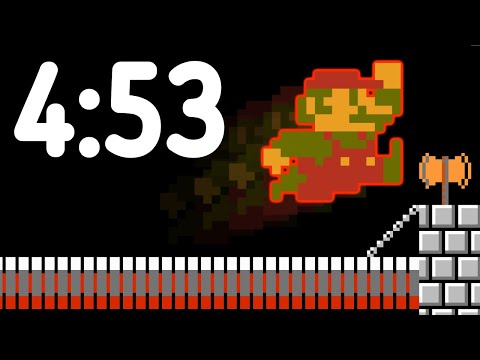
4:53 in Super Mario Bros.: Is It Truly Impossible... or Just "Kinda"?

We've all been there. Staring at the screen, the iconic Super Mario Bros. timer ticking down, desperately trying to shave off precious milliseconds. For years, the 4:53 mark in the original Super Mario Bros. has been a holy grail, a time whispered about in hushed tones, often dismissed as an impossible dream. But what if I told you that this legendary time isn't *exactly* impossible? It's… kinda possible. Intrigued? You should be. This isn't about a magic glitch or a cheat code; it's about pushing the boundaries of what we thought we knew about one of gaming's most foundational titles.

What's the Big Deal with 4:53 in Super Mario Bros.?

The original Super Mario Bros., released in 1985, is a cornerstone of gaming history. Its tight controls, iconic level design, and pure platforming challenge have captivated players for decades. In the world of speedrunning, every frame counts. The Any% category, which aims to finish the game as quickly as possible by any means necessary, has been meticulously optimized over the years. Players have discovered intricate glitches, precise movement techniques, and exploited every possible shortcut. For a long time, the theoretical best time was considered to be around 4:54. Achieving anything close to 4:53 was thought to be physically impossible due to the game's engine limitations and specific level designs.
The pursuit of the ultimate time in Super Mario Bros. has become a legend in itself, a testament to the dedication of the speedrunning community.
This quest for the perfect run often involves exploiting specific game mechanics and pixel-perfect execution. The term "TAS" (Tool-Assisted Speedrun) comes to mind, where players use external tools to achieve frame-perfect inputs, creating runs that are technically perfect but humanly impossible. However, the fascination with 4:53 isn't about a TAS; it’s about what a human player *might* be able to achieve under ideal conditions.

The Route to Near Perfection: Understanding the 4:54 and Beyond

The current World Record for Super Mario Bros. Any% is an astonishing feat of human skill and dedication. This record typically hovers around the 4:54 mark. To get there, runners utilize a series of highly optimized strategies. These include:
  • World 1-1: Precise jumps and running to maintain maximum speed, often involving pixel-perfect wall clips or jumps that barely touch the ground.
  • Warp Zones: Utilizing the fastest possible routes to access warp zones, skipping entire worlds. The most famous is the warp to World 4.
  • Level-Specific Skips and Glitches: Certain levels have known glitches or sequence breaks that allow players to bypass sections or enemies entirely.
  • Frame-Perfect Inputs: Many of the fastest segments rely on inputs that must be executed within a single frame of the game's execution.
The idea of shaving off another full second is monumental. A single frame in Super Mario Bros. is about 1/60th of a second. To gain a full second means optimizing every single segment, eliminating even the slightest hesitation or suboptimal movement. This is where the "kinda" in the title comes into play.

Key Strats and Mechanics: The Difference Makers

Achieving times close to the theoretical limit in Super Mario Bros. requires an intimate understanding of its engine and physics. Here are some of the critical elements:
  • Running Speed: Mario's running speed is not constant. It increases gradually as you hold down the run button. Optimal runs maintain this momentum.
  • Jumps: The height and distance of Mario's jumps are determined by the duration he spends holding the jump button. Mastering jump height and trajectory is paramount for clearing obstacles and triggering specific events.
  • Wall Jumps (unofficial): While not a programmed mechanic, skilled players can "clip" Mario into walls and exploit the game's collision detection to gain vertical momentum or precise positioning.
  • Frame Rules: In Super Mario Bros., certain actions have "frame rules" which dictate how quickly you can perform them consecutively. Understanding and manipulating these rules is key to maximizing speed.
  • Enemy Manipulation: Even enemy placements and movements can be influenced by Mario's position and timing, allowing runners to avoid them more efficiently or even use them to their advantage (though this is less common in Any%).
The chase for sub-4:54 times often hinges on mastering these subtle mechanics and executing them flawlessly under pressure. It's a dance with the game's code, pushing its boundaries with every perfectly timed button press.

The Crucial Role of RNG

Random Number Generation (RNG) plays a significant role in any speedrun, and Super Mario Bros. is no exception. While many actions are deterministic, certain elements like enemy behavior or the exact scrolling of the screen can have slight variations. For a run to be "perfect," or as close to it as possible, the RNG needs to be favorable.
In the pursuit of the absolute fastest times, even the smallest bit of favorable RNG can mean the difference between a personal best and a potential World Record.
For times like 4:53, the RNG would need to be absolutely perfect, aligning every possible favorable outcome to shave off those critical frames. This is where the "kinda" aspect becomes more apparent. It's not about discovering a new glitch that *breaks* the game in a way that allows a sub-4:53, but rather about a near-perfect execution of existing strategies combined with exceptionally good luck.

Miniland and Niftski: Pushing the Limits

The video linked in the original source, by Storster, highlights the efforts of prominent speedrunners like Miniland and Niftski. These individuals are at the forefront of Super Mario Bros. speedrunning, constantly experimenting with new routes and pushing the limits of what's achievable. Their work involves deep analysis of the game's mechanics and tireless practice. The video itself likely showcases attempts or discussions surrounding these incredibly fast times, demonstrating the techniques and the razor-thin margins involved. The music featured in the video, spanning various retro titles, adds to the nostalgic and dedicated atmosphere of the speedrunning community.

The 'Kinda Possible' Explanation

So, why "kinda" possible? It boils down to a few key factors:
  • No New Glitches: We're not talking about a revolutionary new glitch that drastically alters the game's flow. The 4:53 possibility stems from optimizing existing strategies to an almost absurd degree.
  • Frame Perfect Execution: It requires every single input to be performed at the absolute perfect frame, over and over, for the entire duration of the run.
  • Ideal RNG: The stars have to align. Enemy patterns, object spawns, and screen scrolling all need to be in the runner's favor for the entire run.
  • Human Limitation: While theoretically possible in terms of game mechanics, achieving such a time requires a level of human precision, consistency, and endurance that is incredibly difficult to maintain, even for the best in the world.
Essentially, a 4:53 run is "kinda" possible because the game engine doesn't strictly forbid it, but the confluence of perfect execution and flawless RNG required makes it so incredibly improbable that it borders on impossible for a human player to achieve consistently. It’s a theoretical time that might be achieved once in a lifetime under the most ideal circumstances.
This pursuit is what makes speedrunning so compelling. It's not just about beating the game; it's about understanding its deepest secrets and pushing human capability to its absolute limits. The quest for 4:53 in Super Mario Bros. is a prime example of this dedication.

FAQ

Is 4:53 actually achievable in Super Mario Bros.?

While theoretically not impossible due to the game's engine, achieving a 4:53 in Super Mario Bros. requires a level of human precision and perfect RNG that is considered practically impossible for a human player. It's on the extreme edge of theoretical best times.

What is the current World Record for Super Mario Bros. Any%?

The current World Record for Super Mario Bros. Any% is typically around the 4:54 mark, achieved through highly optimized strategies and near-perfect execution.

What is 'Any%' in speedrunning?

'Any%' is a speedrunning category where the goal is to complete the game as fast as possible, using any glitches, exploits, or intended mechanics available.

How do speedrunners shave off milliseconds in games like Super Mario Bros.?

Speedrunners achieve this by mastering precise movement techniques, exploiting game engine mechanics and glitches, optimizing routes to warp zones, and relying on favorable RNG. Every single frame is analyzed and optimized.

Are TAS runs considered when discussing theoretical best times?

Tool-Assisted Speedruns (TAS) demonstrate what is technically possible with frame-perfect inputs, often revealing times that are far beyond human capability. While they inform theoretical best times, the focus for human speedrunning records is on what players can achieve.

The quest for 4:53 in Super Mario Bros. is a fascinating glimpse into the dedication and ingenuity of the speedrunning community. While it might remain a near-unattainable goal for most, the pursuit itself drives innovation and pushes the boundaries of what we believe is possible in gaming. Keep practicing, keep analyzing, and who knows, maybe one day someone will truly shatter this legendary time!

What are your thoughts on the 4:53 barrier? Have you ever attempted speedruns in classic Nintendo titles? Share your experiences and strategies in the comments below! And if you're looking for more in-depth SpeedrunGaming content, join our Discord server to connect with fellow enthusiasts!
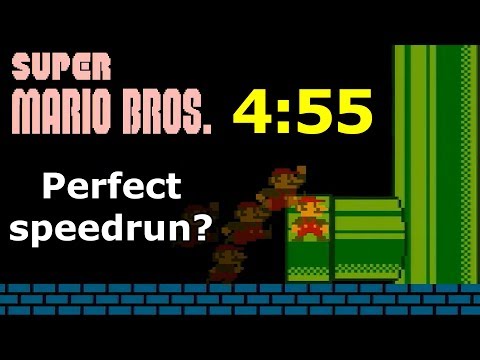

Super Mario Bros. World Record: Is 4:55 the Absolute Peak of Perfection?

Alright, speedrunning fanatics, gather 'round! We're diving deep into the ultimate question for any Any% Super Mario Bros. player: is a 4:55 run truly the pinnacle of human (and digital) achievement? For years, players have obsessed over shaving off milliseconds, mastering every jump, and executing frame-perfect glitches. Today, we're dissecting a monumental run that might just redefine perfection in the classic NES title.

Introduction: The Quest for the Perfect Run

The pursuit of a World Record (WR) in Super Mario Bros. is a legendary saga in the speedrunning community. It's a game where the smallest optimization can mean the difference between a personal best (PB) and a new global benchmark. The 4-minute 55-second barrier has been a holy grail for a long time, representing a near-flawless execution of the game's most optimal path. But what goes into achieving such a time? It's not just about speed; it's about understanding every pixel, every enemy pattern, and every hidden trick the game has to offer.

A Deep Dive into the History of SMB Speedrunning

Super Mario Bros. speedrunning has a rich and storied past. Early runs were focused on simply beating the game quickly, but as the community evolved, so did the techniques. We've seen the rise and fall of various strategies, the discovery of groundbreaking glitches, and the incredible dedication of runners like Any% legend Darbian, StuckInAPlate, and the phenomenal Kosmic. Each era of SMB speedrunning has brought new challenges and pushed the limits of what was thought possible.

Consider the sheer dedication: tavenwebb2002's 4:55.746, achieved on August 3rd, 2019, was a massive leap forward. This run showcased incredible precision and mastery of established techniques. But the quest never stops. The drive to find that extra bit of speed, to execute a strategy perfectly, is what fuels the passion of every speedrunner.

Essential Strats and Glitches

To break into the sub-4:56 territory, and then push towards 4:55, runners need to master a suite of advanced techniques. Let's break down some of the critical ones:

  • 1-1 Flagpole Glitch: This is fundamental. Instead of touching the very top of the flagpole, runners aim for a specific point to save a fraction of a second by triggering the end-level sequence slightly faster.
  • 1-2 Pipe Clip: Skipping the intended end of the level by clipping through the pipe saves valuable time and requires precise positioning and movement.
  • 4-1 Flagpole Glitch: Similar to 1-1, optimizing the flagpole interaction here is crucial.
  • 4-2 Precision: Navigating this underground section efficiently, often involving specific jumps to avoid enemies and maintain momentum.
  • 8-1, 8-2 Bullet Bill Glitch: This is a major time-saver, involving manipulating Bullet Bills to clear obstacles or open paths that would otherwise require slower maneuvering.
  • 8-3 Flagpole Glitch: Another instance where optimizing flagpole interaction significantly impacts the overall time.
  • 8-4 Mastery: The final castle is a complex maze. Runners need perfect knowledge of the correct path and enemy placements to avoid any delays. The "Fastest 8-4" strategies are constantly refined.
  • 8-1 Framerule: Understanding and exploiting the game's frame rules to ensure specific enemy patterns or favorable conditions.

These aren't just tricks; they are the result of thousands of hours of practice, analysis, and community collaboration. Every frame counts, and the discovery of a new optimal strat can send ripples through the leaderboards.

"The 4:55 is not just about execution; it's about understanding the game at a sub-atomic level. Every single input has to be perfect."

The Duel: Kosmic vs. Somewes

The race to 4:55 was particularly intense between two titans: Kosmic and somewes. Both runners pushed each other to new heights. Somewes's previous WR was a testament to his skill, but Kosmic's relentless pursuit led to even faster times.

Kosmic's run on January 18th, 2020, clocked in at an astonishing 4:55.646. This wasn't just a PB; it was a new World Record that solidified his place in Super Mario Bros. speedrunning history. It built upon the foundations laid by others, incorporating refined strats and near-perfect execution across all worlds. The community watched with bated breath as Kosmic navigated Bowser's castle, each jump and firebar avoided bringing him closer to that magical time.

TAS vs. RTA: Pushing the Boundaries

To truly understand the limits, we often look to Tool-Assisted Speedruns (TAS). These runs, created using emulators and frame-by-frame input, represent the absolute theoretical maximum speed achievable in a game, unhindered by human reaction times. Happy Lee's TAS runs, including a near-perfect 4:54.032, provide an invaluable benchmark.

The comparison between TAS and Real-Time Attack (RTA) runs like Kosmic's 4:55 is fascinating. While a TAS might show a theoretical 4:54 is possible, achieving it in RTA is a monumental challenge. The discrepancies often lie in the extreme precision required for TAS-level tricks, some of which are incredibly difficult or outright impossible for human players to consistently replicate under RTA conditions. However, the TAS often inspires new RTA strategies and techniques.

"The difference between a TAS and a WR run is that the WR run is a testament to human perseverance and skill, while the TAS is a glimpse into the game's absolute potential."

Is 4:54 Achievable?

The question on everyone's mind: can a human achieve a 4:54 in Super Mario Bros. under RTA rules? The current WR sits just above 4:55, and the TAS shows that even faster times are theoretically possible. It would likely require a combination of perfect execution of all known major glitches, unparalleled consistency, and perhaps even the discovery of new, incredibly difficult strats.

Runners like Kosmic, somewes, Darbian, and StuckInAPlate are constantly refining their techniques. They analyze every frame, study every run, and push the boundaries. Whether 4:54 becomes a reality remains to be seen, but the pursuit itself is what makes the Community Gamer scene so exciting. The dedication shown by runners like Content Creator HappyLee in pushing TAS boundaries also highlights the potential ceiling.

Frequently Asked Questions

What is the current Super Mario Bros. World Record?

As of my last update, the World Record for Super Mario Bros. Any% is held by Kosmic with a time of 4:55.646, set on January 18th, 2020. However, records are always being challenged!

What are the main glitches used in Super Mario Bros. speedruns?

Key glitches include the Flagpole Glitch (in various worlds), the 1-2 Pipe Clip, and the Bullet Bill Glitch in 8-1/8-2, among others that optimize movement and enemy manipulation.

Is 4:54 possible in Super Mario Bros. speedruns?

Tool-Assisted Speedruns (TAS) have shown times faster than 4:55, with Happy Lee achieving around 4:54. Achieving this in a Real-Time Attack (RTA) run is considered extremely difficult but remains a theoretical possibility for the most dedicated players.

Who are some notable Super Mario Bros. speedrunners?

Prominent runners include Kosmic, somewes, Darbian, StuckInAPlate, GTAce, and andrewg. Happy Lee is renowned for his TAS work.

What is the difference between a TAS and an RTA run?

A TAS (Tool-Assisted Speedrun) is created using emulators and frame-by-frame input, representing the theoretical fastest time. An RTA (Real-Time Attack) is a run performed live by a human player within the normal flow of time, subject to human limitations.

The pursuit of the 4:55 World Record in Super Mario Bros. is a testament to the incredible skill, dedication, and passion of the speedrunning community. It represents a near-perfect blend of strategy, execution, and sheer willpower. While the quest for faster times never truly ends, these incredible runs serve as inspiration for aspiring runners and a spectacle for fans.

What are your thoughts on this record-breaking run? Do you think a 4:54 is achievable in RTA? Let us know in the comments below! Join our Discord server to discuss strategies, share your own PBs, and connect with fellow speedrunning enthusiasts. Don't forget to check out the original video for the full breakdown!

El TAS "Teórico Humano" de Maru Desafía los Récords de Kosmic, Niftski y Miniland en Super Mario Bros. NES: ¡La Revolución del Speedrun Ha Llegado!

Kosmic, Niftski, Miniland y Maru: Revolución del TAS en Super Mario Bros. NES

¡Atención, speedrunners y leyendas del gaming! Si creías que lo habías visto todo en el mundo del speedrun de Super Mario Bros. para NES, prepárate para un viaje alucinante al pasado que redefine los límites de lo posible. Hoy no hablamos de un simple world record, sino de una monumental proeza tecnológica y de habilidad que fusiona las mentes más brillantes del juego. ¡Prepárense para la era del TAS combinado, donde la precisión de la máquina se une a la maestría humana!

La Visión del Futuro del Speedrun: Más Allá de la Pantalla

¿Alguna vez te has sentido abrumado intentando seguir múltiples world record a la vez? El creador de este asombroso proyecto comparte una visión audaz que va más allá de simplemente batir récords; busca revolucionar la forma en que experimentamos las carreras de velocidad. Su objetivo final es una plataforma donde las competiciones de Super Mario Bros. para NES sean accesibles en streaming en vivo, eliminando la necesidad de malabarear entre cuatro pantallas. ¡Esto no es solo un video; es el prototipo de la próxima generación de speedrunning!

"Mi objetivo final es crear una plataforma para carreras de speedrun EN VIVO de Super Mario Bros. donde no tengas que mirar 4 pantallas a la vez."

Esta ambición trasciende la simple optimización de rutas; se trata de democratizar la experiencia del speedrun, haciéndola más accesible y emocionante para todos. La tecnología que impulsa esto es tan impresionante como los propios tiempos de carrera, fusionando machine learning, image processing y un desarrollo sin precedentes que redefine los gaming strategies.

Análisis Profundo de los Titanes del Speedrun

Este video pone cara a cara a tres de los más grandes exponentes en la categoría "Any%" de Super Mario Bros. para NES, quienes en su momento ostentaban los récords mundiales. Cada uno representa la cúspide de la ejecución perfecta, perfeccionando cada frame, cada salto, cada movimiento para exprimir hasta la última centésima de segundo posible. Son verdaderos campeones del speedrunning.

  • Kosmic's 4:55.646 [2020-01-17] - Ex-Récord Mundial: La elegancia en su máxima expresión. La carrera de Kosmic es un testimonio de la dedicación y la precisión que definen a los mejores speedrunners. Cada acción es deliberada, cada ruta calculada para minimizar el tiempo y asegurar una victoria relámpago.
  • Niftski's 4:55.430 [2020-11-13] - Ex-Récord Mundial: Niftski representa la evolución, empujando los límites un poco más allá. Su ejecución muestra una comprensión profunda de las mecánicas del juego, permitiéndole encontrar nuevas formas de ganar preciosos frames y optimizar cada movimiento.
  • Miniland's 4:55.314 [2021-01-12] - Ex-Récord Mundial: La perfección es un objetivo en constante movimiento en el speedrun. Miniland, con su impresionante tiempo, demuestra que siempre hay espacio para mejorar, incluso en un juego tan explorado como Super Mario Bros. Su WR (World Record) subraya la naturaleza competitiva y siempre cambiante del speedrunning.

Ver estas ejecuciones una al lado de la otra es una clase magistral de estrategia de juego y ejecución. Los detalles son sutiles, pero para el ojo entrenado de un gamer experimentado, cada diferencia es una obra de arte que demuestra un dominio absoluto.

Maru y la Teoría Humana del TAS: La Máquina al Servicio de la Perfección

Aquí es donde la cosa se pone realmente interesante y se cruzan los caminos de la tecnología y la habilidad humana. Junto a estos prodigios humanos, encontramos una entrada especial: el TAS de Maru, con un tiempo de 4:54.265. Pero no es un TAS cualquiera. Maru utiliza la \"Teoría Humana del TAS\", un enfoque innovador que evita las trampas mecánicas imposibles en hardware real, como presionar izquierda y derecha simultáneamente, algo que una NES original simplemente no puede hacer. Esto asegura que la ruta, aunque ultrarrápida, sea en teoría realizable por un humano con una precisión extraordinaria.

Un Tool-Assisted Speedrun (TAS) es una grabación de juego asistida por herramientas de software que permiten al jugador realizar acciones con una precisión a nivel de frame, y a veces, más allá de lo humanamente posible. En este contexto, el TAS de Maru no es solo un registro de tiempo, sino una plantilla de la ruta óptima, libre de RNG (Random Number Generation, la aleatoriedad del juego) o errores humanos que pueden costar segundos valiosos. Es una demostración de lo que es posible cuando la lógica del juego se explota al máximo.

"Usamos el TAS de teoría humana porque no hace trampas presionando izquierda y derecha al mismo tiempo, algo imposible en la NES original. Es la ruta más rápida teórica y humanamente factible."

La inclusión de este TAS sirve como el estándar de oro, la meta definitiva a la que aspiran los speedrunners. Es la guía definitiva que muestra el camino más eficiente, un faro de perfección en el competitivo mundo del speedrunning.

Tecnología Avanzada para la Velocidad Extrema

La magia detrás de la sincronización de estas múltiples ejecuciones de speedrun y el TAS es un logro técnico fascinante. El creador menciona el uso intensivo de machine learning e image processing. Esto sugiere un nivel de complejidad que va mucho más allá de la simple edición de video. Estamos hablando de una integración profunda entre el arte del speedrunning y la ciencia de datos.

Imaginemos el proceso: el software debe analizar cada frame de cada video, identificar la posición exacta de Mario, los obstáculos, los power-ups, y sincronizarlos con una precisión milimétrica. Esto requiere algoritmos sofisticados para el reconocimiento de patrones, la predicción de movimiento y la alineación temporal. Es un ejemplo perfecto de cómo la tecnología moderna puede potenciar y expandir el mundo del gaming y el speedrunning, creando experiencias de visualización completamente nuevas.

Este nivel de análisis y presentación no solo muestra los tiempos, sino que ofrece una visión didáctica de las diferencias sutiles que marcan la diferencia entre un récord mundial y una ejecución casi perfecta. Es una clase magistral para cualquier aspirante a speedrunner.

La Eterna Batalla Contra el Reloj

Super Mario Bros. para NES es un juego que muchos de nosotros crecimos jugando, un clásico atemporal. Su aparente simplicidad esconde una profundidad estratégica que se revela a través del speedrun. Los jugadores no solo compiten contra el juego y su diseño de niveles, sino contra el tiempo, contra la posibilidad de error humano y, por supuesto, contra los demás competidores en una carrera sin fin por la supremacía.

Cada nivel, cada salto, cada enemigo es un factor a considerar. El Mundo 1-1, el primer nivel que la mayoría de los jugadores experimentan, es aquí un campo de batalla de precisión milimétrica. Cada salto sobre un Goomba, cada recolección de moneda, cada entrada a una tubería está calculada al milisegundo. Las estrategias como los skips de secciones, el movimiento óptimo para mantener la velocidad máxima constante, y la gestión de cualquier mínima influencia del RNG (Random Number Generation, aunque en SMB1 es mínimo) son cruciales para arañar esas décimas de segundo que separan la gloria de la derrota.

  • Precisión de Salto: Determinar el momento exacto para presionar el botón A, la duración de la pulsación, y la trayectoria resultante para aterrizar en el lugar perfecto y mantener el impulso.
  • Movimiento Óptimo: Mantener la velocidad máxima siempre que sea posible, utilizando pequeños ajustes para navegar por el terreno, evitando cualquier deceleración innecesaria.
  • Gestión de Enemigos: Evitar o eliminar enemigos de la manera más eficiente, a menudo usando saltos precisos o estratégicos power-ups como el Super Champiñón o la Flor de Fuego.
  • Exploración de Límites: Aunque el TAS de Maru evita las trampas obvias, el speedrunning en general explora los límites del motor del juego. En otros títulos, glitches como el Backwards Long Jump o los Wrong Warps pueden acortar drásticamente las rutas, demostrando la ingeniosidad de la comunidad gamer.

Este video nos da una visión única de cómo estas estrategias se aplican al más alto nivel. Nos muestra que incluso en un juego clásico tan explorado, la innovación en estrategia de juego y gaming strategies nunca se detiene.

El Impacto Transformador de los TAS en la Comunidad

Los TAS, y particularmente los enfoques innovadores como la \"Teoría Humana\" de Maru, tienen un impacto profundo y transformador en la comunidad gamer. Por un lado, establecen un punto de referencia teóricamente inalcanzable que inspira a los jugadores humanos a pulir sus propias ejecuciones y a superar sus límites personales.

Por otro lado, plantean preguntas fascinantes sobre la naturaleza misma del speedrun: ¿qué significa realmente \"jugar\" cuando se utiliza asistencia de herramientas de esta magnitud? La distinción entre un TAS puro y un speedrun \"genuino\" es crucial para muchos. Sin embargo, este video presenta un híbrido fascinante: utiliza la tecnología avanzada para mostrar la convergencia de las mejores ejecuciones humanas y la ruta teórica perfecta. La base de las carreras principales sigue siendo la habilidad humana, pero enriquecida por el conocimiento obtenido de la precisión robótica.

"La convergencia de la habilidad humana más pura y la precisión casi infinita de la máquina redefine lo que consideramos posible en el mundo del speedrunning."

Este tipo de contenido no solo atrae a los entusiastas del speedrunning, sino también a aquellos interesados en la historia de los videojuegos, la tecnología, la inteligencia artificial aplicada al gaming y el arte de la optimización. Es una ventana a la vanguardia de lo que se puede lograr.

Preguntas Frecuentes (FAQ)

¿Qué es un TAS?

TAS son las siglas de "Tool-Assisted Speedrun". Se trata de grabaciones de juego donde se utilizan herramientas de software para permitir acciones a nivel de frame, logrando una precisión que va más allá de las capacidades humanas normales. Esto permite explorar rutas y optimizaciones que serían imposibles para un jugador humano.

¿Qué significa "Any%" en speedrunning?

"Any%" es una categoría de speedrun donde el objetivo principal es terminar el juego lo más rápido posible, sin importar cuántos elementos, coleccionables o secretos se completen. Se prioriza exclusivamente la ruta más corta y veloz para llegar a los créditos finales.

¿Por qué la diferencia entre el TAS de Maru y los récords mundiales humanos en Super Mario Bros.?

El TAS de Maru, al ser asistido por herramientas, puede ejecutar secuencias de movimientos imposibles para un humano, como la presión simultánea de botones o una sincronización de frame perfecta que supera los límites de la reacción humana. Los récords mundiales humanos, aunque increíblemente precisos, están limitados por la fisiología y la habilidad del jugador.

¿Es este tipo de proyecto el futuro de los speedruns de Super Mario Bros.?

Este video presenta una visión ambiciosa y fascinante de un futuro donde la tecnología facilita la visualización y la competición en vivo de múltiples speedruns simultáneamente. Si bien el TAS sigue siendo una categoría distinta por su naturaleza, la fusión de análisis de rutas óptimas (provenientes de TAS) con ejecuciones humanas de alta calidad está claramente marcando un nuevo camino y elevando el nivel competitivo.

¿Qué implica el uso de "machine learning" e "image processing" en este proyecto de visualización?

El creador utilizó estas tecnologías para analizar, sincronizar y presentar múltiples videos de speedruns y TAS simultáneamente de forma coherente. Esto requiere que el software reconozca elementos del juego (como la posición de Mario o los obstáculos) y los alinee con una precisión extrema, un desafío computacional considerable que permite una experiencia de visualización única.

Este video es un hito, una confluencia de habilidad humana, tecnología de vanguardia y la pasión inquebrantable por el speedrunning. Kosmic, Niftski, Miniland y Maru no solo nos muestran cómo jugar Super Mario Bros. más rápido, sino que nos invitan a imaginar cómo será el speedrun del mañana. Es una obra maestra que merece ser vista y estudiada por cualquier fanático del retro gaming y del speedrun.

¿Qué te ha parecido esta monumental obra de ingeniería y habilidad? ¿Has intentado alguna vez batir tus propios récords en Super Mario Bros.? ¡Comparte tus hazañas, tus tiempos y tus reflexiones sobre este increíble video en los comentarios de abajo! Si te ha gustado este análisis y quieres más contenido épico sobre el mundo del speedrun, no olvides suscribirte a GamingSpeedrun.com. ¡Nos vemos en la próxima carrera contra el tiempo y la perfección!

Deconstruyendo la Perfección: El Récord Mundial de 4:55 de Super Mario Bros. Explicado Frame a Frame

```html

Deconstruyendo la Perfección: El Récord Mundial de 4:55 de Super Mario Bros. Explicado Frame a Frame

Análisis del récord mundial de speedrun de Super Mario Bros. con Mario saltando hacia la meta

¿Qué tal, runners? Si alguna vez has intentado pasarte Super Mario Bros. en la NES, sabes lo que es la frustración en 8 bits. Ahora, imagina hacerlo en menos de 5 minutos. No, no es una fantasía, es el campo de batalla de los speedrunners más dedicados del planeta. Durante años, la barrera de los 4 minutos y 55 segundos fue considerada el Monte Everest del speedrunning. Una marca casi mítica. Pero, ¿es realmente la run perfecta? ¿O hay algo más allá, un tiempo que roza lo sobrehumano?

En este análisis exhaustivo para la comunidad de GamingSpeedrun, vamos a desglosar frame a frame la legendaria batalla por el 4:55. Hablaremos de los glitches que rompen el juego, de las estrategias que exprimen cada milisegundo y de los titanes como Kosmic y somewes que llevaron la competición a un nivel insano. Prepárate, porque vamos a sumergirnos en el código del Mushroom Kingdom para entender qué se necesita para lograr uno de los world records más prestigiosos de la historia.

El Dios del Tiempo: ¿Qué es la "Framerule"?

Antes de meternos en saltos pixel-perfect y glitches demenciales, tenemos que hablar del verdadero jefe final de Super Mario Bros.: la Framerule (o regla de frames). A diferencia de juegos modernos, la NES no era una bestia de procesamiento. Para ahorrar recursos, Super Mario Bros. solo comprueba si has terminado un nivel cada 21 frames (aproximadamente 0.35 segundos).

Esto significa que da igual si terminas un nivel 0.1 o 0.3 segundos más rápido. Si no llegas antes de que empiece el siguiente ciclo de 21 frames, el juego te hará esperar y perderás ese tiempo. El tiempo no se guarda. Simplemente se evapora.

Esta mecánica es la que dicta absolutamente toda la estrategia del speedrun. Cada salto, cada enemigo esquivado y cada aceleración está calculada no solo para ser rápida, sino para asegurar que Mario toque el final del nivel (o la hitbox del hacha en el castillo de Bowser) justo a tiempo para "pillar" la framerule más temprana posible. Ahorrar 20 frames es inútil. Ahorrar 21 es la clave de la victoria.

Anatomía de un Récord Mundial: Estrategias Clave

Para conseguir un tiempo como 4:55, no basta con correr y saltar. Se necesita una ejecución perfecta de una serie de técnicas y glitches que la comunidad gamer ha descubierto y perfeccionado durante décadas. La ruta estándar para la categoría Any% (terminar el juego lo más rápido posible, usando cualquier medio) es la siguiente:

  • Mundo 1-1: Completado normalmente, pero con un truco final.
  • Mundo 1-2: Se utiliza un "wall clip" para acceder a la Warp Zone que lleva a los Mundos 2, 3 y 4.
  • Warp a Mundo 4-1.
  • Mundo 4-1: Completado normalmente.
  • Mundo 4-2: Se utiliza otra Warp Zone para saltar directamente al Mundo 8.
  • Mundo 8-1, 8-2, 8-3 y 8-4: Se completan para finalizar el juego.

Parece sencillo, ¿verdad? Pues cada uno de esos pasos esconde una capa de complejidad brutal donde un solo error de un frame puede arruinar un PB (Personal Best) prometedor.

Mundo 1-1: El Flagpole Glitch (FPG) que lo cambia todo

Aquí empieza la magia. En lugar de saltar y agarrarse al poste de la bandera como haríamos los mortales, los runners buscan realizar el Flagpole Glitch (FPG). Esta técnica consiste en saltar y tocar la base del bloque del poste con un pixel específico de la cabeza de Mario, justo en el frame adecuado. Si se hace correctamente, Mario entra en el bloque, el juego se "confunde" y te permite seguir controlándolo mientras la animación de fin de nivel se reproduce, ahorrando una valiosísima framerule de 21 frames.

Dominar el FPG es OBLIGATORIO. No hay WR posible sin él. Y debe ejecutarse no solo aquí, sino también en 4-1 y 8-3. Tres FPGs perfectos son la base de cualquier run de élite.

Mundo 1-2 y 4-2: Warp Zones, Clips y la Ruta Óptima

En el Mundo 1-2, el objetivo es llegar a la Warp Zone lo más rápido posible. Esto implica una técnica conocida como "pipe clip" o "wall clip". Al final del nivel, en lugar de subir por las plataformas, los runners se agachan en el borde de una tubería, saltan hacia atrás contra la pared de bloques y, si lo hacen en el frame correcto, Mario atraviesa la pared. Esto les permite correr por la parte superior de la pantalla, saltándose una sección entera y llegando directamente a la Warp Zone. ¡Un ahorro de tiempo masivo!

El Mundo 4-2 es más directo. Se trata de una ejecución impecable para llegar a la siguiente Warp Zone que nos catapultará al infierno: el Mundo 8. Aquí no hay clips locos, solo velocidad pura y un conocimiento absoluto del posicionamiento de los enemigos y los patrones de los ascensores.

Mundo 8: El Infierno Final y el Temido Bullet Bill Glitch

El Mundo 8 es donde las runs de récord mundial nacen o mueren. La tensión es máxima. Aquí se concentran algunos de los trucos más difíciles y dependientes del RNG (Factor de Aleatoriedad).

  • Mundo 8-1: Un nivel largo y lleno de enemigos. Requiere una coreografía perfecta para mantener la máxima velocidad sin detenerse. El objetivo aquí es, de nuevo, pillar la framerule más rápida posible.
  • Mundo 8-2: Famoso por el Bullet Bill Glitch (BBG). Cerca del final, hay un Bullet Bill que se dispara desde fuera de la pantalla. Los runners deben manipular su posición y la del scroll de la pantalla para que el cañón que lo dispara no aparezca. Esto evita que el proyectil se genere, despejando el camino y permitiendo un salto que ahorra otra framerule crucial. Es una de las partes más difíciles y que más runs ha destrozado.
  • Mundo 8-3: Otro nivel largo con Hammer Bros. que son la pesadilla de cualquier runner. El objetivo es llegar al final y clavar el tercer y último FPG de la run.
  • Mundo 8-4: El laberinto final. Este nivel no se trata solo de velocidad, sino de memoria muscular y ejecución perfecta. Hay que tomar la ruta correcta a través de las tuberías y enfrentarse a Bowser. La lucha contra Bowser debe ser instantánea: un salto preciso, esquivar sus martillos y tocar el hacha. Cada segundo aquí es una eternidad.

La Batalla del 4:55: Kosmic vs. Somewes

Durante mucho tiempo, la comunidad vio la barrera de los 4:56 como algo casi inquebrantable, con darbian manteniéndola durante un largo periodo. Pero la verdadera guerra por la perfección se libró entre dos leyendas: Kosmic y somewes. Ambos runners llevaron la competición a un nivel estratosférico, intercambiando el récord mundial y empujando los límites de lo posible.

Somewes fue el primero en romper la barrera de los 4:56 con un increíble 4:55.913. Poco después, Kosmic respondió con un 4:55.796, y más tarde con un 4:55.646. Cada nuevo récord era una clase magistral de ejecución, optimizando cada framerule, clavando cada glitch y manejando una presión psicológica brutal. Esta rivalidad fue el motor que impulsó el descubrimiento de nuevas micro-optimizaciones y strats que antes se consideraban imposibles o demasiado arriesgadas.

El Límite Humano vs. la Perfección del TAS

Para entender si 4:55 era el final del camino, la comunidad recurrió al TAS (Tool-Assisted Speedrun). Un TAS es una run teóricamente perfecta, creada usando emuladores que permiten avanzar frame a frame, eliminar el error humano y ejecutar cada acción con una precisión matemática. El TAS de Super Mario Bros., creado por HappyLee, marcó un tiempo de 4:54.032.

Este tiempo TAS demostró que, matemáticamente, existía un camino para un 4:54. Sin embargo, la comparación reveló que para lograrlo se requerían maniobras de una dificultad casi inconcebible para un ser humano en tiempo real (RTA - Real-Time Attack). Por ejemplo, realizar un "wall clip" en el Mundo 8-4 para saltarse una pequeña parte del laberinto, una hazaña con una ventana de éxito de un solo frame.

¿El Futuro es Hoy? ¿Es Posible un 4:54?

Durante años, la respuesta a esa pregunta era un "quizás" teórico. El 4:55 se sentía como el pico del rendimiento humano. Pero la comunidad de speedrunning nunca se rinde.

Y entonces, ocurrió lo imposible. El 7 de abril de 2021, el speedrunner Niftski destrozó todas las expectativas y logró un tiempo de 4:54.948, convirtiéndose en el primer y único ser humano en lograr un 4:54. Lo volvió a hacer, bajando su propio récord varias veces, con el récord mundial actual situado en un alucinante 4:54.631.

¿Cómo lo hizo? Llevando la ejecución de todas las estrategias que hemos mencionado a un nivel de consistencia inhumano y, crucialmente, incorporando una nueva estrategia en 8-2 que le permite "acelerar" de una forma increíblemente compleja, ahorrando la framerule que nadie pensaba que se podía ahorrar de forma consistente. Su logro no solo rompió un récord; rompió una barrera mental para toda la comunidad.

Así que, ¿es 4:55 la run perfecta? No. Fue un hito monumental, la culminación de años de esfuerzo y la plataforma sobre la que se construyó lo imposible. La verdadera perfección sigue ahí fuera, en esos frames que aún separan a Niftski del TAS. Y puedes estar seguro de que él, y una nueva generación de runners, no descansarán hasta conseguirlos.

Preguntas Frecuentes

¿Qué es una "framerule" en Super Mario Bros.?

La framerule es una mecánica del juego que solo comprueba si un nivel ha sido completado cada 21 frames (0.35 segundos). Esto significa que los speedrunners deben terminar los niveles en múltiplos de 21 frames para ahorrar tiempo de manera efectiva, ya que cualquier tiempo ahorrado entre esos ciclos se pierde.

¿Cuál es el récord mundial actual de Super Mario Bros. (Any%)?

A fecha de hoy, el récord mundial de Super Mario Bros. en la categoría Any% lo ostenta el jugador Niftski, con un tiempo de 4:54.631, conseguido el 25 de diciembre de 2023. Es el único jugador que ha conseguido bajar de los 4:55 segundos.

¿Qué es el "Flagpole Glitch" (FPG)?

El Flagpole Glitch es una técnica esencial en el speedrun de Super Mario Bros. Consiste en tocar la esquina inferior del bloque que sostiene el poste de la bandera con un pixel exacto de la cabeza de Mario. Si se ejecuta correctamente, el juego registra el final del nivel pero permite al jugador mantener el control, lo que ahorra una valiosa "framerule" de 21 frames.

¿Es posible que un humano supere el récord de un TAS?

En la mayoría de los juegos, es extremadamente improbable que un humano supere un TAS, ya que el TAS representa la perfección teórica sin errores. Sin embargo, a veces se descubren nuevas estrategias (strats) o glitches que ni siquiera los creadores del TAS habían contemplado, lo que podría permitir que un RTA (una run humana) supere un TAS antiguo. En el caso de SMB1, el récord de Niftski está increíblemente cerca, pero el TAS actual sigue siendo el límite teórico.

La caza del récord perfecto es una de las historias más apasionantes del gaming competitivo. Es una prueba de dedicación, habilidad y una pasión que roza la obsesión. Cada récord es un capítulo nuevo en esta épica historia.

Y ahora te toca a ti, comunidad. ¿Qué te parece esta increíble hazaña? ¿Crees que veremos un 4:53 en nuestra vida? ¿Cuál es tu récord personal en Super Mario Bros.? ¡Comparte tus PBs y tus opiniones en los comentarios! Y si quieres discutir más estrategias y récords, ¡únete a nuestro Discord! Nos vemos en la próxima run.

How Long to Speedrun Every Super Mario Game? A Deep Dive into Mario's Fastest Runs

So, you've been watching those incredible speedrun videos, maybe you've even dabbled yourself. You hear about players shaving off milliseconds and pulling off insane glitches to beat games in record time. It's a whole different world from just enjoying a game casually. But when you think about a franchise as massive as Super Mario, a question naturally pops into your head: "How long would it *actually* take to speedrun *all* of them?" It sounds simple, but as any seasoned gamer knows, the devil is in the details, and the Super Mario franchise is a labyrinth of them.

The Sheer Scale of Mario

The Super Mario universe isn't just a few games; it's a sprawling collection that spans decades and genres. From the iconic 2D platformers that started it all to 3D adventures, kart racers, RPGs, and even party games, Nintendo has consistently delivered new ways to experience their flagship franchise. This sheer volume makes any attempt to calculate a "total speedrun time" incredibly complex. It's not just about the number of games, but also the different versions, the evolving speedrun categories for each, and the constant discovery of new strats and glitches.

Understanding Speedrun Categories: Any% vs. 100% and Beyond

When we talk about speedruns, the first thing any true gamer knows is that "speedrun" isn't a single, monolithic goal. The most popular category is typically Any%, which means beating the game as quickly as possible, regardless of what you collect or achieve in-game. This often involves exploiting game exploits and glitches that bypass large portions of the game. On the other hand, 100% Completion runs require you to achieve every in-game goal, collect every item, and perform every necessary action. These are significantly longer and often require different, less glitch-reliant strategies.

Then there are even more niche categories, like Low% (completing the game with the absolute minimum requirements), All Bosses, or specific challenge runs. For a franchise like Mario, this means the potential time investment skyrockets when you consider all the possible ways to play.

The sheer variety of categories for a single Mario game can drastically alter the perceived "speedrun length." A Super Mario World Any% run is vastly different in time and strategy from its 100% counterpart.

The Core Mario Experience: How Long for the Mainline Titles?

Let's break down some of the most iconic mainline Super Mario titles. These are the games that define the franchise:

  • Super Mario Bros. (NES): A classic. Any% runs are incredibly short, often under 5 minutes thanks to TAS-level precision and sequence breaks. A 100% run would be considerably longer, focusing on completing every level perfectly.
  • Super Mario Bros. 3 (NES): Introduced more complex level design and power-ups. Any% runs utilize warp whistles and precise movement to achieve times under 10 minutes.
  • Super Mario World (SNES): Famous for its hidden exits and the introduction of Yoshi. Any% runs are famously around 13-15 minutes, often involving the famous Backwards Long Jump (BLJ) or similar game mechanics exploitation.
  • Super Mario 64 (N64): A revolutionary 3D title. Its speedrun is legendary, with the Any% category (often targeting 70 Stars) being highly optimized and sitting around 15-20 minutes. The 120 Star run is a much longer, more comprehensive challenge, taking over an hour.
  • Super Mario Sunshine (GCN): Known for its unique FLUDD mechanics. Any% runs can be around 30-45 minutes, involving intricate routing and precise usage of FLUDD for movement and butterflying techniques.
  • New Super Mario Bros. Wii (Wii): A return to 2D side-scrolling with a modern twist. Runs are generally around 20-30 minutes for Any%.
  • Super Mario Galaxy (Wii): Praised for its creative level design and music. Any% runs are typically around 1 hour and 15 minutes, with specific speedrun strategies involving sword flying and precise inputs.
  • Super Mario Galaxy 2 (Wii): An even more refined experience. Runs are similar to the first, often clocking in around 1 hour and 10 minutes for Any%.
  • Super Mario 3D Land (3DS): A unique blend of 2D and 3D elements. Any% runs are around 30-40 minutes.
  • Super Mario 3D World + Bowser's Fury (Switch): A massive game with a robust multiplayer and a significant amount of content. Any% runs for 3D World alone are around 1 hour and 30 minutes, with Bowser's Fury adding another significant chunk for any% completion.
  • Super Mario Odyssey (Switch): Known for its open-ended sandbox kingdoms and the capture mechanic. The Any% run, often requiring around 130 moons, is a masterclass in movement tech and routing, typically around 55 minutes to 1 hour.

Just these mainline titles already represent a considerable time investment if you were to run them all back-to-back. Imagine adding in every single one of them!

Beyond the Platforming: Speedrunning Mario's Spin-offs

But Mario isn't just about jumping! Think about:

  • Mario Kart games: Many of these have Any% categories focusing on winning races quickly, often utilizing item strategies and shortcuts. Times can vary from a few minutes per cup to hours for a full 150cc Grand Prix run.
  • Mario RPGs (e.g., Super Mario RPG, Paper Mario series, Mario & Luigi series): These typically have longer Any% runs, often in the 2-5 hour range, due to their story-driven nature and turn-based combat. Exploiting battle mechanics and dialogue skips are key.
  • Mario Party games: Speedrunning these is less common in the traditional sense, as they rely heavily on multiplayer and RNG. However, some communities attempt "fastest board" or "most coins in X turns" challenges.
  • Sports titles (e.g., Mario Tennis, Mario Golf): These often have categories based on winning tournaments or achieving specific feats quickly.

The sheer diversity means you'd need to learn entirely different speedrunning strategies for each sub-series.

Calculating the Total Time: The Ultimate Speedrunner's Quest

So, let's try to rough out an estimate. If we take the Any% times for just the mainline platformers mentioned above (averaging around 5-6 hours if you were to play them sequentially without breaks and accounting for setup), that’s already a significant commitment. Now, factor in dozens of spin-off titles, each with their own unique speedrunning meta and categories. Add the time it takes to learn each game's specific speedrun analysis, practice difficult speedrun tech, and perfect the routing. You're likely looking at well over 100 hours, and that's a conservative estimate for just Any% runs across a broad selection of Mario games.

If you were to attempt 100% runs for every game? That number would easily climb into the hundreds, possibly even thousands, of hours. It's a task that requires immense dedication and a deep love for the Super Mario franchise.

The most dedicated runners spend years mastering a single game's speedrun. Doing that for the entire Super Mario franchise is a monumental, lifelong endeavor.

The Role of the Speedrunning Community

The beauty of the speedrunning community is its collaborative nature. Resources like speedrun.com, dedicated Discords, and YouTube tutorials are invaluable. Runners constantly share new gaming strategies, discover new game exploits, and refine existing routes. For Mario games, this means that the "optimal" time to beat a game can change overnight thanks to a new discovery.

The data presented here is based on current video game records and community-accepted times, but this landscape is always shifting. What might be a 15-minute run today could be a 14-minute run tomorrow with a new speedrun technique.

Frequently Asked Questions

What is the fastest Super Mario speedrun?

The fastest speedruns are typically for the earliest 2D titles like Super Mario Bros., which can be completed in under 5 minutes using precise glitch execution. However, for a game like Super Mario Odyssey, the Any% speedrun is closer to an hour.

How do speedrunners find new glitches?

Speedrunners often use memory viewers, debug tools, and practice different inputs or actions in unusual sequences to discover new glitches or sequence breaks. It's a process of trial, error, and deep understanding of the game's code.

Is it possible to speedrun ALL Super Mario games?

Technically yes, but it would take an extraordinary amount of time and dedication, likely thousands of hours, to master the speedruns for every title and category within the vast Super Mario franchise.

What's the difference between Any% and 100% speedruns?

Any% focuses on finishing the game as quickly as possible using any means necessary, often including glitches. 100% requires completing all in-game objectives, collecting all items, and finishing with the highest possible completion percentage, which usually takes much longer.

Where can I find specific Mario speedrun times and strategies?

The best resource is speedrun.com, where you can find leaderboards, guides, and videos for almost every game imaginable, including all the Super Mario titles.

Ultimately, the question of "how long" is less about a definitive number and more about appreciating the incredible dedication and skill involved in mastering these beloved games at breakneck speeds. Whether you're aiming for a world record or just want to shave a few minutes off your personal best, the Super Mario franchise offers a lifetime of challenges.

What's your personal favorite Mario speedrun category to watch or attempt? Share your thoughts and any Mario speedrunning tips you have in the comments below! If there's another game or franchise you'd like us to break down, let us know!

Credits Warp: Speedruns Gone Wild - The Ultimate Guide to Game-Breaking Glitches

What is Credits Warp?

So, you've seen those mind-bending speedruns where players finish a game in an absurdly short amount of time, right? Well, prepare yourselves, because we're diving into one of the most peculiar and fascinating categories: the **Credits Warp**. Ever wondered if you could skip the entire game and jump straight to the end credits? For some games, the answer is a resounding "yes!" This isn't just about beating a game fast; it's about understanding its deepest programming secrets and exploiting them for maximum efficiency. It’s a testament to the sheer ingenuity of the speedrunning community, who spend countless hours dissecting games to find these hidden pathways.

The Origins and Evolution

The concept of the Credits Warp isn't new. It's born from the relentless pursuit of the absolute fastest completion times, often involving intricate glitches or sequence breaks. At its core, a Credits Warp strategy aims to trigger the game's ending sequence without actually completing the intended gameplay objectives. This usually involves manipulating game states, exploiting memory corruption, or using specific in-game mechanics in unintended ways. It's a true display of gaming expertise, turning what were once thought to be game-breaking bugs into celebrated speedrunning strategies.
The original video by Storsterr offers a fantastic overview, showcasing how this niche category has evolved. It’s not just about *if* you can warp to the credits, but *how* efficiently and consistently you can do it. This has led to the development of incredibly complex setups and precise execution requirements.

Super Mario Land 2: A Pioneering Example

One of the most well-known examples of a Credits Warp comes from Super Mario Land 2: 6 Golden Coins. In this classic Game Boy title, speedrunners discovered a way to trigger the ending by performing a specific sequence of actions that manipulates the game's memory. It involves a precise jump and positioning that, under the right circumstances, tells the game it has completed its objective, bypassing all the levels and boss fights. The execution requires near-perfect timing, a testament to the thousands of hours dedicated to figuring out these glitches.
The discovery of the Credits Warp in Super Mario Land 2 was a watershed moment, opening up new possibilities for speedrunning categories and showing how deeply game mechanics could be exploited.
This particular warp involves glitching through a wall and positioning yourself in a specific area that causes the game to load the ending sequence. It’s a beautiful, albeit unintended, consequence of the game's code.

Zool (SMS): Pushing the Boundaries

Zool on the Sega Master System also features a notable Credits Warp. This one often involves utilizing enemy interactions or specific platforming maneuvers to achieve an out-of-bounds state, which then leads to the ending. The SMS version of Zool presented unique challenges, and discovering a Credits Warp there showcased a different kind of speedrunning strategy compared to its console counterparts. It highlights how different hardware and game engines can lead to vastly different exploitation methods.

Super Mario Bros. 3: Mastering the Credits

While Super Mario Bros. 3 is more commonly known for its warp whistles and secrets, it too has seen Credits Warp strategies emerge. These often involve complex glitches and precise movement, sometimes allowing players to bypass entire worlds. The video showcases TAS (Tool-Assisted Speedrun) runs that achieve this, demonstrating a level of precision that is humanly impossible but showcases the absolute theoretical fastest way to finish the game.

Kirby's Adventure: Unexpected Skips

Kirby's Adventure on the NES also harbors secrets that allow for Credits Warps. These strats often involve utilizing Kirby's copy abilities in unexpected ways or exploiting level design to trigger the game's ending prematurely. It’s a prime example of how even seemingly simple platformers can hold deep programming secrets waiting to be discovered by the dedicated speedrunner.

Super Mario World & Yoshi's Island: Complex Strats

The Mario franchise, being a cornerstone of Nintendo's legacy, has been scrutinized for years by speedrunners. Both Super Mario World and its sequel, Super Mario World 2: Yoshi's Island, have seen incredibly complex Credits Warp strategies developed. These often involve intricate sequence breaks, out-of-bounds exploits, and frame-perfect inputs. The sheer ingenuity required to find and execute these is astonishing, pushing the boundaries of what was thought possible within the games.
Mastering a Credits Warp in a game like Super Mario World isn't just about memorizing a route; it's about understanding the game's physics and memory management at a granular level.
These strats often involve manipulating the game's internal timers or object states to trick the game into thinking the final boss has been defeated or the final objective achieved.

Rolan's Curse: A Lesser-Known Gem

The video also highlights Rolan's Curse, a less commonly discussed title that also features a Credits Warp. This demonstrates that the phenomenon isn't limited to the biggest AAA franchises but exists across a wide spectrum of video games. Discovering these hidden pathways in more obscure titles adds another layer of fascination to the speedrunning world.

Sethbling's Credit Challenges and TAS

SethBling is a legendary figure in the Minecraft speedrunning community, known for his deep dives into game mechanics and creative challenge runs. His work on "Credit Challenges" exemplifies the spirit of exploring and exploiting game systems, even if not strictly a "Credits Warp" in the traditional sense. When combined with TAS runs, these challenges showcase the theoretical limits of game completion.

The Art of TAS Runs

Tool-Assisted Speedruns (TAS) are a critical component when discussing theoretical best times, including Credits Warps. TASes use specialized emulators and input tools to perform actions with frame-perfect precision, often revealing glitches and skips that are impossible for human players. The video features several TASes, illustrating how these runs push the boundaries of game completion, demonstrating the absolute fastest possible ways to reach the end credits by exploiting every available mechanic and bug.

Why Credits Warp Matters

The Credits Warp, while a niche category, is a powerful symbol of player agency and the ongoing evolution of how we interact with games. It highlights: * **Deep Game Understanding**: Players aren't just playing the game; they're studying its code. * **Creativity and Ingenuity**: Turning bugs into intentional strategies requires immense creativity. * **Community Collaboration**: Many of these discoveries are made through shared knowledge and collective effort within the gamer community. * **The Joy of Discovery**: Finding a new way to break a game is exhilarating. It reminds us that games are complex systems, and players will always find new and unexpected ways to engage with them. It's this spirit of exploration and pushing boundaries that makes the speedrunning world so dynamic.

Frequently Asked Questions

What is the main goal of a Credits Warp speedrun?

The primary goal of a Credits Warp speedrun is to reach the game's ending credits sequence as quickly as possible by exploiting glitches or unintended game mechanics, bypassing the majority of the game's intended content.

What are some of the most famous games with Credits Warp strategies?

Some of the most famous games featuring Credits Warp strategies include Super Mario Land 2, Super Mario Bros. 3, Kirby's Adventure, and various titles within the Super Mario and Zelda franchises. The technique is found across many different platforms and genres.

Is a Credits Warp considered cheating?

No, in the context of speedrunning, exploiting glitches and unintended mechanics to achieve a faster completion time, including a Credits Warp, is generally accepted as a legitimate category. It's a distinct category from glitchless runs, which aim to complete the game without using any bugs or exploits. This is part of the fun and challenge of speedrun communities.

How are Credits Warps discovered?

Credits Warps are typically discovered through extensive playtesting, deep analysis of game code, memory manipulation, and trial-and-error by dedicated speedrunners and game breakers. Collaborative efforts within the speedrunning community often lead to their discovery and refinement.

Are Credits Warps possible in modern games?

While less common in highly polished modern games due to better QA and anti-cheat measures, Credits Warps or similar game-breaking glitches can still be found in newer titles. Developers sometimes patch them out, but the hunt for these exploits continues to be a driving force for some speedrunners.

The Credits Warp is more than just a glitch; it's a testament to the passion and analytical prowess of the gaming community. It proves that even within the confines of code, there are always new discoveries to be made, new records to shatter, and new ways to experience the games we love. What are your favorite examples of Credits Warps or other mind-bending game-breaking discoveries? Share them in the comments below!