Who is the Ultimate Cheater in the Yu-Gi-Oh! Anime?

Ever felt that gut-wrenching sense of unfairness watching your favorite duelists? You're not alone. The world of Yu-Gi-Oh! is filled with incredible duels, strategic masterpieces, and… a surprising amount of cheating. As veteran speedrunners and anime enthusiasts, we've seen it all. We've spent countless hours dissecting duels, analyzing strategies, and yes, identifying those moments where the rules of the game seemed to bend, or outright break. This isn't just about who lost; it's about who *made* them lose through questionable means. Prepare yourselves, duelists, because we're diving deep into the shadows of the Yu-Gi-Oh! anime to crown the undisputed King of Cheats. Forget about skill for a moment; we're talking about exploiting loopholes, divine intervention (that wasn't supposed to be there), and outright rule-bending.

The Art of the Duel (and the Cheat)

The beauty of Yu-Gi-Oh! lies in its intricate rules and the strategic depth of its card game. However, the anime often takes liberties for dramatic effect. This often blurs the line between clever play and outright cheating. Sometimes it's subtle, a conveniently drawn card. Other times, it's a full-blown supernatural intervention or a blatant disregard for the established rules. From our perspective as speedrunners, every frame counts, and every advantage, fair or foul, is scrutinized. We appreciate a well-executed strategy, but we also recognize when a win feels… unearned. The anime’s narrative often necessitates wins for its main characters, and sometimes, the easiest path to victory involves a little bending of the rules.
In the realm of competitive gaming, fair play is paramount. But in the narrative of an anime, the drama often trumps strict adherence to rules. This makes identifying the "biggest cheater" a fascinating, albeit subjective, exercise.
Let's break down the usual suspects and the most egregious examples of cheating throughout the various arcs of the Yu-Gi-Oh! anime.

Yugi Muto / Yami Yugi: The Chosen One's Controversies

It might surprise some, but Yugi Muto, or rather his alter ego Yami Yugi (the Pharaoh Atem), is no stranger to bending the rules. Often portrayed as the hero fighting for justice, his victories are sometimes questionable. * **The "Heart of the Cards" Phenomenon**: This is perhaps the most famous and debated aspect. While often framed as faith and destiny, there are numerous instances where Yami Yugi *miraculously* draws the exact card he needs at the most critical moment. Is it luck, plot armor, or some form of divine intervention guided by the cards themselves? Many fans argue this constitutes a form of cheating, as it defies probability. * **Anime-Only Card Effects**: There are instances where cards appear to have effects that are not officially documented or are significantly different from their real-life counterparts. While this is a common anime trope to create plot devices, it can be seen as an unfair advantage within the established game mechanics. * **The Duelist Kingdom Arc**: This early arc is notorious for its loose interpretation of rules. Yami Yugi benefited from several convenient draws and situations that helped him overcome opponents who were, at times, playing more by the book.
The "Heart of the Cards" is the ultimate cheat code, isn't it? It’s the anime’s way of saying, "The plot demands this card, so here it is!"
While Yami Yugi's intentions were usually noble, the means by which he achieved victory often skirted the edges of fair play. It's a classic case of the hero's journey where the narrative requires him to succeed, sometimes at the expense of strict rule adherence.

Seto Kaiba: The Billionaire's Ruthless Edge

Seto Kaiba, Yugi's primary rival, embodies arrogance, power, and a near-obsessive drive to win. While his duels are often showcases of raw power and strategic aggression, Kaiba has also employed less-than-honorable tactics. * **Exploiting Rules and Technology**: Kaiba is a master of using technology and corporate influence to his advantage. In the Battle City arc, he famously used his company's advanced technology, including holographic projectors and digital duel disks, which sometimes malfunctioned or provided him with an edge. His intention was always to dominate, and if the rules or technology could be manipulated, he would. * **Intimidation and Psychological Warfare**: Kaiba often uses his immense wealth and intimidating presence to psych out his opponents. While not direct card cheating, it's a form of unsportsmanlike conduct designed to gain an unfair mental advantage. * **The Duelist Kingdom Incident**: While less direct than Yugi's "luck," Kaiba was instrumental in rigging situations and manipulating the tournament rules to his favor, especially during the early stages of Duelist Kingdom. His goal was to eliminate rivals and secure the dragon cards. Kaiba’s cheating is less about supernatural luck and more about leveraging power, influence, and cutting-edge (sometimes unreliable) technology to ensure his victory. He plays the game, but he also plays the system.

Marik Ishtar: Master of Manipulation and Dark Magic

Marik Ishtar, particularly his evil alter ego within the anime, represents the darker side of dueling. His methods are often terrifying and undeniably constitute cheating. * **Mind Control and Possession**: Marik's signature move is using the Millennium Rod to control the minds of others, forcing them to duel for him or even duel against their will. This is a direct violation of any notion of fair play, as the opponent isn't truly competing. * **Possession of Cards and Duelists**: Through his powers, Marik could manipulate game events, influence card draws, and even possess opponents' bodies during duels. This level of interference is far beyond simple rule-bending. * **The Shadow Game**: Marik often employs "Shadow Games," where the losers face dire consequences beyond just losing a duel. While these are presented as ancient rituals, they often involve supernatural powers that give Marik an unfair, terrifying advantage. His use of the Winged Dragon of Ra, imbued with dark powers, is a prime example.
Marik doesn't just bend the rules; he shatters them with dark magic and mind control. His duels are less about strategy and more about survival.
Marik's cheating is arguably the most overt and malicious in the series. He uses supernatural powers and psychological terror to ensure victory, often with devastating consequences for his opponents. For any gamer focused on integrity, Marik is the ultimate antagonist in terms of fair play.

The Lesser Offenders and One-Off Cheats

Beyond the main antagonists, numerous characters have engaged in single instances or patterns of cheating: * **Weevil Underwood**: Famous for hiding "Harpie's Feather Duster" in his deck and destroying Yugi's legendary Exodia pieces. This was a blatant act of cheating disguised as a "mistake." * **Rex Raptor**: In Duelist Kingdom, he used cards that were considered illegal or not yet introduced to the public, giving him an advantage. * **Various Minor Duelists**: Throughout the series, especially in filler arcs or early tournaments, many minor characters resort to cheating tactics like tampering with cards, using hidden devices, or exploiting specific, often unstated, loopholes in rules to gain an edge. These instances, while perhaps less impactful than the main villains, contribute to the overall picture of cheating within the Yu-Gi-Oh! universe. They highlight that the temptation to cheat exists at all levels of dueling.

Our Definitive Ranking: Who Cheats the Most?

Based on the frequency, severity, and impact of their cheating tactics, here's our ranking from most to least cheater-like: 1. **Marik Ishtar (and his dark side)**: His use of mind control, dark magic, and outright supernatural interference makes him the undisputed champion of cheating. He operates entirely outside the established rules. 2. **Yugi Muto / Yami Yugi**: The "Heart of the Cards" phenomenon, while narrative-driven, represents a constant, albeit passive, form of cheating by defying probability. Coupled with convenient anime-only card effects, he ranks high. 3. **Seto Kaiba**: While less reliant on supernatural means, Kaiba's manipulation of technology, rules, and his opponents' minds earns him a solid spot. His cheating is calculated and often systemic. 4. **Weevil Underwood / Rex Raptor / Other Minor Antagonists**: These characters committed significant, memorable acts of cheating but lacked the sustained, overarching pattern of the top contenders. It's important to remember that much of this stems from the anime's need for drama and compelling narratives. These characters, especially Yugi and Kaiba, are protagonists or major rivals whose wins are often predetermined by the script. However, when analyzed purely from a rule-adherence standpoint, the evidence is clear.

Frequently Asked Questions

Q1: Is the "Heart of the Cards" really cheating?
A1: From a purely probabilistic and real-world gaming perspective, yes. The consistent drawing of exact needed cards defies statistical likelihood. In the anime's narrative, it's often portrayed as destiny or a spiritual connection to the cards.

Q2: Did Kaiba ever get punished for his cheating?
A2: Kaiba's actions are often framed within his business and rivalry. While his opponents might suffer, he rarely faces direct repercussions for his technological or manipulative advantages, as he operates within a grey area of legality and influence.

Q3: Were there any specific duels where Yami Yugi clearly cheated?
A3: Many point to his duels in Duelist Kingdom as prime examples, where the stakes and rules were constantly in flux, allowing for convenient draws and plot-driven victories against opponents like Weevil and Rex Raptor.

Q4: How does anime cheating compare to cheating in real-life card games or online platforms like Yu-Gi-Oh! Master Duel?
A4: Anime cheating often involves supernatural elements or plot devices that don't exist in real-world games. Real-life and online cheating typically involves exploiting glitches, using unauthorized software, or colluding, which are universally condemned and punishable.


In conclusion, while the Yu-Gi-Oh! anime provides thrilling duels, it's also a playground where rules are frequently bent and broken for the sake of narrative. Marik stands out as the most egregious cheater, wielding dark magic and control. Yami Yugi benefits from the ultimate plot device – the "Heart of the Cards." Kaiba uses his power and tech to his advantage. Who do YOU think is the biggest cheater in the Yu-Gi-Oh! anime? Did we miss any crucial moments? Let us know in the comments below, and join our Discord channel to discuss all things speedrunning and anime!

Yu-Gi-Oh! Banlist History: Every Card Banned Twice (2004-2022) - A Speedrunner's Deep Dive

What's up, fellow duelists and speedrunning fanatics! Today, we're diving deep into the treacherous waters of the Yu-Gi-Oh! banlist, a topic that’s caused more rage quits and broken controllers than a poorly timed Dark Hole. We're not just looking at any banlist; we're hunting down the legends, the notorious cards that clawed their way back from the abyss, only to be banished again. From 2004 all the way to 2022, we're talking about the real MVPs of the Forbidden list – the double-dippers. This isn't just about what's currently dominating the meta; this is a historical deep dive into Konami's banhammer swings and the cards that survived (and then didn't) twice. For anyone interested in the absolute nuts and bolts of competitive Yu-Gi-Oh! and how the meta has been shaped by these bans, this is your ultimate guide.

The Banlist: More Than Just Rules

For many of us, the Yu-Gi-Oh! banlist isn't just a set of rules; it's a living document that dictates the very soul of the game. It's the gatekeeper of broken combos, the extinguisher of degenerate strategies, and sometimes, a source of endless debate among the gamer community. When a card gets banned, it signifies a major shift. But what happens when a card is so overwhelmingly powerful, so game-breaking, that Konami has to hit it not once, but twice? These are the cards that defined eras, forced innovative deck-building, and, for us speedrunners, presented unique challenges or opportunities to optimize our runs. Understanding this history is key to understanding the evolution of speedrunning in Yu-Gi-Oh!.

Why a Card Gets Banned (Twice!)

The decision to ban a card in Yu-Gi-Oh! is usually made to ensure a healthy and diverse competitive environment. Cards typically face the banhammer for reasons such as:

  • Dominating the Meta: If a single card or a small set of cards allows for excessively consistent, powerful, or non-interactive strategies, they can warp the entire competitive landscape.
  • Enabling Infinite Combos: Cards that facilitate infinite loops or "FTK" (First Turn Kill) strategies without significant counterplay are prime targets.
  • Reducing Card Advantage Unfairly: Mechanics that allow players to draw an excessive number of cards or generate overwhelming advantage too easily.
  • Disrupting Game Flow: Cards that stall the game indefinitely or prevent the opponent from playing the game at all.

Now, why would a card get banned twice? This usually indicates a few things:

  • The Unforeseen Return: A card might be unbanned during a period of meta stagnation or when new support makes it viable in a different, less oppressive way. However, players inevitably find new ways to abuse its power, leading to a second ban.
  • Designer Oversight: Sometimes, Konami might misjudge a card's potential or how it interacts with future releases. The second ban is then a correction.
  • Targeted Nerf Failure: Perhaps a card was banned, then unbanned with slight restrictions or in a different format, only for those restrictions to prove insufficient.

In my experience as a speedrunner, seeing a card get a second ban often means it was truly, fundamentally broken at its core. It’s a sign that its design, no matter how clever, was ultimately unsustainable for the game's health.

The Infamous Double-Dippers: 2004-2022

Pinpointing every single card that has been banned twice is a monumental task, requiring a deep dive into banlists spanning nearly two decades. The Yu-Gi-Oh! banlist has evolved significantly, from simple restrictions to complex Forbidden & Limited lists that change semi-annually. However, certain cards stand out for their notorious history of repeated offense. Let's look at some prime examples:

Yata-Garasu

Ah, Yata-Garasu. The bane of many early duelists. This little bird ghost was responsible for the infamous "Yata Lock," where after successfully dealing damage with it, the opponent would have no cards left in hand and no monsters on the field, leading to a guaranteed win on the next turn as they couldn't draw. It was a classic example of an unfair win condition.

"The Yata-Garasu lock was pure psychological warfare. You knew you'd lost the moment it hit the field with its effect resolving."

It was banned for a long time. Its eventual return, however, was met with trepidation. While it didn't immediately dominate in the same way, the potential for its re-emergence in specific strategies was always a concern, and it eventually found itself back on the Forbidden list.

Chaos Emperor Dragon - Envoy of the End

Another iconic boss monster from the early days. Chaos Emperor Dragon - Envoy of the End had a devastating effect: discard any number of cards from your hand, destroy all cards on the field and in your opponent's hand, then inflict damage equal to the number of cards discarded. It cleared the board and often ended the game in one go.

This card was banned very early on due to its board-wiping and hand-disrupting capabilities, essentially resetting the game state in the user's favor while crippling the opponent. It was unbanned years later, but its sheer power level meant it was always on the brink, and it eventually returned to the Forbidden list.

Last Turn

This Trap Card is a speedrunner's nightmare and a control player's dream (or a broken combo enabler). Last Turn allows you to choose whether you or your opponent wins the Duel if you have more Life Points than them when the card resolves. The catch? You have to summon a monster with 1000 or less ATK, and if you can't, you lose. The meta-abuse potential for specific win conditions led to its banning.

It was banned, then unbanned, only to be banned again because players found incredibly consistent ways to manipulate the game state to fulfill its conditions and secure an instant win, often bypassing normal win conditions entirely.

Pot of Avarice

While not as immediately explosive as the others, Pot of Avarice's ability to recycle five monsters from the Graveyard back into the Deck to draw two cards made it incredibly potent for resource recursion. This card facilitated endless loops and made certain strategies incredibly resilient.

It was banned for a period due to its ability to sustain resource-heavy strategies and enable degenerate combos by constantly refilling the Deck. Its unbanning was met with caution, and its ability to power up graveyard-centric decks meant it eventually found its way back to the Forbidden list for causing similar issues.

Infernity Archfiend

The centerpiece of the infamous "Infernity" decks. Infernity Archfiend allowed you to summon another "Infernity" monster from your hand when it's summoned while you have no cards in your hand. This led to incredibly explosive turns where players could summon multiple monsters, set up devastating boards, and often achieve FTKs.

Its ability to generate massive advantage from an empty hand made it a prime candidate for the banlist. After being banned, it eventually returned, but the deck's inherent consistency and combo potential proved too much, leading to its second ban.

These are just a few examples that highlight the cyclical nature of overpowered cards in online and physical Yu-Gi-Oh!. Each instance tells a story of innovation, abuse, and correction within the game's history.

Impact on Speedruns and Playstyles

As a speedrunner, the banlist is something I constantly have to account for. When a card is banned, it can invalidate entire strategies or force you to find new, optimized routes. Sometimes, a ban can even *open up* new speedrunning possibilities by removing a problematic card that slowed down runs.

"For speedruns, the banlist is like a puzzle piece that keeps getting moved. You have to adapt your entire strategy sometimes."

Cards that get banned twice often represent the pinnacle of broken mechanics. For speedrunning, this means:

  • RNG Manipulation: If a banned card heavily relied on specific setups or draw RNG, its absence forces runners to find more consistent or adaptable strats.
  • Combo Alteration: The core combos of many speedruns are built around specific card interactions. A ban can break these, necessitating a complete rethink of the run's structure.
  • New Categories: Sometimes, a ban can lead to the creation of new speedrun categories, such as "No Banned Cards" runs or runs focusing on surviving specific broken interactions.

The history of these double-banned cards isn't just a historical curiosity; it's a testament to the dynamic nature of speedrun optimization. It shows how the community constantly pushes the boundaries and adapts to the ever-changing ruleset of gaming.

Frequently Asked Questions

What is the most recent card to be banned twice in Yu-Gi-Oh!?

Determining the absolute "most recent" requires checking the latest banlist updates. However, cards like Infernity Archfiend and others mentioned have seen this fate within the 2004-2022 timeframe we're examining. The banlist is dynamic, so it's always worth checking official sources for the latest changes.

Why are some cards unbanned only to be banned again?

This often happens when new support cards are released that synergize with older, powerful cards in unexpected ways, or when the overall power level of the meta shifts, making previously dangerous cards viable again. Sometimes, Konami may misjudge a card's impact upon its return.

Does the banlist affect Master Duel differently than the TCG/OCG?

Yes, Master Duel has its own separate banlist that is updated independently of the physical TCG and OCG banlists. While there's often overlap, especially with historically problematic cards, differences can exist due to the digital format and player base.

Are there cards banned three times?

As of the timeframe discussed (up to 2022), triple bans are exceedingly rare, if they exist at all. Cards reaching a second ban are already considered exceptionally problematic.

How does the banlist impact speedrunning the game?

The banlist fundamentally alters the allowed card pool, which can directly impact the combos, strategies, and overall routes optimized for a speedrun. Runners must always adapt to the current or historical banlist relevant to their category.

The history of the Yu-Gi-Oh! banlist, especially concerning cards banned twice, is a fascinating look into the game's competitive evolution. It highlights the constant battle between card design, player innovation, and the need for a balanced playing field. For us speedrunners, it's a crucial part of the puzzle, forcing us to adapt, optimize, and discover new ways to break the game within its ever-shifting rules.

What are your thoughts on these double-banned cards? Did any surprise you? Let us know in the comments below! And if you're serious about optimizing your runs or just want to discuss the deepest cuts of gaming history, join our Discord community! We're always looking for fellow enthusiasts to share strats, discuss glitches, and celebrate those epic WRs.

Yugioh's Most Infamous FTK Decks: Mastering the Magical Scientist FTK

What's up, fellow duelists and speedrunning enthusiasts! If you've ever delved into the wild world of Yu-Gi-Oh! and its competitive scene, you've likely heard whispers, or perhaps outright screams, of the infamous FTK (First Turn Kill) decks. Today, we're diving deep into one of the most legendary and, let's be honest, often frustrating strategies to ever grace the game: the Magical Scientist FTK. This isn't just about winning; it's about executing a flawless, lightning-fast combo that leaves your opponent staring at their duel screen in disbelief. Welcome to GamingSpeedrun.com, your ultimate source for all things hardcore gaming and speedrunning.

What is the Magical Scientist FTK?

The Magical Scientist FTK in Yu-Gi-Oh! is a combo-oriented strategy designed to win the duel on the very first turn, before the opponent even gets a chance to play. Its namesake card, Magical Scientist, is the linchpin. This monster allows players to pay 1000 Life Points to Special Summon a Fusion Monster from their Extra Deck using monsters from their hand or field as Fusion Material. The catch? The summoned monster can't attack, and its effects are negated. However, this drawback is easily circumvented within the FTK's intricate chain of summons and effects. The goal is to summon a series of powerful Fusion Monsters, often utilizing their summoned effects to generate advantage, search for more cards, or directly inflict damage until the opponent's Life Points reach zero.

The Core Engine: How it Works

At its heart, the Magical Scientist FTK is a beautifully destructive engine. The strategy revolves around generating enough resources to consistently summon Magical Scientist and then leveraging its effect to bring out multiple high-level Fusion Monsters. This typically involves cards that can easily send monsters to the Graveyard (like Cyber Jar or Morphing Jar) or Special Summon monsters from the deck. Once Magical Scientist is on the field, the player uses it to Fusion Summon monsters like The Last Warrior from Another Planet or various "Naturia" Fusion Monsters, often chaining their effects to clear the opponent's side of the field or set up lethal damage. The ability to summon from hand and field makes it incredibly versatile, especially when combined with cards that provide a steady stream of monsters.

Key Cards and Combos

To execute this devastating FTK, a specific suite of cards is absolutely essential. While the exact build can vary depending on the format and banlist, certain cards are almost always present:

  • Magical Scientist: The star of the show. Without this card, the FTK simply doesn't happen.
  • Cyber Jar / Morphing Jar: These provide a massive hand refill and board presence, often setting up the graveyard with the necessary monsters for fusion.
  • Scapegoat: A crucial card for generating fodder on the field, allowing for quick Synchro or Link summons that can then be used for the Magical Scientist fusion.
  • Fusion Gate / Polymerization: Standard fusion spells to get monsters into play.
  • Pot of Greed / Graceful Charity: Historically, these powerful draw spells were vital for digging through the deck to find the combo pieces. (Note: These are banned in most modern formats, highlighting the historical nature of this FTK).
  • Magical Citadel of Azmax: Sometimes used in conjunction with other cards to generate infinite loops or specific win conditions.

A classic combo might start with Scapegoat, followed by using the Sheep Tokens to Synchro Summon a monster like Naturia Beast. If Magical Scientist is in hand, and you have a way to send another monster (perhaps via Dark Magician of Chaos effect), you can then Fusion Summon The Last Warrior from Another Planet. The key is the chain: each summon, each effect, must lead into the next with absolute precision. Missing even one step can cause the entire engine to collapse.

"The beauty of the Magical Scientist FTK lies in its sheer audacity. It's a puzzle where every piece clicks perfectly into place to deliver an instant knockout."

Speedrunning Strats and Execution

For speedrunners, the Magical Scientist FTK presents a unique challenge and opportunity. The goal isn't just to win, but to win *as fast as possible*. This means optimizing the combo for minimal turns and plays. Key speedrunning strats include:

  • Mulligan Strategy: Identifying the ideal starting hand that allows for the quickest possible execution.
  • Resource Management: Knowing precisely how many cards you need in hand and how many monsters must be on the field at each stage.
  • Sequence Optimization: Practicing the exact order of card activations to shave off precious seconds. Even a few seconds saved per run adds up significantly.
  • RNG Manipulation: In games with random elements (like drawing specific cards), runners develop techniques to improve their odds or restart quickly if the draw is unfavorable.

Mastering this FTK for a speedrun requires hundreds, if not thousands, of practice runs. The sheer number of interactions and the dependence on drawing the right cards means that consistency is king. A runner might perfect the physical execution, but a bad sequence of draws can still halt progress. This is where the true dedication to speedrunning shines through – finding the paths to victory even when luck isn't on your side.

Common Pitfalls and RNG Management

Even with perfect execution, the Magical Scientist FTK can be derailed. The biggest culprit is often the RNG (Random Number Generation). Drawing the wrong cards at the wrong time can break the combo. For instance, if you can't find Magical Scientist or the necessary fusion spell, the whole plan falls apart. Another pitfall is miscalculating Life Points. Paying too much when you don't have to, or not having enough to activate Magical Scientist's effect, can be fatal.

From a speedrunning perspective, managing RNG is crucial. This often means having backup plans or "Oversky" strategies – ways to salvage the combo even if the initial plan doesn't pan out perfectly. It's about adapting on the fly. For casual play, understanding these weaknesses is key to both piloting the deck and defending against it. Sometimes, simply having a card that disrupts the opponent's graveyard or Special Summons is enough to stop this particular engine dead in its tracks.

"The tension of a well-executed FTK is palpable. It's a high-stakes gamble where the payoff is instant victory."

Historical Impact and Banlist Considerations

The Magical Scientist FTK has had a significant impact on Yu-Gi-Oh! history, primarily due to its power and the fact that it often dominated competitive play until it was targeted by the banlist. Cards like Magical Scientist, Pot of Greed, and Graceful Charity, which were integral to many FTK strategies, have been banned for years. This highlights how game developers actively manage the online meta to ensure a healthy and diverse play experience.

The existence of such powerful FTK decks also shaped how players approached deck building and strategy. It forced opponents to include specific "anti-FTK" cards and to play more cautiously in the early turns, anticipating potential combos. While the classic Magical Scientist FTK might be a relic of the past in official tournaments due to the banlist, its legacy lives on in fan communities and as a prime example of explosive combo potential in TCG and Master Duel.

Alternatives and Similar Strategies

While the Magical Scientist FTK is iconic, the spirit of instant victory lives on in other archetypes and strategies. Many modern decks aim for similar explosive turns, even if they don't rely on the same specific card. Archetypes focused on:

  • Synchro/Xyz/Link Spam: Decks that can quickly swarm the field with monsters to perform powerful extra deck plays.
  • Pendulum Strategies: Known for their ability to summon large numbers of monsters from the hand and extra deck simultaneously.
  • Specific Archetypal FTKs: Many archetypes have their own unique FTK combos (e.g., Ancient Warriors, Mathmech) that leverage their specific card interactions.

Exploring these alternatives can offer a similar thrill to piloting an FTK deck, focusing on precise execution and overwhelming the opponent with a rapid, decisive combo. For fans of this playstyle, the journey of discovery never ends in the world of Yu-Gi-Oh! #YuGiOh

Preguntas Frecuentes

What is an FTK in Yu-Gi-Oh!?

An FTK, or First Turn Kill, is a strategy in Yu-Gi-Oh! designed to defeat the opponent on the very first turn of the duel, before they have a chance to play any cards or respond.

Is the Magical Scientist FTK still viable in official tournaments?

Generally, no. Many of the key cards that enabled the classic Magical Scientist FTK, such as Pot of Greed and Magical Scientist itself in certain contexts, are banned or heavily restricted on the official banlist, making the original strategy unplayable in most competitive formats.

How much Life Points does Magical Scientist cost to activate?

Activating Magical Scientist's effect costs 1000 Life Points per Fusion Monster summoned.

What is the main challenge when trying to speedrun with an FTK deck?

The main challenge is consistency and managing the Random Number Generation (RNG). FTK decks often rely on drawing specific combinations of cards, and a few bad draws can completely break the combo, requiring the player to restart or adapt.

Where can I find more information on Yu-Gi-Oh! speedruns?

You can find extensive information, leaderboards, and community discussions on websites like speedrun.com. Many runners also stream their attempts on platforms like Twitch.

The Magical Scientist FTK is more than just a deck; it's a piece of Yu-Gi-Oh! history, a testament to the incredible complexity and explosive potential within the game. Whether you're a seasoned speedrunner aiming for a new PB or a duelist curious about the game's wilder strategies, understanding this FTK offers a fascinating glimpse into the evolution of competitive play. Keep practicing, keep refining those combos, and maybe, just maybe, you'll master the art of the instant win!

What are your memories of the Magical Scientist FTK? Did you ever face it, or perhaps even master it yourself? Share your thoughts and experiences in the comments below! Join our Discord server to discuss strategies, share your own speedrun attempts, and connect with fellow gamers.

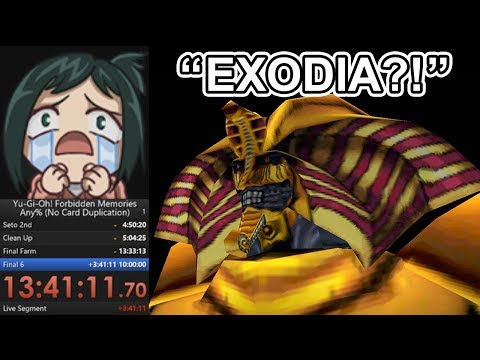
"I JUST GOT EXODIA'D!" - The Brutal Reality of Bad Luck in Speedrunning

Ever been in the middle of a blistering speedrun, hitting every trick, every skip, perfectly executing complex speedrunning strategies, only to have it all come crashing down due to a single, unlucky event? The title of this video, '"I JUST GOT EXODIA'D" | Bad Luck In Speedrunning #2', perfectly encapsulates that gut-wrenching feeling. It's not about losing a game; it's about a perfectly orchestrated attempt being derailed by the cruel hand of fate, or as the gaming community calls it, RNG (Random Number Generator).

In the world of speedrunning, where every frame counts and a Personal Best (PB) is the ultimate goal, bad luck can be the most formidable opponent. This isn't just about failing a jump; it's about the specific, often bizarre, ways a game can conspire against you, turning a potential World Record (WR) run into a highlight reel of misfortune.

What Does "Getting Exodia'd" Mean in Speedrunning?

The term "Exodia" originates from the popular card game Yu-Gi-Oh!. In that game, summoning the five pieces of Exodia instantly wins you the duel, regardless of your opponent's remaining life points or board state. It's a guaranteed, often overwhelming, victory condition.

In speedrunning, "getting Exodia'd" is a sarcastic inversion of this concept. It refers to a situation where a runner's carefully planned strategy is completely shut down, not by their own mistake, but by an overwhelmingly unlucky series of events, often involving RNG. It's like the game itself is saying, "Nope, you’re not winning this one," in the most abrupt and unfair way possible.

Think about it: you've practiced the route for hundreds of hours. You know the precise inputs, the pixel-perfect jumps, the optimal weapon usage. Then, a critical RNG-dependent event that usually goes your way suddenly decides to betray you. This could be anything from a specific enemy drop failing to appear, a boss's attack pattern being unusually aggressive, or a glitch occurring at precisely the worst possible moment.

It's that moment when your entire plan unravels because a game mechanic, one you usually master, decides to go rogue against you. You didn't make a mistake; the game just decided your run was over.

This phenomenon is particularly brutal in games where RNG plays a significant role. Games like Minecraft, many RPGs, and even some action titles can have random elements that can make or break a run. When you get "Exodia'd," it feels like the game has delivered a "game over" screen based on pure chance, rather than your skill.

The Crucial Role of RNG in Speedruns

For anyone unfamiliar with the term, RNG (Random Number Generator) is the backbone of many game mechanics. It dictates everything from enemy spawn locations and patrol paths to item drop rates, critical hit chances, and even the results of certain actions. In speedrunning, RNG is a double-edged sword.

On one hand, favorable RNG can lead to incredible runs. Imagine finding a rare item drop immediately, or a boss entering a predictable, easy-to-exploit phase. This is what runners strive for – the perfect seed, the ideal enemy behavior. This is where speedrun gaming becomes an art form, optimizing based on probabilities.

However, the flip side is where "getting Exodia'd" often happens. When the RNG rolls consistently against the runner, it can be soul-crushing. For instance:

  • Item Drops: In many RPGs, a specific item is required to progress or complete the speedrun quickly. If the drop rate is low and the RNG refuses to grant it after dozens of attempts within the run, the run is effectively over.
  • Enemy Behavior: Some enemies have randomized attack patterns. If an enemy consistently uses its most dangerous or time-consuming attacks, it can turn a swift encounter into a prolonged struggle.
  • Map Generation: Games with procedurally generated maps or dungeons rely heavily on RNG. A particularly unhelpful layout can add significant time or even create unpassable obstacles.
  • Critical Hits/Misses: In combat-heavy runs, failing to land critical hits when needed, or an enemy landing critical hits against you disproportionately, can drastically alter the outcome.

The video referenced likely showcases one or more of these scenarios, where an unexpected and unfavorable RNG outcome leads to a spectacular failure, hence the "Exodia'd" label.

Common Speedrun Frustrations Beyond Bad RNG

While RNG is a frequent culprit, it's not the only source of frustration in the speedrunning community. Runners also contend with:

  • Execution Errors: This is the most common cause of failed runs. Missing a jump, fumbling a combo, or mistiming a strategy can lead to lost time or even death. While frustrating, these are usually attributed to the runner's own skill.
  • Glitches and Bugs: Sometimes, the game itself fails. A critical game-breaking glitch that wasn't present in previous attempts, or a bug that creates an unintended obstacle, can end a run. This is different from intentional exploits used in speedruns; these are unexpected game failures.
  • Hardware/Software Issues: A sudden crash, a controller malfunction, or even a network issue during an online speedrun can be devastating.
  • External Factors: Distractions, unexpected noises, or even physical fatigue can impact a runner's performance.

However, "getting Exodia'd" specifically refers to the feeling of being robbed by the game's inherent randomness, making it a distinct flavor of frustration that resonates deeply with experienced runners.

How Speedrunners Cope with Bad Luck

The life of a speedrunner is one of resilience. After experiencing a devastating "Exodia" moment, what do they do?

  • Take a Break: Often, the best immediate solution is to step away from the game for a bit. Frustration can cloud judgment and lead to more mistakes. A short walk, a drink of water, or switching to a different game can help reset the mindset.
  • Analyze the Failure: Even if it was bad luck, runners will often review their VOD (Video on Demand) to see if there was *anything* they could have done differently. Could they have positioned themselves better to mitigate the RNG? Was there an alternative strategy?
  • Embrace the Humor: The speedrunning community is known for its ability to laugh at itself. Bad luck moments, especially spectacular ones, often become memes or highlight clips, shared for comedic effect. This helps diffuse the tension and reminds everyone that it's still a game. The existence of series like "Bad Luck In Speedrunning" is a testament to this.
  • Focus on the Next Attempt: The most crucial coping mechanism is simply to press "start" again. Speedrunning is a grind. Every failed run is a learning opportunity and a step closer to the next successful one. The pursuit of a PB or a WR is relentless.
The difference between a good speedrunner and a great one isn't just their execution; it's their mental fortitude. How quickly can they shake off a run-ending disaster and queue up for another go?

Learning from Bad Luck

While it feels like pure misfortune, these "Exodia" moments can sometimes offer valuable insights. They highlight the inherent randomness of a game and can push runners to develop more robust strategies that account for a wider range of RNG outcomes.

For example, if a particular RNG-dependent strategy consistently fails, a runner might be forced to explore less optimal but more consistent alternatives. This can lead to innovation in speedrunning strategies and potentially even discover new routes or glitches that were previously overlooked.

Furthermore, these moments serve as a stark reminder of the delicate balance in competitive gaming. They underscore the importance of acknowledging factors beyond pure player skill and appreciating the complex interplay of mechanics, strategy, and sheer chance that defines many of our favorite games.

The Psychology of Speedrunning Fails

The emotional rollercoaster of speedrunning is intense. When a runner dedicates countless hours to perfecting a strategy, the stakes for each attempt become incredibly high. An "Exodia" moment triggers a primal sense of unfairness. The investment of time and effort feels invalidated by a random number.

This can lead to a phenomenon known as "tilt," where frustration and anger impair decision-making. Runners might become overly aggressive, take unnecessary risks, or simply make more basic errors due to their agitated state. Recognizing and managing these emotional responses is a crucial aspect of high-level speedrunning.

The fact that the community finds humor in these situations is a healthy coping mechanism. Sharing these "bad luck" moments normalizes the experience and reinforces the idea that everyone, from casual players to world-class speedrunners, is subject to the whims of the game.

Ultimately, while no one enjoys getting "Exodia'd," these moments are an intrinsic part of the speedrunning experience. They test a runner's dedication, adaptability, and sense of humor. They remind us that even in the most skill-based endeavors, a little bit of luck can go a very long way.

Frequently Asked Questions

What is the origin of the term "Exodia" in gaming?

The term "Exodia" originates from the card game Yu-Gi-Oh!, where summoning the five pieces of Exodia results in an instant win. In speedrunning, it's used sarcastically to describe a run being ended abruptly by overwhelming bad luck, often due to RNG.

How significant is RNG in speedrunning?

RNG (Random Number Generator) is a critical factor in many speedruns. It influences item drops, enemy behavior, map generation, and more. While favorable RNG can lead to record-breaking runs, consistently bad RNG is a primary cause of speedrun failures and the "Exodia'd" phenomenon.

What's the difference between a speedrun fail due to skill and one due to bad luck?

A skill-based fail typically involves an execution error, like missing a jump or mistiming an ability. A bad luck fail, or "getting Exodia'd," occurs when a run is ruined by random game events (RNG) or unexpected bugs, despite the runner executing their strategy perfectly.

How do speedrunners deal with losing a great run due to bad luck?

Speedrunners cope by taking breaks, analyzing their failed attempts, finding humor in the situation (often by sharing clips), and most importantly, by starting a new run. Resilience and the pursuit of a personal best or world record are key.

If you've ever experienced a moment where the game seemed to conspire against you, share your stories in the comments below! What's the most brutal "Exodia'd" moment you've witnessed or experienced in a speedrun? Let's discuss and commiserate together!