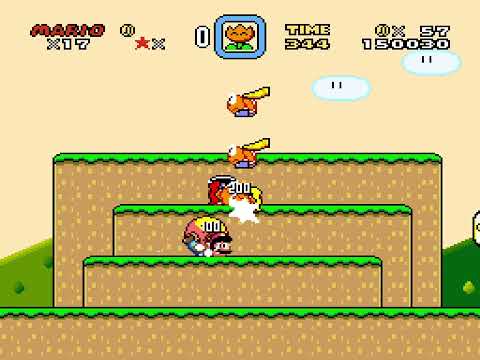
Super Mario World Speedrun: The WAHOO Phenomenon and Its Parody

WAHOO! If you're a fan of Super Mario World and the incredible world of speedrunning, you've likely encountered the legendary "WAHOO" and perhaps even the hilarious parodies surrounding it. This isn't just about glitches or skips; it's about the culture, the memes, and the sheer dedication that drives players to shave off milliseconds. Today, we're diving deep into what makes a Super Mario World speedrun so captivating, exploring the strategies, the iconic moments, and a particularly memorable parody that brought the absurdity of world record attempts to life.

What is Super Mario World Speedrunning?

Super Mario World, a staple on the Super Nintendo Entertainment System (SNES), is one of the most beloved and enduring speedrun titles. The goal in a speedrun is simple: complete the game as fast as humanly possible. This isn't about enjoying the whimsical journey through Dinosaur Land; it's about optimization, precision, and a deep understanding of the game's mechanics. Speedrunners meticulously study every frame, every jump, and every enemy placement to find the quickest path from the start of the game to the final credits.

The primary categories for Super Mario World speedruns often revolve around:

  • Any%: Beat the game as quickly as possible, using any glitches or exploits allowed.
  • 100%: Complete all levels and collect all items, a much longer and more complex challenge.
  • All Castles: A category focusing on reaching and completing all castle levels.

The competition in Super Mario World speedruns is fierce, with players constantly pushing the boundaries of what's possible, aiming for that coveted World Record (WR). Every successful Personal Best (PB) is a testament to countless hours of practice and dedication.

The Legend of WAHOO

The "WAHOO" sound effect in Super Mario World is iconic, often associated with Mario's iconic jumps. In the context of speedrunning, it can become a shorthand for moments of triumph, or sometimes, a humorous acknowledgement of a particularly risky or difficult maneuver. The raw energy and excitement of a successful speedrun attempt, especially when chasing a record, can feel almost primal, hence the association with an energetic exclamation like "WAHOO!"

The pursuit of a World Record in Super Mario World is an exercise in extreme precision and deep game knowledge. Every millisecond counts.

Players often develop unique superstitions or call-outs during their runs. A well-timed "WAHOO" might punctuate a critical boss fight skip or a perfect sequence of jumps through a challenging level. It becomes part of the language of the run, understood by fellow speedrunners and fans.

Speedrun Strategies and Techniques

Super Mario World is a goldmine for speedrunning techniques. Runners exploit various mechanics to gain an edge:

  • Glitches and Skips: Many categories rely on sophisticated glitches. For instance, the "Lunar Dragon Skip" allows players to bypass a significant portion of the game.
  • Precise Movement Tech: Mastering techniques like running jumps, spin jumps, and Yoshi cancels is crucial.
  • RNG Manipulation: While not always feasible or desired, understanding and sometimes manipulating Random Number Generator (RNG) elements can be key in certain situations.
  • Level Routing: The optimal path through each level is meticulously planned. This involves knowing exactly where to jump, when to use power-ups, and how to avoid unnecessary encounters.

The speedrunning community is constantly innovating. New glitches are discovered, and existing strategies are refined. A single discovery can shave seconds off the WR, igniting a new wave of competition.

One of the most famous strategies involves utilizing Yoshi to perform extended flight sequences or to gain momentum. The interplay between Mario, Yoshi, and the game's physics engine is a core element explored by runners. Even seemingly minor interactions, like the precise timing of throwing Yoshi, can have significant impacts on a run.

The beauty of Super Mario World speedrunning lies in its depth. There's always something new to learn, a faster strat to discover.

Parody and Community Humor

The intense dedication of speedrunning can sometimes lead to humorous situations and memes. The original content you referenced, likely a parody, highlights this aspect perfectly. By exaggerating the effort and potential "cost" of achieving a world record, it taps into the shared understanding and inside jokes of the gaming community. These parodies are a way for the community to celebrate the passion while also acknowledging its more absurd elements.

The idea of a speedrunner going to extreme lengths for a record is fertile ground for comedy. It reflects the almost obsessive nature of trying to achieve perfection in a digital world. These pieces of content often become viral within the gaming sphere because they resonate with the dedication fans have for their favorite titles.

The Impact of Terminal Montage

The creator of the parody you mentioned, often associated with "Terminal Montage" and the "Something Series," has a knack for capturing the essence of games and their communities in a humorous and engaging way. Their animations often focus on specific characters, game mechanics, or, in this case, the extreme dedication required for speedruns. The use of "WAHOO" in this context likely plays on the iconic sound effect and the high-energy nature of elite gameplay.

These parodies, while comedic, also serve to introduce a wider audience to the intricacies of speedrunning. They spark interest and can lead viewers to seek out actual speedruns and appreciate the skill involved. The credit given to voice actors, animators, and musicians in such content also highlights the collaborative nature of content creation, even for a parody.

The use of various remixes and themes from Super Mario World and other Nintendo titles in the parody's soundtrack further adds to its appeal, creating a nostalgic and energetic audio-visual experience that resonates with fans of the franchise and Nintendo games in general. This blend of humor, accurate gaming references, and high-quality production is what makes content like this so successful within the gamer community.

How to Get Started in SMW Speedruns

Intrigued by the world of Super Mario World speedruns? Here's how you can dive in:

  1. Play the Game!: First and foremost, play Super Mario World extensively. Get comfortable with its controls and level design.
  2. Watch the Pros: Head over to speedrun.com and watch top runners. Pay attention to their routes, techniques, and commentary.
  3. Practice Specific Sections: Don't try to run the whole game at once. Practice individual levels or challenging tricks until you can perform them consistently.
  4. Join the Community: Many speedrunning communities have Discord servers. Joining one is a great way to ask questions, get advice, and connect with other runners.
  5. Use Resources: Look for guides and tutorials created by experienced runners. Websites like speedrun.com often host these resources.

Remember, the journey to a world record is long and arduous, but every improvement is a victory. Embrace the grind and enjoy the process of mastering this classic title.

Frequently Asked Questions

Q1: What is the current World Record for Super Mario World Any%?
A1: World Records are constantly being broken! For the most up-to-date information, always check the official leaderboards on speedrun.com.

Q2: Are glitches allowed in Super Mario World speedruns?
A2: It depends on the category. In "Any%" runs, glitches and exploits are generally allowed and often essential. Other categories, like "100%", may have stricter rules.

Q3: How long does it take to become a good Super Mario World speedrunner?
A3: This varies greatly depending on individual practice time, natural aptitude, and the goals you set. Some runners achieve respectable times in weeks, while mastering the game for WR pace can take years.

Q4: Where can I watch live Super Mario World speedruns?
A4: Many top speedrunners stream their practice sessions and attempts on platforms like Twitch. Searching for "Super Mario World speedrun" on Twitch will lead you to active streamers.

The speedrunning community is incredibly supportive. Don't be afraid to ask for help or share your progress!

Whether you're aiming for a world record or just want to shave a few minutes off your personal best, Super Mario World offers a deep and rewarding speedrunning experience. The blend of precise execution, strategic planning, and the sheer fun of playing a beloved game makes it a timeless challenge for any aspiring gamer.

What are your favorite Super Mario World speedrun moments? Did you find the parody hilarious, or do you prefer to focus on the serious speedrunning aspect? Let us know in the comments below, or join the conversation on our GamingSpeedrun Discord server!

Super Mario World ROM Hacks: Mastering the Niche of Speedrunning

The realm of speedrunning is vast and ever-evolving, pushing the boundaries of what's possible within beloved video games. While major titles often steal the spotlight, a passionate and dedicated community thrives in the intricate, often mind-bending, world of ROM hacks. Today, we're diving deep into a particularly fascinating corner: the Super Mario World ROM Hack Speedrun Niche. This isn't just about beating the original game faster; it's about exploring entirely new levels, manipulating game mechanics in unexpected ways, and mastering custom challenges designed by passionate creators. If you've ever marveled at the sheer speed and precision of top-tier speedrunners or wondered what lies beyond the official releases, you're in the right place. This article will serve as your ultimate guide, dissecting the allure, the techniques, and the dedicated community that makes Super Mario World ROM hack speedruns so captivating. We'll explore what makes these hacks unique, the common *strats* employed, and why this niche continues to grow.

Table of Contents

What Are Super Mario World ROM Hacks?

Super Mario World, a timeless classic released for the Super Nintendo Entertainment System, has a robust and active modding scene. ROM hacks are essentially fan-made modifications of the original game's code, allowing creators to build entirely new levels, introduce custom mechanics, alter enemy behavior, and even change graphical assets. These aren't just simple tweaks; many ROM hacks offer experiences that are vastly different from the original, presenting unique challenges and gameplay loops. The Super Mario World Central (SMWC) community is a primary hub for these creations, fostering a collaborative environment where designers and players can share their work. These hacks range from incredibly difficult "Kaizo" stages designed to test the limits of player skill to entirely new adventures with intricate plotlines and mechanics.

The Allure of SMW ROM Hack Speedruns

So, why speedrun a ROM hack? The appeal lies in several key factors:
  • Uncharted Territory: Unlike official games that have been dissected for decades, ROM hacks offer new frontiers for exploration. Runners are constantly discovering new *glitches*, *skips*, and *strats* that were never intended by the hack's creator.
  • Designed Challenges: Many ROM hacks are specifically designed with speedrunning in mind, featuring intentional obstacles and sequences that require precise execution. This provides a clear goal for runners aiming for the fastest times.
  • Variety: The sheer diversity of ROM hacks means there's a speedrun category for almost any playstyle. From precision platforming challenges to exploiting unique *RNG* patterns, the options are endless.
  • Community Innovation: The relationship between ROM hack creators and speedrunners is often symbiotic. Creators push the envelope with inventive designs, and speedrunners find new ways to break or master those designs, leading to constant evolution.
For many, the thrill comes from mastering a hack that is notoriously difficult, finding a *frame-perfect* execution for a specific *skip*, or developing a novel *strat* that shaves precious seconds off a World Record (*WR*). It's a testament to player dedication and the creative potential of game modification.

Essential Speedrunning Techniques in ROM Hacks

While specific techniques vary wildly depending on the ROM hack, certain fundamental skills from vanilla Super Mario World speedrunning often carry over and are even amplified:
  • Precise Movement: Mastering Mario's physics is paramount. This includes techniques like *running jumps*, *wall jumps* (if applicable), *spin jumps*, and precise ledge grabs.
  • Glitch Exploitation: Many ROM hacks are built upon or around the game's existing engine. Runners often leverage *glitches* like *sprite clipping*, *P-Switch manipulation*, or even *arbitrary code execution* (ACE) if the hack supports it. The ability to find and exploit these is a hallmark of expert ROM hack speedrunners.
  • RNG Manipulation: In some hacks, random number generation (*RNG*) can significantly impact gameplay. Savvy runners learn to predict or influence *RNG* to get favorable outcomes, such as specific enemy patterns or item drops.
  • Level-Specific Skips and Strats: Each ROM hack presents unique puzzles and challenges. Discovering or perfecting a *skip* that bypasses a difficult section or developing a *strat* that maximizes efficiency through a segment is crucial for achieving fast times.
The variety of Super Mario World ROM hacks means there are numerous speedrunning categories. Some of the most popular include:
  • Kaizo ROM Hacks: These are notoriously difficult hacks designed to push players to their absolute limit. Speedrunning Kaizo hacks often involves incredibly precise pixel-perfect jumps, complex *glitch execution*, and brutal *challenge runs*. Examples include hacks like Kaizo Mario World, Kaizo Mario II, and the infamous Grand Poo World 2. The strategies here are often extremely technical and require hundreds of hours of practice.
  • Vanilla-Plus Hacks: These hacks aim to expand upon the original Super Mario World experience without fundamentally altering core mechanics or introducing overly complex *glitches*. They focus on creative level design and challenging but fair platforming. Runners in this category focus on optimization of movement and execution of intended mechanics.
  • "Joke" or "Troll" Hacks: While often not taken as seriously for *PB*s, these hacks can still be incredibly fun to speedrun. They feature absurd challenges, unexpected twists, and often rely on finding *exploits* to complete them as quickly as possible, sometimes leading to hilarious outcomes.
  • Custom Boss Fights: Some hacks focus on creating entirely new and challenging boss encounters. Speedrunning these often involves learning intricate attack patterns and finding the optimal damage output *strats*.
In terms of specific *strats*, you'll often see:
  • "Backwards Long Jump" (BLJ): While not as prevalent in SMW hacks as in some other games, understanding momentum conservation from various jumps is key.
  • Power-Up Management: Knowing when to grab a P-Wing, Fire Flower, or Cape Feather can be critical for specific sections or *skips*.
  • Enemy Manipulation: Using enemy AI to your advantage, whether it's to gain height, trigger an event, or clear a path, is a common strategy.
  • "Byte glitches" or "memory corruption" strategies: In some advanced hacks, runners might exploit how the game handles memory to achieve seemingly impossible results, like manipulating enemy behavior or game state.
The beauty of SMW ROM hack speedrunning lies in its constant innovation. A new hack drops, and the community immediately dives in, dissecting every pixel and every line of code to find the fastest way through. It’s a detective game meets a dexterity challenge.

The Community and the Thrill of Discovery

The Super Mario World ROM hack speedrunning community is incredibly passionate and collaborative. Platforms like speedrun.com host leaderboards for a vast array of SMW ROM hacks, encouraging friendly competition. Discord servers and forums are buzzing with discussion, strategy sharing, and *WR* attempts. The thrill of discovery is a massive driving force. When a runner finds a groundbreaking *skip* or a new *glitch* that shaves significant time, it’s celebrated by the entire community. This continuous evolution keeps the niche fresh and exciting, even for hacks that have been around for years. The dedication of creators to craft these challenging worlds and the dedication of runners to master them creates a unique and engaging ecosystem.

Getting Started in SMW ROM Hack Speedrunning

If you're inspired to jump into the world of SMW ROM hack speedrunning, here’s how to begin:
  1. Choose a ROM Hack: Start with a hack that appeals to you. Look at speedrun.com for leaderboards and popular titles. For beginners, perhaps start with a "Vanilla-Plus" hack before diving into the extreme difficulty of Kaizo runs.
  2. Get the ROM: You'll need a Super Mario World ROM. It's essential to have a legal copy of the original game to create your own ROMs for patching.
  3. Patch the ROM: Download a ROM patching tool (like Lunar IPS) and apply the ROM hack file to your Super Mario World ROM.
  4. Learn the Game: Play through the ROM hack normally first to understand its design, mechanics, and general layout.
  5. Watch Existing Speedruns: Study runs from top players on YouTube or Twitch. Pay attention to their movement, *strats*, and *glitches*.
  6. Practice, Practice, Practice: Speedrunning is all about repetition. Focus on specific sections and try to perfect them. Use tools like save states in emulators for practice if allowed by the category rules.
  7. Join the Community: Engage with the ROM hack’s specific Discord server or the broader SMW speedrunning communities. Ask questions, share your progress, and learn from others.
The journey is as rewarding as the destination. Every PB you achieve, every new trick you learn, and every community interaction contributes to the rich tapestry of this niche.

Frequently Asked Questions

What is a ROM hack in the context of Super Mario World?

A ROM hack is a modified version of the original Super Mario World game code, created by fans. These hacks can feature new levels, mechanics, enemies, and challenges, offering entirely new gameplay experiences.

Is speedrunning ROM hacks legitimate?

Absolutely. The speedrunning community embraces ROM hacks as a legitimate extension of the original games. They are a testament to creativity and skill, with official leaderboards on sites like speedrun.com.

What is the difference between a "glitchless" and a "glitch" speedrun category?

In "glitchless" categories, runners are restricted from using unintended game exploits. In "glitch" categories, runners actively seek out and utilize these glitches to save time or bypass obstacles.

How difficult are Super Mario World ROM hacks compared to the original game?

Difficulty varies immensely. Some ROM hacks are designed to be only slightly more challenging than the original, while others, like Kaizo hacks, are exceptionally difficult and require expert-level skill and countless hours of practice.

Where can I find Super Mario World ROM hacks and communities?

Super Mario World Central (smwcentral.net) is a primary hub for ROM hacks and community discussion. Speedrun.com also hosts leaderboards for many popular ROM hacks, often linking to their respective communities.

The world of Super Mario World ROM hack speedrunning is a vibrant and ever-expanding universe. It's a place where creativity, technical mastery, and sheer dedication converge to create thrilling and challenging experiences. Whether you're a seasoned speedrunner or a curious gamer, there's always something new to discover and master in this exciting niche. Keep pushing those boundaries, find your next great *strat*, and maybe, just maybe, you'll be setting the next World Record!

Mastering the Glitchfest: A Deep Dive into Super Mario World's 2:54 TAS by IgorOliveira666

Super Mario World Glitchfest TAS

Hey speedrunning enthusiasts and Mario fans! Today, we're diving deep into a truly spectacular speedrun of a timeless classic: Super Mario World on the SNES. This isn't just any run; it's a Tool-Assisted Speedrun (TAS) by the incredibly skilled IgorOliveira666, clocking in at an astonishing 2 hours, 54 minutes, and 33.62 seconds. What makes this run stand out is its title: "Glitchfest". This implies a deliberate exploration and exploitation of the game's deepest secrets, and believe me, this TAS delivers!

The Glitchfest Philosophy

When you hear "Glitchfest," you know you're in for something special. This isn't about the fastest route through the game using intended mechanics. Instead, it's a masterclass in understanding how the game works *under the hood*. IgorOliveira666's run is a testament to the dedication of the speedrunning community to uncover every possible shortcut, every unintended shortcut, and every quirky behavior the game has to offer. In my experience, TAS runs like this often push the boundaries of what we think is possible in a game.

Super Mario World, a titan in the SNES era, continues to hold a significant place in the hearts of gamers worldwide. Its vibrant graphics, fluid controls, iconic soundtrack, and, crucially for this discussion, its abundant glitches make it a perennial favorite for exploration and speedruns. While many games have exploits, not all glitches translate into time saves. This particular TAS, however, is designed to highlight as many of these as possible, creating a truly unique spectacle.

What Exactly is a TAS?

Before we dive deeper into the exploits, let's clarify what a Tool-Assisted Speedrun (TAS) entails. Unlike a "live" speedrun played by a human in real-time, a TAS is created using external tools. These tools allow the runner to control the game frame by frame. This means perfect inputs, instantaneous reaction times, and the ability to test and perfect strategies with absolute precision. Think of it as a perfect, optimized playthrough, often exploring routes and tricks that would be humanly impossible. This precision is key to executing complex glitches consistently.

Super Mario World's Enduring Legacy

Released in 1990, Super Mario World wasn't just a game; it was a phenomenon. It was the flagship title for the Super Nintendo Entertainment System, showcasing the console's capabilities with its colorful sprites and expansive world. Beyond its technical prowess, the game introduced Yoshi, a beloved companion who added a new layer of gameplay mechanics. The sheer number of secrets, hidden exits, and the non-linear progression through the world map meant that players could spend hundreds of hours discovering everything. This depth also means there's a vast playground for discovering glitches, making it a prime candidate for speedrunning and TAS projects.

The intricate design of Super Mario World, with its multiple layers of mechanics and hidden content, inadvertently created fertile ground for a vast array of glitches to be discovered over the decades.

Exploiting the Code: Key Strats and Skips

This "Glitchfest" TAS isn't just about finding *any* glitch; it's about finding glitches that *save time* or enable significant sequence breaks. Some common themes in Super Mario World glitch exploitation include:

  • Damage Boosting: Intentionally taking damage to gain extra momentum or pass through certain obstacles.
  • Sprite Duplication/Manipulation: Causing enemies or items to duplicate or behave erratically, sometimes leading to unintended pathways.
  • Wall Clips: Finding precise pixel positions to clip through the game's collision detection, bypassing entire sections of levels.
  • Out-of-Bounds (OOB) Exploits: Forcing Mario outside the intended playable area of a level, often leading to skips or accessing areas prematurely.
  • Level Warping: Utilizing specific glitch combinations to jump directly to later levels or the final boss, bypassing large portions of the game.

IgorOliveira666's TAS likely employs a combination of these, meticulously planned and executed. For instance, finding a reliable way to clip through a specific wall in Donut Plains could save minutes compared to the standard route. Similarly, exploiting enemy AI or item spawns to gain an advantage is a staple of advanced speedruns.

Navigating the Chaos: Crashes and Restarts

The description explicitly mentions that some glitches are so intense they cause the game to crash, requiring a console restart. This is a fascinating aspect of glitch hunting in older games. The hardware and software limitations, combined with complex interactions between game elements, can lead to unpredictable states. For a TAS, this means the runner must account for these potential crashes and plan accordingly. Sometimes, the fastest route might involve a glitch with a high chance of crashing, forcing a restart. Other times, the TAS might be designed to *avoid* the game-breaking glitches while still leveraging time-saving ones. The ability to execute these flawlessly, even under the threat of a crash, is what makes TAS runs so impressive. It's a delicate dance between pushing the engine to its limits and maintaining control.

The thrill of a TAS "Glitchfest" lies not just in the speed, but in the sheer audacity of breaking the game in ways the developers never imagined, all while staying within the boundaries of a near-perfect execution.

This run, published on May 24, 2022, serves as a benchmark. It showcases a particular interpretation of "beating" Super Mario World – one that embraces its imperfections and uses them as a tool for achieving ultimate speed. It’s a testament to the community's ongoing engagement with the game, even years after its initial release.

A Feast for the Eyes (and Ears)

While the primary goal is speed, a TAS like this also offers a unique visual experience. Seeing Mario traverse levels in ways never intended, using enemies as platforms in impossible sequences, or phasing through solid objects is captivating. The "flashing lights" warning is also crucial. Many glitches, especially those involving rapid sprite manipulation or graphical errors, can lead to intense visual effects. While it’s a sign of deep exploitation, players with epilepsy should exercise extreme caution. The provided timestamps (43:24, 53:02, 57:49, 1:16:19, 1:37:36, and 2:09:15) are critical for those who want to experience these intense moments or skip them entirely.

The iconic soundtrack of Super Mario World also plays a role, providing a familiar auditory backdrop to the otherwise chaotic visual display. The contrast between the cheerful music and the game-breaking glitches is often part of the charm for viewers.

The Impact on the Speedrunning Community

TAS runs like IgorOliveira666's "Glitchfest" have a profound impact on the broader speedrunning community. They:

  • Push the boundaries of knowledge: They often discover glitches or strategies that are later adapted by human runners (though often in simplified or safer forms).
  • Inspire new runners: Watching a near-perfect execution can motivate others to pick up the game and strive for their own personal bests (PB).
  • Provide reference points: TAS runs serve as the ultimate theoretical limit for a game's speedrun category, guiding human runners on what's potentially achievable.
  • Entertain: Beyond the technical aspects, they are often incredibly fun and fascinating to watch, showcasing a deep, often humorous, understanding of game mechanics.

This specific run, focusing on *quantity* and *intensity* of glitches, is particularly valuable for those interested in the game's technical underpinnings. It’s more than just a fast time; it’s an educational tool for aspiring glitch hunters and a celebration of Super Mario World's deep systems.

For those wanting to explore more about Super Mario World speedruns, platforms like Speedrun.com are invaluable resources. You can find leaderboards for various categories, see the top human runners, and learn about the evolution of the strategies used.

Frequently Asked Questions

What does TAS stand for in speedrunning?

TAS stands for Tool-Assisted Speedrun. It's a type of speedrun created using external tools that allow for frame-by-frame control, enabling perfect inputs and execution.

Are TAS runs considered official records?

Generally, TAS runs are kept in a separate category from "Real-Time Attacks" (RTA) or human-played runs. While they represent the theoretical fastest time, they are not typically compared directly against RTA records.

How do glitches save time in Super Mario World?

Glitches can save time by allowing players to skip entire levels, bypass obstacles, reach areas faster than intended, or manipulate enemy behavior to create shortcuts. This TAS specifically focuses on showcasing many such exploits.

Why is Super Mario World still so popular for speedrunning?

Its enduring popularity stems from its tight controls, vast amount of content, depth of mechanics, and the sheer number of discoverable glitches and tricks, making it a rich and rewarding game for both casual play and high-level competition.

Where can I watch this TAS?

This specific TAS was published by IgorOliveira666. You can typically find such runs on platforms like YouTube or through dedicated speedrun archives. Searching for "[TAS] Super Mario World Glitchfest IgorOliveira666" should lead you to it.

This "Glitchfest" TAS by IgorOliveira666 is more than just a record; it's a deep dive into the very fabric of Super Mario World. It's a testament to human ingenuity (even when assisted by tools) and the incredible replayability of a game masterpiece. Whether you're a seasoned speedrunner, a casual Mario fan, or just curious about game exploits, this run offers something fascinating.

What are your favorite glitches in Super Mario World? Did this TAS inspire you to try some runs yourself? Let us know in the comments below! Join our Discord channel to discuss this and all things speedrunning!

Mastering Super Mario Land: The 12:29.219 Any% Speedrun Deep Dive

Super Mario Land Any% Speedrun Record

Introduction: The Allure of Super Mario Land Speedruns

Hey speedrunners and Mario fans! Ever stared at that pristine Super Mario Land ending screen, wondering if you could shave off even a single second? The quest for the perfect run is an intoxicating challenge, pushing the boundaries of what's possible in a game we all grew up with. The recent PB of 12 minutes and 29.219 seconds is a testament to the dedication and intricate knowledge within the speedrunning community. But what does it truly take to achieve such a feat? We're diving deep into the world of Super Mario Land's 'Any%' category to dissect this incredible record.

The 12:29.219 Record: A Closer Look

Achieved on January 24th, 2022, this record is more than just a number; it's a culmination of countless hours of practice, meticulous route planning, and flawless execution. Played on original hardware – a real SNES with a Super Game Boy 2 Watch – this run emphasizes the purist approach that many speedrunning enthusiasts value. This isn't about emulators or save states; it's about raw skill and a deep understanding of the game's mechanics.

The dedication to playing on original hardware adds a layer of authenticity and challenge that resonates deeply within the retro gaming speedrunning scene.

You can witness this monumental achievement firsthand in the original YouTube video. It's a masterclass in precision and efficiency.

Understanding 'Any%' in Super Mario Land

In the speedrunning world, 'Any%' is the most common category. It means completing the game as quickly as possible, without any specific restrictions on collectibles or specific objectives, beyond simply reaching the end credits. For Super Mario Land, this translates to a hyper-optimized path through the game's distinct worlds and challenging bosses.

This category is all about:

  • Finding the fastest routes through each level.
  • Minimizing time spent in menus or between screens.
  • Executing precise jumps and movements to maintain momentum.
  • Utilizing glitches and skips where applicable to bypass sections.

Unlike a 100% run, 'Any%' doesn't care about collecting every coin or finding every secret. It's a pure race against the clock, demanding a deep understanding of the game's engine and its exploitable mechanics.

Key Strategies and Glitches

The magic behind breaking speed records often lies in exploiting the game's code. For Super Mario Land, this includes a variety of clever techniques:

  • Precise Jumping and Movement: Mastering the specific jump arcs and running speeds is crucial. Small optimizations in how Mario moves can save fractions of a second over the course of a run.
  • Level Skips and Warps: The most significant time-savers often involve bypassing entire sections of levels or even worlds. While Super Mario Land doesn't have major warp zones like its console counterparts, clever routing can effectively skip parts of levels.
  • Boss Strategies: Each boss has specific patterns. Speedrunners develop optimized strategies to defeat them as quickly as possible, often requiring perfect timing and positioning.
  • Exploiting Physics: Understanding how the game's physics engine works can lead to unexpected shortcuts. For example, certain jumps or enemy interactions might allow Mario to move faster or reach areas unintended by the developers.

The pursuit of these techniques is an ongoing process. The speedrunning community constantly discovers new optimizations and exploits. For instance, the Super Mario Land speedrunning leaderboards often show subtle changes in routes as new discoveries are made.

Level Breakdowns: Navigating the Worlds

Super Mario Land is segmented into distinct worlds, each with its own set of challenges:

  • World 1 (Grassy Land): The introductory world. Runners focus on maintaining speed and executing early, precise jumps. The boss, King Totten, is typically defeated with minimal effort.
  • World 2 (Underwater World - Chai Sea): Navigating underwater levels can be slower. Runners often utilize the Superball Flower effectively to clear paths quickly.
  • World 3 (Desert Land - Easton Desert): Introduces new enemy types and more challenging platforming. The goal here is to avoid unnecessary combat and maintain forward momentum.
  • World 4 (Sky Land - Chiza): Features unique mechanics like the Super Jump power-up and challenging vertical sections. Optimal use of the popgun is key.
  • World 5 (Mountains - Shogun Land): Introduces the motorcycle sections. Mastering the controls and avoiding obstacles is paramount to maintaining speed.
  • World 6 (Bazir): A challenging world that often requires precise execution to avoid losing time.
  • World 7 (Yukiko): The final stretch before the ultimate confrontation. This world tests all the skills acquired throughout the game.
  • World 8 (Magician's Realm - Tatanga's Castle): The climax of the game. This involves final boss encounters that demand perfect execution.

Each level presents unique obstacles, and a top-tier speedrun is about optimizing every single second within these environments. Even a single misstep can cost precious time.

The Role of RNG in Super Mario Land Speedruns

Random Number Generation (RNG) plays a significant, albeit sometimes frustrating, role in many speedruns. In Super Mario Land, RNG can affect:

  • Enemy spawn patterns and movement.
  • Power-up drops from blocks.
  • The specific appearance of certain environmental hazards.

While experienced runners can mitigate the impact of bad RNG, there are moments where luck is a factor. A perfectly executed run can still be slightly slower due to unfortunate enemy placements or a missed power-up. The best runners are those who can adapt to or manipulate these RNG elements most effectively.

The constant battle against unpredictable enemy movements and item drops is a core part of the challenge in many classic games, and Super Mario Land is no exception.

Evolution of the Run: From Start to Sub-13

The record of 12:29.219 didn't appear overnight. Speedrunning is a continuous process of discovery and refinement. Early runs of Super Mario Land 'Any%' were significantly longer. Over the years, the community has:

  • Discovered new glitches and skips.
  • Refined movement techniques for maximum speed.
  • Optimized boss strategies for quicker defeats.
  • Developed new routes to bypass difficult sections.

The pursuit of a sub-13-minute time was a major milestone, and this current record pushes that boundary even further. It's a testament to the collaborative spirit of the speedrunning community, where knowledge is shared and constantly built upon.

Training for Speed: What it Takes

Becoming a top-tier speedrunner requires more than just playing the game a lot. It involves:

  • Practice, Practice, Practice: Hours upon hours are dedicated to mastering individual levels and the entire game.
  • Segmented Practice: Runners often break down the game into smaller segments (levels or specific sections) to practice them until they are perfected.
  • Watching Other Runners: Studying the techniques of the best players is invaluable. Websites like speedrun.com are a treasure trove of information.
  • Understanding the Game's Code: Some runners delve deep into the game's mechanics, understanding frame data and engine quirks to find minute optimizations.
  • Mental Fortitude: The ability to perform under pressure, especially during a PB attempt, is critical. Choking on a record run can be devastating, so resilience is key.

The journey to a record-breaking time is arduous but incredibly rewarding for those who dedicate themselves to it.

Frequently Asked Questions

Common Questions About Super Mario Land Speedruns

What is the fastest category for Super Mario Land?
The 'Any%' category, aiming to complete the game as fast as possible without specific restrictions, is generally the fastest and most popular category.
Does Super Mario Land have major glitches or skips used in speedruns?
While not as glitch-heavy as some other games, speedrunners utilize precise movement, optimal boss strategies, and minor sequence breaks to shave off time.
Is it possible to speedrun Super Mario Land on an emulator?
Yes, emulators are often used for practice and learning routes. However, the most prestigious records, like the one discussed, are typically set on original hardware for authenticity.
How long does it take to get good at Super Mario Land speedrunning?
This varies greatly depending on the individual, but mastering the game to a competitive level can take hundreds or even thousands of hours of dedicated practice.

Conclusion: The Enduring Appeal of Super Mario Land Speedrunning

The 12:29.219 record for Super Mario Land 'Any%' is a testament to the enduring appeal of this classic title and the incredible dedication of its speedrunning community. It showcases not only mastery of the game's mechanics but also a deep understanding of optimization, strategy, and the constant drive to push boundaries. Whether you're a seasoned speedrunner or a curious gamer, there's always something to appreciate in the pursuit of perfection.

What are your favorite Super Mario Land speedrunning moments or strats? Did this breakdown inspire you to try a run yourself? Share your thoughts, your own PBs, or any amazing glitches you've discovered in the comments below! Let's keep the gaming community alive and kicking!

How Long to Speedrun Every Super Mario Game? A Deep Dive into Mario's Fastest Runs

So, you've been watching those incredible speedrun videos, maybe you've even dabbled yourself. You hear about players shaving off milliseconds and pulling off insane glitches to beat games in record time. It's a whole different world from just enjoying a game casually. But when you think about a franchise as massive as Super Mario, a question naturally pops into your head: "How long would it *actually* take to speedrun *all* of them?" It sounds simple, but as any seasoned gamer knows, the devil is in the details, and the Super Mario franchise is a labyrinth of them.

The Sheer Scale of Mario

The Super Mario universe isn't just a few games; it's a sprawling collection that spans decades and genres. From the iconic 2D platformers that started it all to 3D adventures, kart racers, RPGs, and even party games, Nintendo has consistently delivered new ways to experience their flagship franchise. This sheer volume makes any attempt to calculate a "total speedrun time" incredibly complex. It's not just about the number of games, but also the different versions, the evolving speedrun categories for each, and the constant discovery of new strats and glitches.

Understanding Speedrun Categories: Any% vs. 100% and Beyond

When we talk about speedruns, the first thing any true gamer knows is that "speedrun" isn't a single, monolithic goal. The most popular category is typically Any%, which means beating the game as quickly as possible, regardless of what you collect or achieve in-game. This often involves exploiting game exploits and glitches that bypass large portions of the game. On the other hand, 100% Completion runs require you to achieve every in-game goal, collect every item, and perform every necessary action. These are significantly longer and often require different, less glitch-reliant strategies.

Then there are even more niche categories, like Low% (completing the game with the absolute minimum requirements), All Bosses, or specific challenge runs. For a franchise like Mario, this means the potential time investment skyrockets when you consider all the possible ways to play.

The sheer variety of categories for a single Mario game can drastically alter the perceived "speedrun length." A Super Mario World Any% run is vastly different in time and strategy from its 100% counterpart.

The Core Mario Experience: How Long for the Mainline Titles?

Let's break down some of the most iconic mainline Super Mario titles. These are the games that define the franchise:

  • Super Mario Bros. (NES): A classic. Any% runs are incredibly short, often under 5 minutes thanks to TAS-level precision and sequence breaks. A 100% run would be considerably longer, focusing on completing every level perfectly.
  • Super Mario Bros. 3 (NES): Introduced more complex level design and power-ups. Any% runs utilize warp whistles and precise movement to achieve times under 10 minutes.
  • Super Mario World (SNES): Famous for its hidden exits and the introduction of Yoshi. Any% runs are famously around 13-15 minutes, often involving the famous Backwards Long Jump (BLJ) or similar game mechanics exploitation.
  • Super Mario 64 (N64): A revolutionary 3D title. Its speedrun is legendary, with the Any% category (often targeting 70 Stars) being highly optimized and sitting around 15-20 minutes. The 120 Star run is a much longer, more comprehensive challenge, taking over an hour.
  • Super Mario Sunshine (GCN): Known for its unique FLUDD mechanics. Any% runs can be around 30-45 minutes, involving intricate routing and precise usage of FLUDD for movement and butterflying techniques.
  • New Super Mario Bros. Wii (Wii): A return to 2D side-scrolling with a modern twist. Runs are generally around 20-30 minutes for Any%.
  • Super Mario Galaxy (Wii): Praised for its creative level design and music. Any% runs are typically around 1 hour and 15 minutes, with specific speedrun strategies involving sword flying and precise inputs.
  • Super Mario Galaxy 2 (Wii): An even more refined experience. Runs are similar to the first, often clocking in around 1 hour and 10 minutes for Any%.
  • Super Mario 3D Land (3DS): A unique blend of 2D and 3D elements. Any% runs are around 30-40 minutes.
  • Super Mario 3D World + Bowser's Fury (Switch): A massive game with a robust multiplayer and a significant amount of content. Any% runs for 3D World alone are around 1 hour and 30 minutes, with Bowser's Fury adding another significant chunk for any% completion.
  • Super Mario Odyssey (Switch): Known for its open-ended sandbox kingdoms and the capture mechanic. The Any% run, often requiring around 130 moons, is a masterclass in movement tech and routing, typically around 55 minutes to 1 hour.

Just these mainline titles already represent a considerable time investment if you were to run them all back-to-back. Imagine adding in every single one of them!

Beyond the Platforming: Speedrunning Mario's Spin-offs

But Mario isn't just about jumping! Think about:

  • Mario Kart games: Many of these have Any% categories focusing on winning races quickly, often utilizing item strategies and shortcuts. Times can vary from a few minutes per cup to hours for a full 150cc Grand Prix run.
  • Mario RPGs (e.g., Super Mario RPG, Paper Mario series, Mario & Luigi series): These typically have longer Any% runs, often in the 2-5 hour range, due to their story-driven nature and turn-based combat. Exploiting battle mechanics and dialogue skips are key.
  • Mario Party games: Speedrunning these is less common in the traditional sense, as they rely heavily on multiplayer and RNG. However, some communities attempt "fastest board" or "most coins in X turns" challenges.
  • Sports titles (e.g., Mario Tennis, Mario Golf): These often have categories based on winning tournaments or achieving specific feats quickly.

The sheer diversity means you'd need to learn entirely different speedrunning strategies for each sub-series.

Calculating the Total Time: The Ultimate Speedrunner's Quest

So, let's try to rough out an estimate. If we take the Any% times for just the mainline platformers mentioned above (averaging around 5-6 hours if you were to play them sequentially without breaks and accounting for setup), that’s already a significant commitment. Now, factor in dozens of spin-off titles, each with their own unique speedrunning meta and categories. Add the time it takes to learn each game's specific speedrun analysis, practice difficult speedrun tech, and perfect the routing. You're likely looking at well over 100 hours, and that's a conservative estimate for just Any% runs across a broad selection of Mario games.

If you were to attempt 100% runs for every game? That number would easily climb into the hundreds, possibly even thousands, of hours. It's a task that requires immense dedication and a deep love for the Super Mario franchise.

The most dedicated runners spend years mastering a single game's speedrun. Doing that for the entire Super Mario franchise is a monumental, lifelong endeavor.

The Role of the Speedrunning Community

The beauty of the speedrunning community is its collaborative nature. Resources like speedrun.com, dedicated Discords, and YouTube tutorials are invaluable. Runners constantly share new gaming strategies, discover new game exploits, and refine existing routes. For Mario games, this means that the "optimal" time to beat a game can change overnight thanks to a new discovery.

The data presented here is based on current video game records and community-accepted times, but this landscape is always shifting. What might be a 15-minute run today could be a 14-minute run tomorrow with a new speedrun technique.

Frequently Asked Questions

What is the fastest Super Mario speedrun?

The fastest speedruns are typically for the earliest 2D titles like Super Mario Bros., which can be completed in under 5 minutes using precise glitch execution. However, for a game like Super Mario Odyssey, the Any% speedrun is closer to an hour.

How do speedrunners find new glitches?

Speedrunners often use memory viewers, debug tools, and practice different inputs or actions in unusual sequences to discover new glitches or sequence breaks. It's a process of trial, error, and deep understanding of the game's code.

Is it possible to speedrun ALL Super Mario games?

Technically yes, but it would take an extraordinary amount of time and dedication, likely thousands of hours, to master the speedruns for every title and category within the vast Super Mario franchise.

What's the difference between Any% and 100% speedruns?

Any% focuses on finishing the game as quickly as possible using any means necessary, often including glitches. 100% requires completing all in-game objectives, collecting all items, and finishing with the highest possible completion percentage, which usually takes much longer.

Where can I find specific Mario speedrun times and strategies?

The best resource is speedrun.com, where you can find leaderboards, guides, and videos for almost every game imaginable, including all the Super Mario titles.

Ultimately, the question of "how long" is less about a definitive number and more about appreciating the incredible dedication and skill involved in mastering these beloved games at breakneck speeds. Whether you're aiming for a world record or just want to shave a few minutes off your personal best, the Super Mario franchise offers a lifetime of challenges.

What's your personal favorite Mario speedrun category to watch or attempt? Share your thoughts and any Mario speedrunning tips you have in the comments below! If there's another game or franchise you'd like us to break down, let us know!

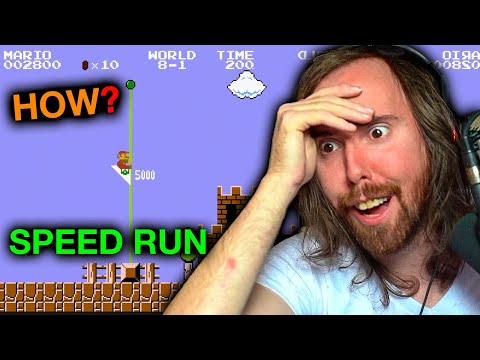
Asmongold's Mind is Blown by Incredible World Record Mario Speedruns

What happens when a titan of the streaming world, known for his unfiltered reactions and deep dives into MMOs, stumbles upon the sheer brilliance of Super Mario Bros., Super Mario World, and Super Mario 64 speedruns? You get a mind-blowing spectacle of elite gaming talent, and more importantly, a priceless reaction from Asmongold himself. In this deep dive, we're dissecting the moments that left the popular streamer speechless, exploring the incredible feats of speedrunning and what makes these games eternal favorites for gamers seeking the ultimate PB.

Super Mario Bros. Any% World Record: A Blistering Pace

The journey into the heart of Mario speedrunning often starts with the original, Super Mario Bros.. Witnessing a player achieve a World Record (WR) time of 4:54.881 in the Any% category is nothing short of breathtaking. This isn't just about beating the game; it's about shaving milliseconds off every jump, every movement, every precise pixel. The runner, Niftski, showcases a mastery of glitches and optimal routing that completely redefines how one "plays" the game. Asmongold likely marveled at the sheer dedication and technical execution required to achieve such a feat. This category focuses on reaching the end of the game as fast as possible, using any means necessary, which often involves intricate sequence breaks and warp zone usage that most casual players never discover.

In my experience watching countless runs, the Any% category for classic games like Super Mario Bros. always pushes the boundaries of human reaction time and game knowledge. It's pure, unadulterated skill.

Super Mario World: Redefining the End Game

Next on the docket is Super Mario World, a game beloved for its expansive levels and secrets. The "Credits Warp" category is a testament to deep game exploitation. SethBling's groundbreaking run, achieving the warp in an unprecedented 5:59.6, marked a historic moment. This strategy involves manipulating the game's code in such a way that the credits sequence is triggered immediately after a specific setup, bypassing a vast majority of the game's intended progression. It's a perfect example of how the speedrunning community turns games on their heads, discovering exploits that developers likely never anticipated. For Asmongold, seeing a game he probably played extensively in his youth being "broken" in such a profound way must have been mind-boggling.

SM64: The Rolling Rocks Challenge

Then we dive into the 3D realm with Super Mario 64. While the standard Any% runs are incredible, the "Watch for Rolling Rocks" category, particularly with its "0.5x A Presses" stipulation, presented by pannenkoek2012, is a whole different beast. This involves performing the game's actions with an extremely limited input precision, demanding frame-perfect execution and an insane level of control. It highlights not just speed, but a meticulous, almost surgical, approach to gameplay. Asmongold, accustomed to the more traditional gameplay loops of MMORPGs, would undoubtedly be astonished by the dexterity and patience required for such a niche and difficult challenge. This showcases the sheer depth and variety within SM64 speedruns, catering to different skill sets and types of challenges.

The dedication to mastering specific, often obscure, mechanics in games like SM64 is what makes the speedrunning community so fascinating. It's not always about raw speed, but about the elegance of execution.

The Asmongold Reaction Explained

Why does a streamer like Asmongold, primarily known for his time spent in virtual worlds like Azeroth or Eorzea, get so captivated by Mario speedruns? It boils down to a few key factors:

  • Pure Skill Display: Speedrunning is the ultimate test of skill, precision, and game knowledge. Even if the game isn't an MMO, the raw talent on display is universally impressive to any seasoned gamer.
  • Discovery and Exploitation: The community's ability to find and exploit game mechanics is endlessly fascinating. It’s like uncovering secret lore or hidden strategies, but applied to beating the game itself.
  • Nostalgia Factor: Games like the Mario series are staples in gaming history. Seeing them played at such a high level taps into a wellspring of nostalgia for many viewers, including Asmongold.
  • Unfiltered Reactions: Asmongold's genuine and often exaggerated reactions add an entertaining layer to watching the runs. His surprise and awe mirror that of many viewers experiencing these runs for the first time.

Why Mario Speedruns Captivate

The Super Mario franchise has been a cornerstone of gaming for decades, and its speedrunning scene is equally iconic. What makes these particular games so fertile ground for speedrunning?

  • Tight Controls: Nintendo's flagship platformers are renowned for their responsive and precise controls. This allows for extremely tight execution and minimal margin for error in speedruns.
  • Deep Mechanics: Beneath the surface of accessible gameplay lies a surprising depth of mechanics that speedrunners exploit, from wall jumps and dive cancels to complex glitches.
  • Variety of Categories: Whether you're interested in the fastest possible completion (Any%), collecting every item (100%), or executing specific difficult challenges (like SM64's categories), there's a Mario speedrun for everyone.
  • Community Passion: The decades-long history of these games means a dedicated and knowledgeable community constantly pushes the boundaries, setting new records and discovering new strategies. This competitive spirit fuels the ongoing evolution of speedruns, ensuring there's always something new to watch and learn. This constant innovation is key to maintaining the excitement in the speedrun community.
The legacy of Super Mario is immense, and its speedrunning scene is a direct reflection of that enduring appeal, constantly reinventing how we see these beloved classics.

Community and Competition

The thrill of a World Record isn't just about the individual achievement; it's about the collective pursuit. Platforms like Speedrun.com serve as the central hubs where these records are tracked, debated, and ratified. This creates a vibrant ecosystem where runners from around the globe compete, share strategies, and push each other to new heights. Asmongold's reaction videos often shine a spotlight on this incredible dedication, potentially inspiring more players to explore the world of speedrunning, whether it's for Super Mario Bros., Super Mario World, SM64, or any other game.

The competitive aspect is fierce but generally respectful. Runners analyze each other's VODs, look for tiny optimizations, and celebrate groundbreaking discoveries. It’s this blend of individual mastery and community collaboration that makes the #speedrunning scene so compelling. Whether it's on PC or console, the drive to be the fastest remains universal.

Frequently Asked Questions

What is an Any% speedrun?

An Any% speedrun is a category where the goal is to complete the game as quickly as possible, using any glitches or exploits available. It's the most common and often the fastest category for many games.

What does WR mean in speedrunning?

WR stands for World Record. It signifies the fastest time ever officially recorded for a specific game and category.

How do speedrunners find new strategies?

Speedrunners often discover new strategies through extensive practice, experimentation with game mechanics, analyzing existing runs, and collaborating with other runners in the community.

Is speedrunning only about finishing the game fast?

Not entirely. While speed is paramount in many categories, there are also challenge categories that focus on specific difficult tasks, extensive item collection (like 100%), or completing the game under unique constraints.

Where can I watch official speedruns?

Websites like Speedrun.com list official records and often link to the runners' streams or recorded videos. Twitch is also a primary platform for live speedrunning content.

Asmongold's surprised and delighted reaction to these world-class Mario speedruns serves as a fantastic gateway for many into the incredible world of speedrunning. The dedication, skill, and innovation on display are truly awe-inspiring, reminding us that even the most familiar games can offer endless depths to explore. Whether you're a seasoned speedrunner chasing your next PB or a casual observer, these runs are a testament to the passion and creativity within the gaming community. Keep watching, keep playing, and maybe one day you'll set your own #WR!

What did you think of Asmongold's reaction? Have you ever tried speedrunning these Mario classics? Let us know in the comments below or join our Discord server to discuss strategies and share your own gaming achievements!

World Record Progression: Super Mario Bros. 3 Warpless - The Ultimate Speedrun Guide

What's up, speedrunners and Mario fans! Today, we're diving deep into the legendary *Super Mario Bros. 3* and its "Warpless" category. This isn't just any speedrun; it's a journey through intricate glitches, precise execution, and the relentless pursuit of shaving milliseconds off the world record. If you've ever watched a *Super Mario Bros. 3* speedrun and marveled at how players skip entire worlds, you're in the right place. We're going to break down what makes a warpless run so special, the iconic strats, and how these records are constantly being pushed.

What Exactly is a Warpless Run?

In the context of *Super Mario Bros. 3*, a "warpless" run means completing the game without using any of the traditional warp zones. Normally, players might use the Warp Whistles found in World 1-3 and World 3-3 to skip ahead to later worlds, drastically cutting down completion time. However, in a warpless run, the goal is to traverse every world sequentially, from World 1 all the way to World 8, utilizing glitches and advanced techniques to bypass required level completions or gain access to warp areas without activating them in the traditional sense. This category often relies on more complex movement and sequence breaks that are not present in standard playthroughs or even regular warp runs. The challenge lies in the sheer precision required and the mastery of game mechanics.

Key Strats and Glitches in SMB3 Warpless

The warpless category is famous for its use of specific, often mind-bending, glitches. These aren't just minor exploits; they are fundamental to skipping large portions of the game and achieving the fastest times. Some of the most crucial techniques involve: * **Hammer Bro Skip**: A notorious glitch that allows players to bypass the Hammer Bros. encounter at the end of World 1-2, granting access to the Warp Zone without needing to defeat them. * **Boom Boom Skips**: Various methods to bypass the boss battles against Boom Boom, particularly in World 2, which normally requires defeating him to progress. * **Level Skips**: Using precise jumps, enemy interactions, or object manipulation to bypass checkpoints or entire sections of levels. * **Warp Whistle "Manipulation"**: While not using the whistle traditionally, some runs might involve strategies that get the player *to* the whistle's location or trigger an effect that mimics a warp without actually using the item. Understanding these glitches is paramount for anyone looking to compete or simply appreciate the depth of this speedrun category.

World 1 to World 2: The Hammer Bro Skip

The journey begins immediately with the challenge of getting past World 1. Normally, you'd need to defeat the Hammer Bros. guarding the path to the warp area at the end of World 1-2. For warpless, this is bypassed. The primary strategy involves a precise setup where the player manipulates enemy behavior, often a Bullet Bill or a specific enemy placement, to create a situation where they can pass through the Hammer Bros. without initiating the battle. This often requires perfect timing and positioning, and a single mistake here can cost valuable seconds or end the run. Mastering this sequence is the first major hurdle for any aspiring warpless runner.
In my early attempts, the Hammer Bro skip was the bane of my existence. The timing window felt impossibly small, but with practice, you start to see the rhythm of the enemies and Mario's movement. It's pure muscle memory and pattern recognition.

World 2 to World 4: The Iconic Boom Boom Skip

World 2 presents another significant obstacle: the boss, Boom Boom. In a warpless run, defeating him is often circumvented. Depending on the specific version of the game and the discovered glitches, players might exploit enemy AI or level geometry to pass Boom Boom without engaging in the typical boss fight. This can involve precise jumps over him or manipulating his movement pattern to get past the trigger point for the boss encounter. Achieving this skip is crucial as it saves a significant amount of time compared to a standard boss fight.

World 4 to World 6: The Warp Whistle Magic

While the category is "warpless," it doesn't mean Warp Whistles are entirely irrelevant. Sometimes, the strategy involves reaching the location of a Warp Whistle (like the one in World 1-3 or 3-3) not to use it conventionally, but perhaps to trigger an obscure mechanic or set up a later sequence break. More commonly, however, the path to World 6 involves navigating through World 4 and 5 without using any warps. This might include specific enemy management or precise platforming to clear levels quickly and efficiently, keeping the progression linear.

World 6 to World 7: Navigating the Nautilous

World 6, with its unique airship levels, often presents a different kind of challenge. Warpless runs here focus on efficient navigation through these often-treacherous stages. The goal is to maintain momentum and avoid unnecessary risks. Sometimes, specific enemy patterns or environmental hazards need to be perfectly timed or bypassed using advanced movement techniques. The sequence breaks here might be less about major glitches and more about optimizing every single jump and dash.

World 7 to World 8: The Final Frontier

The final stretch to World 8 requires absolute focus. World 7 often involves underwater levels or tricky platforming sections. Runners must maintain peak performance, as any slip-up near the end can be devastating. The objective is to reach the final castle in World 8 as quickly as possible, often utilizing knowledge of enemy placements and optimal paths through the levels. This phase of the run is where years of practice truly shine, as every action is calculated to shave off fractions of a second.
The tension in World 7 and 8 is palpable. You know the record is on the line, and every single enemy placement feels like a personal challenge. You have to trust your muscle memory and execute perfectly.

The Evolution of the WR: Constant Refinement

The world record progression in *Super Mario Bros. 3* warpless is a testament to the ingenuity and dedication of the speedrunning community. Records aren't just broken by pure skill; they evolve as new glitches are discovered, old strats are optimized, and frame-perfect inputs are perfected. What was once considered an impossible sequence might now be standard practice. This constant evolution means that the current world record is always a snapshot of the peak of human and technological capability within the game's engine. Watching the history of the WR unfold is like watching a historical document of gaming mastery. For those interested in the historical context, resources like Speedrun.com's Super Mario Bros. 3 page are invaluable. They showcase the progression of records and the runners who achieved them.

RNG and Optimizations

Like many speedruns, *Super Mario Bros. 3* warpless is heavily influenced by Random Number Generation (RNG). Enemy patterns, item drops, and even certain environmental behaviors can vary. Runners develop strategies not only for the optimal path but also for how to handle different RNG variations. This involves: * **Enemy Pattern Memorization**: Knowing how enemies spawn and move in various scenarios. * **Item Prediction**: Anticipating when power-ups might appear and adapting if they don't. * **Mitigation Strategies**: Having backup plans for when unfavorable RNG occurs. The best runners don't just execute perfectly; they adapt seamlessly to the game's unpredictable nature, making the most of every situation.

Getting Started with SMB3 Warpless

If this deep dive has inspired you to try your hand at *Super Mario Bros. 3* warpless, here are a few tips: 1. **Study the Game**: Play through *Super Mario Bros. 3* extensively, understand its mechanics, and familiarize yourself with every level. 2. **Watch Top Runners**: Analyze existing world record runs and top player videos. Pay close attention to their movement, glitches, and decision-making. Look for guides on platforms like YouTube. 3. **Practice Specific Glitches**: Isolate and practice the key glitches like the Hammer Bro skip and Boom Boom skip repeatedly until they become second nature. 4. **Utilize Resources**: Check out communities like the Super Mario Bros. 3 Speedrunning Discord for advice and resources. 5. **Be Patient**: Speedrunning, especially a category like warpless, requires immense patience and dedication. Don't get discouraged by failures; learn from them. Remember, the journey to a good time is as rewarding as the final result.

Preguntas Frecuentes

### What is the difference between a warpless and a regular speedrun in Super Mario Bros. 3? A regular speedrun might use warp zones to skip worlds, while a warpless run prohibits the use of any warp zones, requiring players to complete every world sequentially from 1 to 8 using glitches and advanced techniques to bypass obstacles and bosses. ### Are all the glitches used in SMB3 warpless runs intended by the developers? No, many of the glitches used in warpless runs, such as the Hammer Bro skip, are unintended exploits of the game's engine that speedrunners have discovered and mastered over time. ### How much time does the warpless category save compared to a standard run? The warpless category typically takes longer than a standard "any%" run that uses warp zones, as it requires playing through more of the game's content. However, it is a distinct and challenging category with its own dedicated player base and records. ### Is Super Mario Bros. 3 a popular game for speedrunning? Yes, *Super Mario Bros. 3* is one of the most iconic and popular games in the speedrunning community, with several categories, including warpless, any%, and 100%, all having active communities and ongoing record progression. ### What skills are most important for a Super Mario Bros. 3 warpless runner? Key skills include precise platforming, expert knowledge of game mechanics, understanding and execution of complex glitches, adaptation to RNG, and immense patience and dedication. The pursuit of the world record in *Super Mario Bros. 3* warpless is more than just a game; it's a testament to human ingenuity, pattern recognition, and the sheer will to push boundaries. Whether you're a seasoned speedrunner aiming for the top or a curious gamer marveling at the impossible feats achieved, the warpless category offers a fascinating look into the deepest layers of this beloved classic. What are your favorite SMB3 warpless strats? Did you discover any glitches yourself back in the day? Let us know in the comments below, or join the conversation on our Discord server!

Super Mario World: Quickie World 100% Speedrun Smashes 13:48 Barrier!

Hey speedrunning fanatics and Super Mario World aficionados! Welcome back to GamingSpeedrun, your ultimate hub for all things fast-paced and pixel-perfect in the gaming world. Today, we're diving deep into an absolutely mind-blowing achievement that's shaking the foundations of the custom ROM hack scene: the Super Mario World Quickie World 100% Speedrun, clocking in at an astonishing 13 minutes and 48 seconds!

What Exactly IS Quickie World?

For those new to the custom ROM scene, Quickie World isn't your average trip to the Mushroom Kingdom. This beast of a ROM hack is the brainchild of the legendary Japanese hacker, Koteraz. Forget the nostalgic ease of vanilla SMW; Quickie World throws down the gauntlet with levels designed to test your reflexes, your puzzle-solving skills, and your very sanity. We're talking brutally difficult platforming sections, brain-bending puzzles, and boss encounters that demand precision and perfect execution. It's a testament to the creativity and dedication within the speedrun community.

The 100% Challenge: A Grueling Gauntlet

Now, let's talk about the category that’s causing all the buzz: the 100% speedrun. This isn't just about reaching the end credits. In Quickie World, achieving 100% means conquering every single level, meticulously collecting all 96 exits scattered throughout the hack, and taking down every single boss. And you have to do it FAST. This demands an intimate knowledge of the game's layout, enemy patterns, and hidden secrets. It’s a true test of endurance and mastery.

The 100% category in Quickie World is arguably the most demanding, requiring absolute perfection across the board. Every second counts, and a single mistake can cost precious minutes.

Mastering the Speedrun Strategy (Strats)

Achieving a time like 13:48 in Quickie World 100% isn't down to luck; it's the result of meticulously crafted strategies, often referred to as 'strats'. These strats involve optimal movement, precise jump timings, and exploiting the game engine to its absolute limits. For instance, mastering the precise jump and spin-jump combinations needed to clear certain spike pits or navigating the intricate maze-like levels requires countless hours of practice.

Every single frame matters. Runners analyze their own gameplay and those of others to shave off milliseconds. This can involve:

  • Frame-Perfect Jumps: Executing jumps at the exact moment to gain maximum height or distance.
  • Optimized Route Planning: Knowing the quickest path through each level and the entire game.
  • Minimalist Collectibles: Grabbing necessary items only when they directly contribute to saving time or enabling progression.

Glitches and Skips: The Speedrunner's Arsenal

Like many legendary ROM hacks and original games, Quickie World is rife with opportunities for glitches and skips. These aren't bugs; they're features that savvy speedrunners exploit to bypass entire sections of levels or even gain unfair advantages. Identifying and mastering these glitches is a crucial part of any top-tier speedrun. In Quickie World, players might utilize things like:

  • Wall Jumps: Precise maneuvers to gain height on walls that shouldn't be climbable.
  • Out-of-Bounds (OOB) Exploitation: Finding ways to get Mario outside the intended playable area to skip parts of a level.
  • RNG Manipulation: While less common in platformers, sometimes understanding and subtly influencing random number generator outcomes can be key for specific enemy placements or item drops.

The discovery of new glitches or more efficient ways to perform existing ones can completely change the landscape of a speedrun category. This constant evolution is what makes the speedrun community so dynamic.

The sheer ingenuity involved in finding and executing these advanced techniques is often as impressive as the final time itself. It's a deep dive into the mechanics of the game.

The Record Holder: Koopa's Incredible Feat

The current world record for the Quickie World 100% speedrun, a jaw-dropping 13:48, belongs to the incredibly skilled runner known as Koopa. This time represents the pinnacle of dedication, practice, and sheer talent. Koopa has pushed the boundaries of what was thought possible in this demanding hack, showcasing a level of precision that is truly awe-inspiring. Watching Koopa's run feels like witnessing a perfectly choreographed dance with the game itself.

To witness this phenomenal achievement firsthand, you can find Koopa's world record run readily available on popular streaming platforms like Twitch and YouTube. We highly recommend checking it out to see the strats and execution in action. It’s a masterclass in speedrunning.

Tips for Aspiring Runners

Feeling inspired to tackle Quickie World yourself? Here are a few pointers from the trenches:

  • Start Small: Don't aim for the 100% WR on day one. Practice individual levels and smaller segments.
  • Study the Pros: Watch runs from top players like Koopa. Pay close attention to their movement, their tricks, and their decision-making.
  • Practice, Practice, Practice!: There's no substitute for repetition. Muscle memory is key for executing difficult tricks consistently.
  • Learn the Glitches/Skips: Understand how they work and how to perform them reliably.
  • Join the Community: Engage with other runners. Share knowledge, ask questions, and get feedback. The gaming community is often incredibly supportive.

Why You Should Watch This Run

The "Super Mario World Quickie World 100% Speedrun in 13:48" is more than just a fast time; it's a celebration of skill, dedication, and the passion that drives the speedrun community. It showcases how players can take a beloved game (or in this case, a beloved hack) and push it to its absolute limits. Whether you're a hardcore speedrunner yourself, a long-time Super Mario World fan, or just someone who appreciates watching incredible feats of skill, this run is an absolute must-see.

At Gaming Speedrun, we live and breathe this stuff. We're committed to bringing you the cutting edge of speedrunning content, from world records to groundbreaking techniques. Keep an eye on our blog for more insights into the amazing world of fast playthroughs!

Frequently Asked Questions

What is Quickie World?

Quickie World is a notoriously difficult custom ROM hack for Super Mario World, created by the hacker Koteraz, known for its challenging levels and puzzles.

What does 100% completion mean in Quickie World?

In Quickie World, 100% completion requires players to finish every level, collect all 96 exits, and defeat all bosses within the game.

Who holds the current world record for Quickie World 100%?

The current world record is held by the speedrunner known as Koopa, with a time of 13 minutes and 48 seconds.

Where can I watch the world record run?

The run can typically be found on popular video platforms like Twitch and YouTube by searching for "Koopa Quickie World 100% WR".

Is Quickie World suitable for beginners?

Quickie World is generally considered extremely difficult and is not recommended for beginner players of Super Mario World or speedrunning in general. It's best approached after gaining experience with the original game and other, less challenging ROM hacks.

So there you have it – a deep dive into one of the most impressive speedruns happening right now. The dedication to perfecting every jump, every trick, and every moment is what makes the speedrun community so electrifying. Have you tried Quickie World? Did you catch Koopa's incredible run live? Let us know your thoughts in the comments below! Join our Discord channel to connect with fellow speedrunners and discuss the latest strategies. Until next time, keep those timers running!