Futurama Any% Speedruns: Crushing the Sub-1:10 Barrier!

Intro: The Quest for Speed

Hello fellow runners and Futurama fanatics! If you're here, chances are you're obsessed with shaving seconds off your playthrough of this beloved sci-fi comedy. We're talking about the legendary Futurama Any% speedruns, and the holy grail: breaking the sub-1 hour and 10-minute barrier. This isn't just about beating the game; it's about understanding every pixel, every dialogue skip, and every potential glitch that can shave precious milliseconds. Get ready to dive deep into the strategies that make these insane speedruns possible.

Understanding Any% in Futurama

For those new to the speedrunning lingo, Any% means completing the game as fast as possible, using any means necessary. In Futurama, this translates to exploiting every shortcut, animation cancel, and even unintended glitches the game throws at us. It's a race against the clock where mastering movement and understanding level layouts is paramount. We're not looking for 100% completion here; we're looking for the most direct, albeit often chaotic, path from start to finish. This category is the purest form of speed and demands incredible precision.

Key Strats and Skips for a Sub-1:10 Run

Achieving a sub-1:10 run in Futurama is a monumental task that requires absolute mastery. It's not just about knowing the route; it's about executing it flawlessly, time after time. * **Early Game Sequence Breaks**: The initial levels are crucial for setting up a fast run. There are several spots where players can skip entire sections by using precise jumps or exploiting collision detection. For instance, in the first few levels, a well-timed jump can bypass a whole platforming sequence, saving vital seconds. * **Dialogue Skips and Text Advancement**: Futurama is dialogue-heavy. Mastering the button inputs to skip dialogue as quickly as possible is non-negotiable. Even a fraction of a second saved per dialogue box adds up significantly over the course of a run. Some runners have even found ways to trigger subsequent dialogue prompts faster than intended. * **Weapon and Ability Optimization**: Knowing which weapon to use for specific enemy types and when to switch is key. Some weapons offer faster enemy clearing, while others might be needed for specific environmental interactions. Efficient use of abilities, like Bender's jetpack or Fry's hypno-beam, can bypass combat encounters or enable faster traversal.
In my experience, the most overlooked aspect is the efficiency of weapon switching. It sounds minor, but mastering those quick swaps can shave off enough time to make or break a personal best.
New New York, the iconic setting, presents a unique set of challenges and opportunities for speedrunners. * **Traffic and Pedestrian Avoidance**: Dodging the various hover cars and robotic citizens is essential. Often, the fastest route isn't the most obvious one. Runners utilize tight pathways and precise movement to weave through crowds, minimizing slowdowns. * **Environmental Interaction Exploits**: Certain environmental elements can be manipulated. For example, specific destructible objects might be bypassed entirely with precise movement, or their destruction could be timed to coincide with enemy spawns to clear paths faster. * **Utilizing Verticality**: New New York is a vertical city. Runners often find ways to exploit the game's physics engine to perform advanced jumps or use environmental features to gain height faster than intended, skipping large ground-based sections.

Boss Battles and Game-Breaking Glitches

Boss fights in a speedrun are often treated differently than in a casual playthrough. The goal is to end them as quickly as possible, sometimes through exploits. * **Damage Boosting and Optimal DPS**: Against bosses, the strategy shifts to maximizing damage output in the shortest window. This often involves specific weapon combinations and positioning to hit weak points repeatedly. Damage boosting, intentionally taking a hit to gain temporary invincibility frames and power-ups, can also be a viable, albeit risky, strategy. * **Known Boss Glitches**: The Futurama speedrunning community has discovered several glitches that can significantly shorten boss encounters. This might involve trapping a boss in a specific AI loop, causing them to take continuous damage, or outright skipping phases of the fight. One notable glitch involves manipulating the arena boundaries to make certain bosses despense with their usual attack patterns. * **Out-of-Bounds (OOB) Exploits**: The holy grail for many speedrunners is finding ways to get the player character out of the intended playable area. Successfully navigating out-of-bounds can often lead to skipping entire levels or boss fights, drastically reducing run times. These require extensive knowledge of game physics and careful execution.
The 'Dark Matter' boss skip was a game-changer for Any%. Learning that specific sequence of movements and attacks took me weeks, but it easily saves over a minute on any decent run.

RNG Manipulation and Practice

Random Number Generation (RNG) plays a significant role in any speedrun, and Futurama is no exception. * **Enemy Spawn Patterns**: The placement and behavior of enemies can vary. Runners learn to recognize optimal patterns and sometimes employ strategies to force favorable RNG. This might involve re-entering an area to reset spawns or positioning themselves in a way that influences enemy AI. * **Item Drops and Power-ups**: Certain power-ups or essential items might have randomized drop rates. While true RNG manipulation is difficult, understanding the probabilities and knowing when to commit to a route versus resetting due to bad luck is crucial. * **The Grind is Real**: Consistent practice is the only way to master these techniques. Spending hours upon hours in specific levels or practicing particular tricks is essential. Many runners use save states or practice modes to isolate and perfect challenging sections. The dedication required for a World Record is immense.

The Mental Game: Staying Focused Under Pressure

Breaking into the top leaderboards, especially aiming for a Personal Best or a World Record, is as much a mental challenge as it is a technical one. * **Managing Nerves**: As you get closer to a good time, the pressure mounts. Executing a difficult trick during a near-perfect run requires immense focus. Deep breathing techniques and mental preparation are as important as physical practice. * **Resilience After Mistakes**: Mistakes are inevitable. A runner must be able to recover quickly from a small error without letting it derail the entire run. Knowing when a run is still salvageable and when it's better to reset is a skill honed through experience. * **The Thrill of the Chase**: Ultimately, the drive to improve, to shave off those extra milliseconds, and to compete against the best in the world is what fuels speedrunners. The community aspect, the shared passion for optimization, and the excitement of seeing new records fall are incredibly motivating. It's why we keep coming back to games like Futurama.

The Community and Leaderboards

The Futurama speedrunning community, though perhaps smaller than some, is dedicated and passionate. * **Speedrun.com**: The central hub for all speedrun records and leaderboards for Futurama can be found on Speedrun.com. This is where you'll see the top times, watch the best runs, and compare your own achievements. * **Discord Channels**: Joining the official or unofficial Futurama speedrunning Discord servers is highly recommended. Here, you can ask questions, share strategies, find practice partners, and get real-time advice from experienced runners. * **Streaming and VODs**: Watching live streams of runners attempting record runs on platforms like Twitch, or reviewing past VODs, is an invaluable learning tool. You can see the strats in action and learn from their successes and failures.
The collective knowledge shared on the Futurama speedrunning Discord is insane. I wouldn't have shaved 30 seconds off my PB without advice on micro-optimizations I'd never have found myself.

Frequently Asked Questions

**Q: What is the current World Record for Futurama Any%?** A: As of my last update, the World Record for Futurama Any% is incredibly competitive and constantly being challenged. It's best to check the official leaderboards on Speedrun.com for the most up-to-date time, as these records change frequently! **Q: How long does a typical Any% speedrun of Futurama take?** A: A typical Any% speedrun aiming for a good time (sub-1:10) requires near-perfect execution and can take anywhere from 1 hour and 15 minutes to under 1 hour and 10 minutes. Less optimized runs might be longer, around the 1.5 to 2-hour mark. **Q: What are the most important glitches to learn for a speedrun?** A: Key glitches often involve sequence breaks in early levels, boss fight exploits (like the Dark Matter skip), and potentially out-of-bounds tricks if discovered and deemed viable for the Any% category. Mastering dialogue skips is also crucial. **Q: Is Futurama a difficult game to speedrun?** A: Futurama presents a moderate to high difficulty for speedrunning. It requires precise platforming, quick reactions, knowledge of specific exploits, and consistent execution. While not as technically demanding as some other games, its length and the need for near-perfection make it challenging. In conclusion, pushing for a sub-1:10 Futurama Any% run is an extreme test of skill, knowledge, and sheer determination. It involves mastering intricate movement, exploiting game mechanics, and pushing the boundaries of what's thought possible. Whether you're aiming for a world record or just want to shave seconds off your personal best, the journey is incredibly rewarding. What are your favorite Futurama speedrun tricks or glitches? Did you manage to break that sub-1:10 barrier? Share your experiences, strategies, and any tips you have in the comments below! Join our Discord community to connect with other speedrunners and discuss the latest strats. Happy running!

How Big Is The World of Minecraft? Unveiling the Infinite (Almost!)

Hey fellow adventurers and speedrunners! Ever stared out at the blocky horizon in Minecraft and wondered just how far you could *really* go? It's a question that tickles the explorer in all of us, and for us speedrunners, understanding the scale of the world is crucial for planning those mind-bending speedrun attempts. Today, we're diving deep into the sheer, almost incomprehensible, vastness of the Minecraft world. Forget what you think you know; we're about to uncover just how massive this sandbox truly is.

Understanding Minecraft's World Size

At its core, Minecraft generates worlds using a procedural generation system. This means that instead of a pre-designed map, the game uses algorithms to create terrain, biomes, structures, and caves on the fly as you explore. This system is designed to create virtually endless possibilities. For a long time, the perceived limit of a Minecraft world was often discussed in terms of its coordinates. The game uses a system of X, Y, and Z coordinates to define every block's position. The theoretical limit for these coordinates is massive. In the Java Edition, the world border extends to X and Z coordinates of ±30,000,000 blocks. That's an astounding 60 million blocks from one edge to the other on either axis! The Y coordinate, representing height, ranges from -64 to 319 in modern versions.
In practical terms, exploring 30 million blocks in every direction would take an astronomical amount of time, even with the fastest speedrun strategies.

Java Edition vs. Bedrock Edition: A Size Discrepancy?

It's important to note that there are differences in world generation and limits between the Java Edition and the Bedrock Edition (which includes versions for consoles, mobile, and Windows 10). * **Java Edition**: As mentioned, the Java Edition has the ±30,000,000 block limit on the X and Z axes. This has been the standard for a long time. * **Bedrock Edition**: In Bedrock Edition, the world border is technically infinite. However, this doesn't mean you can truly explore forever without issues. Due to how the game handles data and rendering, performance degrades significantly as you venture extremely far from the world spawn. Players have reported graphical glitches, extreme lag, and other instability issues when pushing the boundaries of Bedrock worlds. While there isn't a hard coded border like in Java, the practical limit is far more constrained by the game's engine.

The Far Lands: Myth and Reality

The legendary "Far Lands" were a phenomenon in older versions of Minecraft's Java Edition. Due to a bug in the noise-generation algorithm at extreme coordinates (around ±12,550,821 blocks), the terrain would become incredibly chaotic and distorted, creating surreal landscapes. These were not intentional but a fascinating byproduct of the generation system's limitations at the time. While the original Far Lands have been fixed and are no longer present in modern Java versions, the concept of "extreme" coordinates still exists. Pushing towards the ±30,000,000 block limit in Java can still lead to performance issues and bizarre terrain generation, though not the same chaotic patterns as the original Far Lands. Some dedicated players and speedrunning communities have explored these regions, documenting the strange landscapes and the challenges they present. It's a testament to the game's enduring complexity and the dedication of its players.
The pursuit of reaching the Far Lands, or the modern equivalent of extreme coordinates, is a niche but dedicated pursuit within the speedrun community.

The Impact on Speedrunning

For speedrunning Minecraft, the immense size of the world isn't usually a direct obstacle in the way of reaching the Ender Dragon. Most speedrun categories, especially Any% and specific challenge runs, focus on reaching the End dimension as quickly as possible. This typically involves optimizing routes within the Overworld to find a Stronghold and then navigating the End. However, the world's scale *does* play a role in several ways: * **Seed Exploration**: The specific seed of a Minecraft world determines the layout of biomes, structures, and even the location of the Nether and End portals. Speedrunners spend countless hours analyzing seeds to find optimal ones that spawn crucial structures close to the starting point. The sheer number of possible seeds (2^32 unique seeds for Java Edition) means the world's potential is nearly infinite in terms of unique starting conditions. * **Resource Distribution**: Knowing how biomes and structures are distributed across vast distances can influence long-term strategies, particularly in categories that require specific resources found only in certain biomes or generated structures. * **Glitches and Skips**: While not directly related to world size, understanding how the game generates terrain can sometimes lead to discovering glitches or skips that bypass large distances, making speedruns even faster. The engine's behavior at extreme coordinates, while not typically exploited in standard runs, represents an area of the game's mechanics that dedicated players explore.

Exploration and Discovery Beyond the Horizon

Beyond the competitive edge of speedrunning, the vastness of Minecraft's world is an invitation to pure exploration. Players have documented incredible discoveries, navigating millions of blocks to find rare biomes, unique geological formations, or simply to witness the procedural generation at its most extreme. The concept of an "infinite" world is a powerful draw. It means that no matter how much you play, there's always something new to see. This sense of endless possibility is what makes Minecraft such a unique and enduring game. Even with the known limits and performance considerations, the **feeling** of an infinite world is a core part of the Minecraft experience. For those who love to RPG and explore, this scale is a dream.

Practical Limits and Performance

While the theoretical limits are staggering, the practical reality of playing Minecraft involves performance. * **World Border**: In Java Edition, the world border is a hard stop. Once you hit it, you can no longer move past it. This limit was implemented to prevent players from encountering severe performance issues and graphical glitches that occurred at extremely high coordinates in older versions. * **Chunk Loading**: The game loads and renders "chunks" of the world around the player. The further you travel, the more chunks need to be loaded and processed, which taxes your system's CPU and RAM. Even with powerful PCs, venturing millions of blocks away will eventually lead to significant lag and instability. * **File Size**: Minecraft world save files can grow quite large, especially after extensive exploration. While not directly tied to the world *size* limit, the cumulative data of explored areas impacts storage and loading times.
For most players, the "infinite" world provides more than enough space for countless builds, adventures, and even epic speedrun attempts without ever approaching the technical limits.
The beauty of Minecraft's world generation lies in its balance between perceived infinity and manageable gameplay. It offers a canvas so vast that it fuels our imagination, while still being a space we can actively engage with and conquer, whether for building the ultimate castle or achieving that next WR.

Frequently Asked Questions

What is the maximum world size in Minecraft Java Edition?

The world border in Minecraft Java Edition extends to ±30,000,000 blocks on the X and Z axes, creating a playable area of 60 million by 60 million blocks.

Is Minecraft Bedrock Edition's world truly infinite?

While Bedrock Edition doesn't have a hard coded world border like Java, performance degrades significantly at extreme coordinates, creating practical limitations long before any theoretical infinite boundary.

Can you still find the Far Lands in modern Minecraft?

No, the original chaotic Far Lands caused by a bug in older Java Editions have been fixed. However, extreme coordinates in modern Java can still generate unusual terrain and cause performance issues.

Does world size affect Minecraft speedruns?

World size primarily impacts speedrunning through seed selection and the distribution of necessary structures. While most runs don't require traveling extreme distances, understanding the world's generation mechanics is key to optimization.

What are the practical limits of exploring a Minecraft world?

Practical limits are imposed by game performance. Loading and rendering distant chunks requires significant system resources, leading to lag and instability long before reaching the theoretical world borders. In conclusion, the world of Minecraft is staggeringly, almost unfathomably, large. While the Java Edition has a defined, albeit massive, border, and the Bedrock Edition faces practical performance limits, the *feeling* of infinite possibility remains. This vastness is a core part of what makes Minecraft a playground for creativity, exploration, and of course, incredibly challenging speedruns. Keep exploring, keep pushing those boundaries, and let us know in the comments below about your most epic explorations or your personal best speedrun times! Join our Discord to share your discoveries and strategies!

Porcinos FC's Epic Climb: Conquering the 9th Division in FIFA 22 - A Speedrunner's Perspective

Hey there, fellow gamers and speedrunning enthusiasts! Today, we're not just talking about a game; we're talking about a *journey*. You've clicked on this because you're curious about that insane climb to the 9th division in FIFA 22, specifically the saga of Porcinos FC. Whether you're here to dissect the strategies, marvel at the progression, or just soak in the competitive spirit, you've landed in the right spot. At GamingSpeedrun.com, we live and breathe this stuff, and trust me, this climb is one for the books. We're diving deep into what it takes to not just play, but to conquer, and how that translates into the kind of runs that get the community buzzing. Forget casual play; we're looking at precision, strategy, and the relentless pursuit of optimization. This isn't just about winning matches; it's about mastering the game's mechanics to achieve a goal efficiently.

The 9th Division Gauntlet: What's at Stake?

Climbing the divisions in FIFA is a rite of passage for any serious player. Each tier presents a new level of challenge, demanding better tactics, more refined skills, and a deeper understanding of the game's AI and player interactions. The 9th division, in particular, represents a significant hurdle. It's often the point where players truly start to differentiate themselves, moving beyond basic mechanics into sophisticated gameplay. For those of us focused on speedrunning, reaching a specific division goal isn't just about completion; it's about the *time* it takes to get there. Every match, every goal, every single decision is scrutinized for potential time saves. The pressure intensifies with each passing game, and the margin for error shrinks considerably.

Porcinos FC: More Than Just a Team Name

Porcinos FC. The name itself evokes a certain spirit, doesn't it? While this post is about the climb, the identity of the team is crucial. In the competitive FIFA landscape, team narratives and player personas add layers of engagement. Whether it's a streamer's personal club, a community-driven entity, or a fictional team built for a challenge, the story behind the climb matters. In the context of a speedrun or a challenging progression, Porcinos FC's journey to the 9th division embodies the dedication required. It signifies a commitment to overcoming obstacles, adapting to the meta, and pushing the boundaries of what's considered achievable within the game's framework.

Speedrunning FIFA 22: The Unseen Grind

When you watch a speedrunning category for a game like FIFA 22, you're seeing the culmination of countless hours of practice, research, and trial-and-error. For a progression-based run like reaching Division 9, it's not about completing a campaign in record time, but about optimizing the *entire process*. This involves:
  • Match Efficiency: Winning every game as quickly as possible.
  • Menu Navigation: Minimizing time spent in menus between matches.
  • Team Management: Streamlining squad updates and tactical adjustments.
  • Exploiting Mechanics: Using in-game glitches or advantageous tactics that are allowed within the run's ruleset.
The grind is real, and it’s often invisible to the casual observer. Every second saved in a match, every efficient menu transition, adds up to a significant difference in the final time.
The dedication to shave off even a few seconds per match is what separates good runs from legendary ones. It’s a testament to the player's understanding and mastery of FIFA 22’s intricate systems.

Key Strategies for Reaching Division 9

So, how does one actually achieve this rapid ascent? It's a blend of raw skill and strategic planning.
  • Aggressive Playstyle: Often, pushing forward and creating chances quickly is key. This means mastering quick build-up play and effective pressing.
  • Defensive Solidity: While offense wins games, defense wins championships (and divisions!). Mastering defensive positioning and timing tackles is paramount to avoid conceding cheap goals.
  • Set Piece Mastery: Corner kicks and free kicks can be game-changers. Having a reliable routine for scoring from these situations can save precious time and secure crucial wins.
  • Understanding the Meta: FIFA 22, like any iteration, has a meta – the most effective tactics and formations. Knowing these and either using them or countering them effectively is vital.
In my experience, focusing on a formation that allows for quick transitions from defense to attack, like a 4-3-3 variant or a fast-paced 4-2-2-2, has been incredibly effective. It allows for both attacking width and central penetration, keeping the opponent guessing.

Optimizing Your Run: Tips from the Speedrunner

From a speedrun perspective, every aspect of the climb is optimized. This goes beyond just playing well:
  • Pre-game Setup: Have your custom tactics and player instructions dialed in before you even start the climb. No time for fumbling with settings mid-run.
  • Roster Management: If fitness is a factor, have a few key players ready to sub in without disrupting your flow. For longer runs, this might involve managing contracts or injuries if the category allows.
  • Mental Fortitude: Bad games happen. A key part of any speedrun is maintaining focus and not letting a frustrating match derail the entire attempt. Take a breath, reset, and go again.
The fastest way to climb isn't always the most enjoyable for a casual player, but for a speedrunner, efficiency is king. Every second counts when shaving down the total time.

Rifts and RNG: Battling the Unexpected

Ah, RNG – Random Number Generation. It's the bane and the blessing of many gamers, and FIFA is no exception. Whether it's a freak deflection, a last-second goal conceded, or a penalty that somehow misses the net, the unpredictable nature of RNG is a massive factor. For speedrunners, dealing with bad RNG means developing strats to mitigate its impact. Can you score from a penalty quickly? Can you recover defensively from an unlucky bounce? These are the questions that separate a good run from a great one. It requires adapting on the fly and trusting your fundamental skills to bail you out when the dice don't roll your way.

The Community Aspect: Sharing the Climb

The beauty of gaming, and especially speedrunning, is the community. Sharing your progress, discussing strategies, and celebrating milestones with others is what makes the grind worthwhile. Whether it's on Twitch, Discord, or forums, connecting with fellow players enriches the experience. Ibai's streams and content often foster a vibrant community, and the journey to Division 9 in FIFA 22 is a perfect example of content that engages viewers. It's relatable, aspirational, and provides a platform for discussion and shared excitement. If you’re on this journey, don’t be afraid to share your own tips or struggles!
The shared experience of grinding through divisions, cheering each other on, and dissecting close matches is what makes FIFA culture so dynamic.

Frequently Asked Questions

What is the fastest way to rank up in FIFA 22?

The fastest way generally involves playing aggressively, mastering quick build-up play, and ensuring you win matches decisively. Understanding and utilizing the current meta formations and tactics is also crucial for efficiency.

Is it possible to speedrun FIFA 22 division climbing?

Yes, it's definitely possible! Speedrunners often focus on categories like "Reach Division X in the fastest time" or "Win Division Y with Z conditions." It requires immense dedication to optimize every aspect of gameplay and menu navigation.

What are some common FIFA 22 glitches or exploits speedrunners might use?

While official rulesets vary, speedrunners might look for ways to optimize AI behavior, exploit minor animation skips, or use specific formations/tactics that create advantageous situations consistently. However, major game-breaking glitches are often patched quickly.

How important is RNG in FIFA 22 speedruns?

RNG plays a significant role, especially in progression-based runs. While players can't control it, skilled speedrunners develop strategies to mitigate the negative impacts of bad RNG and capitalize on good RNG when it occurs. So there you have it – a glimpse into the world of competitive FIFA 22 progression and the dedication it takes to reach those elite divisions. Whether you're aiming for Division 9 yourself or just enjoy the spectacle of optimized gameplay, the journey of Porcinos FC is a testament to skill, strategy, and persistence. What are your thoughts on climbing the FIFA divisions? Have you attempted any speedruns in sports games? Drop your experiences and insights in the comments below – let's build this community together! And if you’re looking for more deep dives into speedrunning and gaming culture, stick around GamingSpeedrun.com!

Devil May Cry DMD 100% Speedrun World Record Smashed: 1:17:08

What's up, demon hunters! If you're here, you're probably chasing that sweet, sweet demonic power or, more likely, looking for the absolute pinnacle of skill in *Devil May Cry*. Well, prepare to have your jaws dropped, because we're diving deep into a **world record speedrun** for the notoriously brutal Dante Must Die (DMD) difficulty, completing 100% of the game in an insane **1 hour, 17 minutes, and 8 seconds**. This isn't just a run; it's a masterclass in execution, strategy, and pure, unadulterated gaming prowess. The 100% completion criteria here are no joke: every single S rank across all missions, all ten secret missions conquered, every blue orb collected to maximize health, and every single item purchased from the shop. This is the ultimate test, pushing both the player and the game's mechanics to their absolute limits. This WR is absolutely monumental. It's not just a new record; it's the first-ever sub 1:25 run for this category, obliterating the previous world record held by slickford. That previous record was already a legendary deathless run, but this new time shaves off *over eight minutes*. How is that even possible? We're talking about revolutionary new strategies, flawless execution, and an intimate understanding of *every* i-frame, *every* enemy pattern, and *every* environmental exploit. Honestly, this is the kind of achievement that makes you reconsider what's possible in a game.

Introduction: The Hunt for Perfection

This record isn't just about beating the game; it's about beating it in the most demanding way possible, with a perfect score. The dedication required for a 100% run on DMD is staggering. It demands not only incredible skill but also immense patience and a deep dive into the game's mechanics that few players ever reach.

What Exactly is 100% Completion on DMD?

Let's break down what "100%" truly means in the context of a *Devil May Cry* speedrun on DMD:
  • All Mission S Ranks: This is the cornerstone. Every single mission must be completed with an S rank, requiring stylish combat, efficient time management, and minimal damage taken.
  • All Secret Missions: Finding and beating all ten secret missions adds significant challenge and time investment.
  • All Blue Orbs: Maximizing your health bar is crucial for survivability, especially on DMD.
  • All Shop Items: Every consumable and upgrade available must be purchased, requiring careful resource management throughout the run.

The Shadow of the Previous World Record

Before this incredible feat, the bar was set incredibly high. The previous world record, achieved by the legend slickford, was the first deathless run of its kind. Holding onto a record like that is a monumental achievement in itself, proving that a perfect, untarnished playthrough was possible. It represented the current understanding of the game's limits.

Revolutionary Strats and Flawless Execution

So, how did we shave off eight minutes? The answer lies in innovation and perfect execution. This run showcases:
  • Advanced Movement Tech: Exploiting nuances in character movement, air control, and environmental interactions to shave off precious seconds in every section.
  • Optimized Combat Routes: Enemies are dispatched with brutal efficiency, often using specific combos or glitches to skip animations or deal massive damage instantly.
  • Boss Fight Exploits: Bosses that typically take minutes are reduced to mere seconds through discovered weaknesses and precise timing.
  • Strategic Skipping: Identifying and executing skips for non-essential encounters or even parts of levels that don't impede 100% completion criteria.
This run feels like the culmination of years of practice and theorycrafting. Every input is deliberate, every decision calculated to shave off milliseconds.

A Proudest Accomplishment: Pushing the Boundaries

For the runner, this isn't just another record; it's stated as their proudest speedrun accomplishment to date. This level of dedication and success is the dream for many in the #speedrunning community. It represents a deep connection with the game and a relentless drive to master it.

Domination Across All DMD Categories

With this incredible 100% record secured, the focus is shifting. The goal is now to conquer the remaining DMD categories: Any% and Low%. Achieving world records in all four major DMD categories would be an unprecedented feat, solidifying legendary status within the *Devil May Cry* speedrunning scene. Imagine holding the top spot in Any%, Low%, 100%, and perhaps even a No DMG category – that's the ultimate demon-slaying trifecta!
The pursuit of perfection never truly ends. There's always a faster strat, a tighter execution, a new way to break the game.

Key Run Details: No Shortcuts, Pure Skill

This world record emphasizes pure, unadulterated skill. The runner explicitly states:
  • Deathless: Absolutely zero deaths. One mistake means starting over.
  • No Save & Quit Glitch: This common speedrunning technique, used to reset rooms or force specific outcomes, was avoided.
  • No Grinding: All necessary resources and upgrades were acquired *during* the speedrun, not beforehand.
  • No IGT Abuse: In-game time (IGT) manipulation, often used to shorten timers, was not employed.
This commitment to "legit" play makes the achievement even more impressive. It’s a testament to the runner’s mastery and dedication to fair play within the spirit of #speedrun.

Witness the Record-Breaking Run

You've heard about it, you've read about the insane details, now it's time to see it for yourself. Check out the full run below to witness history being made. Pay close attention to the intricate combos, the near-impossible dodges, and the sheer speed at which the game is traversed. This is the benchmark for *Devil May Cry* DMD 100% speedrunning.
Watching this run is like attending a masterclass. You see strategies you never thought possible and execution that defies belief.

We're talking about a level of mastery that few achieve. This run pushes the very definition of what a Devil May Cry speedrun can be. It’s a stunning display of skill that will likely stand the test of time, at least until the next evolution in DMC speedrunning strats.

Frequently Asked Questions

Is this the only Devil May Cry speedrun world record?

No, this is a specific world record for the Devil May Cry 100% speedrun on Dante Must Die (DMD) difficulty. There are numerous other categories and difficulties for Devil May Cry games, each with its own set of world records.

What makes the DMD difficulty so challenging for speedrunning?

DMD significantly increases enemy health, damage output, and aggression. Enemies also gain new attack patterns and resistances, making survival and efficient combat incredibly difficult for a speedrun where every second counts.

How was the previous record of ~1:25 beaten by over 8 minutes?

The substantial time save comes from the discovery and perfect execution of new, highly optimized strategies, including advanced movement techniques, combat exploits, and faster boss kill methods that were not utilized or perfected in the previous record run.

What does "100% completion" entail in this context?

It means achieving an S rank on every mission, finding and completing all secret missions, collecting all available blue orbs to maximize health, and purchasing every item from the shop.

Are there any glitches or exploits used in this run?

The runner explicitly states "no save and quit glitch," implying that while some game mechanics might be exploited for speed (which is standard in speedrunning), major sequence-breaking glitches or unintended game mechanics that trivialize the challenge were avoided to maintain a high standard of legitimacy.

This world record is more than just a number; it's a testament to the enduring legacy of *Devil May Cry* and the incredible dedication of its speedrunning community. The pursuit of perfection in games like this is what drives innovation and pushes boundaries. This run sets a new standard, and we can't wait to see what happens next. Will this record stand the test of time? Or will another demon hunter rise to challenge it?

What do you think of this incredible run? Did you expect such a massive time save? Let us know your thoughts in the comments below! And if you're inspired to dive into the world of speedrunning or just want to get better at *Devil May Cry*, join our Discord server – the community is always ready to share tips, strategies, and support.

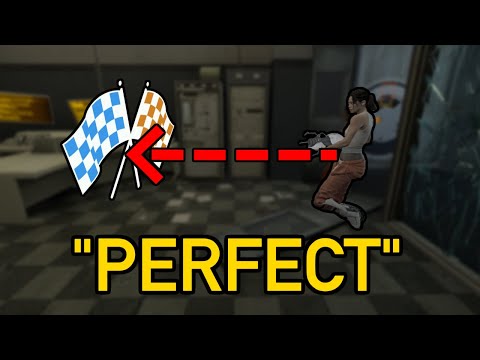
Cracking the "Perfect" Portal 2 Speedrun: Unveiling the Neurotoxin Sabotage Strat

Perfection. It's a word rarely uttered in the same breath as speedrunning, a discipline that thrives on exploiting the imperfect, the unintended, and the downright bizarre. Yet, for a specific, infamous level in Portal 2, the Neurotoxin Sabotage chamber, "perfect" has been a recurring descriptor throughout its speedrunning history. How have dedicated runners managed to shave milliseconds, then seconds, off these so-called "perfect" world record times? This isn't just about completing a level; it's about dissecting it, finding the seams, and pushing the boundaries of what's thought possible. We're diving deep into the mind-bending strategies that have redefined what "beating the perfect Portal 2 speedrun" truly means.

Introduction: The Allure of "Perfect"

When a level in a game like Portal 2, known for its intricate puzzle design, starts getting tagged with "perfect run" discussions, you know something special is happening. The Neurotoxin Sabotage level is a prime example. It's not just about reaching the end; it's about reaching it with an optimized, almost balletic execution. In my experience as a speedrunner, these levels become legendary because they push players to discover exploits and muscle memory that defy conventional gameplay. This article isn't just a recap; it's an exploration of the sheer ingenuity and dedication required to conquer what many initially deemed unbeatable.

A History of Records

The journey to the current state of the Neurotoxin Sabotage speedrun has been a long and winding one. Early runs, even those that secured world records at the time, likely relied on more straightforward, albeit still optimized, methods. But as the speedrunning community digs deeper, new techniques emerge. The leaderboard for this chamber is a testament to this continuous evolution, with times constantly being chipped away. What was once a massive achievement is now just a stepping stone for the next generation of runners.

Understanding the progression of the PB (Personal Best) and WR (World Record) for this specific level is key. It highlights the iterative nature of speedrun development. Each new trick found can invalidate entire previous strategies, forcing runners to adapt or fall behind. It’s a constant arms race against the game's mechanics themselves.

Core Strategies: Glitches and Skips

The pursuit of a "perfect" run in Neurotoxin Sabotage often hinges on understanding and executing specific glitches and skips. These aren't just minor optimizations; they are fundamental shifts in how the level can be traversed.

  • The Shot Through the Door: This is a foundational trick credited to runners like PerOculos and Szeimartin. Instead of proceeding through the level in a linear fashion, this strategy involves manipulating the player's position and portal placement to shoot a portal through a gap in a door, bypassing significant sections of the map. This drastically cuts down on travel time and engagement with environmental hazards.
  • Implosion Skip: Another game-changing technique, the implosion skip, was a collaborative discovery involving a large group of runners, including Krzyhau, Nidboj, Warrior_Gamer, Wizard889, PerOculos, and Tanger2b. This skip likely involves exploiting physics or rendering to bypass a section that would normally require a specific sequence of actions, possibly related to crushing mechanics or environmental triggers.

These strategies demonstrate a deep understanding of the game's engine. They move beyond just mastering the intended mechanics and delve into the realm of emergent gameplay, where unintended interactions become the fastest path forward.

Key Tricks and Execution

Executing these advanced skips requires precision. Let's break down what goes into pulling them off consistently:

  • Precise Aiming: The "shot through the door" trick requires pixel-perfect aiming. A slight deviation means losing precious seconds, or worse, failing the trick entirely and having to reset.
  • Optimized Movement: Beyond the major skips, optimal movement is crucial. This includes bunny hopping (if applicable in Portal 2's engine for speed), strafing, and minimizing air control losses. Every jump, every turn, needs to be as efficient as possible.
  • Portal Placement Timing: Placing portals at the exact right moment is critical, especially when chaining tricks or reacting to game physics. Misplaced portals can lead to death, STALEMATE screens, or simply lost time.
In my own runs, mastering the precise camera angles for these portal tricks took hours of practice. It's not just about knowing *where* to shoot, but *how* to position yourself to achieve that perfect angle.

The "implosion skip" likely involves a complex sequence of inputs and physics manipulations. This could mean triggering certain events in a rapid, unintended order, or using environmental elements in ways the developers never envisioned to bypass a necessary sequence.

Rhythm, RNG, and Refinement

While many speedruns strive to eliminate Random Number Generation (RNG), some elements are unavoidable. In Neurotoxin Sabotage, RNG might affect factors like POG (Physics Object Generation) or certain enemy behaviors, although Portal 2 is generally quite deterministic. The true "perfect" run, however, often comes down to mastering the rhythm of the level and adapting to any minor variations.

Runners develop an almost innate sense of timing for each segment. This isn't just about muscle memory; it's about understanding the game's internal timers and physics cues. Even in a highly optimized run, there's a flow, a rhythm that, when hit perfectly, feels incredibly satisfying. This is where the dedication truly shines – turning complex sequences into a smooth, repeatable performance.

The difference between a good run and a WR often comes down to that one moment where you nail a difficult trick under pressure, something you've practiced a thousand times but still feels risky.

The Community's Role

The discovery and refinement of these advanced strategies wouldn't be possible without a collaborative community. The shoutouts in the original content highlight this beautifully:

  • Strategy Discovery: Runners like PerOculos, Szeimartin, Krzyhau, Nidboj, Warrior_Gamer, Wizard889, and Tanger2b are credited for finding the pivotal "shot through the door" and "implosion skip" techniques. This wasn't the work of one person but often a collective effort of experimentation and sharing findings.
  • Video Assistance: Baister09 and Zach's contributions to the video creation process show the importance of production within the speedrun community. Making complex strategies understandable for others requires skill both in-game and in editing.
  • Leaderboard Verification: For the most up-to-date times, checking the official leaderboards on speedrun.com is essential. This centralized hub is where the community tracks progress and verifies new records.

This spirit of shared knowledge and mutual improvement is what drives the speedrunning scene forward. New runners build upon the work of those who came before, constantly pushing the boundaries of what's possible. It's a testament to the power of community in optimizing even the most challenging game segments.

Frequently Asked Questions

What is the Neurotoxin Sabotage level in Portal 2?
It's a specific chamber within Portal 2 that has historically been a popular target for speedrunners due to its challenging layout and the pursuit of optimized, "perfect" times.
What are the main speedrunning tricks for this level?
Key tricks include the "shot through the door" strategy, allowing players to bypass sections by portal placement, and the "implosion skip," which bypasses other major parts of the level.
Is this video a World Record or a tutorial?
No, the original content clarifies that this video is a showcase of strategies, glitches, and bugs used in speedrunning, not an actual world record or a step-by-step tutorial.
Where can I find the latest Portal 2 speedrun times?
The best place to find the most up-to-date times and leaderboards for Portal 2, including the Neurotoxin Sabotage chamber, is on speedrun.com.

Beating the "perfect" Neurotoxin Sabotage speedrun isn't just about reflexes; it's about intellect, persistence, and community. It’s a constant dialogue between the player and the game’s code, finding ways to bend the rules and achieve the impossible. The strategies discussed here, from the game-changing skips to the nuanced execution, represent the pinnacle of this dedication.

What are your thoughts on these Portal 2 speedrunning strategies? Have you ever attempted a challenging speedrun yourself? Share your experiences, tips, or any other mind-blowing tricks you know in the comments below! Join our Discord community to connect with fellow runners, discuss strats, and share your own epic runs. Let’s keep the spirit of speedrunning alive and push those WRs!

```

Top 10 Luck-Dependent Speedruns: When RNG Becomes the Ultimate Boss

Welcome, fellow speedrunners and gaming enthusiasts, to GamingSpeedrun.com! Today, we're diving deep into a topic that stirs passion, frustration, and occasional sheer disbelief in our community: luck-dependent speedruns. We've all been there, right? Watching a run fall apart because of a single bad RNG roll, or witnessing an absolutely insane sequence of fortunate events that shatter world records. It's like playing the ultimate lottery, but instead of cash, the prize is bragging rights and a spot on the leaderboards. In this post, we'll explore the games and categories where the capricious hand of fate plays a starring role, making every attempt a unique gamble.

Introduction: The Thrill of the Gamble

The pursuit of the perfect speedrun is often seen as a test of pure skill and execution. However, for many of the most exciting categories across numerous games, luck, or more specifically, Random Number Generation (RNG), is an unavoidable and often dominant factor. These runs aren't just about precise inputs; they're about adapting to unpredictable game mechanics and capitalizing on fortunate outcomes. This is where the true mettle of a speedrunner is tested – can you perform under pressure while the game itself throws curveballs?

What Exactly is RNG in Speedrunning?

RNG, or Random Number Generation, refers to any process in a game that produces a seemingly unpredictable outcome. This can range from enemy patrol patterns and item drop rates to critical hit probabilities and even the results of specific game events. In speedrunning, RNG can significantly impact the time a run takes. A "good RNG" run might see crucial items appearing early, enemies aligning perfectly for quick kills, or rare events triggering favorably. Conversely, "bad RNG" can lead to prolonged fights, missed opportunities, and frustrating resets. Mastering these runs often involves learning how to manipulate or mitigate the impact of bad RNG, or simply getting incredibly lucky.

The Top 10 Luck-Dependent Speedruns

We've scoured the speedrunning community, consulted with top runners, and reviewed countless hours of gameplay to compile this list. These aren't necessarily the *hardest* speedruns, but they are undeniably the ones where you'll find yourself holding your breath, crossing your fingers, and praying to the RNG gods.

1. Pokémon Red/Blue (Any% Glitchless)

While glitchless runs aim to avoid exploits, the core gameplay of Pokémon Red/Blue is steeped in RNG. Critical hit chances, wild Pokémon encounters (and their stats!), trainer battle AI, and even the movement patterns of wild Pokémon in later generations of these games are all subject to the whims of the random number generator. A single bad critical hit against your starter can spell disaster, and the specific Pokémon you encounter can drastically alter the strategy and time. It's a classic example of a beloved #gaming experience where luck is a core component.

2. Super Mario Bros. (Warps)

While the core platforming in Super Mario Bros. is about skill, the famous warp zones introduce an element of unpredictability. Getting to the warp pipes often requires precise jumps, but once there, the specific warp you land in is determined by factors that can feel random, especially in older versions or specific categories. More importantly, enemy placement and behavior, particularly Lakitu's cloud and Spiny distribution, can create unexpected challenges that force quick adaptation. This iconic #pcgamer title still holds surprises!

In my experience, some of the most legendary speedruns in Super Mario Bros. have come down to whether or not a Bullet Bill coincidentally flew *just right* to clear a gap for the runner. It's insane!

3. The Legend of Zelda: Ocarina of Time (Any%)

Ocarina of Time speedruns are famous for their intricate #speedrun strats, many of which rely on specific RNG manipulations. Getting the right sword damage, crit rates for enemies that need to be defeated in specific ways, or even the precise timing of certain owl drops can make or break a run. The item drops from enemies, like rupees or hearts, also play a role. While many routes are optimized, a string of bad luck with drops or critical hits can still add significant time.

4. Final Fantasy VII (Compilation of sorts)

Running Final Fantasy VII, especially categories that involve significant combat, is a masterclass in managing RNG. Critical hits from enemies can quickly deplete your party's health, and the appearance of certain rare monsters or specific boss attack patterns can force detours or time-consuming fights. The Materia drop rates from enemies also add a layer of uncertainty. Runners must constantly adapt their strategies based on the luck of the draw in every encounter, making it a true #rpg gamble.

5. GoldenEye 007 (Palace)

The legendary GoldenEye 007 speedruns, particularly on maps like "Palace," are notorious for their reliance on enemy AI and guard patrols. Runners must meticulously plan routes to avoid detection, but guards can unpredictably change their patrol paths or spot the player, leading to immediate alarm and time loss. The placement of specific enemies that need to be dispatched quickly also varies. It's a tense dance between player skill and unpredictable AI behavior.

I've seen runs end because a single guard decided to walk a few steps off their usual path. That's the kind of RNG that makes GoldenEye runs so nail-biting.

6. Super Metroid (Any%)

While Super Metroid is renowned for its deep sequence breaks and skilled movement, certain boss fights and enemy encounters are heavily influenced by RNG. The drops from enemies (like energy or missiles) can be crucial, and their appearance rate is randomized. Boss patterns, while often predictable, can have slight variations or specific attack timings that require quick reactions. Some advanced strats even involve manipulating enemy spawns, a process deeply tied to the game's RNG.

7. Donkey Kong Country 2 (Any%)

This beloved platformer, especially in its #speedrunning categories, features several segments where RNG plays a significant role. The rolling barrels, the placement of Kritters, and particularly the infamous "Kannon's Cannon" level can be heavily RNG-dependent. The trajectory of specific projectiles or the spawn points of enemies can force a runner to adjust their strategy on the fly. Getting a good run often means getting lucky with enemy and hazard placement.

8. Castlevania: Symphony of the Night (Any%)

In Castlevania: Symphony of the Night, particularly when aiming for specific item drops for optimal damage or survival, RNG is a key factor. While much of the game can be mastered with precise movement, the loot tables for enemies and chests are randomized. A runner might need a specific piece of gear or a certain drop to defeat a boss efficiently, and waiting for that random chance can be a significant time sink. This #mmorpg-like exploration component adds a layer of luck.

The hunt for specific Alucard Sword drops in Symphony of the Night speedruns can be brutal. You can get a perfect run until you hit a boss and realize you're missing that one crucial piece of gear because RNG wasn't on your side.

9. Paper Mario: The Thousand-Year Door (Any%)

Paper Mario: The Thousand-Year Door speedruns are heavily reliant on the luck of critical hits in battle. While stylish moves can guarantee damage, critical hits are random and can dramatically speed up or slow down encounters. The types of enemies encountered in certain areas and their distribution can also impact the run's efficiency. Runners spend hours practicing the timing for stylish moves, but a string of unlucky enemy actions or a lack of critical hits can still lead to resets.

10. Hollow Knight (Any%)

Hollow Knight is a challenging metroidvania where exploration and combat require immense skill. However, certain elements are subject to RNG. Enemy spawn locations, particularly for crucial skips or specific combat encounters, can vary. Furthermore, the outcomes of certain environmental interactions or boss attack patterns might have subtle random elements. While less pronounced than in some other games on this list, the cumulative effect of minor RNG variations can influence a speedrun's overall time.

Strategies for Tackling RNG

So, how do speedrunners cope with the chaotic nature of luck-dependent runs? It's a multi-faceted approach:

  • Understanding Probabilities: Runners meticulously study the game's mechanics to understand the exact odds of various random events. This helps in determining the most efficient strategies and when it's statistically viable to continue a run.
  • RNG Manipulation: In many games, subtle player actions can influence or "manipulate" RNG. This might involve specific timings of inputs, saving and reloading at precise moments, or triggering events in a particular order. Mastering these techniques is crucial.
  • Adaptability: The best runners don't just stick to a rigid plan. They learn to recognize bad RNG and pivot to alternative strategies or routes that are less affected by it. This requires a deep understanding of the game's systems.
  • Practice, Practice, Practice: The more you play, the more familiar you become with all possible outcomes. This allows for quicker reactions and more confident decision-making when RNG throws a curveball. Think of it as building muscle memory for every potential scenario.
  • Patience and Mental Fortitude: Sometimes, it just comes down to resetting and trying again. Developing the mental resilience to withstand frustrating RNG and maintain focus run after run is perhaps the most important "strategy" of all. This is where the true spirit of #PB (Personal Best) chasing comes in.

Conclusion: Embracing the Chaos

Luck-dependent speedruns are a fascinating subgenre that highlights the dynamic and unpredictable nature of video games. They test not only a player's technical skill but also their strategic thinking, adaptability, and mental fortitude. While some runners prefer runs with minimal RNG, there's an undeniable thrill in pushing the boundaries of what's possible when fate is a significant factor. It's this element of surprise that keeps the speedrunning community vibrant and engaging. So, next time you watch a run, remember the unseen battles against the random number generator that often determine the outcome. Keep practicing, keep adapting, and may the RNG be ever in your favor!

Frequently Asked Questions

What is the most common RNG element in speedruns?
Critical hits and item drop rates are among the most common RNG elements that speedrunners encounter across various games.
Can all RNG be manipulated?
No, not all RNG can be manipulated. Some game mechanics are designed to be purely random, requiring runners to adapt or rely on luck.
Is RNG considered cheating in speedrunning?
No, RNG is an inherent part of most games. Speedrunning communities focus on fair play and established rulesets, which include how RNG should be handled. Manipulating RNG within the game's intended mechanics is part of the strategy.
Which game is considered the ultimate test of RNG in speedrunning?
While subjective, games like Pokémon (due to encounter rates, criticals, etc.) or older RPGs with complex combat systems are often cited as having significant RNG dependencies.

What are your favorite luck-dependent speedruns or most frustrating RNG moments? Share your thoughts in the comments below! Join our Discord server to discuss strategies, share clips, and connect with fellow speedrunners!

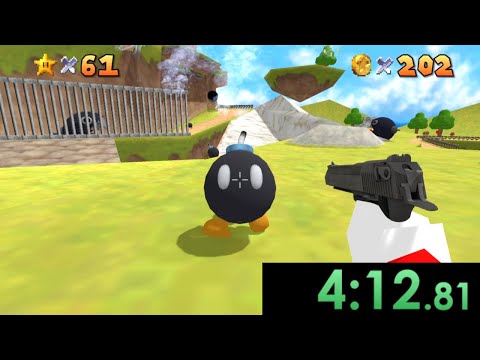
I Speedrun "Cursed Mario 64" - My Most Insane Challenge Yet!

What's up, speedrunning fanatics! EazySpeezy here, and today we're diving deep into something truly wild – a speedrun of "Cursed Mario 64." This wasn't your average run; it pushed my skills, my patience, and maybe even my sanity to the absolute limit. If you're looking for the ultimate flex in the gaming world, this might just be my greatest accomplishment. Stick around, because I'm breaking down exactly what went down.

What is Cursed Mario 64?

For those not in the know, "Cursed Mario 64" isn't an official Nintendo release. It's a fan-made, heavily modified version of the original Super Mario 64, often created using tools like the Super Mario 64 PC port. The "curse" comes from the deliberate introduction of glitches, altered physics, unfair enemy placement, and generally chaotic level design. Think of it as Mario 64 on steroids, but the steroids are made of pure, unadulterated chaos. These ROM hacks are designed to be challenging, unpredictable, and often hilarious to watch – especially when a runner is trying to master them for a speedrun.

The Decision to Speedrun It

As many of you know, my channel often delves into the more casual side of speedruns. I love showcasing cool runs and making them accessible. However, I also thrive on pushing boundaries. When I saw the potential for insane challenges within cursed versions of beloved games like Mario 64, I was hooked. The idea of taking a game everyone knows and turning it into a nightmare, and then mastering that nightmare? That's the kind of challenge that gets my adrenaline pumping. It’s about testing the limits of skill and breaking down complex, seemingly impossible tasks into manageable segments.

Training and Strats

Mastering a cursed ROM hack for a speedrun requires a completely different approach than a standard run. You can't rely on muscle memory from the original game. Instead, it's about deep-diving into the specific modifications:
  • Glitch Exploitation: Identifying and reliably executing new glitches introduced by the hack.
  • Pattern Recognition: Memorizing enemy spawn patterns, hazard timings, and unique level mechanics.
  • RNG Manipulation (if possible): Understanding and potentially influencing Random Number Generator (RNG) outcomes to favor favorable events.
  • Route Optimization: Creating the fastest possible path through the cursed levels, often involving risky maneuvers.
This specific run involved figuring out entirely new movement tech and understanding how the "curses" affected physics. It was a steep learning curve, and some days felt like I was back at square one.
The sheer unpredictability of "Cursed Mario 64" meant that hours of practice could be undone by a single, unforeseen event.

Key Moments and Struggles

There were countless moments during practice where I thought about quitting. The infamous "Tick Tock Clock" in this version was a particular beast. The usual time-sensitive mechanics were amplified with new hazards and physics quirks that made reaching the flagpole feel like scaling Mount Everest. I distinctly remember one practice session where I had a near-perfect run going, only to be taken out by a randomly placed Boo that wasn't there in any previous attempt. It’s those moments that test your resolve.
I also had to work closely with the creator of the Super Mario 64 FPS mod, @MixMorris, to understand some of the deeper engine changes that made this cursed version possible. Their insights were invaluable in developing effective strats.
Watching the world record run by others in similar mods often provides inspiration, but for a cursed hack, the record is often just whoever can survive the longest without losing their mind!

RNG and Unpredictability

One of the defining characteristics of a "cursed" ROM hack is the reliance on RNG. Unlike a standard speedrun where routes are meticulously planned and executed with precision, here you often find yourself at the mercy of random elements. Whether it's the timing of enemy patrols, the trajectory of projectiles, or even the placement of platforms, you have to adapt on the fly. This makes every run feel unique and adds an extra layer of tension. You can have the perfect setup, but one bad RNG roll can cost you minutes, or the entire run. It’s a constant battle against the game itself.

The Final Run

When the stars finally aligned, and I felt confident enough to attempt a full speedrun, the tension was palpable. Every input felt critical. The run was a rollercoaster of near-disasters and clutch saves. There were moments where I executed a complex trick flawlessly, followed immediately by a blunder that put me seconds away from failure. It’s this emotional journey that makes speedrunning so addictive. Witnessing the PB come together after so much struggle is an unparalleled feeling. You can watch the full run here: [Link to EazySpeezy's Cursed Mario 64 Speedrun Video].
This run is a testament to perseverance. It's about embracing the chaos and finding a way to win, even when the game actively tries to stop you.

Why Speedrun This Game?

So, why would anyone intentionally subject themselves to this kind of challenge? For me, it's about:
  • Pushing Boundaries: Exploring the extreme limits of gameplay and skill.
  • Community Contribution: Showcasing unique mods and inspiring others.
  • Personal Growth: Overcoming immense difficulty builds incredible problem-solving skills and mental fortitude.
  • Pure Fun: Honestly, mastering something this absurd is incredibly rewarding and entertaining.
My channel generally focuses on a more casual side of speedruns. With these videos, I want to show off cool speedruns, explain how they work, and entertain. Hopefully, you enjoy the content and maybe even take up speedrunning yourself, because it is truly a lot of fun! ---

Preguntas Frecuentes

What is the difference between a normal Mario 64 speedrun and a cursed one?

A normal Mario 64 speedrun follows the intended game mechanics and established optimal routes. A "cursed" run, however, utilizes heavily modified ROM hacks that introduce intentional glitches, altered physics, unfair challenges, and unpredictable elements, requiring entirely new strategies and a higher tolerance for chaos.

Is "Cursed Mario 64" an official game?

No, "Cursed Mario 64" is not an official game. It refers to fan-made modifications, or ROM hacks, of the original Super Mario 64, designed to be significantly more difficult and unpredictable.

How long does a Cursed Mario 64 speedrun typically take?

The duration can vary wildly depending on the specific ROM hack and the runner's skill. Some might be slightly longer than a standard run, while others, due to extreme difficulty and RNG, can take significantly longer or be considered "unbeatable" by many.

Where can I watch more speedruns like this?

You can find more speedruns, including those of cursed ROM hacks, on platforms like YouTube and Twitch. Following specific streamers or checking out resources like speedrun.com for leaderboards and discussions is also highly recommended. So there you have it – my insane dive into the world of "Cursed Mario 64." It was a wild ride, filled with frustration, triumph, and a whole lot of laughs (mostly at my own expense). If you've ever attempted a particularly brutal speedrun or tackled a crazy gaming challenge, let me know in the comments below! What's the most cursed game you've ever tried to beat? Join our Discord channel to chat with fellow speedrunners, share your own runs, and get tips on your favorite games. Let's build this community together!


El Polémico Regreso de Belle Delphine: ¿El Peor o una Estrategia Maestra?

¡Velocistas, preparaos! Hoy no vamos a hablar de glitches en Super Mario 64 o de trucos para batir el WR de Elden Ring. Vamos a adentrarnos en un terreno mucho más pantanoso y, francamente, desconcertante: el regreso de Belle Delphine. Sí, has oído bien. La controvertida influencer que redefinió el concepto de "contenido de nicho" y se hizo viral (y millonaria) con su *Gamer Girl Bath Water* parece estar de vuelta. Pero, ¿es este un regreso triunfal o, como muchos susurran, el peor que podíamos imaginar? Analicemos qué hay detrás de este fenómeno.

¿Quién es Belle Delphine y Por Qué Importa?

Mary Belle Kirschner, mundialmente conocida como Belle Delphine, irrumpió en la escena digital como un torbellino a finales de 2018. Nacida en Sudáfrica, esta creadora de contenido se hizo famosa en plataformas como Instagram y TikTok por su estética vanguardista, su maquillaje dramático y una actitud descaradamente provocadora. Pero lo que la catapultó a la fama global, y generó un debate masivo, fue su audaz movimiento de vender el agua de su baño a sus fans, autodenominados "simps", por la nada despreciable suma de 30 dólares por botella.

Este movimiento, en su momento, fue visto por muchos como una genialidad del marketing o, por otros, como un acto desesperado por la atención. Independientemente de la perspectiva, demostró una comprensión innata de cómo capitalizar tendencias emergentes y audiencias específicas. Su habilidad para generar conversación y controversia era, en sí misma, una forma de speedrun de la fama en internet.

En mi experiencia, pocos creadores han sabido jugar tan bien las cartas de la controversia y el marketing viral como lo hizo Belle Delphine en su apogeo.

La Era Dorada del "Simp": Monetizando la Niche

El término "simp", aunque a menudo usado de forma peyorativa, describe a alguien que hace demasiado por una persona por la que siente atracción romántica o sexual, a menudo sin ser correspondido. Belle Delphine, de forma brillante o perturbadora según se mire, identificó y capitalizó esta dinámica. Creó un ecosistema donde sus fans sentían que, al comprar sus productos o interactuar con ella de formas específicas, obtenían una conexión exclusiva.

Esta estrategia, que explotó alrededor de 2019-2020, la convirtió en una figura pionera. Demostró que existía un mercado dispuesto a pagar por una fantasía, por un sentido de cercanía con una figura pública que, de otra manera, sería inalcanzable. Su éxito fue tan rotundo que generó un sinfín de imitadores y debates sobre la ética de estas prácticas en el mundo del contenido online y el streaming.

Este fenómeno no fue exclusivo de ella; vimos ecos en otras plataformas y con otros creadores, pero Belle Delphine fue, sin duda, la punta de lanza. Su capacidad para mantener el hype y generar ventas masivas la posicionó como una figura clave en la historia reciente de las redes sociales y el marketing digital.

La Desaparición Misteriosa

Tras alcanzar su pico de fama, Belle Delphine pareció desvanecerse del ojo público. Su actividad en las redes sociales disminuyó drásticamente, dejando a muchos seguidores y observadores preguntándose qué había sucedido. Este silencio generó todo tipo de especulaciones: ¿se retiró por agotamiento? ¿Hubo problemas legales o personales? ¿Fue simplemente una estrategia para generar expectación?

La falta de información clara solo alimentó el misterio. En la cultura de internet, donde la transparencia (o la falta de ella) puede ser tan comentada como el contenido en sí, esta ausencia prolongada se convirtió en un tema de conversación recurrente. Para aquellos interesados en el speedrunning de la fama, su salida fue tan intrigante como su llegada.

Ese período de inactividad fue oro puro para las teorías de conspiración. Nadie sabía si volvería o si había sido un espejismo.

El Regreso Polémico: ¿Una Estrategia o un Desastre?

Y entonces, ocurrió. Belle Delphine regresó. Sin embargo, este regreso no ha estado exento de críticas. Los eventos y contenido que ha lanzado desde su vuelta han sido calificados por algunos como "el peor regreso de todos". Las razones son variadas:

  • Falta de Novedad: El mercado y las audiencias han evolucionado. Lo que antes era impactante y novedoso, ahora puede parecer forzado o repetitivo.
  • Calidad del Contenido: Algunos críticos señalan una aparente disminución en la calidad o el impacto del contenido comparado con su etapa más popular.
  • Percepción Pública: Tras un tiempo de ausencia y con la evolución del discurso sobre la figura del "simp" y las dinámicas online, la recepción ha sido más mixta.

Por otro lado, no se puede descartar que este "mal" recibimiento sea, en sí mismo, parte de una estrategia. Generar controversia, incluso negativa, mantiene a un creador en el centro de la conversación. Es un movimiento arriesgado, similar a una táctica de speedrun donde se toma un riesgo calculado para ganar tiempo o ventaja.

Su capacidad para volver a generar noticias y debates, incluso con contenido que no es del agrado de todos, demuestra que el personaje de Belle Delphine sigue teniendo un poder de convocatoria innegable. Ya sea por nostalgia, curiosidad morbosa o verdadero fanatismo, su nombre sigue resonando.

Análisis desde la Comunidad Gamer

Desde la perspectiva de la comunidad gamer, la figura de Belle Delphine es, cuando menos, peculiar. Si bien no es una figura tradicional del gaming, su éxito se construyó sobre una estética y una narrativa que a menudo se cruzan con la cultura de internet y los videojuegos. El término "Gamer Girl" se convirtió en una parte integral de su identidad, aunque su relación directa con el speedrunning o los MMORPGs es nula.

Sin embargo, la forma en que monetizó su imagen y utilizó las dinámicas de las comunidades online tiene paralelismos con ciertos aspectos del streaming de videojuegos y la creación de comunidades de nicho. La astucia para identificar y explotar un mercado, la generación de contenido que provoca reacciones intensas, y la gestión de la percepción pública son habilidades que, en diferentes contextos, también son cruciales para los speedrunners de élite y los creadores de contenido exitosos en el mundo del PC Gamer.

El debate sobre si su regreso es un éxito o un fracaso se alinea con discusiones más amplias sobre la autenticidad, la estrategia de contenido y la longevidad de las personalidades de internet. Es un caso de estudio fascinante, incluso para quienes nos dedicamos a batir récords en nuestros juegos favoritos.

Preguntas Frecuentes

¿Quién es Belle Delphine?

Belle Delphine, cuyo nombre real es Mary Belle Kirschner, es una influencer sudafricana que se hizo famosa a nivel mundial por su contenido provocador y su audaz estrategia de marketing, como la venta de "agua de baño de gamer girl".

¿Por qué se considera su regreso "el peor"?

Algunos críticos y miembros de la comunidad consideran su regreso como pobre debido a una percepción de falta de originalidad, calidad del contenido o una desconexión con las tendencias actuales, en contraste con el impacto que tuvo en su apogeo.

¿Es Belle Delphine una gamer o speedrunner?

No, Belle Delphine no está directamente asociada con el gaming competitivo ni con el speedrunning. Su fama se basa en su identidad como influencer y creadora de contenido en plataformas como TikTok e Instagram, aunque utilizó la estética "gamer girl" como parte de su marca.

¿Fue rentable su estrategia de "simps"?

Inicialmente, su estrategia de vender productos exclusivos y personalizados a sus seguidores (los "simps") fue extremadamente rentable, convirtiéndola en una figura millonaria y pionera en la monetización de nichos en internet.

¿Qué opinas tú? ¿Es el regreso de Belle Delphine un movimiento desesperado o una jugada maestra de marketing que aún no comprendemos? Déjanos tus comentarios abajo y únete a nuestra comunidad en Discord para debatir sobre los temas más candentes del gaming, el speedrunning y la cultura de internet. ¡Queremos escuchar tu perspectiva!